Afghanistanpage 2

Place · 101 articles
Share

Coverage, page 2

page 2 of 6
R

Afghanistan: From displacement to return: the humanitarian realities facing Afghan returnees

Countries: Afghanistan, Pakistan Source: ODI - Humanitarian Practice Network Mehrullah Rahmani In the outskirts of Afghanistan, hundreds of thousands of Afghan refugees have been forcibly returned from Pakistan . At the same time, growing numbers of Afghans have also been returned from Iran, adding to the scale and complexity of the humanitarian crisis. Many have been deported, while others have returned with few or no resources, leaving them to settle in remote mountainous areas far from major roads and essential services. They live in makeshift shelters, often just tents under the scorching sun or on bare stones, with no access to clean water, food, or even basic shelter. Healthcare is out of reach, and many lack even the simplest identification documents, leaving them vulnerable and invisible in the margins of society. Before fleeing to Pakistan, I was a high school student in Kabul, dreaming of becoming a doctor. My family led a relatively stable life: we had clean water to drink, food to eat, a roof over our heads, and the freedom to seek opportunities. But after August 2021, when the Taliban seized power, my father lost his job, and that fragile economic stability we once knew evaporated. We were forced to leave, seeking refuge in Pakistan, not knowing if we would ever return to a secure life. This experience is just one of many. Across Pakistan, families are being uprooted and returned to this limbo. Following renewed border clashes between Pakistan and Afghanistan, Pakistani authorities have intensified the forced return and deportation of Afghan refugees . Many returnees face significant humanitarian needs including lack of shelter, food, clean water and legal recognition, leaving them vulnerable during the reintegration process. These returnees need urgent support from shelter to food, from healthcare to legal recognition so that they are no longer invisible, but given the basic dignity they deserve. Read the full article on ODI-HPN

ReliefWebReliefWebODI - Humanitarian Practice Network21 Sept

Afghanistan: Weekly Market Report: Issue 311: Week 2 - September 2026

Country: Afghanistan Source: World Food Programme Please refer to the attached file. Key Highlights Market Overview Market conditions remained broadly stable during the second week of September, with modest weekly movements across most food commodities. Despite limited week-on-week price movements, several staple food commodities remained considerably above last year's levels, particularly rice, wheat, cooking oil and potato. Meanwhile, elevated fertilizer and fuel prices continued to contribute to higher agricultural production and supply-chain costs, while declining labour availability and purchasing power continued to affect vulnerable households. Food Categories: National food prices remained relatively stable during the second week of September, with most staple commodities recording only modest weekly changes. However, several commodities remained substantially above last year's levels, particularly rice, wheat, cooking oil and potato. • Wheat and Wheat Flour: Wheat grain and flour prices recorded negligible weekly changes, however compared to last year, wheat grain, wheat flour (low-price and high-price) remained 14%, 12% and 8% higher, respectively. • Rice: Palawi and Sholae rice prices declined by 0.9% and 0.4% week-on-week, respectively. Despite these minor declines, prices remained substantially above last year's levels, at 21% and 35% higher, respectively. Similarly, both Palawi and Sholae rice were significantly above their three-year average level by 21%. • Other Staples: Cooking oil, sugar, pulses, salt and bread prices experienced negligible week-on-week. However, year-on-year trends show a mixed picture, with cooking oil and sugar prices 14% and 9% higher, respectively, while pulses and bread were 12% and 3% lower than last year. • Vegetables: Vegetable prices declined during the week, with potato, onion and tomato prices falling by 3.7%, 1.7% and 0.2%, respectively. However, potato prices remained 38% higher than last year and 30% above the three-year average. Meanwhile, tomato and onion prices remained 30% and 8% lower year-on-year, respectively. Non-Food Categories: Terms of Trade (ToT): The ToT, which reflects purchasing power, remained under pressure for both labour-dependent households and pastoralists, as declining income and higher prices constrain access to food. • Casual Labour ToT: Nominal casual labour ToT declined by 0.7% week-on-week to 10.2 kg of low-price wheat flour, remaining 14% below last year and 11% below the three-year average. The sustained decline in purchasing power reflects continued pressure on labour income relative to food prices. • Labour Availability and Wages: Unskilled labour availability declined by 2.2% week-on-week to 2.0 days per week, remaining 15% below last year and 19% below the three-year average. Meanwhile, unskilled wages were 4% below last year, while skilled wages remained unchanged year-on-year. • Pastoralist ToT: A pastoralist could exchange a one-year-old female sheep for 264 kg of low-price wheat flour, which is 14% below last year and 7% below the three-year average, indicating a significant pressure on livestock-dependent households. • Fertilizers and Agricultural Inputs: Fertilizer prices recorded minor weekly declines, with DAP and urea falling by 0.4% and 0.8%, respectively. However, prices remained considerably above last year's levels, with DAP and urea 13% and 27% higher, respectively. Meanwhile, improved seed and animal feed prices remained 7% and 5% below last year, respectively.

ReliefWebReliefWebWorld Food Programme21 Sept

Transparent Tribe Deploys New Rust Backdoor Using Private GitHub Repositories for C2

The Pakistan-aligned threat group tracked as Transparent Tribe (aka APT36 and Earth Karkaddan) has been attributed to a fresh set of cyber attacks targeting government and defense entities in India and Afghanistan. The attacks, per Zscaler ThreatLabz, involve the use of previously undocumented tools called RUSTYSHADE, RUSTYMOVE, PSNATCH, and BASHNATCH. The activity has been codenamed Operation

The Hacker NewsThe Hacker Newsinfo@thehackernews.com (The Hacker News)18 Sept

DTM Pakistan: Bi-Weekly Flow Monitoring of Afghan Nationals (16 – 31 August 2026)

Countries: Pakistan, Afghanistan Source: International Organization for Migration Please refer to the attached file. The International Organization for Migration (IOM) Pakistan’s FM provides key insights into cross-border migration trends, returning Afghan nationals to Afghanistan, including their profiles, mobility patterns, routes, vulnerabilities, demographics and other social characteristics. Between 16 and 31 August 2026, DTM border monitors (BMs) interviewed 1,629 heads of households through a Flow Monitoring Registry (FMR) form, while a total of 23,646 Afghan returnees were identified through the five border crossing points (BCPs).

ReliefWebReliefWebInternational Organization for Migration18 Sept

Afghanistan — Flow Monitoring Update (30 August–12 September 2026)

Countries: Afghanistan, Iran (Islamic Republic of), Pakistan Source: International Organization for Migration Please refer to the attached file. The International Organization for Migration’s (IOM) Displacement Tracking Matrix (DTM) Afghanistan’s Flow Monitoring (FM) is designed to provide insights into the mobility patterns at Afghanistan’s border points with the Islamic Republic of Iran and Pakistan. This activity involves two interlinked exercises: Flow Monitoring Counting (FMC), which monitors the number of movements across the border, and Flow Monitoring Surveys (FMS), which collect data on the profiles of Afghan nationals crossing the border, including reasons for travel and intentions. The FMS leverages FMC data to determine statistically valid, gender-disaggregated target samples on a daily basis, enabling statistically representative FMS data. It is important to note that DTM collects information on total movements at a given border point, not the number of unique individuals entering or leaving the country. Movements can include returnees, deportees, and circular travellers, including those visiting family or students, for example. DTM FM is operational at four main crossing points (connected to Afghanistan’s National Highway) as well as two other crossing points with the Islamic Republic of Iran and Pakistan. This flow monitoring update combines information from the FM and other IOM sources related to cross-border movement to Afghanistan. For a detailed explanation of the methodology used in gathering various inflow data, the report directs readers to the section titled “IOM Inflow Data” on page 8. Outflow data is collected exclusively through DTM’s FM.

ReliefWebReliefWebInternational Organization for Migration18 Sept

UNHCR-IOM Pakistan Flash update # 111 | Arrest and Detention Flow Monitoring (15 September 2023 – 12 September 2026)

Countries: Pakistan, Afghanistan Source: UN High Commissioner for Refugees Please refer to the attached file. INTRODUCTION In response to the Ministry of Interior's (MoI) decision of 26 September 2023 to enact an “Illegal Foreigners' Repatriation Plan”, UNHCR, the UN Refugee Agency and IOM, the UN Migration Agency, have collated their data on the arrest, detention, and deportation of Proof of Registration (PoR) holders, Afghan Citizen Card (ACC) holders, and undocumented Afghan nationals as well as on the outflows of Afghan nationals at the Torkham, Ghulam Khan, Chaman, Badini and Bahramcha border crossing points, to better understand the protection environment and movements of Afghan nationals returning to Afghanistan from Pakistan. In 2025, the Government of Pakistan (GoP) issued several directives impacting Afghan nationals. In January, the GoP announced that Afghan nationals should relocate from Islamabad Capital Territory (ICT) and Rawalpindi, or else face deportation. In April, further announcements indicated the implementation of the second phase of the “IFRP”, targeting ACC holders, in addition to undocumented Afghans. In July, the GoP issued a Statutory Regulation Order (SRO) directing the repatriation/deportation of PoR card holders following the expiry of PoR card validity on 30 June. The GoP later indicated a deadline of 1 September for PoR holders to leave Pakistan, before the start of the repatriation/deportation process. UNHCR issued a press briefing expressing concern regarding the decision and urging the GoP to exempt Afghans with international protection needs, as well as those with particular circumstances or vulnerabilities, from involuntary return.

ReliefWebReliefWebUN High Commissioner for Refugees18 Sept

UNHCR Afghanistan: When Return is Only the Beginning

Countries: Afghanistan, Iran (Islamic Republic of), Pakistan Source: UN High Commissioner for Refugees Please refer to the attached file. Why conditions of return, predictable financing and local absorption capacity determine whether return of refugees supports stability or fuels protection risks and renewed movement Return is not the end of the journey When refugees return, sustainability depends on safe, voluntary return, access to basic services, documentation, livelihoods and community support. Resources spent on immediate needs such as food, transport and healthcare cannot be invested in housing, documentation or livelihoods. At the same time, concentration of returns in a few areas increase pressure on housing, services and job markets in communities with limited investment, while restrictions on the rights of women and girls further weaken prospects for sustainable reintegration and recovery.¹

ReliefWebReliefWebUN High Commissioner for Refugees18 Sept
  • neutral toward UNHCR · 96%

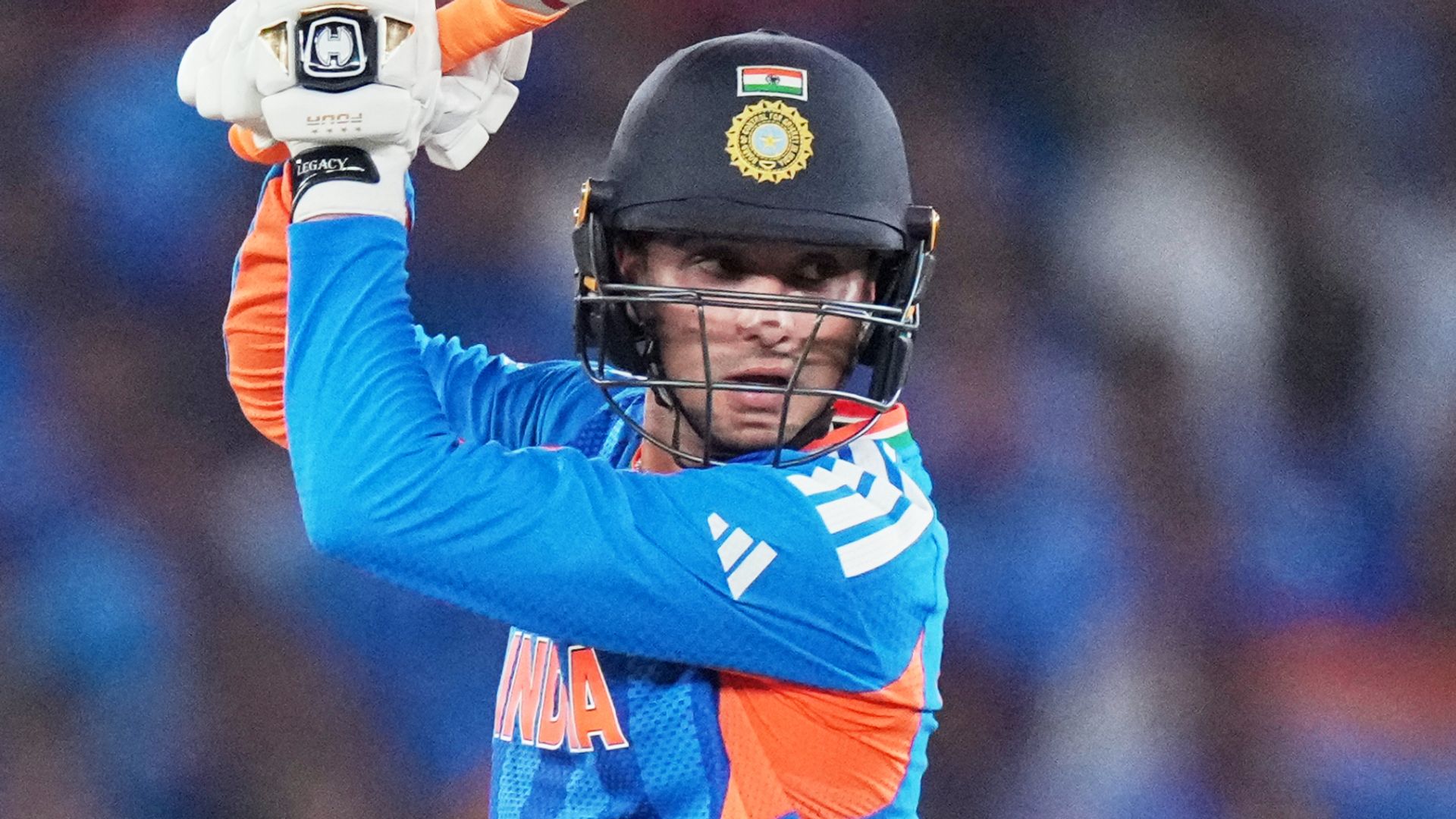
Abhishek blazes fastest century in full-member T20s as India sweep Afghanistan

India opener Abhishek Sharma smashed the fastest Twenty20 International century by a batter from a full-member nation on Thursday, blasting a 30-ball hundred as ‌the hosts thrashed Afghanistan by 127 runs in Delhi to complete a 3-0 series sweep. The 26-year-old hammered 108 off 34 balls, striking nine fours and 11 sixes before falling to Rashid Khan. His hundred eclipsed the previous India record of a 35-ball century set by stalwart Rohit Sharma against Sri Lanka in 2017. Fellow ⁠opener and wicketkeeper-batter Sanju Samson chipped in with 50 off 35 deliveries as India posted 221-7 after Afghanistan won the toss and chose to bowl. Afghanistan's reply never took off as the visitors slumped to 47-4 and were eventually ‌bowled out for 94 in 14.1 overs. Captain Ibrahim Zadran was the only Afghanistan batter to cross 20, making 25, while India all-rounder Nitish Kumar Reddy and spinner Ravi ‌Bishnoi dismantled the batting lineup with three wickets apiece. "I feel ‌it's all dependent on my process before every series," Abhishek said. "It's very ‌particular for me, against who I ‌play and their bowlers, how I'm going to utilise the powerplay... The way I play, it's very important for the captain ‌and the coach to be on your side. "You have to get ⁠surety. I feel this is because of them as well... It's very simple from day one. I just want to express myself. Just see the ball and hit the ball. "You ⁠can't be sure you'll ⁠be doing well all the time, but the culture we've developed in our team is to dominate, and it's been going well so far." India had already wrapped ⁠up the series with a seven-wicket victory in the second T20 on Tuesday, having opened the contest with another convincing seven-wicket win on Sunday. "Definitely disappointed," Zadran said. "We improved a little bit in the powerplay. Totally happy with the intent... "Yes, we will struggle a little bit in one or two series, ‌but with time we will improve. If we don't have intent, it is really hard to beat international teams. "We need to play more games and more series, especially against the biggest teams. That's how we can improve." India next face Japan in a one-off T20 on September 22 before beginning their Asian Games campaign at the quarter-final stage six days later.

MBMobile BusinessReuters18 Sept

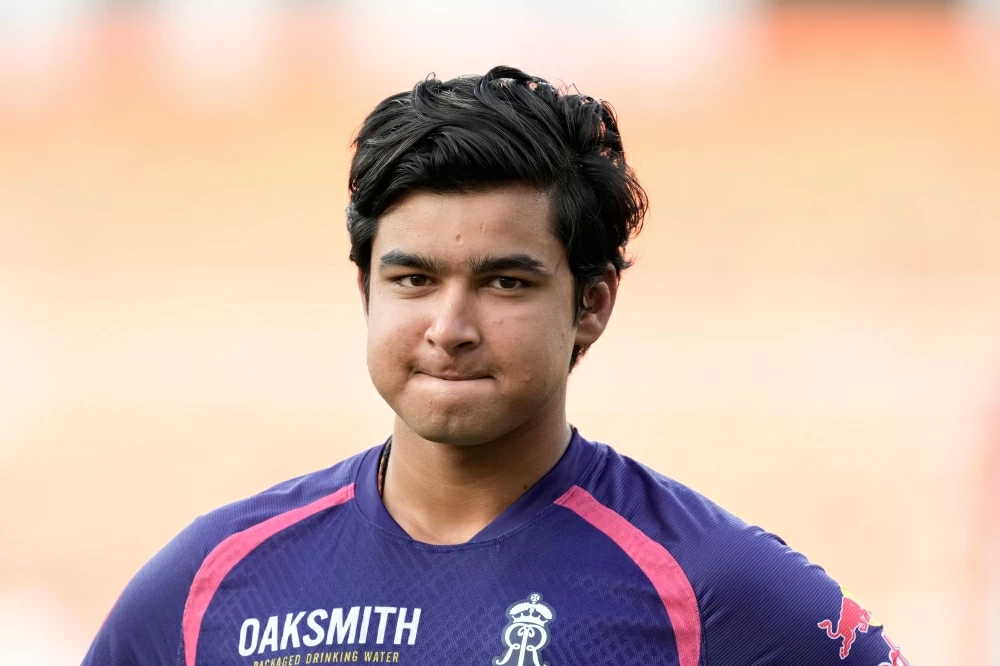
Vaibhav Sooryavanshi has to be patient, says India coach Gambhir

India coach Gautam Gambhir said Vaibhav Sooryavanshi will have to wait for his chance ‌to break into the side after he left the 15-year-old prodigy on the sidelines of their three-match Twenty20 series sweep against Afghanistan. Abhishek Sharma and Sanju Samson opened for India in the series, with ⁠Abhishek scoring the third-fastest century in T20 internationals in Thursday's 127-run victory in New Delhi. Sooryavanshi, who was the highest scorer in this year's ‌Indian Premier League, made his international debut against England in July but the top-order batter failed to ‌make an impact as the hosts dominated ‌India in the T20 series. He scored two fifties ‌against Zimbabwe in Harare ‌later that month but has not played for India since. "Whether you’re a 15-year-old or ‌a 30-year-old, when you have to ⁠wait for your opportunity you have to wait for your opportunity," Gambhir told reporters after the match. "We know ⁠the kind of ⁠talent he has and what he can do, but someone who has been performing for the last ⁠two to three years will always be ahead of someone who has just entered the team." Sooryavanshi will travel to Nagoya for India's Asian Games campaign, with a one-off T20 against hosts ‌Japan set for Tuesday before the Asiad quarter-final on September 28. "Whenever he gets his run, he will get a longer run as well ... we want competition and talent in the dressing room," Gambhir added.

MBMobile BusinessReuters18 Sept

UNHCR Italy Factsheet, February 2026

Countries: Italy, Afghanistan, Bangladesh, Pakistan, Peru, Syrian Arab Republic, Ukraine, World Source: UN High Commissioner for Refugees Please refer to the attached file. taly has been party to the 1951 Refugee Convention since 1954. The same year, UNHCR established a country office in Italy, which became a multi-country office in 2020, covering Italy, the Holy See and San Marino and Malta since 2026. UNHCR supports Italy in strengthening its asylum system, including through assistance in the implementation of the EU Pact on Migration and Asylum, to ensure compliance with international standards. UNHCR advances safe and legal pathways for refugees through labour, education and humanitarian corridors, evacuations, and resettlement, partnering with government, civil society, and the private sector as part of Italy's external dimension agenda. HIGHLIGHTS ARRIVALS BY LAND AND SEA In 2025, Italy remained the primary destination for sea arrivals in Southern Europe, accounting for 46 per cent (66,316 people) of the total, with nearly 90 per cent of sea crossings originating from Libya, followed by Tunisia, Algeria, and Türkiye. Around 6,500 people were intercepted at the north-eastern land border with Slovenia —similarly to 2024—although UNHCR estimates that many more crossings went undetected. CITY-TO-CITY EVENT On 19 and 20 November 2025, the third edition of the Cityto-City event was held in Naples, bringing together municipalities signatory to the Charter for the Integration of Refugees and attended by fifty representatives from municipal administrations, civil registry offices, the National Association of Italian Municipalities, and private sector. The event strengthened collaboration on refugee inclusion through thematic roundtables on documentation, residence registration, housing and data collection, with municipalities reaffirming their commitment to advancing solutions and sharing best practices to enhance integration efforts.

ReliefWebReliefWebUN High Commissioner for Refugees17 Sept

Republic of Türkiye Fact-sheet September 2026

Countries: Türkiye, Afghanistan, Iran (Islamic Republic of), Iraq, Syrian Arab Republic Source: UN High Commissioner for Refugees Please refer to the attached file. Developments in Syria following December 2024 have led to an increase in voluntary returns to Syria, with 723,000 refugees returning by August 2026 from Türkiye, which hosts one of the largest refugee populations globally. UNHCR supports the national asylum procedures and works in coordination with diverse stakeholders, including government institutions, local authorities, and civil society, in advancing refugee protection, inclusion, access to solutions, including voluntary return. Responsibility-sharing to enhance access to social services remains crucial, with an increasing need for diversified and flexible funding for the refugee response, as well as other solutions, such as resettlement and complementary pathways.

ReliefWebReliefWebUN High Commissioner for Refugees17 Sept

UNHCR Latvia Factsheet, February 2026

Countries: Latvia, Afghanistan, Russian Federation, Somalia, Syrian Arab Republic, Tajikistan, Ukraine, World Source: UN High Commissioner for Refugees Please refer to the attached file. Refugees from Ukraine: Latvia hosts about 32,000 refugees from Ukraine under Temporary Protection which constitutes almost 1 per cent of the population. EU’s external borders: UNHCR continues to collaborate with state authorities to improve access to asylum for those irregularly ariving in the southeastern regions bordering Belarus. Education: UNHCR advocates for the inclusion of refugee children from Ukraine into the national education system. HIGHLIGHTS Socio-economic inclusion of Ukrainians The 2025 statistics show a growing socio-economic inclusion of Ukrainian refugees: participation in the national labor force, as well as the average renumeration continues to increase: 10,401 Ukrainians were employed by December 2025, compared to 9,600 in December 2024. Access to asylum at the Latvia-Belarus border In 2025, according to the State Border Guard, over 12,000 attempts to cross the border were prevented at the LatviaBelarus border. This is the second highest total number of attempts recorded since 2021 (the highest number recorded so far was in 2023 with 13,836 attempts). By contrast, the number of persons admitted on humanitarian grounds at Latvia’s border with Belarus is among the lowest: 31 in 2025 and 26 in 2024 in comparison to 428 in 2023.

ReliefWebReliefWebUN High Commissioner for Refugees17 Sept

UNHCR Sweden Fact Sheet, February 2026

Countries: Sweden, Afghanistan, Iraq, Syrian Arab Republic, Ukraine Source: UN High Commissioner for Refugees Please refer to the attached file. Asylum system: Sweden has made strong contributions to refugee protection through a well-established asylum system, policy support and funding to UNHCRE. The current asylum system will be reformed in light of the EU Pact .implementation. Contributor of unearmarked funding: Sweden is UNHCR’s largest contributor of unearmarked funding. Swedens total contribution to UNHCR in 2025 amounted to $159.4 million. Stable and secure status: UNHCR advocates for Sweden to grant all beneficiaries of international protection a secure and stable status to facilitate integration. HIGHLIGHTS Fewer asylum applications and more returns The Swedish Government announced that asylum applications fell to 6,735 in 2025, a 30 per cent decrease compared to 2024. This is the lowest number recorded since 1984. At the same time returns have increased by nearly 60 per cent since 2022. Increase in grant for voluntary repatriation From January 2026, it is possible for refugees to be granted SEK 350,000 (close to $40,000) if they voluntarily decide to return to their home country. In UNHCR’s view, it is important that the decision to voluntarily return is based on a free and informed decision with access to updated and clear information about the situation in the home country and the return process, taking into account the underlying reasons for flight.

ReliefWebReliefWebUN High Commissioner for Refugees17 Sept