Afghanistanpage 5

Place · 103 articles
Share

Coverage, page 5

page 5 of 6

25 years after 9/11, al Qaeda remains a threat – even as Washington looks away

A quarter of a century after the deadliest terrorist attacks in US history, al Qaeda’s various branches have moved away from the global jihad advocated by Osama bin Laden, focusing instead on regional insurgencies. Their actions continue to destabilise swathes of the world, from the Sahel to Afghanistan, neglected by a US administration that critics say has unlearned the lessons of 9/11.

France 24France 24Antoine FLANDRIN11 Sept

Look back: 9/11, Osama bin Laden, and a safe haven in Afghanistan

After terrorists attacked the United States on Sept. 11, 2001, America's attention turned fully to the group's leader, Osama bin Laden, and his Al Qaeda network, which had found protection in Afghanistan. Correspondent Allen Pizzey reports on a country already devastated by more than 20 years of continuous warfare, which was anticipating further retaliation by Washington, in a story that originally aired Sept. 16, 2001. Pizzey also talks with Vicky and Mark Timlin, of the charity Hope Worldwide, whose head office ordered them to leave Afghanistan following the attacks on the World Trade Center and the Pentagon.

CBS NewsCBS News11 Sept

UNHCR-IOM Pakistan Flash update # 110 on Arrest and Detention/Flow Monitoring, 15 Sep 2023 to 5 Sep 2026

Countries: Pakistan, Afghanistan Sources: International Organization for Migration, UN High Commissioner for Refugees Please refer to the attached file. In response to the Ministry of Interior's (MoI) decision of 26 September 2023 to enact an “Illegal Foreigners' Repatriation Plan”, UNHCR, the UN Refugee Agency and IOM, the UN Migration Agency, have collated their data on the arrest, detention, and deportation of Proof of Registration (PoR) holders, Afghan Citizen Card (ACC) holders, and undocumented Afghan nationals as well as on the outflows of Afghan nationals at the Torkham, Ghulam Khan, Chaman, Badini and Bahramcha border crossing points, to better understand the protection environment and movements of Afghan nationals returning to Afghanistan from Pakistan. In 2025, the Government of Pakistan (GoP) issued several directives impacting Afghan nationals. In January, the GoP announced that Afghan nationals should relocate from Islamabad Capital Territory (ICT) and Rawalpindi, or else face deportation. In April, further announcements indicated the implementation of the second phase of the “IFRP”, targeting ACC holders, in addition to undocumented Afghans. In July, the GoP issued a Statutory Regulation Order (SRO) directing the repatriation/deportation of PoR card holders following the expiry of PoR card validity on 30 June. The GoP later indicated a deadline of 1 September for PoR holders to leave Pakistan, before the start of the repatriation/deportation process. UNHCR issued a press briefing expressing concern regarding the decision and urging the GoP to exempt Afghans with international protection needs, as well as those with particular circumstances or vulnerabilities, from involuntary return.

ReliefWebReliefWebUN High Commissioner for Refugees11 Sept

Afghanistan Food Security Outlook Update, August 2026 - January 2027: Crisis (IPC Phase 3) persists despite an anticipated favorable start to the season

Countries: Afghanistan, Iran (Islamic Republic of), Pakistan Source: Famine Early Warning System Network Please refer to the attached file. Key Messages Crisis (IPC Phase 3) outcomes are expected through January 2027 across parts of the central highlands, east, northeast, and southwest, and urban areas, with additional provinces deteriorating to Crisis (IPC Phase 3) starting in October. Despite the favorable 2026 harvest, poor households in these areas entered the season with eroded assets following consecutive years of drought and below-average production, and remote, deficit-producing areas face additional constraints from limited production, such as fewer typical labor opportunities, and high transportation costs that are sustaining elevated food prices. Agricultural labor during the winter wheat planting season will provide only a marginal increase in income, as planting is less labor intensive than other crops and is typically handled by landowners themselves, limiting demand for hired labor. As households deplete own-produced stocks in September and casual labor income declines from October, poor households are expected to face food consumption gaps and engage in negative coping strategies, including selling productive assets and taking on debt. Stressed (IPC Phase 2) outcomes are expected across the rest of the country through the projection period . Through September, own-produced food and harvest-related labor, alongside seasonal income from livestock, construction, and petty trade, will allow most households to meet minimum food needs. As harvest stocks deplete and labor opportunities decline from October, market dependence is expected to increase, with poor households relying on coping strategies such as borrowing to maintain food consumption through the winter lean season. The ongoing El Niño event is expected to drive above-average precipitation countrywide between October 2026 and January 2027 the start of the October 2026 to May 2027 wet season. This is expected to enable above average and timely winter wheat planting following four consecutive years of drought between 2021 and 2024. Above-average precipitation is also expected to improve snowpack and snow water volumes countrywide, contingent on temperatures remaining average to below average during the precipitation season.

ReliefWebReliefWebFamine Early Warning System Network11 Sept

Lebanon: Escalation in the Middle East and Beyond — Mobility Report (25 August – 07 September)

Countries: Lebanon, Afghanistan, Armenia, Azerbaijan, Iran (Islamic Republic of), Iraq, Pakistan, Syrian Arab Republic, Türkiye, Turkmenistan Source: International Organization for Migration Please refer to the attached file. On 17 June 2026, the United States of America and the Islamic Republic of Iran reached an agreement on a Memorandum of Understanding (MOU) concerning the cessation of hostilities. The escalation in the Middle East and beyond had triggered a humanitarian crisis affecting multiple regions in an already fragile context. A resurgence of hostilities in recent weeks are placing pressure on humanitarian access and threatens civilian and essential services. Mobility dynamics across the region and beyond due to renewed escalation remains uncertain. The situation continues to be highly fragile, requiring sustained monitoring and operational preparedness. In the Islamic Republic of Iran, some families have begun returning to their homes amid signs of de-escalation. However, thousands continue to shelter in hotels due to damage to housing and civilian infrastructure. As of 01 June, approximately 9,000 individuals remain displaced, unable to return to their homes due to the extent of the damage. Overall, population movements remain localized, temporary, and economically driven, with no signs of mass displacement. In Lebanon, displacement nationwide remains significant despite continuing returns. As of 01 September 2026, 329,240 people remain internally displaced across 628 cadasters, a 5.6 per cent decrease compared to the previous reporting period (as of 19 August 2026). Of the total IDPs in Lebanon, 21,758 individuals remained displaced in 218 collective shelters. Returns have continued, with 856,316 returned IDPs reported as of 19 August 2026, marking a 4.7 per cent increase from the previous round (as of 12 August 2026). Humanitarian and protection needs remain acute, driven by the destruction of homes and services, prolonged displacement, explosive ordnance risks, protection concerns, and declining coping capacities. Meanwhile, cross-border flows into the Syrian Arab Republic are continuing, with a total of 761,319 movements recorded as of 07 September 2026. IOM’s Displacement Tracking Matrix (DTM) is on the ground, actively tracking displacement and cross border mobility while scaling operations in coordination with local authorities and partners to better understand how the crisis is impacting human mobility in the region.

ReliefWebReliefWebInternational Organization for Migration10 Sept

The struggle for women to get care in Afghanistan

In this edition, French filmmaker and journalist Mélanie Nunes speaks to  FRANCE 24 about her investigative report, "Afghanistan : les soignantes de l'ombre" or ‘the unsung female carers’. It follows women in the country as they try to get the heath care they need, as well as following health care providers themselves as they try to offer their services. Nunes says that the women who participated in the short-form documentary did so because “nobody cares about what they think" in their own country. "Afghanistan : les soignantes de l'ombre" recently came out on the Arté television channel.

France 24France 24Stuart NORVAL10 Sept

Pakistan Moves to Expel Afghan Medical Students

Click to expand Image King Edward Medical University, Lahore, Pakistan. © 2014 Razaawais141/Wikimedia Without warning, Pakistan has directed all medical and dental institutions to expel Afghan students and arrange to send them back to Afghanistan. It is the latest move by Pakistani authorities to summarily deport Afghans from the country. Especially for Afghan women students, being returned to Afghanistan ends their chances of ever becoming doctors or dentists, as the Taliban have banned all women from universities and medical training. Pakistan’s medical institutions have also suspended new admissions of Afghan nationals. Lahore’s King Edward Medical University directed 20 Afghan medical students, including 4 women and 7 students in their final year, to report within 24 hours to complete departure formalities. The nongovernmental Human Rights Commission of Pakistan estimates about 100 Afghan medical and dental students in Lahore may be affected, including 20 to 40 women. Some Afghan students have approached the organization seeking safe shelter alongside legal assistance, as they fear imminent deportation. Pakistan is obligated as a party to the International Covenant on Economic, Social and Cultural Rights to ensure equal access to higher education based on ability and without discrimination. The United Nations committee monitoring compliance with the treaty has clarified that its protections extend to non-nationals, regardless of immigration status. Removing enrolled students just because they are Afghan is contrary to these protections. Human Rights Watch has previously documented Pakistani authorities’ arbitrary arrests and forced returns of hundreds of thousands of Afghans, many who had lived for decades in Pakistan. Pakistan is also bound by the universal principle of nonrefoulement, which forbids the forcible return of people to a well-documented risk of persecution, torture, or other serious harm. Because those Afghans previously expelled from Pakistan were not properly screened, we have no way of knowing how many feared persecution from the Taliban if returned. Pakistani authorities should withdraw the return orders, restore students’ enrollment, reverse the discriminatory admissions ban, and ensure students can remain lawfully to complete their degrees. Each student’s protection needs require individual assessment, with safe shelter for those needing it, especially women who are at greater risk of Taliban persecution. Pakistan should let these future doctors and dentists finish their education for their own sakes and for the countless lives they may one day improve or save in Pakistan or – when it is finally safe for them to return – in Afghanistan.

Human Rights WatchHuman Rights WatchHuman Rights Watch10 Sept

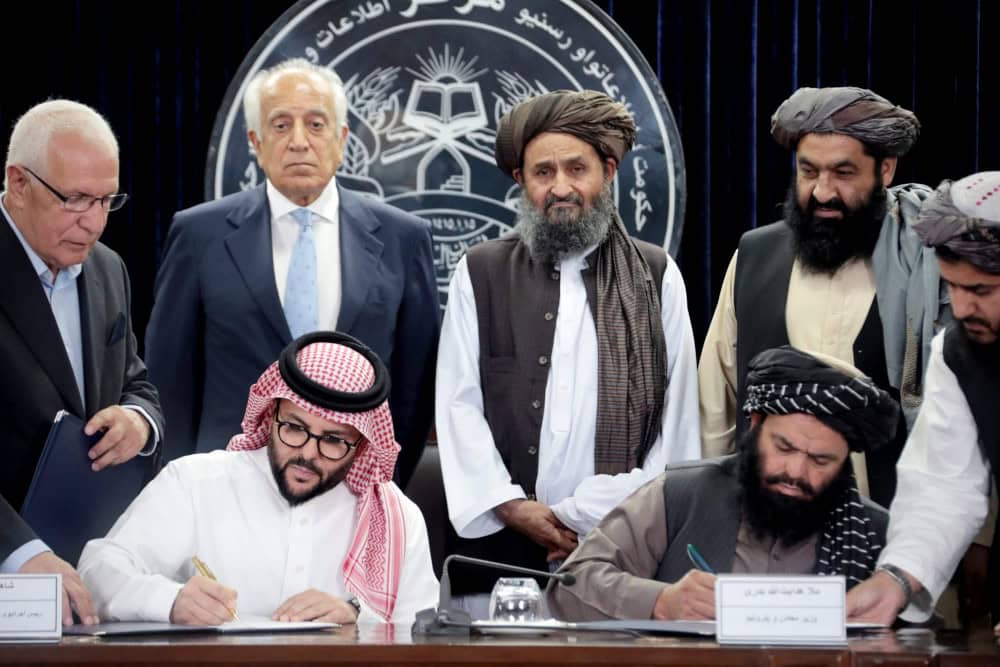
Former US ambassador Khalilzad visits Kabul, attends Taliban oil deal signing

Former US Ambassador to Afghanistan Zalmay Khalilzad met with senior Taliban officials and attended the signing of a major oil and gas agreement with a Saudi company, despite the US State Department insisting that he was acting solely “in a personal capacity.” Whatever his intentions, Khalilzad gave the Taliban something it has sought since returning to power: an appearance of American validation.

Long War JournalLong War JournalWill Selber9 Sept

‘One day the Taliban will need women to be educated’: three sisters on being forced back to Afghanistan

Shallah, Fatimah and Maahi are among hundreds of thousands of Afghan women and girls deported from Iran and Pakistan in the past year to a life of severe restrictions It was a warm summer afternoon on 15 August 2021 when the Taliban entered Kabul and changed the lives of millions. Shallah*, then 16, watched the news at home on the Afghan TV channel Tolo news. She ran crying to the garden, to tell her mother that Afghanistan had fallen. Her younger sister, Fatimah*, then 11, was at her cousin’s house, where her aunt told her the news. At the time, she says, she did not understand what a takeover meant, or who the Taliban were. Her elder sister, Maahi*, then 22, was well aware of the consequences and remembers her hands shaking at work as she read the news on her phone, on Facebook pages of Afghan news. Continue reading...

The GuardianThe GuardianGuardian reporters9 Sept

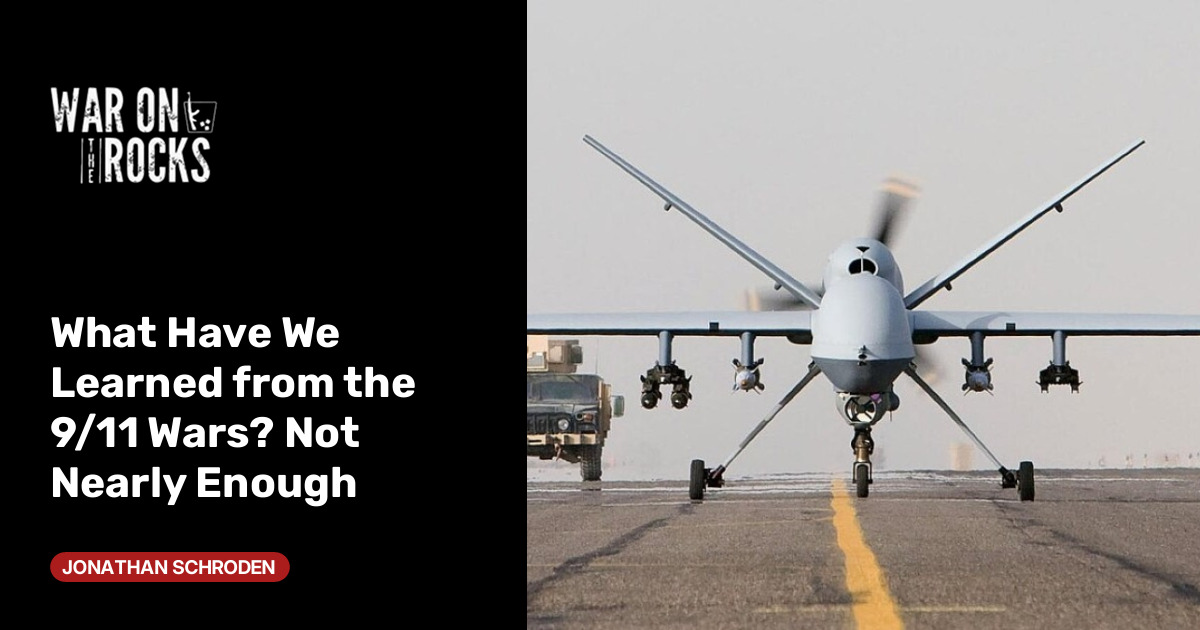
What Have We Learned from the 9/11 Wars? Not Nearly Enough

Editor’s Note: The following article draws on themes from the author’s forthcoming book titled US Counterterrorism Operations in Afghanistan: Jackpots, Dry Holes, and Collateral Damage.Over the next month, the United States will pass two major historical milestones: the five-year anniversary of its withdrawal from Afghanistan and the 25-year anniversary of the terrorist attacks of Sept. 11, 2001. While the latter is likely to receive at least a modicum of respectful remembrance from U.S. leaders and the American public, the former is likely to be ignored by the U.S. government and to escape broader notice.These are painful milestones. Ones that are

War on the RocksWar on the RocksJonathan Schroden17 Aug

They gave me to someone who could not read or write … it would be better if you buried me alive

I was the top student in my university class but when the Taliban took Afghanistan again I was forced to marry and my dreams of being a pilot ended On my last day of school it seemed years of effort were now contained in one small piece of paper. Everyone was happy at graduation, holding our certificates, each of us had a different road ahead. Friends wanted to study medicine, civil engineering or economics. For me, I wanted aviation – to be a pilot. We worked hard, preparing for Kankor – the university entry exam – then came the first delay. Coronavirus reached Afghanistan. Everywhere went into quarantine, our exams were postponed. Continue reading...

The GuardianThe GuardianShabnam5 Aug