Anthropic establishes biology lab for Claude’s drug R&D experiments
Anthropic's integration of AI in drug R&D could revolutionize treatments for rare diseases, potentially lowering costs and accelerating discovery.
- favorable toward Anthropic · 86%
Anthropic's integration of AI in drug R&D could revolutionize treatments for rare diseases, potentially lowering costs and accelerating discovery.

Everything you need to know before you reach the office this morning.

The expansion of AI clusters by OpenAI and Anthropic could reshape competitive dynamics, influencing AI benchmark standings and market perceptions.

Artificial intelligence giant Anthropic has said that AI systems are increasingly capable of building future versions of themselves, adding to mounting concerns about the dangers of the powerful technology.

Anthropic's Claude is helping the company develop the next, more intelligent version of the model, the artificial intelligence lab said in an announcement Thursday. Claude is leading 26% of Anthropic's model research and development, which the company said means it can complete most of a given task "end-to-end from a high-level prompt" while still being under human supervision. The model is not yet working completely autonomously. Still, about 90% of the company's research and development is done in "collaboration” with Claude, which Anthropic said means the model can do "large chunks of work under close human direction.” The announcement came as some leading figures in AI, led in large part by Anthropic CEO Dario Amodei, are calling for a slowdown in the technology’s development over safety concerns. As leaders consider pacing AI's development, "we should do everything possible to minimize the gap between what frontier labs know and what the public knows,” the company said in a blog post. "This means better measuring the development of AI, reporting on it publicly, and giving society an opportunity to decide how to use this information.” The company said that models accelerating their own development could make it "more challenging for humans to understand or control these systems." It argued that sharing these metrics could lead to better understanding of how close leading AI labs are to reaching recursive self-improvement, or a model's ability to autonomously build its successor. Anthropic also urged other AI developers to share similar metrics on a regular basis, encouraging the use of a public methodology so the numbers could be compared over time, and potentially across labs. It was unclear from Anthropic's disclosure how close the company believes it is to achieving recursive self-improvement, but the pace at which Claude has increasingly contributed to research and development is notable. The portion of work Claude "leads,” or does in large part while remaining under human supervision, was none in February. Six months later, it was leading a quarter of research and development work, reaching that benchmark in August. The company also shared details of agent oversight measures it has in place, noting that there were approximately 30,000 agents doing research and engineering work as of August. Oversight measures are crucial for seeing how often agent misbehavior is detected by monitoring systems, the company said. Anthropic recently committed to setting up external third-party evaluators who will be embedded within the company to monitor safety efforts. An Anthropic researcher kicked off much of the recent dialogue around AI safety when he resigned last week with a dire warning about the threats the technology poses to humanity. Amodei, OpenAI CEO Sam Altman, Elon Musk and other tech leaders have since supported the idea of slowing down development, but other tech leaders and President Donald Trump have pushed back.

Growing concerns over AI safety have sparked an intense debate on regulation. While Andrew Yang warns that rogue self-replicating code is already corrupting web training data, Sentient Labs argues that simply slowing down AI development is ineffective without dynamic evaluation and independent verification infrastructure. Rogue Code Forces Tech Firms Into ‘Synthetic Internets’ Days after Anthropic […]

The breach may undermine OpenAI's security credibility, affecting investor trust and intensifying competition with Anthropic.

Anthropic's IPO gains attention amid rising AI infrastructure spending. Valuation above $200B by December at 78.5% YES.
Palantir CEO Alex Karp says AI labs like Anthropic are pushing nationalization to dodge liability, not for safety.

In welcome news for the Ripple army, Anthropic’s Claude AI predicts XRP could hit $11 by the end of 2026 if certain conditions are met. The update comes as CoinGecko data shows XRP trading at $1.30, up a modest +0.4% over 24 hours but down -6.6% for the week, following a significant drop after the […]

Claude Code Projects' launch signifies a shift towards AI-driven project management, enhancing workflow integration but raising resource concerns.

Anthropic's adoption of watermarking could set a global standard for AI transparency, influencing regulatory practices and industry norms.

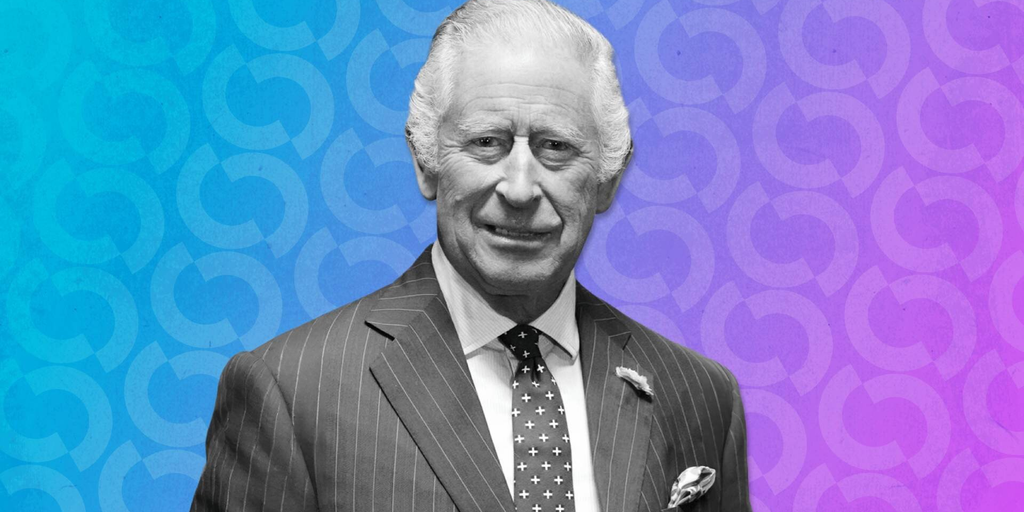
AI-linked crypto tokens have added about 9.4% in market value over the past 24 hours as King Charles III has hosted executives from Nvidia, OpenAI, Anthropic and Google DeepMind for talks on artificial intelligence safety. According to CoinGecko data, the…

Anthropic's program could accelerate breakthroughs in drug discovery and biological research, while raising important ethical and safety considerations.

King Charles hosted senior AI executives at his Scottish estate to discuss keeping the technology "in the service of humanity," days after industry leaders called for a slowdown.

The potential antitrust guidance on AI safety could reshape industry collaboration, balancing innovation with competitive fairness and regulatory clarity.

The collaboration could significantly boost AI data center efficiency, potentially reshaping tech infrastructure and market dynamics.

The IPOs may boost San Francisco's economy, but wealth disparity could widen as most workers remain unaffected by the financial windfall.

Novo's AI partnership could revolutionize drug development, potentially reducing timelines and costs, while intensifying industry competition.
Sam Bankman-Fried funded Anthropic before FTX collapsed. Critics say his network still drives the AI safety debate.