Cubapage 2

Place · 43 articles
Share

Coverage, page 2

page 2 of 3

UNHCR Montenegro Fact Sheet, February 2026

Countries: Montenegro, Cuba, Russian Federation, Serbia, Türkiye, Ukraine, World Source: UN High Commissioner for Refugees Please refer to the attached file. Since March 2022, Montenegro has granted temporary protection (TP) to Ukrainians fleeing the war and hosts one of the largest refugee communities relative to its population in Europe. UNHCR supports the Government to strengthen asylum procedures, improve reception standards and develop a conducive environment for refugees’ socio-economic inclusion. UNHCR supports the authorities to improve statelessness determination procedures and access to socio-economic inclusion of stateless people. HIGHLIGHTS Strengthening asylum procedures UNHCR advocates with national authorities to secure access to asylum procedures for all people in need, further strengthen identification and referral mechanisms, improve the decision-making process and develop inclusion prospects to foster self-reliance of asylum seekers and refugees. Statelessness Montenegro is progressing towards the full implementation of the remaining three of seven statelessness Global Refugee Forum (GRF) pledges, by further enhancing the statelessness determination procedures (SDP), implementing fully functional birth registration procedures for people born in Montenegro and amending relevant legislation to secure access to socio-economic rights for stateless people.

ReliefWebReliefWebUN High Commissioner for Refugees16 Sept

UNHCR Spain Fact Sheet, February 2026

Countries: Spain, Canary Islands (Spain), Colombia, Cuba, Nicaragua, Peru, Syrian Arab Republic, Ukraine, Venezuela (Bolivarian Republic of), World Source: UN High Commissioner for Refugees Please refer to the attached file. In 2025, 36,775 people arrived in Spain by land and sea, 43% less than in 2024. Around 52% arrived through the West Mediterranean route and 48% through the West Africa Atlantic route. Most common nationalities included Mali, Senegal and Guinea among arrivals in the Canary Islands, and Algeria, Morocco and Somalia in the rest of the country. Sea arrivals to the Balearic Islands increased by 24% in comparison to 2024, with more nationals from Somalia and Mali traveling from Algeria. In the Canary Islands, there was a significant rise in the proportion of women arriving by boat, while children continue to represent a substantial share. Also noteworthy is the increase of Sudanese nationals arriving in Ceuta. During the same period, around 144,400 people applied for asylum in Spain, mostly from Venezuela, Mali and Colombia. There was a notable increase in asylum applications from Venezuelans compared to 2024. Meanwhile, around 30,300 people received temporary protection in Spain, mainly Ukrainian refugees.

ReliefWebReliefWebUN High Commissioner for Refugees15 Sept

Reporte de coyuntura: Actualización informativa sobre situación en Cuba (agosto 2026)

Country: Cuba Source: UN Country Team in Cuba Please refer to the attached file. DESTACAMOS ● Los meses de verano concluyeron con récord de cortes eléctricos, que incluyeron días con el 74% de la Isla apagada, y por lo menos cuatro episodios de desconexión del Sistema Eléctrico Nacional. Hasta mayo de 2026, habían dejado de entrar al país 2 millones 667 mil toneladas de combustible, respecto a lo planificado. ● Organizaciones alertan sobre “etapa alarmante” de los impactos humanitarios, que abarcan ya a todos los sectores de la población y no solo a grupos vulnerables. Expertos de la ONU instaron a la comunidad internacional a actuar con rapidez para evitar que Cuba se convierta en una “Gaza silenciosa”. ● Más de 3 millones 500 mil personas están afectadas por el abasto de agua, en su mayoría debido a la falta de bombeo provocada por los cortes eléctricos. Los ciclos de suministro a través de pipas exceden los 60 días en algunas localidades, agravando el riesgo de brotes de enfermedades. ● La mortalidad infantil se ha disparado particularmente en territorios como La Habana (14.2, en contraste con el indicador de 5.3 en el año 2020). Los servicios neonatológicos exhiben un deterioro en cascada, con funcionamiento deficiente de ventiladores pulmonares, incubadoras y otro equipamiento requerido de suministro eléctrico estable. ● Se han incrementado las sanciones en los sectores logístico, minero, energético y de servicios médicos, . Aunque los canales de diálogo entre los gobiernos de Cuba y Estados Unidos se mantienen, autoridades cubanas aseguraron que las negociaciones están estancadas

ReliefWebReliefWebUN Country Team in Cuba14 Sept

Situation Report: Information Update on the Situation in Cuba (August 2026)

Country: Cuba Source: UN Country Team in Cuba Please refer to the attached file. HIGHLIGHTS ● The summer months concluded with record power cuts, which included days with 74% of the island turned off, and at least four episodes of disconnection of the National Electric System. As of May 2026, 2,667,000 tons of fuel had stopped entering the country, compared to what was planned. ● Organizations warn of an "alarming stage" of humanitarian impacts, which already cover all sectors of the population and not just vulnerable groups. UN experts urged the international community to act quickly to prevent Cuba from becoming a "silent Gaza." ● More than 3,500,000 people are affected by the water supply, mostly due to the lack of pumping caused by power cuts. Supply cycles through pipes exceed 60 days in some localities, aggravating the risk of disease outbreaks. ● Infant mortality has skyrocketed particularly in territories such as Havana (14.2, in contrast to the indicator of 5.3 in 2020). Neonatological services exhibit a cascading deterioration, with deficient functioning of pulmonary ventilators, incubators and other equipment requiring a stable electricity supply. ● Sanctions have been increased in the logistics, mining, energy and medical services sectors. Although the channels of dialogue between the governments of Cuba and the United States are maintained, Cuban authorities assured that negotiations are stalled.

ReliefWebReliefWebUN Country Team in Cuba14 Sept

Cuba: Latinoamérica y El Caribe Resumen de Situación Semanal al 11 de septiembre 2026

Countries: Cuba, Colombia, Ecuador, Haiti Source: UN Office for the Coordination of Humanitarian Affairs Please refer to the attached Infographic. CIFRAS CLAVE 3,2M personas en Cuba carecen de acceso seguro al agua, creando riesgos de salud pública 1,9M personas en Haití en inseguridad alimentaria aguda (CIF Fase 4) entre marzo-junio 2026 1,3K personas afectadas por enfrentamientos o confinamiento en el norte de Colombia CUBA: SALUD/AGUA Los socios de salud reportan importantes brotes de rotavirus y norovirus, que presionan a un sistema de salud ya sobrecargado y reducen su capacidad de respuesta. Unos 3,2 millones de personas carecen de acceso a agua segura, y más hogares recurren ahora a fuentes sin tratar. La crisis energética, la escasez de combustible y las fallas crónicas de infraestructura deterioran los servicios de agua, saneamiento e higiene (WASH). UNICEF advierte que estos servicios deficientes aumentan el riesgo de enfermedades transmitidas por el agua, en particular diarreicas entre los niños. La Embajada de Estados Unidos también alertó sobre el aumento de enfermedades diarreicas por el deterioro de los sistemas de agua y electricidad, y el último informe de OPS/OMS identificó las enfermedades transmitidas por agua y alimentos como riesgos prioritarios de salud pública. ECUADOR: DESPLAZAMIENTO El Consejo Noruego para Refugiados (NRC) informó el 8 de septiembre que los ataques contra la educación en las provincias donde opera llegaron a 27 en el primer semestre de 2026, casi la mitad en Guayas y El Oro. Los ataques incluyeron amenazas, disparos, extorsión y asesinatos, afectando a escuelas con casi 19.000 alumnos. El NRC ubica a Ecuador tercero en la región en desplazamiento interno por violencia, detrás de Haití y Colombia. ACNUR y la Defensoría del Pueblo reportan que la violencia del crimen organizado, incluidas amenazas de muerte, extorsión, reclutamiento y asesinatos, ha desplazado a más de 300.000 personas en los últimos tres años, cifra que organizaciones de derechos humanos consideran mayor. El Ministerio del Interior registró 4.882 homicidios entre enero y julio, frente a 5.295 un año antes. HAITÍ: SEGURIDAD ALIMENTARIA Según el Clúster de Seguridad Alimentaria, 5,83 millones de personas, el 52% de la población analizada, enfrentaron inseguridad alimentaria aguda en el segundo trimestre de 2026, incluidas 1,9 millones en Fase 4. La canasta alimentaria nacional subió un 4% entre abril y mayo, y el frijol rojo siguió escaseando en varios departamentos. La violencia armada se ha extendido de Puerto Príncipe hacia Artibonite y Centro, y afecta los mercados, los medios de vida y los servicios esenciales. El desplazamiento interno alcanzó 1,47 millones en mayo, y la zona metropolitana de Puerto Príncipe superó por primera vez las 300.000 personas desplazadas tras los enfrentamientos en Cité Soleil. Los socios de seguridad alimentaria atendieron a 1,9 millones de los 3,5 millones de personas previstas entre enero y junio, dejando a 1,8 millones sin asistencia adecuada. COLOMBIA: DESPLAZAMIENTO Los enfrentamientos entre grupos armados no estatales por el control territorial han desplazado o confinado a más de 1.300 personas en el norte de Colombia. En Montecristo, Bolívar, más de 880 personas de cinco comunidades están confinadas, y los grupos armados han bloqueado el ingreso de alimentos y combustible. En Ituango, Antioquia, los combates desplazaron a 339 personas, que se ubican ahora en Ituango y Valdivia, mientras que 37 familias siguen confinadas en Tarazá desde el 27 de agosto. Otras 301 personas en Medio San Juan, Chocó, están en riesgo de confinamiento, según la Defensoría del Pueblo. En Nariño, una operación militar ampliada en tres municipios cerró una vía pública y dejó a unas 1.500 personas en riesgo de confinamiento, lo que genera preocupación por las restricciones a la movilidad y el acceso humanitario.

ReliefWebReliefWebUN Office for the Coordination of Humanitarian Affairs11 Sept

Cuba: Latin America & The Caribbean Weekly Situation Update as of 11 September 2026

Countries: Cuba, Colombia, Ecuador, Haiti Source: UN Office for the Coordination of Humanitarian Affairs Please refer to the attached Infographic. KEY FIGURES 3.2M people in Cuba facing difficulties in accessing safe water, creating public health risks 1.9M people in Haiti faced IPC Phase 4 (Emergency) levels of food insecurity (March-June 2026) 1.3K people affected by clashes or confinement across northern Colombia CUBA: HEALTH/WATER Health partners in Cuba report significant rotavirus and norovirus outbreaks, which are straining an already overstretched health system and eroding its capacity to respond. An estimated 3.2 million people struggle to access safe water, and more households now rely on untreated sources. The country’s energy crisis, fuel shortages and chronic infrastructure failures are degrading water, sanitation and hygiene (WASH) services. UNICEF warns that failing WASH services raise the risk of waterborne disease, particularly diarrhoeal illness among children. A recent United States Embassy health alert also flagged rising diarrhoeal disease tied to deteriorating water and power systems, and PAHO/WHO’s latest report identified water- and food-borne diseases as priority public health risks. ECUADOR: DISPLACEMENT The Norwegian Refugee Council (NRC) reported on 8 September that attacks on education in the provinces where it works reached 27 in the first half of 2026, nearly half in Guayas and El Oro. The attacks, including threats, shootings, extortion and killings, schools serving nearly 19,000 pupils. NRC ranks Ecuador third in the region for violence-driven internal displacement, behind Haiti and Colombia. UNHCR and Ecuador’s Ombudsperson’s Office report that organized crime violence, including death threats, extortion, recruitment and killings, has displaced more than 300,000 people over the past three years, a figure rights groups say may be higher. The Ministry of the Interior recorded 4,882 homicides from January to July, down from 5,295 a year earlier. HAITI: FOOD SECURITY Per the Food Security Cluster, 5.83 million people, 52 per cent of the population analysed, faced acute food insecurity in the second quarter of 2026, including 1.9 million in Phase 4. The national food basket cost 4 per cent more between April and May, and red beans remained scarce in several departments. Armed violence has spread from Port-au-Prince into the Artibonite and Centre, disrupting markets, livelihoods and essential services. Internal displacement reached 1.47 million in May, and the Port-au-Prince metropolitan area passed 300,000 displaced people for the first time after clashes in Cité Soleil. Food security partners reached 1.9 million of the 3.5 million people targeted from January to June, leaving 1.8 million without adequate assistance. COLOMBIA: DISPLACEMENT Fighting between non-state armed groups over territory has displaced or confined more than 1,300 people across northern Colombia. In Montecristo, Bolívar, over 880 people in five communities are confined, and armed groups have blocked food and fuel from entering. In Ituango, Antioquia, clashes displaced 339 people, who have settled in Ituango and Valdivia, while 37 families have remained confined in Tarazá since 27 August. A further 301 people in Medio San Juan, Chocó, are at risk of confinement, according to the Ombudsperson’s Office. In Nariño, an expanded military operation across three municipalities closed a public road and put roughly 1,500 people at risk of confinement, raising concerns over mobility restrictions and humanitarian access.

ReliefWebReliefWebUN Office for the Coordination of Humanitarian Affairs11 Sept

Panama: ACNUR MCOPA: Newsletter - Conectando Talento y Oportunidades - Nov 2025-Jul 2026

Countries: Panama, Belize, Cuba, Trinidad and Tobago Source: UN High Commissioner for Refugees Please refer to the attached file. Resumen de las principales actividades de la Unidad de Respuestas Sostenibles de la Oficina Multipaís de ACNUR en Panamá. ACNUR, la Agencia de la ONU para los Refugiados, junto con gobiernos, organizaciones socias, empresas y actores de desarrollo, trabajan para proteger a las personas refugiadas y solicitantes de la condición de refugiado y apoyar su capacidad de reconstruir sus vidas y desarrollar su potencial. Este trabajo también contribuye al crecimiento y bienestar de las comunidades que las acogen, impulsando soluciones sostenibles que fortalecen la inclusión y el desarrollo compartido.

ReliefWebReliefWebUN High Commissioner for Refugees10 Sept

A Growing Global Push for Free Education for Every Child

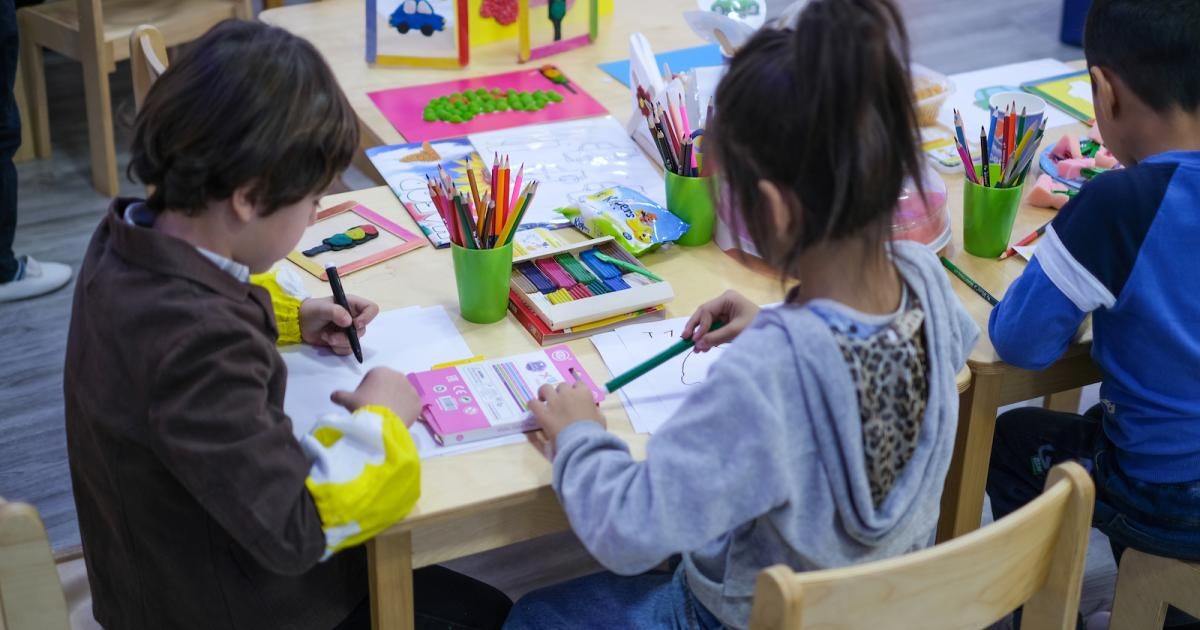
Click to expand Image Students in a pre-primary school classroom in Tashkent, Uzbekistan, 2021.  © 2021 Bede Sheppard / Human Rights Watch The global push to make free education accessible for every child gained momentum, as 81 states met at the United Nations in Geneva on August 31 to September 2 to discuss a proposed treaty that could strengthen children’s right to education and remove financial barriers that keep many out of school. The new optional protocol to the Convention on the Rights of the Child would recognize early childhood care and education as part of the right to education, guarantee at least one year of free public pre-primary education, and strengthen the promise of free public secondary education. The initiative has been led by Sierra Leone, the Dominican Republic, and Bulgaria, which already provide free education for their children from pre-primary through secondary. During the three-day meeting, Guatemala became the 62nd country to publicly support the initiative. However, there were differences about next steps: Some states including Armenia, Azerbaijan, Bulgaria, Chile, Cuba, the Dominican Republic, Ecuador, Georgia, Peru, South Africa, and Uruguay supported moving forward to draft the treaty while others, including Austria, Bangladesh, Belgium, Egypt, and Slovenia, called for more time to consider different options. Children played a central role at the meeting. Child delegates from all five regions shared recommendations based on consultations with more than 80 children worldwide. Tuition-free education is not genuinely free if families still need to pay for transport, uniforms, school materials, and other essential costs, the delegates said. Free pre-primary education gives children a stronger start and children from disadvantaged families a fairer chance to succeed. Free secondary education can change the course of a child’s life by reducing the likelihood of child marriage and opening doors to further education and decent work. For children with disabilities, removing financial and practical barriers can enable them to participate fully and learn alongside their peers. Further consultations will take place before the next formal meeting in October 2027. The Sierra Leone chair called for continued review of the proposals for the treaty and expert advice, while stressing that children should continue to have a meaningful, safe, and inclusive role in the next stages. The momentum now needs to become action. Governments should move this process forward so that millions of children are not left waiting for the education to which they are entitled.

Human Rights WatchHuman Rights WatchHuman Rights Watch9 Sept

Latam Insights: Inside Argentina’s Tax Relief for Exchanges and El Salvador’s Growing Bitcoin Stack

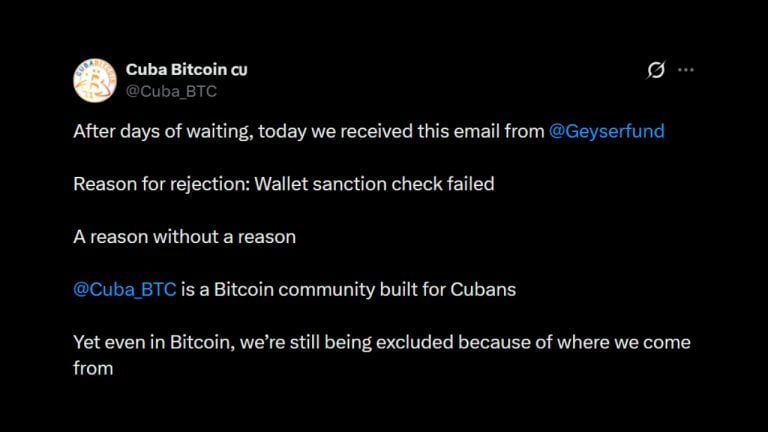
Welcome to Latam Insights, a compilation of the most relevant crypto news from Latin America over the past week. In this edition, Argentina issues tax exemptions to VASPs, Cuba approves reforms to open its economy, and El Salvador keeps adding bitcoin. President Milei Exempts Registered Crypto Exchanges From Argentina’s ‘Cheque Tax’ President Javier Milei has […]

Bitcoin.com NewsBitcoin.com NewsSergio Goschenko21 Jun