Egypt

Place · 188 articles
Share

All coverage

page 1 of 10

Dubai property 2026: India tops international buyer interest, US surges to second

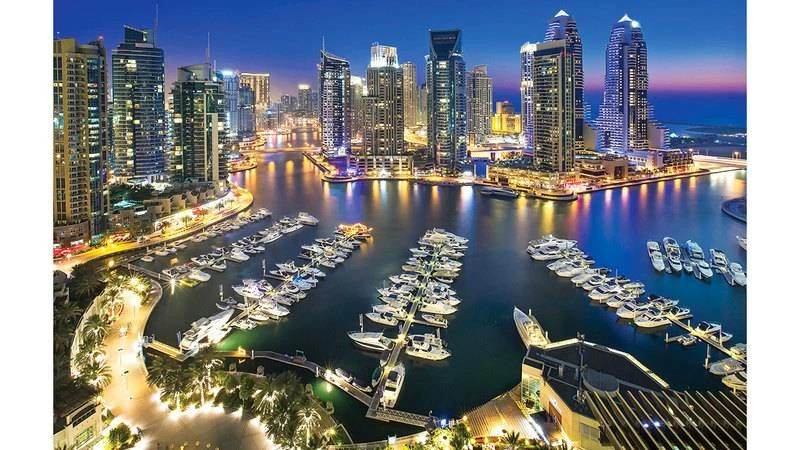
Dubai: An analysis conducted by the real estate platform DXBinteract showed that Indian investors topped the list of international interest in buying properties in Dubai, with a share of 16.3% of the total interest and digital search observed during the period from June to August 2026, while the United States recorded a remarkable jump to occupy second place with a share of 13%. The platform found that America’s second-place ranking on the list represents the highest ranking the United States has ever recorded in its readings, making the rise in American interest the most prominent shift during the analysis period, and an indication of the expansion of the potential demand base for Dubai real estate to include markets that were not ahead in previous rankings. According to the data, the United Kingdom came in third place with 10.7%, while Pakistan was fourth with a share of 5.4%, followed by Saudi Arabia with 4.4%, and then Egypt with 3.7%. Canada came in seventh with a share of 3.5%, followed by Australia with 3%, then France with 2.9%, and Singapore with 2.5%. The top 10 countries collectively accounted for 65.4% of the observed international attention, while the top 20 countries accounted for 80.4%, and the remaining 19.6% was distributed among the rest of the markets. Fatih Al-Masdi, founder of the real estate platform, DXBinteract, said that the Dubai Land Department provides accurate and reliable data on transactions, prices, sizes, areas and projects, but it does not currently publish a public and updated database that allows for the classification of actual transactions according to the nationality of the buyer. Fatih Al-Masdi, founder of the real estate platform, DXBinteract. Picture credit: Supplied Al-Masdi added that this deficiency makes some of the rankings circulating about “the most purchasing nationalities” unverifiable at the level of the entire market. He explained that “the reports of some real estate companies regarding the nationalities of buyers mainly reflect the mix of their clients, not the entire market, as some companies specialise in certain clients.” Al-Masdi stressed that the analysis of search results, digital interest, and the distribution of platform visits by country provides, in his estimation, the best proactive indicator available for monitoring the source of international interest, in the absence of official, public, and up-to-date data on the nationalities of buyers. He stressed that these indicators are not a substitute for transaction data, but rather measure the stage that precedes it, when the potential buyer begins to research, compare and explore projects and prices. He said that “the high levels of international interest in Dubai real estate reflect the existence of a base of potential buyers that could turn into actual demand during the fourth quarter of 2026.” He added: "This data helps us identify the markets from which future demand may come, while actual transaction data remains the decisive indicator of whether interest will turn into buying." He explained that a decrease in a country’s digital presence should be interpreted as a decrease in detectable online interest, and not as a definitive judgment on the actual size of demand or the number of transactions. Interest from outside the country The DXBinteract real estate platform's analysis covers the period from June to August 2026, excluding domestic demand from within the UAE. The figures reflect the distribution of digital interest by country for potential demand, not data on confirmed transactions or buyer nationalities. Therefore, the published percentages reflect each country's share of the total interest coming from outside the UAE, and do not represent its share of total platform visits, including visits from the local market.

MBMobile BusinessAhmed Al-Damardash16h ago

AI in healthcare, minus the technical fog

Healthcare teams need to understand AI before they can use it responsibly. The AI in Healthcare program helps healthcare professionals understand, evaluate, and responsibly implement AI, with no technical background required. Participants learn prompt engineering and AI readiness assessment, work hands-on with tools including ChatGPT, and complete a capstone project designing an AI-based solution to […]

EEEnterpriseAM EgyptThe Enterprise Company18h ago

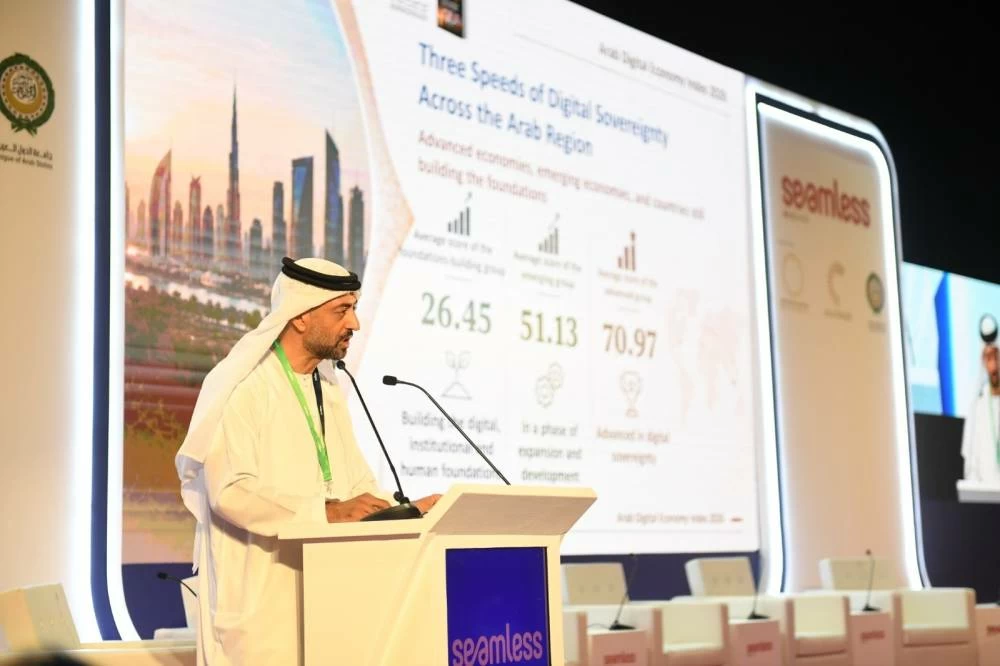
UAE tops Arab Digital Economy Index 2026

Dubai: The UAE has topped the Arab Digital Economy Index 2026, whose results were announced on Tuesday as Seamless Middle East 2026 opened in Dubai under the patronage of H.H. Lt. General Sheikh Saif bin Zayed Al Nahyan, Deputy Prime Minister and Minister of the Interior, and Supreme President of the Arab Federation for Digital Economy. Held at Dubai World Trade Centre from 22nd - 24th September, the event brings together the payments, fintech, banking, digital commerce, retail, identity and logistics sectors, with more than 25,000 participants, around 800 speakers and 750 exhibitors. The opening session drew Arab and international diplomatic, government and institutional representatives, including ambassadors and delegates from Egypt, Oman, Qatar, Lebanon, Mauritania, Tunisia, Syria, Djibouti and Palestine, alongside Russian representatives and officials from international and regional organisations. UAE government, economic, financial and academic officials also attended, along with representatives of the finance, energy, customs and economic development sectors, banks, chambers of commerce, research and innovation centres and international organisations. The opening programme featured an address by Dr. Ali Mohammed Al-Khouri, Chairman of the Board of Directors of the Arab Federation for Digital Economy and Advisor to the Council of Arab Economic Unity, followed by the launch of the Arab Digital Economy Index 2026. Officials from the Sharjah Research, Technology and Innovation Park and the UAE Banks Federation also addressed the event before delegates toured the exhibition. The index assesses digital-economy performance across a framework covering institutions, infrastructure, workforce, digital government, innovation, knowledge and technology, market forces, capital-market growth and sustainable development. The UAE led the highest-performing group, which also included Saudi Arabia, Bahrain, Qatar and Oman. The second group, comprising countries with medium levels of performance, included Jordan, Kuwait, Morocco, Egypt, Tunisia and Algeria. The third group, representing countries in the process of building their digital foundations, comprised Lebanon, Mauritania, Iraq, Djibouti, Comoros, Libya, Palestine, Syria, Sudan, Somalia and Yemen. The results showed stronger progress across the Arab world in digital infrastructure, government services and cybersecurity, while wider gaps remained in innovation, the data economy, research and development, and the ability to translate digital investment into productivity and economic value. Al-Khouri said the latest edition of the index places digital sovereignty at the heart of discussions on the future of Arab economies, as data, artificial intelligence, cloud infrastructure, semiconductors and cybersecurity become increasingly important to countries' economic and institutional capabilities. Commenting on the UAE's ranking, he said it reflects years of sustained investment in digital infrastructure, government services, cybersecurity, artificial intelligence and the knowledge economy, establishing the country as a leading model for building an innovation-driven economy that translates technological advancement into higher productivity and economic value. Al-Khouri thanked the UAE for supporting the development of the Arab digital economy and expressed appreciation to President His Highness Sheikh Mohamed bin Zayed Al Nahyan for his support and patronage of the Arab Digital Economy Vision, which he said has helped advance joint Arab action in the sector. He also praised the continued support of H.H. Lt. General Sheikh Saif bin Zayed Al Nahyan, saying his supportive role has helped transform several Arab initiatives from concepts and strategies into practical programmes, platforms and projects. The Arab Digital Economy Vision was launched in Abu Dhabi in 2018 with the support and patronage of President His Highness Sheikh Mohamed bin Zayed Al Nahyan and was subsequently adopted at the Arab leaders' level in 2022 as a framework for regional cooperation in the digital economy and technological transformation. The Arab Digital Economy Index is among the tools developed by the federation to measure progress, identify gaps and determine future priorities. Seamless Middle East 2026 features three days of discussions on fintech, digital payments, e-commerce, artificial intelligence, data analytics, cybersecurity and emerging technologies, bringing together government entities, financial institutions, technology companies, investors and experts from the region and beyond.

MBMobile BusinessWAM22 Sept

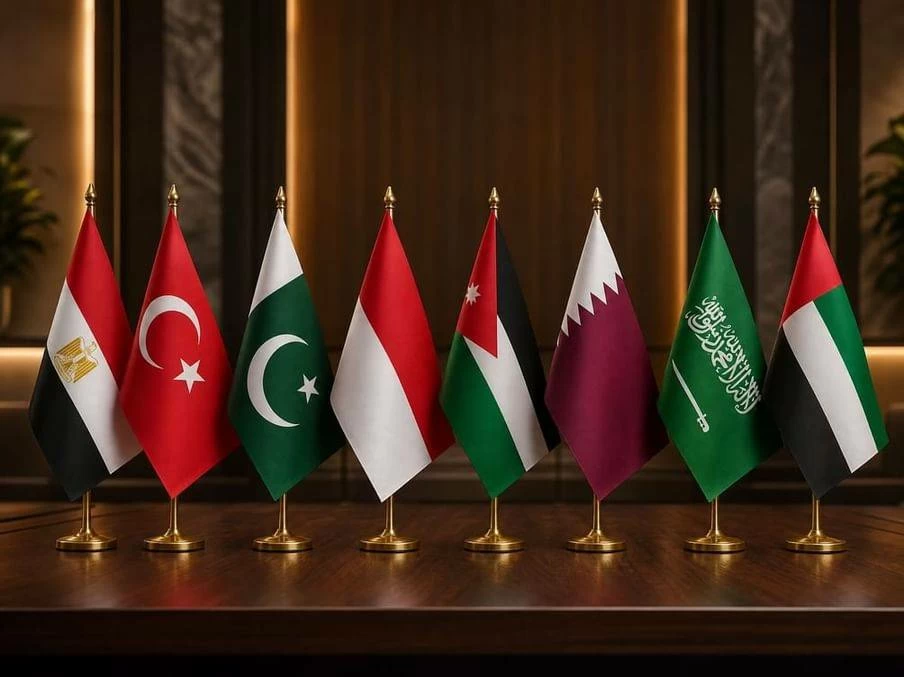
Joint Statement by Ministers of Foreign Affairs of UAE, KSA, Qatar, Jordan, Indonesia, Pakistan, Türkiye, Egypt

New York - The Ministers of Foreign Affairs of the Arab Republic of Egypt, the State of Qatar, the Hashemite Kingdom of Jordan, the United Arab Emirates, the Republic of Indonesia, the Islamic Republic of Pakistan, the Republic of Türkiye, and the Kingdom of Saudi Arabia met in New York on September 21, 2026, on the margins of the 81st Session of the United Nations General Assembly. The Ministers express deep concern over the continued humanitarian suffering in Gaza and call upon Israel to immediately fulfil its outstanding commitments under the First Phase of the Comprehensive Plan, including by ensuring the immediate, safe and unhindered delivery of humanitarian assistance and Early Recovery supplies, and facilitating the rehabilitation of critical infrastructure. They stress the imperative of preserving the ceasefire and ending all violations. The Ministers stress that the Road Map constitutes an integral part of the Comprehensive Plan and provides the implementation framework for advancing its Second Phase, including decommissioning alongside full Israeli withdrawal, the deployment of the International Stabilization Force (ISF), the assumption by the National Committee for the Administration of Gaza (NCAG) of its responsibilities throughout the Gaza Strip, and the launch of early recovery and reconstruction across Gaza. They call on all parties to fulfil their respective commitments in good faith and without delay. The Ministers reiterate their categorical rejection of any measures aimed at the expulsion or the forced displacement of the Palestinian people from their homeland or attempts to alter the territorial or demographic character of the Occupied Palestinian Territory. They deplore in this context the illegal measures aimed at consolidating Israeli control and annexation, including the accelerating settlement expansion, land confiscation, demolition of Palestinian homes, settler violence and terrorism, and forced displacement, and called for their immediate reversal. They express grave concern over measures undermining the historical and legal Status Quo of the Muslim and Christian holy sites in Jerusalem. The Ministers welcome the recent measures taken by the United Kingdom, as well as broader national and European efforts, in response to illegal Israeli settlement activity, including measures to halt trade with illegal Israeli settlements and call for further effective measures to end settlement expansion and ensure accountability for settler violence. They also emphasise that Gaza must remain an integral part of the Palestinian territory and reaffirm that the implementation of the Comprehensive Plan must contribute to the reunification of the West Bank, including East Jerusalem, and the Gaza Strip, and to a credible and irreversible pathway towards the exercise of the Palestinian people's right to self-determination and the realization of a sovereign, viable, and independent Palestinian State with East Jerusalem as its capital, through the implementation of the two-State solution. The Ministers commend the leadership of President Donald J. Trump and underscore the indispensable role of the United States in ensuring the implementation of the Comprehensive Plan. They call for sustained and active US engagement to ensure that all parties, including Israel, fulfil their commitments and obligations and to overcome obstacles to the implementation of the Road Map. They stress that tangible progress on the ground will strengthen the credibility of the Board of Peace and the authority of the plan and create deeply needed momentum. The Ministers reaffirm their readiness to continue working collectively with the United States, the Board of Peace, the Palestinian Authority and all relevant parties to advance the full implementation of the Comprehensive Plan and its Road Map, alleviate the suffering of the Palestinian people, fulfil their right to self-determination and independent statehood and achieve just, lasting and comprehensive peace in the region.

MBMobile BusinessWAM22 Sept

UNHCR Returns to Syria Regional Update - (September 2026)

Countries: Syrian Arab Republic, Egypt, Iraq, Jordan, Lebanon, Türkiye Source: UN High Commissioner for Refugees Please refer to the attached file. REGIONAL OVERVIEW As of 31 August 2026, an estimated 1.8 million Syrians had returned from neighbouring countries, alongside over 2 million internally displaced persons (IDPs) who returned to their areas of origin. Return movements continued across the region, although patterns and volumes varied by operation. This edition focuses on the role of cash assistance in supporting voluntary return and reintegration. Across host countries and inside Syria, cash assistance helps refugees and returnees address practical barriers before departure, during movement and after arrival, including transportation, documentation, baggage, food, shelterrelated costs and other immediate household needs. Cash assistance is one part of UNHCR’s broader protection and durable solutions response. It complements counselling, legal assistance, information provision, protection monitoring, in-kind support, referrals and community-based services. It is not designed as an incentive to return; rather, it supports refugees and returnees who have already made, or declared, an informed and voluntary decision to return.

ReliefWebReliefWebUN High Commissioner for Refugees22 Sept

Oscars: Egypt Selects Abu Bakr Shawky’s ‘The Stories’ for International Feature Race

Abu Bakr Shawky’s drama “The Stories” — which is inspired by how the director’s Egyptian father and Austrian mother began their love affair as pen pals — has been selected as Egypt’s entry for the Academy Award for best international feature film. When Shawky’s father Ahmed was an aspiring pianist in Cairo in 1967, he […]

VarietyVarietyNvivarelli22 Sept
  • neutral toward Oscars · 99%

DTM Sudan Displacement and Return Snapshot - Update 9 (20 September 2026)

Countries: Sudan, Central African Republic, Chad, Egypt, Ethiopia, Libya, South Sudan, Uganda Source: International Organization for Migration Please refer to the attached file. The Sudan Displacement and Return Snapshot includes information on internally displaced persons (IDPs) and returnees, based on data from over 13,000 locations, 185 localities, and all 18 states in Sudan. Main Findings An estimated 8,583,274 internally displaced persons (IDPs) were recorded across 185 localities in all 18 states. An estimated 5,145,165 returned individuals were recorded across 77 localities in nine states. Eighty-two per cent of returnees moved back from internal displacement, while 18 per cent returned from abroad. Approximately half of IDPs (55%) and returnees (50%) were children under 18 years old. Key Trends The number of IDPs decreased by 26 per cent compared to the highest-recorded displaced population and by approximately one per cent compared to the previous month. The number of returnees increased by four per cent compared to the previous month. For further information, see the DTM Methodological Note and the DTM Sudan Interactive Dashboard.

ReliefWebReliefWebInternational Organization for Migration22 Sept