Ethiopiapage 3

Place · 67 articles
Share

Coverage, page 3

page 3 of 4

The De-Dollarization Plumbing Nobody is Talking About $DXY

While social media debates whether the dollar crashes overnight or dominates forever, a fundamental structural rewiring is quietly occurring. Sovereign nations are actively refinancing dollar denominated loans directly into Chinese yuan. This is not a sudden crash of the greenback, but a gradual bypass of the Western financial architecture. Who Is Doing This? The blueprint crystallized when Kenya finalized the conversion of its Chinese Standard Gauge Railway (SGR) loans converting roughly $3.5b to $5b from USD to RMB. Kenya shifted from floating Western benchmark rates (SOFR) to China’s Loan Prime Rate (LPR), slicing interest rates nearly in half and saving an estimated $215M to $250M annually. Following Kenya’s execution, Ethiopia entered bilateral agreements with the People’s Bank of China (PBOC) to restructure debt treatment, set up RMB trade settlements, and integrate its banks into CIPS (China's Cross-Border Interbank Payment System). Other debt distressed borrowers holding heavy Chinese bilateral loans including Zambia, Mozambique, and Sri Lanka are exploring or initiating similar bilateral currency swaps and redenomination models. How Does This Actually Affect the U.S.? These nations aren't dumping existing dollar balances. However, they are eliminating future demand for them. The Closed-Loop Financial Rail: When a country owes AMEX:USD , it must clear payments through New York correspondent banks and SWIFT. Redenominating debt into RMB cuts Western rails out entirely. The borrower sells raw commodities directly to China, earns RMB, and uses that RMB to service Chinese infrastructure debt via CIPS. The transaction never touches a U.S. bank or Wall Street clearinghouse. Blunting Sanctions Leverage: The primary enforcement mechanism of U.S. foreign policy has long been the threat of cutting off access to the dollar clearing system. As developing nations establish parallel, non-dollar debt and payment circuits, the coercive leverage of secondary financial sanctions weakens. Erosion of Passive Dollar Demand: Foreign central banks historically held massive foreign exchange cushions in U.S. Treasuries because global debt had to be paid in dollars. Redenominating external sovereign liabilities reduces the structural necessity to hoard dollar reserves over the coming decades. Hard Data to Track (Beyond Central Bank Gold Accumulation) While foreign central banks hoarding physical gold at multi decade records remains a visible sign of reserve diversification, the real operational plumbing shows up in institutional data. SAFE Cross Border RMB Share: Tracks the proportion of China’s own external trade and cross-border payments settled in yuan versus dollars. It has crossed 52%, with H1 cross-border trade settlements in RMB up over 31% year-over-year. A decade ago, this was near zero. U.S. Treasury TIC Data (Official vs. Private Divergence): Recent Treasury International Capital (TIC) releases show a clear structural split. Foreign private investors (hedge funds and asset managers capturing high nominal yields) continue buying, while foreign official accounts (central banks) frequently register net monthly outflows. Foreign states are no longer passively absorbing U.S. deficit issuance at historical rates. CIPS Network Trajectory: Clearing volume on China’s alternative to SWIFT has accelerated past an annualized $25T+ equivalent, connecting nearly 1,800 participating institutions across over 100 countries. Panda Bond Issuance: Foreign sovereign and supranational issuers tapping China's domestic bond market to borrow directly in RMB have pushed cumulative outstanding volume beyond RMB 500 billion, locking in 2 to 3% yields rather than issuing dollar debt. What Could Cause This to Speed Up? Aggressive Secondary Sanctions Overreach The primary accelerator of de-dollarization is the weaponization of the dollar itself. If the U.S. imposes broad secondary sanctions on major non-aligned nations (e.g., sanctioning Indian, Turkish, or Emirati banks for trading with China or Russia), it forces neutral countries to preemptively construct non-dollar settlement rails to protect their own trade flows. "Higher for Longer" U.S. Interest Rates The math behind Kenya and Ethiopia’s debt conversion was straightforward: paying 7.5% on floating USD loans versus 3% on Chinese RMB loans. If stubborn U.S. inflation or surging deficit supply forces U.S. yields back up, dollar debt service becomes unsustainable for emerging markets. Borrowers will actively demand debt conversion into lower-yielding currencies simply to avoid default. Official Pricing of Key Commodities Outside USD The petrodollar is the bedrock of non-discretionary dollar demand. If major energy or commodity exporters (such as Saudi Arabia, the UAE, or Brazil) move from settling bilateral volumes in local currencies to officially invoicing and benchmarking raw materials in yuan or multi currency baskets, global buyers will no longer need to hold massive structural dollar cushions. TGtg!

TITradingView Ideas15 Sept

Ethiopia: Emergency Medical Teams experts from three regions strengthen multidisciplinary approaches to outbreak response

Country: Ethiopia Source: World Health Organization Around 30 participants and experts from Africa, the Eastern Mediterranean Region, and Europe gathered in Addis Ababa, Ethiopia, for a four-day workshop designed to strengthen multidisciplinary collaboration for outbreak response. Provided by the Robert Koch Institute (RKI), with technical and operational support from the World Health Organization (WHO), the workshop was organized within the framework of the Emergency Medical Teams (EMT) initiative. It brought together professionals from diverse fields and backgrounds, creating a valuable platform to exchange experiences, build trust, and explore how different technical capacities can work together to address increasingly complex public health emergencies. Throughout the workshop, participants shared lessons learned from responding to disease outbreaks in different contexts. Discussions highlighted the importance of collaboration and coordination among various disciplines and organizations while providing an opportunity for experts to learn from one another's experiences and approaches. The workshop explored the broad range of capacities required for effective outbreak response and examined how these different areas of expertise can complement each other during emergencies. Participants discussed the value of integrating technical, operational, environmental and social perspectives to support more comprehensive and effective responses. Practical learning formed an important component of the programme. At the Regional EMT Training and Knowledge Hub, participants took part in hands-on water filtration and water quality testing exercises. These activities demonstrated the critical role of environmental health interventions in outbreak settings and provided an opportunity to apply technical knowledge in realistic operational scenarios. Sessions also focused on the contributions of anthropology and the One Health approach to outbreak preparedness and response. Through interactive and practical exercises, participants explored how social, cultural, environmental, animal and human health factors intersect and influence disease transmission. The discussions emphasized the importance of understanding communities, behaviours and local contexts while addressing infectious disease and zoonotic outbreaks. A significant portion of the workshop was dedicated to strengthening the outbreak response network and identifying ways to enhance future collaboration. Participants examined barriers and enabling factors that influence multidisciplinary cooperation and discussed practical actions to foster stronger partnerships, information sharing and coordinated responses across regions and sectors. A defining feature throughout the workshop was its focus on looking beyond clinical care and recognizing outbreak response as a comprehensive, multidisciplinary effort. Participants were encouraged to think beyond traditional emergency response models and explore how different capacities can be connected to achieve better outcomes during public health crises. “Effective outbreak response requires much more than clinical expertise. It depends on strong collaboration across disciplines, sectors and regions. This workshop provided a valuable opportunity to build trust, strengthen professional networks and better understand how diverse capacities can work together to respond to increasingly complex public health emergencies,” said Senait Tekeste, Acting Team Lead for Emergency Preparedness and Response (EPR), WHO Ethiopia. The workshop strengthened regional partnerships and reinforced the importance of trust, collaboration and shared learning in outbreak preparedness and response. The networks established and strengthened during the event are expected to support more coordinated, effective and resilient responses to infectious disease outbreaks in the future. Media contacts Alemtsehay Zergaw Gebremichael Communications Officer WHO Ethiopia Email: gebremichaela@who.int

ReliefWebReliefWebWorld Health Organization15 Sept

Ethiopia: Improved IPC and WASH facilities make healthcare safer at Moyale hospital

Country: Ethiopia Source: World Health Organization Moyale - Located along the Ethiopia–Kenya border, Moyale Hospital provides essential health services to a catchment population of more than three million people. Its strategic location and role as a Point of Entry health facility make it important not only for routine healthcare delivery, but also for the prevention, detection and management of public-health threats that could spread across borders. For years, however, interruptions in the hospital’s water supply, inadequate sanitation and handwashing facilities, and weaknesses in healthcare-waste management made it difficult for healthcare workers to consistently maintain appropriate infection prevention and control standards. To address these priority gaps, the World Health Organization (WHO Ethiopia), with financial support from the Government of Japan, invested approximately USD 42,000 to improve Infection Prevention and Control (IPC) and Water, Sanitation and Hygiene (WASH) systems at the hospital. The support focused on practical infrastructure improvements that directly affect the safety and dignity of healthcare workers, patients and caregivers. Two staff toilet blocks were rehabilitated, providing hospital personnel with safe and functional sanitation facilities. Damaged water pipelines across the hospital compound were repaired, helping improve the reliability of water services in key clinical and patient-care areas. New handwashing facilities were installed, and existing sanitation facilities were improved to support better hand hygiene and reduce the risk of healthcare-associated infections. Healthcare-waste management was another priority. The hospital’s existing incinerator was rehabilitated, and a new ash pit was constructed to support the safer treatment and disposal of infectious healthcare waste in accordance with IPC standards. Together, these improvements are enabling healthcare workers to maintain a cleaner and safer environment while strengthening the hospital’s readiness to manage infectious-disease risks. One of the most visible improvements is a newly constructed laundry facility with eight washing compartments, conveniently located near the patient wards. The facility provides caregivers—many of whom remain at the hospital for several days while supporting hospitalized relatives—with access to clean water and a safe, dedicated place to wash clothing and bedding. “This has made life easier for us. I came here to support my daughter. When someone is sick, you want to focus on helping them get better. Having a proper place to wash clothes near the ward makes a big difference.” Ms Erkoki at Moyale Hospital Near the new facility, an elderly grandmother carefully washes clothes while caring for her hospitalized grand child. Previously, caregivers often struggled to find an appropriate place to wash essential items during their stay at the hospital. Her experience demonstrates that investments in IPC and WASH do more than improve infrastructure. They also create a safer, cleaner and more dignified environment for patients and the family members who care for them. Strengthening preparedness at a critical border facility During the handover ceremony, Innocent Komakech, WHO Hub Coordinator, representing WHO Ethiopia Representative, emphasized that access to clean water, sanitation, hand hygiene and safe healthcare-waste management is fundamental to quality healthcare as well as safety of the health care workers, care givers and the community. These measures are among the most effective ways to reduce healthcare-associated infections, protect healthcare workers and patients, and strengthen health facilities’ preparedness for disease outbreaks and other public-health emergencies. Moyale Hospital Medical Director Dr Girma Hussen welcomed the improvements, noting that water interruptions, inadequate sanitation and healthcare-waste-disposal challenges had affected patient care and staff safety for several years. He thanked WHO and the Government of Japan for addressing priority infrastructure gaps and highlighted the need for continued investment in the hospital’s isolation capacity and preparedness for emerging infectious-disease threats. Representatives of the Oromia Regional Health Bureau and local authorities also recognized the commitment of the hospital’s leadership and staff to improving healthcare quality despite longstanding infrastructure challenges. For Moyale Hospital, the completed work represents more than an infrastructure upgrade. It is an investment in safer healthcare, improved working conditions, stronger infection prevention and greater dignity for patients and caregivers. As Moyale continues to serve communities along the Ethiopia–Kenya border, the strengthened IPC and WASH systems will help reduce infection risks and improve the hospital’s capacity to prevent and respond to public-health threats. Through financial support from the Government of Japan under the JSB Fund, WHO continues to work with the Government of Ethiopia and regional and local health authorities to strengthen health systems, improve quality of care and build resilient healthcare facilities capable of preventing, detecting and responding to public-health emergencies.

ReliefWebReliefWebWorld Health Organization15 Sept

World: Multi-country outbreak of mpox, External situation report #69 - 14 September 2026

Country: World Source: World Health Organization Please refer to the attached file. Highlights • WHO conducted a global mpox rapid risk assessment in August 2026; the overall global public health risk associated with the mpox multi-country outbreak was again assessed as moderate. • WHO continues to consider the ongoing multi-country mpox outbreak a graded emergency, with new outbreaks reported in multiple countries and over a thousand confirmed cases reported every month. All countries and partners are thus strongly encouraged to sustain surveillance and notification for mpox, along with coordinated preparedness and response activities in all technical areas in line with WHO guidance. • The WHO Director-General’s standing recommendations on mpox issued under the provisions of the International Health Regulations (2005) have, therefore, been extended until August 2027. • A global multi-partner initiative to improve access to mpox vaccines was launched on 27 August 2026 in Addis Ababa, Ethiopia. The initiative creates a new long-term mechanism under the established International Coordinating Group (ICG) on Vaccine Provision for countries to request mpox vaccines for outbreak response. • Transmission of mpox continues to affect key populations largely through sexual transmission, often followed by household spread and community outbreaks. All clades of monkeypox virus (MPXV) continue to circulate. • In July 2026, 32 countries across four WHO regions reported 1370 confirmed mpox cases, including seven deaths (case fatality ratio [CFR] 0.5%). About three-quarters of these cases were reported in the WHO African Region. • In July 2026, Madagascar, Angola, China, the Democratic Republic of the Congo and Kenya reported the most cases. • In July 2026, the WHO African region reported more confirmed cases than in June, while the Region of the Americas, Western Pacific, European, and South-East Asia regions reported fewer cases. The Eastern Mediterranean Region reported no confirmed cases in July 2026, like in June. • Eleven countries in Africa have reported active transmission of mpox in the last six weeks (6 July – 16 August 2026), with 1153 confirmed cases, including seven deaths (CFR 0.6%). Madagascar, Angola, Kenya, the Democratic Republic of the Congo and Cameroon reported the highest number of cases during this period. • Two countries, Chile and Hungary, have reported mpox due to clade Ib MPXV for the first time. • Czechia, France, Germany, Ireland, Italy, the Kingdom of the Netherlands, Portugal, Switzerland, and the United Kingdom of Great Britain and Northern Ireland (hereafter “the United Kingdom”) have reported community transmission of clade Ib MPXV, including among men who have sex with men.

ReliefWebReliefWebWorld Health Organization15 Sept

UNHCR South Sudan Thematic Brief - Multidimensional poverty of refugees and host communities

Countries: South Sudan, Central African Republic, Democratic Republic of the Congo, Ethiopia, Sudan Source: UN High Commissioner for Refugees Please refer to the attached file. Key messages The Multi dimensional Poverty Index (MPI) measures deprivation in education, health, and living conditions and provides a comprehensive picture of well-being. Newdataon refugees in South Sudan allows comparison with host communities, and in turn enables policy discussions to address the drivers of poverty. Refugees in South Sudan are characterized by a high level of multi dimensional poverty. Refugees in the Northern part of the country are slightly better off than their hosts. The results show that almost the entire population–both refugees and hosts–is either poor or vulnerable to falling into poverty. The three dimensions—education, health, and living conditions—equally contribute to the multi dimensional poverty. Vulnerable groups such as children, women and girls as well as households with children under 5 years old are more likely to face multidimensional poverty. There is a strong statistical association between multi dimensional poverty and mental health problems among refugees, along side reduced self-efficacy (belief in one’s ability to achieve goals).This suggests the possible existence of a psychological poverty trap. Deprivation fuels poor mental health and low self-confidence, which in turn limit resilience, livelihood engagement, and the capacity to escape from poverty. Evidence from other contexts shows that combining economic and psychological support can produce stronger results than either approach alone. The alarming situation reflects the conditions that prevailed before the outbreak of war in Sudan, which has significantly increased the number of refugees and exacerbated an already fragile humanitarian context. With ongoing reductions in humanitarian aid, the situation is deteriorating further, and there is a high risk that conditions will continue to worsen. As a matter of fact, humanitarian aid plays a crucial role in sustaining refugees. The recent humanitarian cuts will lead to decreased food assistance and compromised health care and education services. Consequently, this is likely to exacerbate poverty among refugees as more than 75 percent of refugees in the South and 50 percent of those in the North rely on humanitarian assistance. The international community needs to step up support for refugees and their communities. Sustainable responses require partnerships, financing, and national leadership. South Sudan’s Global Refugee Forum commitments prioritize socioeconomic inclusion, responsibility-sharing, and regulatory reforms, supporting a shift from short-term aid to long-term development to reduce poverty and foster self-reliance. This shift advocates for development interventions from the onset of crisis to enhance integrative approaches and services for both refugees and host communities, promoting resilience and self-reliance.

ReliefWebReliefWebUN High Commissioner for Refugees15 Sept

Sudan: Eastern Africa: Regional Cash and Voucher Assistance Overview (April - June 2026)

Countries: Sudan, Burundi, Ethiopia, Kenya, Rwanda, Somalia, South Sudan, Uganda Source: UN Office for the Coordination of Humanitarian Affairs Please refer to the attached Infographic. Cash and Voucher Assistance (CVA) in Eastern Africa reached 4.6 million people with US$193.9 million across seven countries in the second quarter of 2026, up from 2.3 million people and US$87.3 million across five countries in the first quarter. Sudan, Ethiopia, South Sudan and Somalia accounted for 91 per cent of transfers, reflecting high humanitarian needs in protracted crises. Multi-Purpose Cash Assistance (MPCA) and Food Security and Livelihoods accounted for 90 per cent of transfers, highlighting the role of flexible cash in addressing immediate and broader needs. National NGOs comprised nearly half (46 per cent) of implementing organizations, advancing localization. Cash-in-hand remained the main delivery mechanism at 54 per cent, while bank transfers and mobile money each accounted for 19 per cent, highlighting the importance of reliable, accessible and context-appropriate payment systems. At the same time, insecurity and access constraints in Sudan and South Sudan, liquidity shortages in northern Ethiopia, and gaps in registration, interoperability and coordination continue to constrain the timely and effective delivery of assistance. As humanitarian needs remain high and resources increasingly constrained, maintaining the scale and effectiveness of CVA will depend on more flexible and predictable financing, stronger delivery systems and the ability to act earlier ahead of predictable shocks. Click here to access the interactive Regional Cash and Voucher Assistance Dashboard

ReliefWebReliefWebUN Office for the Coordination of Humanitarian Affairs14 Sept

Kenya: UNHCR Regional Bureau for Eastern and Southern Africa | Consolidated Regional Community Feedback Analysis Report: January - March 2026

Countries: Kenya, Burundi, Ethiopia, Rwanda, Somalia, South Sudan, Sudan, Uganda Source: UN High Commissioner for Refugees Please refer to the attached file. In the first quarter of 2026 (January to March), eight (8) country operations (Burundi, Ethiopia, Kenya, Rwanda, Somalia, Sudan, South Sudan and Uganda) from the Regional Bureau for Eastern and Southern Africa (RBESA) actively collected and analyzed community feedback to better understand the priorities, concerns and information needs of forcibly displaced and stateless populations. Community feedback continues to play a critical role in informing protection responses, programme adjustments and accountability efforts across the region. The report does not capture feedback from the former Southern Africa Bureau, as bilateral engagements on taxonomy alignment and data integration continued during this reporting period.

ReliefWebReliefWebUN High Commissioner for Refugees10 Sept

Rising Tigray Tensions Test African Union

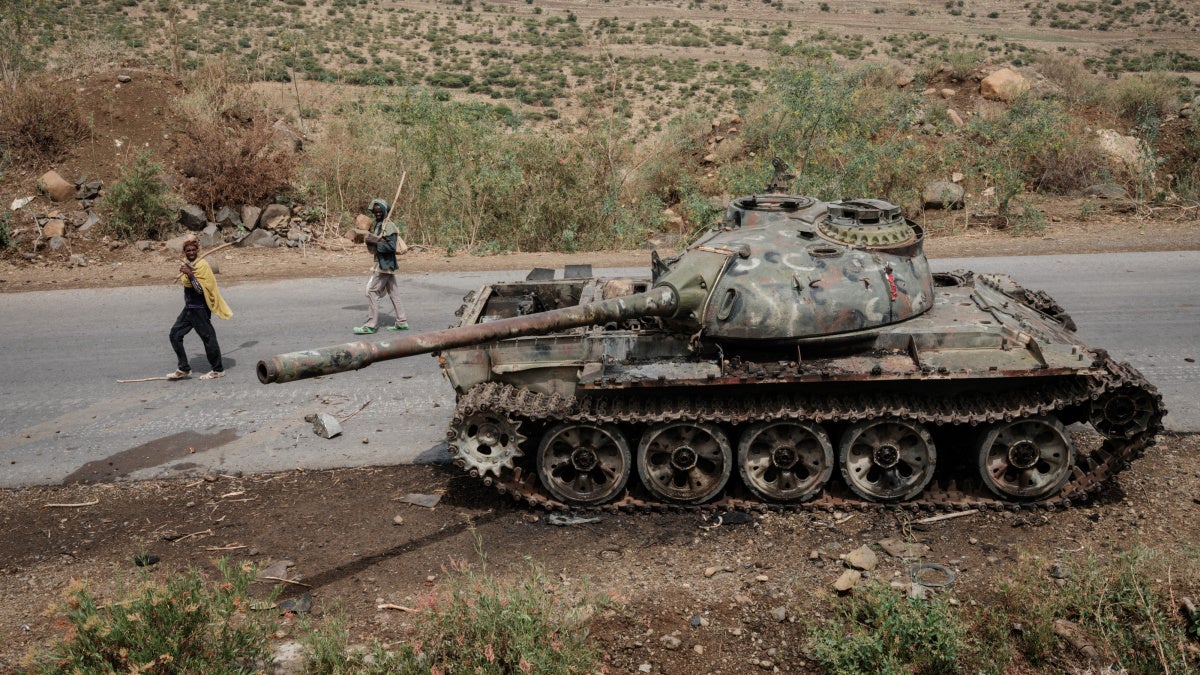
Click to expand Image Farmers walk past an alleged Eritrean army tank abandoned in Dansa, southwest of Mekele in Tigray region, Ethiopia, June 20, 2021. © 2021 Yasuyoshi Chiba/AFP via Getty Images Barely a week after African leaders met in Luanda, Angola to strengthen the African Union’s conflict prevention capacity, escalating tensions in northern Ethiopia are testing whether the AU can turn early warning into action. Tensions between Ethiopia’s federal government and the Tigray People’s Liberation Front (TPLF), the Tigray region’s main political party, have grown for over a year amid increasing disputes around the implementation of the AU-brokered November 2022 Pretoria Cessation of Hostilities Agreement. Both parties have accused the other of military mobilization, while unresolved questions over contested territories, the safe return of displaced people, and disarmament threaten the agreement. In August heavy fighting erupted between Ethiopian federal forces and Tigrayan forces near Ethiopia’s border with Sudan with reports of artillery and drone strikes. The AU has expressed concern about rising tensions in Tigray as far back as March 2025 and Human Rights Watch has repeatedly highlighted concerns for the safety of civilians. In April, we documented continuing abuses against Tigrayans by authorities and security forces in Western Tigray. More recently, we documented TPLF forcibly recruiting civilians in Tigray, including children as young as 15. The political mechanisms intended to manage growing tensions are under strain. However, efforts to revive the mediation dialogue have raised concerns about whether the existing mediation channel retains both parties’ confidence. The AU Peace and Security Council, of which Ethiopia is a member, called on August 12 for strengthening the Continental Early Warning System to bridge the gap between early warning and early action. The Council validated on August 24 a new Trigger Model for Early Warning and Response, intended to connect identifiable risks with timely preventive action. Days later, at their extraordinary summit in Luanda, African leaders emphasized strengthening conflict prevention, mediation, and early warning and early action. Developments in northern Ethiopia now present a concrete opportunity to put those commitments into practice. The AU should intensify engagement with Ethiopia’s federal government and the TPLF to address the disputes threatening the Pretoria agreement. It should assess whether the existing mediation arrangement needs strengthening and call for public reporting by its Monitoring, Verification and Compliance Mechanism on compliance with the agreement, including allegations of remobilization and abuses against civilians. The 2020-2022 conflict brought devastating abuses and civilian suffering. The AU should act before escalating tensions spiral out of control.

Human Rights WatchHuman Rights WatchHuman Rights Watch9 Sept
TR

US Pushes for Stake in Ethiopia’s Mega‑Airport Development

The United States is pushing to secure a significant role for American industry in Ethiopia’s $12.5 billion Bishoftu International Airport, a four‑runway development intended to anchor the country’s long‑term aviation expansion. The “Dubai of Africa” project has drawn intense interest from international investors, with Washington viewing it as an opportunity for U.S. industrial participation in Africa’s […]

Travel RadarTravel RadarZoe Weyrauch-Gosling3 Aug