

A Tunisian activist's journey from Gaza flotilla hero to jailed hunger striker
GBGlobal Banking & Finance Review1h ago

The U.S.-backed Board of Peace is proposing a six-month, $2.45 billion plan to begin reconstruction and governance in Gaza as President Donald Trump’s ceasefire plan struggles to stay afloat

Country: occupied Palestinian territory Source: UN Office of the High Commissioner for Human Rights Please refer to the attached files. Donor Forum on the Mine Action Response in the Occupied Palestinian Territory Thank you for convening this important discussion on Humanitarian Mine Action in the Occupied Palestinian Territory. Our colleagues from national and international partners of the Protection Cluster’s Mine Action Thematic Area and the United Nations Mine Action Service have carried out extraordinary work in impossible conditions. They have highlighted the severe threat of explosive ordinance and contamination in Gaza, advocated for protection through education and clearance, and charted a path forward for safe humanitarian response and rebuilding in Gaza. Thank you to each of you for your commitment and efforts. As outlined in the joint Protection and Mine Action analysis that we released last week, explosive ordnance contamination has become one of the defining humanitarian and protection challenges in the OPT and it undermines the full enjoyment of human rights. In Gaza, the extensive use of explosive weapons in a densely populated environment has caused exceptionally high levels of death, traumatic injury, displacement and destruction, and left an estimated 68 million metric tonnes of debris and potentially contaminated rubble where hundreds and hundreds of missing people now lie. Explosive ordnance remains embedded in collapsed homes, damaged infrastructure and rubble. This creates immediate risks to civilians, while making humanitarian access, debris management, the dignified recovery of human remains, reconstruction, and return considerably more difficult. The challenge extends beyond Gaza. In the West Bank, longstanding contamination is increasingly compounded by militarized operations in populated areas and emerging hazards associated with wider regional escalation. The harm caused by explosive ordnance can present itself long after an attack. Its effects extend through ongoing exposure to unexploded ordnance in damaged and dangerous homes and infrastructure; it disrupts essential services and causes long-term psychological distress and repeated displacement. Survivors frequently require emergency medical treatment, rehabilitation, psychosocial support and other specialized services. At community level, persistent fear of explosive ordnance can restrict movement, access to essential services and livelihoods, and prevent people from safely returning to their homes and communities. Humanitarian Mine Action should not be understood as a stand-alone technical activity. Explosive Hazard Assessments, Explosive Ordnance Disposal, risk education, victim assistance and information management are all directly relevant to civilian protection, recovery and the enjoyment of rights. For Mine Action and the Protection Cluster, this means continuing to advocate collectively for several fundamental requirements. We need safe, sustained and predictable humanitarian access for Mine Action actors. We need timely authorization for Mine Action activities and access for qualified personnel and the specialized equipment required to assess and mitigate hazards. We need predictable, sustained and multi-year financing, commensurate with the scale and duration of the contamination challenge. We need continued investment in Palestinian Mine Action capacity, including national expertise and institutions that will be critical to the longer-term recovery. We also need to ensure that Mine Action is systematically reflected in humanitarian planning, debris management, early recovery and reconstruction. And finally, we need significant and meaningful diplomatic pressure to remind all Member States to uphold obligations under international law. This requires parties to a conflict to clear Explosive Remnants of War, to take measures to protect civilians from the effects of these weapons and to assist the efforts of international and non-governmental organizations working in these areas. I hope that today's Forum can help us translate this shared analysis into concrete changes on the ground. Thank you. Read the Protection Cluster’s analysis on civilian harm associated with explosive ordnance in the Occupied Palestinian territory: A Continuum of Civilian Harm and the Path to Protection: How Explosive Ordnance Shapes Protection Risks and the Imperative for Humanitarian Mine Action in the Occupied Palestinian Territory - occupied Palestinian territory | ReliefWeb * In the Occupied Palestinian Territory, the UN Human Rights Office has been coordinating protection response under the umbrella of the Humanitarian Country Team since 2009. The Protection Cluster in the Occupied Palestinian Territory has over 100 partners, covering Gaza and the West Bank, and focusing on a wide variety of protection issues including mine action, gender-based violence, and child protection.
 ReliefWeb•UN Office of the High Commissioner for Human Rights1h ago
Priests Against Genocide hold shroud with names of 300 children killed in 'ceasefires' in Gaza, the occupied West Bank
 Al Jazeera1h ago
Neither Ireland nor Luxembourg have been selling Israeli bonds since the start of September, effectively costing the Israeli state €2.2bn a year, as shock over Gaza and West Bank grows.
Country: Serbia Source: HALO Trust Pristina, Kosovo, 23 September 2026 - The HALO Trust is celebrating the conclusion of its humanitarian landmine clearance in Kosovo today after 27 years. In 1999, when Kosovo’s refugees returned home, they found a country devastated by war — and a landscape scarred by landmines and unexploded cluster munitions. The conflict had ended, but danger remained just below the surface. More than 800,000 people were displaced during the 1998–99 conflict. In the first month after the war, an estimated 150 people were killed or injured by landmines, 71% of them under 24-years-old. “I have just come back from Gaza and the destruction there is very familiar to me. It’s what Kosovo looked like when the refugees returned home in 1999,” said Agron Boshtraj, who was trained by HALO and joined as a deminer when the conflict ended. Today, Kosovo is a very different country. Its economy has grown to more than $14 billion, life expectancy is close to 78 years, and communities have rebuilt their homes, schools, businesses,, and lives. “Kosovo shows us that the real impact of removing landmines and cluster bombs is not measured in hectares cleared, but in what that land makes possible over time,” said Atholl Stewart, HALO Kosovo’s last programme manager. Cleared land has become fertile farmland and safe roads have enabled vital infrastructure to develop, giving families and businesses the confidence to rebuild and invest. Pristina Airport, which now welcomes almost five million passengers every year, could only be redeveloped after a nearby minefield was cleared, and hundreds of cluster bombs had to be removed before the key E851 motorway corridor could be built through areas such as Arllat. Around Peja in the west, clearing contaminated mountain trails has helped to unlock a flourishing tourism economy, with the city now receiving around 150,000 visitors a year. The country’s recovery reflects many factors — peace, political stabilisation, investment,, and the determination of its people - but those things needed safe ground on which to take root. “Mine clearance was not the outcome of Kosovo’s recovery. It was one of the prerequisites that made recovery possible,” Stewart added. ENDS Notes to editors: Some of HALO’s Kosovar employees are now leading its operations in Syria and Ukraine. Investing in their endeavours now will be critical to stabilising both countries. The HALO Trust is the world's largest humanitarian landmine clearance organisation. HALO works in 30+ countries including Ukraine, Afghanistan, Yemen, Syria, Colombia, Angola and Sri Lanka. We deploy groundbreaking technology in conflict and post-conflict settings to help people rebuild their homes, restore their livelihoods and keep their children safe. HALO also runs programmes in weapons and ammunition management and safety training. During emergencies, we also provide humanitarian aid and logistical support. HALO was founded in 1988 in Afghanistan. We employ over 8,000 staff worldwide and recruit 95% of them locally.
ReliefWeb•HALO Trust2h ago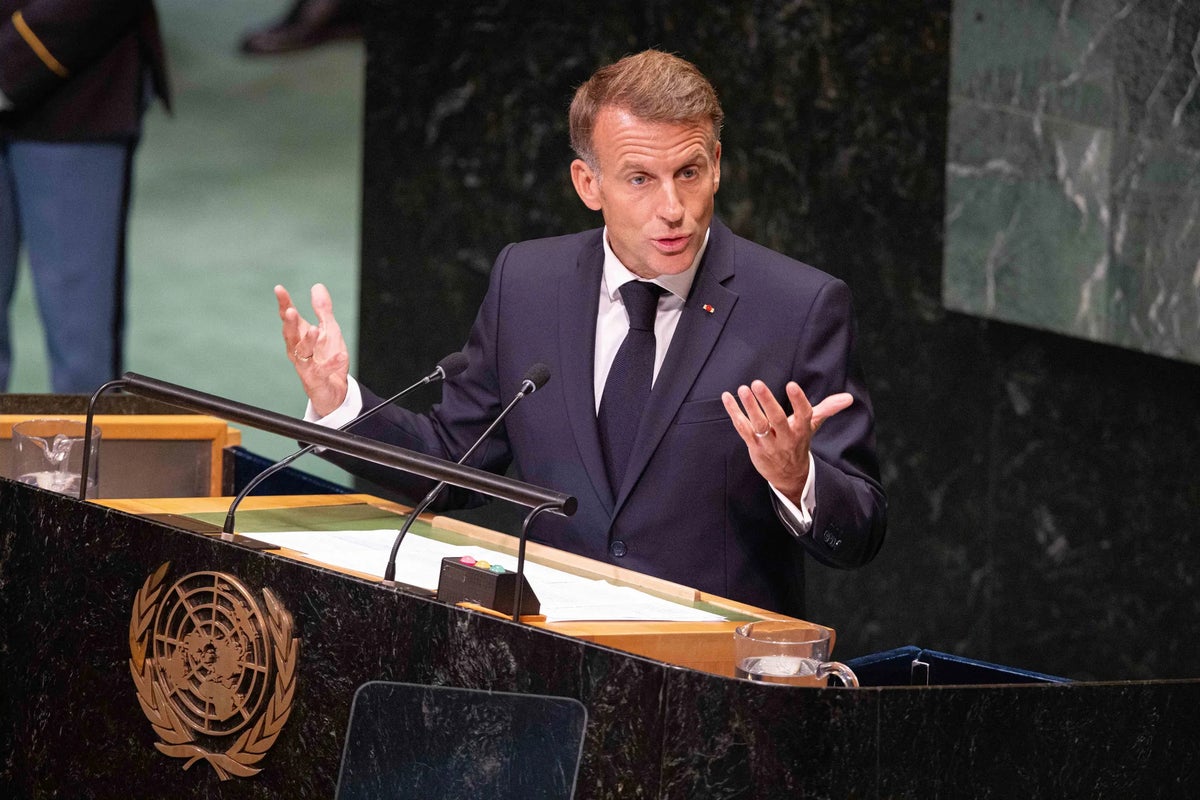
French president Emmanuel Macron was scathing of Israeli actions in the West Bank and Gaza in speech to the UN General Assembly

As the war in Gaza approaches its fourth year, the Guardian follows five ordinary Palestinians as they go about their lives. Each tells the story of their day, revealing the terrible toll of the conflict. At 76, Mansoura’s most precious possession is the key to her former home As the war in Gaza approaches its fourth year, this week, the Guardian follows five ordinary Palestinians as they go about their lives. Each will tell the story of their day, revealing the terrible toll of the ongoing conflict. The flat-bed truck is open to the hot summer air, its metal frame covered on two sides by draped tarpaulins, the rear by a pegged-up bedsheet. On the tin floor lies a squab mattress and pillow with a yellow frilled cover. Last night, I stayed awake until 2 am. I barely sleep during the night because of the mosquitoes and the heat. I fall asleep for a short while, I wake up early in the morning, pray to God, and wait to hear the call to dawn prayer. When I wake up, I call for my grandson to bring over the white plastic chair that I need to climb in and out of the truck. Continue reading...
 The Guardian•Seham Tantesh in Gaza and Tess McClure4h ago
🇫🇷 French President Emmanuel Macron criticised Gaza diplomacy at the UN General Assembly, calling it a "shameful spectacle" and urging action to reopen humanitarian routes.

Heimir Hallgrímsson accused of ‘stupidity’ by Israel’s FA Micheál Martin says IFA’s response is ‘unacceptable’ Ireland’s prime minister, Micheál Martin, backed his country’s football manager, Heimir Hallgrímsson, after Israel’s football federation accused Hallgrimsson of “stupidity, ignorance and hypocrisy” over comments about the war in Gaza. “I think those are unacceptable remarks; they should be withdrawn,” Martin told reporters in New York, where he is attending the UN general assembly. “Israel can’t keep denying what the world knows, and what the world understands.” Continue reading...
The Guardian•Agence France-Presse5h ago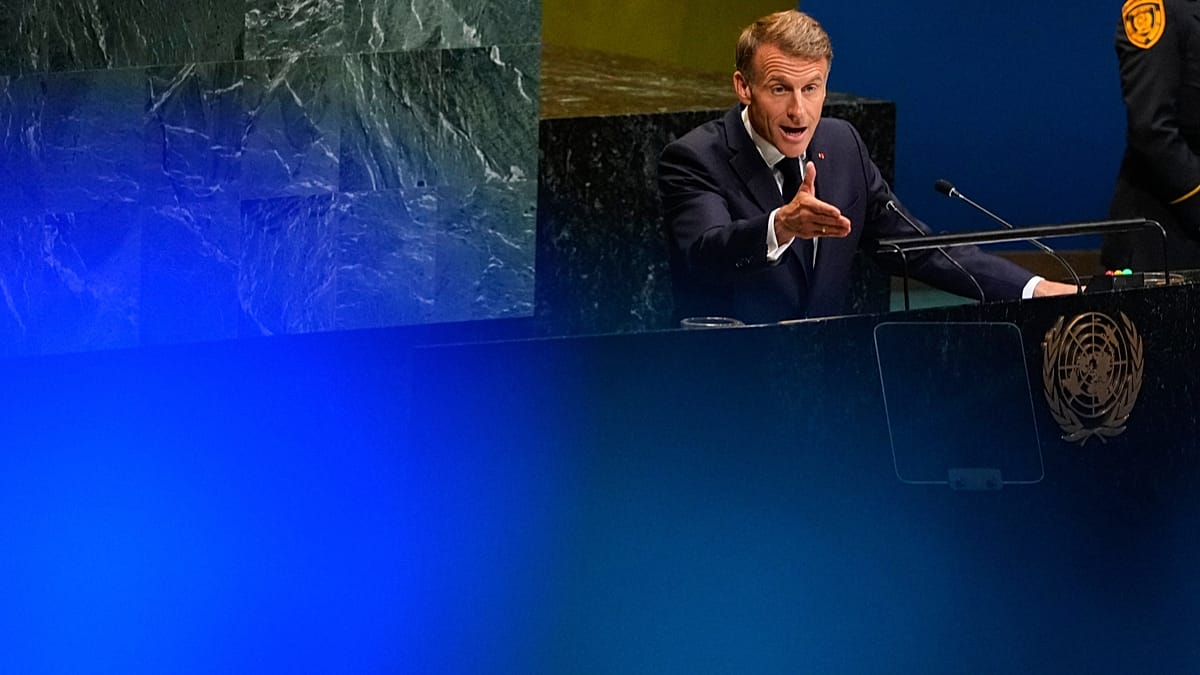
In his Tuesday speech, Macron railed against the humanitarian situation in Gaza and urged countries to recommit to international laws and the UN system.
 Euronews7h ago
In his Tuesday speech, Macron railed against the humanitarian situation in Gaza and urged countries to recommit to international laws and the UN system.
Euronews7h ago
The UN Population Fund also says there has been a "severe escalation" in the number of early and forced marriages.
 BBC10h ago
UK PM Burnham condemned Israel’s war on Gaza, and explains why the UK sanctioned illegal Israeli settlements.
Al Jazeera12h ago
Country: occupied Palestinian territory Sources: CCCM Cluster, International Organization for Migration, Shelter Cluster Please refer to the attached file. Ahead of the 2026 - 27 rainy season, the IOM Needs and Population Monitoring Programme, in collaboration with the Site Management Cluster (SMC) and Shelter Cluster, conducted a mapping-based assessment to identify displacement sites and populations at risk of flooding across the Gaza Strip. The assessment combines verified site-level information with the IOM–Acacia Water (2024) flood-risk classification to provide an evidence base for preparedness planning, contingency measures, and resource prioritization across Gaza's five governorates. This Phase One assessment covers all known displacement sites located within medium and high flood-risk areas, using Site Management Cluster data. Sites classified as low or no flood risk are not included in this analysis.
ReliefWeb•Shelter Cluster13h ago
Theo Von is speaking out about the war in Gaza ... noting that Macklemore got sacked from Ed Sheeran's tour for doing the same thing. Theo opened up about his stance on what's happening to Palestinians in a new clip on social media, saying ... "It…
 TMZ•TMZ Staff15h ago
Lawyers for James ‘Fergie’ Chambers, wanted over alleged support for Hamas, say client is being persecuted The Spanish government has decided to allow the Trump administration’s controversial extradition request to extradite wealthy activist James “Fergie” Chambers to continue in the country’s courts. Chambers, a US citizen and wealthy donor to leftwing and humanitarian projects, is currently imprisoned in Madrid. It is the first known case of the US seeking to extradite a citizen over alleged support for Hamas, an accusation tied to money Chambers has donated to support Palestinians, including the Sameer Project, in Gaza. Continue reading...
The Guardian•Timothy Pratt17h ago
Brazilian President Luiz Inacio Lula da Silva condemned the “pain and trauma” inflicted by Israel’s government in Gaza.
Al Jazeera19h ago
Macron's critique highlights persistent humanitarian challenges in Gaza, potentially impacting geopolitical stability and US-Palestine relations.
 CryptoBriefing•Estefano Gomez20h ago