
9 Adorable Photos of a (Very) Young Michael B. Jordan
In celebration of Jordan’s October 2026 Vogue cover, we revisit some of his very earliest years onscreen, when he was still a leading man in the making.
In celebration of Jordan’s October 2026 Vogue cover, we revisit some of his very earliest years onscreen, when he was still a leading man in the making.

Countries: Ireland, Afghanistan, Syrian Arab Republic, Ukraine, World Source: UN High Commissioner for Refugees Please refer to the attached file. Arrivals: a total of 13,162 people applied for international protection in Ireland in 2025, representing a decrease of nearly 30 per cent compared with 2024. In addition, Ireland welcomed 290 Syrian refugees through resettlement from Lebanon and Jordan. CJEU Ruling: In its judgment on reception conditions in Ireland, the Court of Justice of the European Union found that the State cannot invoke force majeure to justify failing to provide asylum‑seekers with their basic material needs. The ruling aligns with UNHCR’s submission. International Protection Bill: In January, the Minister for Justice received Cabinet approval to publish the International Protection Bill 2026, which will replace the International Protection Act 2015 and reform Ireland’s asylum system in line with the EU Pact on Migration and Asylum.
 ReliefWeb•UN High Commissioner for Refugees16 Sept
Country: Yemen Source: UN Office of the Special Envoy of the Secretary-General for Yemen Amman, 23 October 2024 - On 2 October, the Office of the Special Envoy of the Secretary General for Yemen (OSESGY) initiated a series of political dialogues with Yemeni actors as part of its ongoing efforts to build momentum towards a peaceful and inclusive resolution to the conflict in Yemen. These meetings, held in Amman, Jordan, have so far included discussions with representatives of the Rashad Party, the Nasserite Party, and the Yemeni Socialist Party as well as civil society groups. During these meetings, there emerged a broad consensus on the need for transparency and inclusive discussions towards a roadmap. The political and civil society actors amplified the urgency of economic recovery and immediate humanitarian relief, highlighting that these critical issues—such as the payment of salaries and the reopening of vital roads—cannot be delayed until a political settlement is reached. They stressed that addressing these pressing concerns is essential to gaining public support and alleviating the suffering of ordinary Yemenis. During the dialogues, each actor presented unique perspectives on the ongoing peace efforts. Among the issues were the importance of political inclusivity, with a strong emphasis on the notion that "Yemen’s political future must be owned by Yemenis, without exclusion," and the need for clearer communication regarding the roadmap process. Regarding the political process, there was a strong call to address the root causes of Yemen’s conflict through a phased approach to the transition process, focusing on restoring state institutions and ensuring the withdrawal of armed groups. The participants also emphasized the need for a clear framework for the roadmap, highlighting the importance of building on the past progress like the talks in Kuwait in 2016. During the discussions, OSESGY briefed the participants on the commitments reached between the Parties in December 2023, with the support of Saudi Arabia and Oman, including among others; a nationwide ceasefire, salary payments, resumption of oil exports, opening of roads, the withdrawal of non-Yemeni forces and the initiation of a Yemeni- led political process under UN auspices, aimed at achieving a lasting solution. The Office briefed on efforts to operationalize these commitments in the Roadmap and noted how developments—particularly the attacks in the Red Sea and growing regional tensions—have narrowed its mediation space, delaying progress. While recognizing the regional challenges, OSESGY stressed the importance of continued dialogue on moving forward and critical confidence building steps. Yemeni people’s vision and contributions remain key to shaping the next steps. In addition, economic recovery and humanitarian relief were stressed as immediate priorities for Yemenis, suggesting that the peace process must address economic needs as a priority to gain public support. It was argued that the economic file should not be secondary to political and security discussions. OSESGY briefed the parties on the progress made in addressing key economic issues raised during recent discussions with interlocutors. Building on the July 23 understanding, these efforts have focused on de-politicizing the economy and fostering collaboration over competition. OSESGY emphasized the importance of shifting away from a zero-sum mind-set notion to protect the economy from further escalation. While acknowledging each side’s constructive engagement, OSESGY stressed that positive signals must translate into concrete actions that benefit the Yemeni people. On the security front, the political parties raised concerns about the growing involvement of regional and external actors, stressing the need for strong international and regional guarantees to ensure that agreements are respected. Without such guarantees, they warned of the potential for further destabilization, particularly given regional escalations in the Red Sea and beyond. In turn, OSESGY briefed on its engagement with the Military Coordination Committee and local actors on the basis of the OSESGY-led Ceasefire Concept that focuses on de-escalation and planning. The exchange also covered a range of security-related topics that need to be discussed in the security track. In addition to the messages voiced by the political parties, civil society actors raised the issue of detainees, including those from the UN, international NGOs, local civil society organizations, and diplomatic missions, as a matter of significant concern. Civil society representatives underscored the deep human impact of the detainee issue beyond politics. Families continue to suffer as their loved ones remain in captivity, and there is an urgent need for immediate action, accompanied by sustained international pressure, to secure their release. Addressing this issue is seen as essential for building trust and advancing efforts toward a meaningful peace process. More discussions will follow in the coming weeks and into 2025 with Yemeni political parties and entities, and Yemeni civil society groups, including youth, women, and marginalized people. OSESGY will continue to focus on incorporating the insights gained into its discussions with the Parties and advocating for solutions shaped by Yemeni perspectives and needs. OSESGY extends its appreciation to the Hashemite Kingdom of Jordan for hosting and facilitating these important meetings, contributing significantly to advancing the dialogue for peace in Yemen.
ReliefWeb•UN Office of the Special Envoy of the Secretary-General for Yemen16 Sept
Joseph A. Jordan Jr. was only two years out of high school when he enlisted in the U.S. Army in 1943 during the height of World War II. Two years later, while stationed in France, Jordan’s jeep rolled while traversing a minefield in northern France. The crash left him permanently paralyzed from a spinal cord […]
 Rolling Stone•Rolling Stone15 Sept
Countries: Jordan, Iraq, Syrian Arab Republic Source: UN High Commissioner for Refugees Please refer to the attached file.
ReliefWeb•UN High Commissioner for Refugees15 SeptThe tally includes facilities in Kuwait, Bahrain, Qatar, the United Arab Emirates, Saudi Arabia, Iraq, Oman, and Jordan.

In making “Jo of Montreal,” Ameen Nayfeh, director of the award-winning Palestinian drama “200 Meters,” embarked on a very different kind of project than his debut feature, namely a feel-good family film that kids could enjoy. “Jo of Montreal” is about Yusuf (Hamzah Baareh), a spoiled 12-year-old boy visiting family in Jordan and stranded in […]
 Variety•Emeza80514 Sept
Countries: Syrian Arab Republic, Egypt, Iraq, Jordan, Lebanon, Türkiye Source: Estonian Refugee Council Please refer to the attached file. Key Takeaways • Since December 2024, Syria has witnessed one of the largest and most rapid return movements of this century. More than 3.5 million refugees and IDPs have returned to their places of origin – a scale unimaginable only a few years ago. While the renewed possibility of return is encouraging, movements have far outpaced many communities’ absorption capacity. In many locations, returnees have found essential services missing and are having to live in damaged housing. As such, any future humanitarian programming should incorporate an area-based reintegration approach. • Available benchmarks show that income covers only a fraction of essential costs. In March, the minimum wage covered 28% of WFP’s MEB for a family of five and less than half (43%) of its food component. Independently, SCPR found that university educated public-sector and private-sector wages covered only 33.9% and 38.5% of the household abject-poverty line in April. These findings reinforce the need to verify household income and expenditure locally before setting transfer values and to review values regularly as prices and exchange conditions change. • Women-headed households, children, people with disabilities and families of missing persons face compounded protection concerns. Documentation and death-registration gaps restrict property rights and assistance; people with disabilities experience exclusion from work; economic stress increases GBV and harmful coping; and children are at a high risk for explosive-ordnance casualties, child labor and child marriages. Specialist legal assistance and robust referral system add-ons should be considered to ensure that assistance coverage goes beyond the minimum survival standards and accounts for specific vulnerabilities of affected groups. • Cash-delivery conditions improved somewhat in June and July as exchange-rate differences narrowed and the Central Bank expanded currency choice for beneficiaries of covered incoming remittances. However, local humanitarian transactions and procurement must still be conducted in Syrian pounds, and feasibility remains highly location specific. Financial service provider liquidity, currency availability, fees, agent coverage, documentation requirements, electricity, connectivity and cash-out safety should therefore be verified before selecting a delivery mechanism, with offline and non-cash alternatives retained. • Explosive-ordnance contamination and the prohibitive cost of land clearance constrain agricultural recovery in many return areas. Livelihood support should therefore extend beyond agriculture to viable non-farm microenterprises, particularly for womenheaded and returnee households. Productive-asset grants including support to purchase sewing machines, workshop tools, small-business stock, or equipment for small food retail activities is recommended, provided local assessment confirms demand and viability.
ReliefWeb•Estonian Refugee Council14 Sept
State news channel, Al Mamlaka, says the southern port of Aqaba was evacuated as a precaution.
 Al Jazeera14 Sept
Country: Jordan Source: UN High Commissioner for Refugees Please refer to the attached file. Home to over 47,000 Syrian refugees, the Zaatari camp is jointly managed by the Syrian Refugee Affairs Directorate (SRAD) and UNHCR, the UN Refugee Agency. As the lead agency for the refugee response in Jordan, UNHCR coordinates activities and services provided in the camp. Since its establishment in 2012, Zaatari has become emblematic of Syrian displacement across the Middle East. The camp's evolution from a small collection of tents to a semi-urban settlement reflects the changing needs and aspirations of the camp residents, as well as a transition to a more predictable, cost-effective, and participatory platform for delivering assistance.
ReliefWeb•UN High Commissioner for Refugees14 Sept
Country: Jordan Source: UN High Commissioner for Refugees Please refer to the attached file. Home to almost 33,000 Syrian refugees, Azraq camp is under the joint management of the Syrian Refugee Affairs Directorate (SRAD) and UNHCR, the UN Refugee Agency. As the lead agency for the refugee response in Jordan, UNHCR coordinates activities and services provided in the camp since its establishment in 2014. The camp has four operational villages and is about 14.7 km2 in size. The village-based approach aims to foster a greater sense of ownership and community among residents. Some of the key facilities in Azraq camp include a hospital, health clinics, a solar power plant, three water boreholes, schools, and community centres.
ReliefWeb•UN High Commissioner for Refugees14 Sept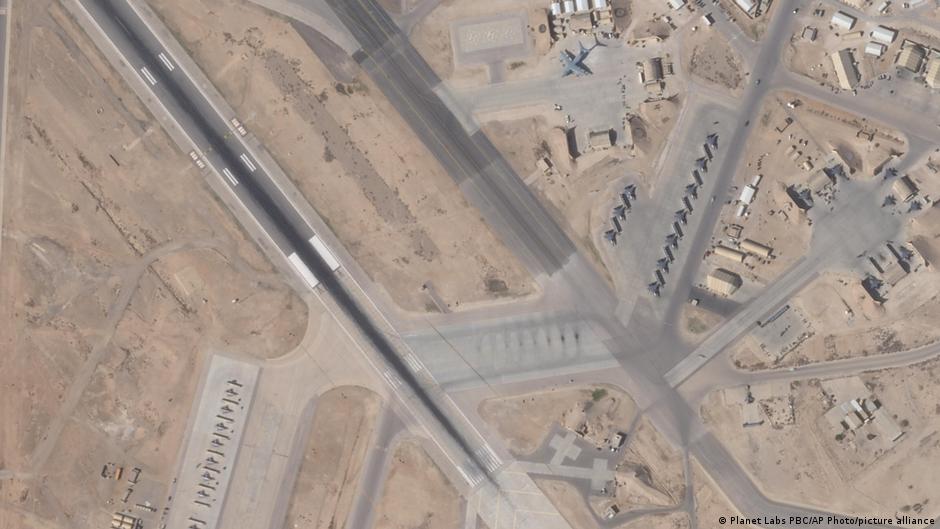
The US president downplayed reports that Chinese entities had given Iran satellite imagery before a strike on a military base in Jordan that killed three American soldiers.
 Deutsche Welle14 Sept
Country: Jordan Source: World Food Programme Please refer to the attached file. IN NUMBERS 80,000 people assisted in August (50% female) - estimate USD 1.7M cash transferred in August USD 30.4M required in the next six months (September 2026 – February 2027) 221,600 Syrian refugees returned to Syria (December 2024 – August 2026) KEY HIGHLIGHTS WFP provided food assistance to 80,000 refugees in camps only, at reduced transfer value. The Government of Jordan approved the National School Feeding Strategy for 2026–2030 and tasked the Ministry of Education with implementing the strategy in coordination with relevant stakeholders, including WFP. WFP Jordan suspended its call centre due to budget constraints and a reduction in the number of assisted refugees Beneficiaries were informed of the change in advance and will continue to reach WFP through social media platforms and helpdesks.
ReliefWeb•World Food Programme13 Sept
The incident underscores escalating geopolitical tensions and intelligence-sharing complexities, potentially destabilizing regional security dynamics.
 CryptoBriefing•Estefano Gomez12 Sept
Jordan Ngatikaura is ready to move forward after finalizing his divorce from 'Mormon Wives' star Jessi Draper ... telling TMZ he's grateful for the closure and focused on their kids. Jordan tells us he'll always appreciate the meaningful chapter he…
 TMZ•TMZ Staff12 Sept
Country: occupied Palestinian territory Sources: Logistics Cluster, World Food Programme Please refer to the attached Infographic. Context Overview • UN/INGO aid throughput decreased in August to 7% below the monthly average. Between 01 and 31 August, 2,152 UN and INGO trucks were offloaded at Gaza crossings. Ashdod accounted for 42% of offloads, followed by Egypt (23%) and Jordan (19%); the remaining throughput originated on the West Bank and Israel routes. • The monthly average offloading rate was approximately 85% of manifested trucks. Egypt recorded the highest share of operational challenges, with 29% of manifested trucks returned (delayed until a following day), rejected, or cancelled by partners prior to dispatch. • During the week of 16 August, the entry window for cargo categorised as "dual use" was extended from one day to two days. The Logistics Cluster support team coordinated additional shipments with partners to maximize use of the extended window. • From Jordan, the Logistics Cluster support team coordinated the movement of 353 trucks carrying shelter, food and WASH items. Overall, 8,004 pallets were delivered from Jordan to Kerem Shalom/Karem Abu Salem (KS/KAS) via Cluster-managed common transport services, on behalf of six partners. • On 30 August, a fire was reported at an Egyptian Red Crescent (ERC) warehouse in Al Arish. The extent of the damage is not confirmed at the time of reporting. • In Gaza, 12,569 pallets of inter-agency humanitarian cargo were collected from KS/KAS via Cluster-managed common transport services on behalf of ten partners. The cargo was delivered to Cluster-managed temporary storage facilities across Gaza for onward distribution by partners. • On 23 August, a nearby airstrike affected two Cluster-managed temporary storage facilities; all staff are safe and no cargo was lost.
ReliefWeb•World Food Programme11 Sept
US official admits the naval base near Manama sustained heavy damage in the war with Iran.
Al Jazeera11 SeptAviation News – An Iranian missile strike on Muwaffaq Salti Air Base in Jordan damaged multiple U.S. military aircraft overnight between September 8 and 9,...

The incident may heighten regional tensions, influencing market perceptions and potentially affecting Iran's future airspace policy decisions.
CryptoBriefing•Estefano Gomez10 Sept
Aaron Rodgers has shared exactly how his watershed reconciliation with younger brother Jordan Rodgers went down ... and it wasn't without its difficult moments. The Pittsburgh Steelers quarterback told his teammate Cam Heyward on the "Not…
TMZ•TMZ Staff10 Sept