As a local, there are 9 things I wish tourists knew before visiting Salem, Massachusetts
Thousands travel to the Massachusetts town of Salem in the fall, especially in October, for Halloween. As a local, avoid these mistakes tourists make.
Thousands travel to the Massachusetts town of Salem in the fall, especially in October, for Halloween. As a local, avoid these mistakes tourists make.

Widow’s Bay wins Emmy night! After one of the most talked-about Emmy races in recent memory, Katie Dippold’s Apple TV comedy about a group of oddballs living on a haunted Massachusetts island has taken home the Emmy for best Comedy Series, making a record-breaking total of 14 wins for the show — the most of […]
 Deadline•Antonia Blyth15 Sept
Rep. Nancy Mace (R-S.C.) said Monday that Lindsay Clancy should be publicly executed, as the Massachusetts woman faces a new trial for allegedly murdering her three children. “Her children are dead, she should be dead too,” Mace told TMZ. The South Carolina Republican later said, “She should get the death penalty. It should be public,…
 The Hill•Max Rego15 Sept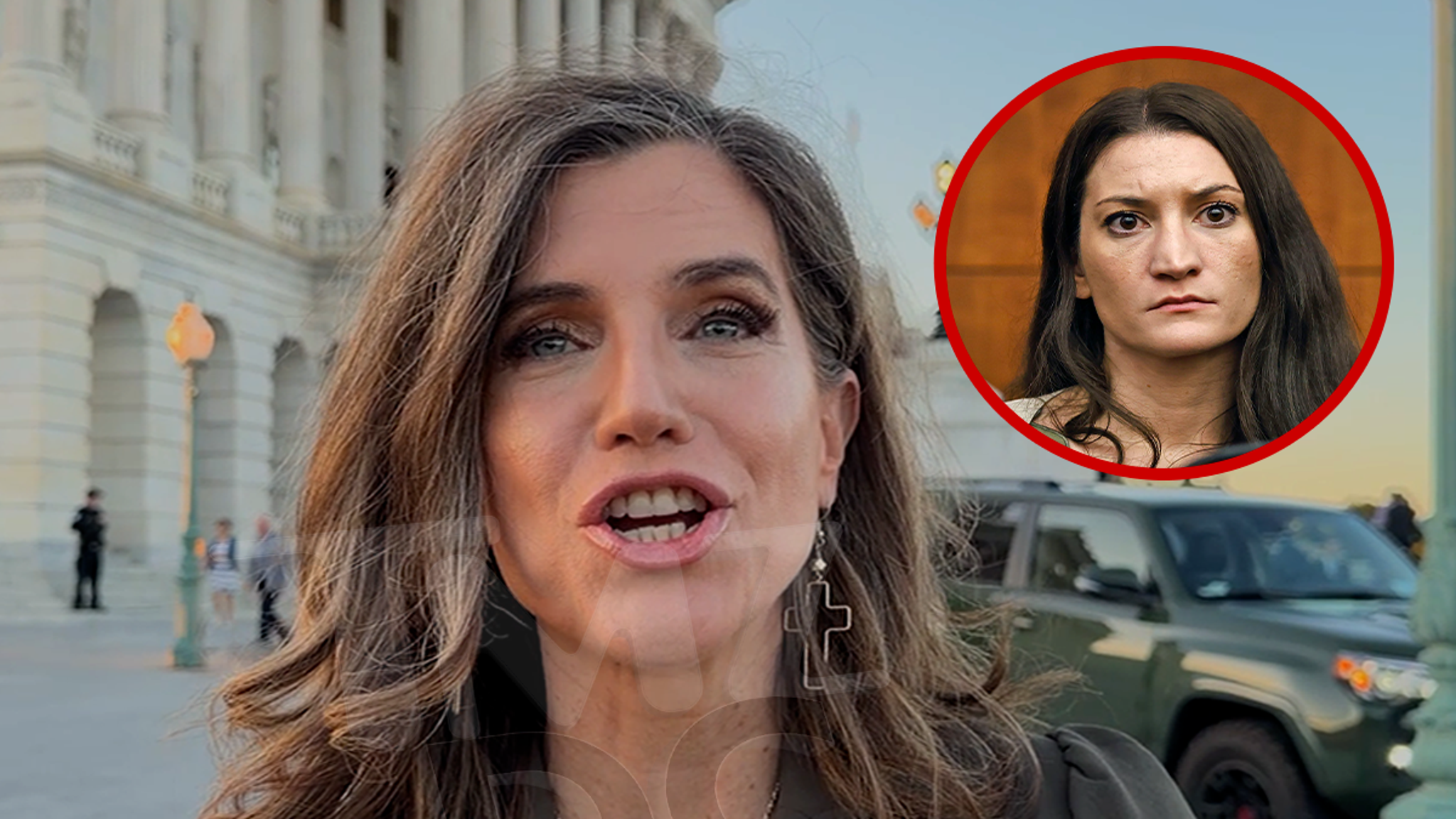
Rep. Nancy Mace is calling for Lindsay Clancy to be publicly executed ... saying the Massachusetts mom accused of killing her three children "should be dead too." The South Carolina congresswoman made the explosive comments while discussing…
 TMZ•TMZ Staff15 Sept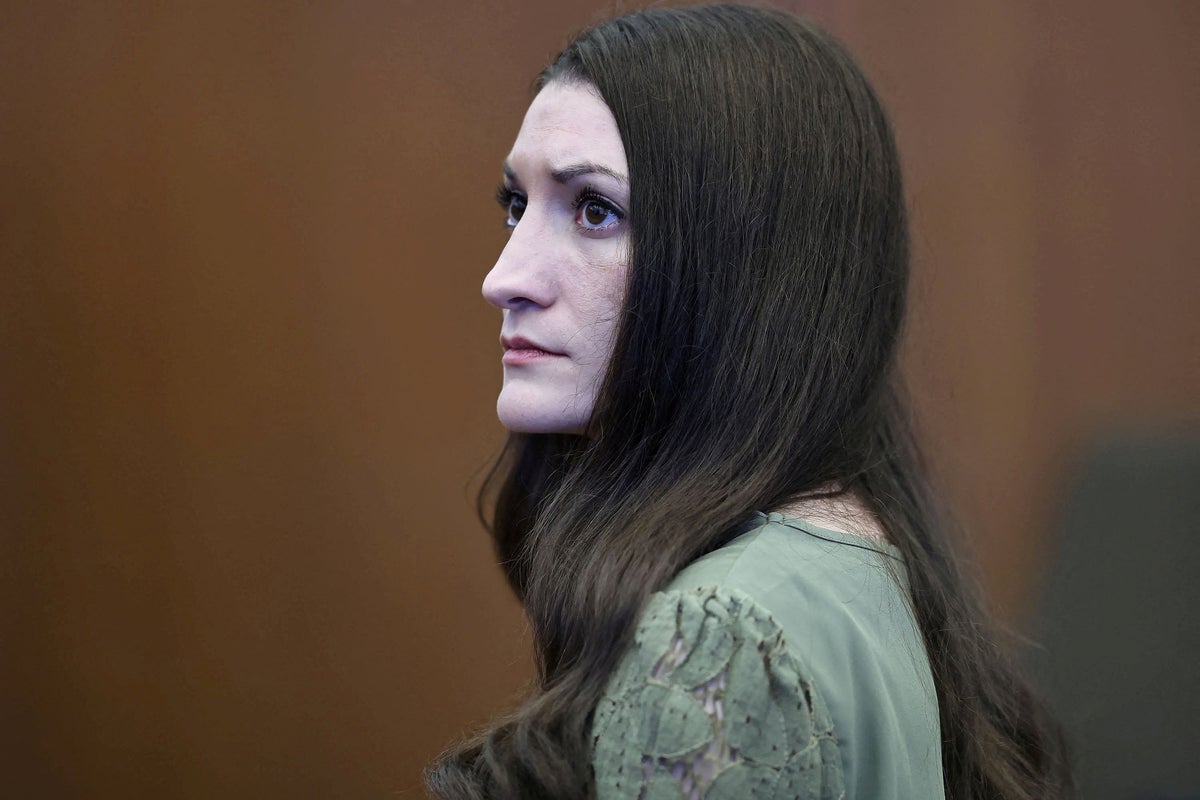
Clancy, 36, admitted to killing her three children - Cora, 5, Dawson, 3, and 8-month-old Callan - in the basement of her Massachusetts home in 2023, before trying to take her life. Her case ended in a mistrial September 4

An 83-year-old Lexington woman pleaded guilty to five counts of wire fraud after Ideal Financial drained $10.93 million from 204 investors in a Ponzi scheme.
 The Daily Hodl•Daily Hodl Agent12 Sept
As the Massachusetts mother faced trial for killing her three children, many Americans found themselves sympathizing with the defendant.

In a special edition, we examine a case that has gripped the United States and sparked debate over postpartum mental health. Former nurse Lindsay Clancy from Massachusetts stood trial for the deaths of her three children. She said she was suffering from postpartum psychosis at the time and the court proceedings ended in a mistrial after the jury failed to reach a unanimous verdict. FRANCE 24's Annette Young speaks to Meghan Cliffel, who experienced postpartum psychosis after the birth of her second child, and Dr. Susan Hatters-Friedman, the psychiatrist who treated her.
BOSTON — Massachusetts’ high court adopted the Commission on Judicial Conduct’s recommendation to impose a sanction of public remand against Judge Shelley Richmond Joseph for creating the appearance of impropriety and failing to comply with the law. The judge failed to adequately explain why she asked to go off the record, or what she said while she was off the record, in proceedings involving a detainee. A court officer helped the detainee escape through a sallyport and, while the judge argues she did not know of this escape plan, it is unclear because she went off the record.
Kevin Reddington says prosecution did not offer evidence that client’s killing of her children constituted murder Lindsay Clancy’s lawyer on Thursday asked the judge who oversaw the Massachusetts woman’s murder trial to declare her not guilty of murder by reason of insanity, saying prosecutors had failed to prove that, despite being mentally ill, she knew killing her three young children would be wrong. Defense attorney Kevin Reddington made the request to Judge William Sullivan six days after the trial ended in a deadlock, and as a fourth member of the 12-member jury went public to describe how a single juror had prevented the panel from reaching a unanimous verdict. Continue reading...
 The Guardian•Reuters10 Sept
Lindsay Clancy's lawyer has asked the judge who oversaw the Massachusetts woman's murder trial to declare her not guilty by reason of insanity, saying prosecutors had failed to prove that, despite being mentally ill, she knew killing her three young children would be wrong.

A Massachusetts mom accused of murdering her two young children before fleeing to Vermont is asking the judge to release her from custody or dismiss her case. Janette MacAusland's lawyer, Joseph Krowski, asked the judge to either let his client go…
TMZ•TMZ Staff10 Sept
Massachusetts has become the third state in as many months to slap new restrictions on data center development.
 TechCrunch•Tim De Chant9 Sept
Massachusetts' clean energy mandate for data centers could set a precedent for sustainable tech infrastructure, influencing global industry standards.
 CryptoBriefing•Editorial Team8 Sept
A nostalgia-bait return to the witchy 90s comedy is as strange and messy as the first but there are warm seasonal pleasures to be had Much has changed in the universe, cosmic and otherwise, since the Owens witches last graced the big screen with their practical magic of sleeping draughts, midnight margaritas and generational love curses. For one, movies like the 1998 cult-ish classic Practical Magic – a compellingly bizarre mashup of genres, aspirational 90s fashion and sisterly affection starring Sandra Bullock and Nicole Kidman in their movie-star primes as lovelorn sorceresses in Puritan-lite Massachusetts – largely stopped reaching theaters. For another, nostalgia cycles only intensified and tightened, our algorithms clogged with unsolicited sequels and dupes for Bullock’s impeccable vintage 90s Levi’s. Which makes Practical Magic 2, reuniting both Kidman and Bullock, and Stockard Channing and Dianne Wiest as their lovingly eccentric aunts, somewhat of an anomaly, at once a seeming inevitability and, as a matrilineal romance comedy (though decidedly not a romcom) starring two 60-year-old women , an oddity . There’s no circumventing nostalgia bait, but Practical Magic remains so idiosyncratic in tone and, well, kookiness, that a sequel somewhat appeals. Continue reading...
The Guardian•Adrian Horton8 Sept
A western Massachusetts store sold the biggest single Megabucks ticket ever, worth $29.71 million. The win tops all prior records for the state lottery game.
The Daily Hodl•Daily Hodl Agent8 Sept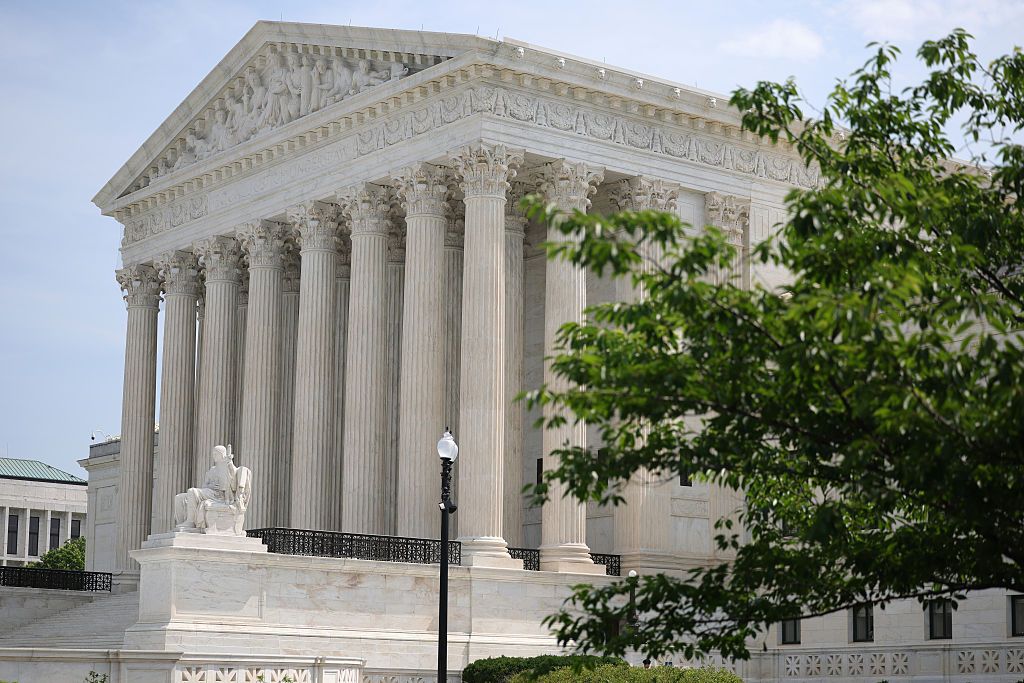
The Trump administration came to the Supreme Court on Sunday morning, asking the justices to pause a ruling by a federal judge in Massachusetts that bars the government from implementing parts of a U.S. Postal Service rule on mail-in ballots. U.S. Solicitor General D. John Sauer told the court that Friday’s order by U.S. District Judge Indira Talwani “nullif[ies] the Postal Service’s efforts to address the risk that the federal mails will be used to perpetrate voter fraud—a particularly pernicious species of fraud that dilutes the votes of lawful voters, prevents election results from reflecting the will of the American people, and undermines ‘public confidence in the integrity of the electoral process.’” Sunday’s filing was the third time in less than six weeks, and the second time since Thursday, that the Trump administration came to the Supreme Court seeking to clear the way to implement restrictions on mail-in voting. In March, President Donald Trump signed an executive order that directed federal agencies to take a series of steps on mail-in voting. The first provision instructs the Department of Homeland Security to create lists of the adult U.S. citizens in each state and to send those lists to states at least 60 days before a federal election. The second provision tells the U.S. attorney general to “prioritize the investigation and, as appropriate, the prosecution of State and local officials … who issue Federal ballots to individuals not eligible to vote in a Federal election.” And the third provision requires states to give the U.S. Postal Service a list of voters to whom the states intend to send mail ballots, and it prohibits the USPS from mailing ballots to voters who are not on the lists of “enrolled” voters that the USPS will create. A group of 23 states, led by California, and the District of Columbia went to federal court in Boston to challenge the government’s implementation of the order. They argued that the executive order conflicts with provisions in the Constitution that give states the power to determine voter eligibility and to set the “Times, Places, and Manner” of holding congressional elections. Talwani prohibited the federal government from implementing the challenged restrictions on or before Nov. 3, 2026, in the District of Columbia and the 23 challenging states. After the U.S. Court of Appeals for the 1st Circuit declined to pause Talwani’s order while the litigation continued, the Trump administration on July 27 asked the Supreme Court to step in – as did a group of 12 states, led by Alabama , that had joined the case on the Trump administration’s side. Nearly a month later, the Supreme Court allowed the Trump administration to begin implementing the executive order. In a 10-page, unsigned opinion , the majority wrote that it was too soon for courts to consider the states’ challenge because the order had not yet been carried out – and, as a result, the states have not suffered the kind of injury that would allow their lawsuit to proceed. Shortly after the court’s ruling, Talwani lifted an injunction that she had issued in a separate challenge, brought by the League of Women Voters, to one provision of the executive order. But in an Aug. 27 decision , Talwani issued a temporary restraining order that blocked the Trump administration, for 14 days, from requiring states to comply with several provisions of the new Postal Service rule , such as ballot envelope design requirements and the submission of voter data into a USPS portal. The Trump administration returned to the Supreme Court on Thursday, asking the justices to freeze Talwani’s order (and to issue an administrative stay, which puts the order on hold while they consider the government’s request). On Friday, Talwani issued a preliminary injunction , which replaced her Aug. 27 temporary restraining order and barred the Trump administration from requiring states to comply with provisions of the rule indefinitely while the states’ challenge continues. On Sunday, Sauer submitted a letter to Scott Harris, the clerk of the Supreme Court, withdrawing the Trump administration’s Sept. 3 application in light of Talwani’s new order granting a preliminary injunction. The Trump administration on Sunday then also filed a new application , seeking to put Talwani’s Sept. 4 preliminary injunction on hold. Sauer wrote that the order is “materially identical to the temporary restraining order, both in its substantive scope and its minimal, conclusory reasoning.” Talwani’s “continuing prejudgment of the rule is baseless,” he contended, and its rationale is “simplistic.” Sauer pushed back against suggestions “that the Postal Service is trying to federalize the rules for mail-in voting.” Instead, he said, “the Postal Service’s final rule imposes only modest envelope-design and addressee-information requirements for federal-election ballots sent via U.S. Mail.” The new rule, Sauer continued, “is plainly constitutional. While the States have primary authority to regulate the manner of elections, they cannot choose to use the federal mails to carry out their elections but then insist that their election-related mail is somehow exempt from the Postal Service’s rulemaking authority, conferred by Congress, to regulate envelope design and addressee information.” If Talwani’s order is not put on hold, Sauer said, the government will – as the Supreme Court has already recognized in earlier proceedings involving the rule – suffer permanent harm (a key factor in determining whether to award temporary relief) because the election is so soon. North Carolina has already started to mail out ballots, Alabama will do so on Sept. 9, and “at least five States” will do so the following week – all without being required to comply with the new rule. By contrast, Sauer contended, the states’ claims that complying with the rule will harm them are “overblown.” Justice Ketanji Brown Jackson, who has initial responsibility for emergency appeals from Massachusetts, directed the challengers to file their response by 4 p.m. EDT on Wednesday, Sept. 9.
 SCOTUSblog•Amy Howe6 Sept
The differing stances on AI safety rules may shape future regulatory landscapes and impact market dynamics and company valuations.
CryptoBriefing•Estefano Gomez3 Sept
Fairshake affiliate Protect Progress spent $189,528 supporting Jake Auchincloss, who defeated Jason Poulos in Massachusetts’ primary.

Fairshake's reduced spending in Massachusetts suggests a strategic focus on more competitive races, potentially influencing future political dynamics.
CryptoBriefing•Editorial Team1 Sept