Ondo Opens In-Kind Minting for Tokenized US Stocks
Approved institutions can now swap existing share inventory for Ondo Stocks through Alpaca, removing the separate cash funding required by the platform’s existing issuance flow.

Approved institutions can now swap existing share inventory for Ondo Stocks through Alpaca, removing the separate cash funding required by the platform’s existing issuance flow.

TL;DR Ondo Finance has added in-kind minting and redemption for institutional Ondo Stocks users. Eligible institutions can contribute existing equity inventory rather than converting shares to cash first. The service currently supports tokenized positions on Ethereum and BNB Chain and is not a retail minting product. Ondo Finance is removing one of the more awkward steps in institutional stock tokenization: converting existing share inventory to cash before moving it onchain. Through an integration with Alpaca’s Instant Tokenization Network, eligible institutional users can now contribute existing equity inventory directly to mint Ondo Stocks positions. Shares Can Move Into The Tokenized System Without A Cash Detour The new in-kind flow changes the mechanics for institutions that already hold the underlying securities. Instead of selling shares, moving cash and then using that cash to create tokenized exposure, qualified users can deposit the existing inventory into the process. Ondo says the mechanism supports minting and redemption on Ethereum and BNB Chain. For large institutions, that can reduce settlement friction and make tokenized equities feel less like a separate market that needs to be funded from scratch. It also brings the workflow closer to the creation-and-redemption mechanics familiar from other institutional investment products. Retail Users Are Not The Target The service is restricted to KYC and AML-verified institutional participants. That means this is not a new button that lets ordinary retail users turn brokerage shares into blockchain tokens. The significance is more structural. Tokenized securities become easier to scale when the conversion process works with the inventory institutions already hold. Ondo and Alpaca are effectively trying to make the bridge between conventional equity custody and tokenized ownership less cumbersome. The product is now live for eligible institutional users on Ethereum and BNB Chain, with no cash-conversion step required for contributed inventory. This article was written by the News Desk and edited by Samuel Rae.

NEAR is positioning its cross-chain infrastructure for the growing shift toward on-chain financial markets.

NEAR has partnered with Ondo Finance to give eligible users access to 20 tokenized U.S. stocks, exchange-traded funds, and commodity-linked products through near.com and NEAR Intents. Ondo Finance said the integration would let eligible near.com users exchange supported crypto assets…

near.com began offering Ondo Finance’s tokenized U.S. stocks and exchange-traded funds (ETFs) on Tuesday, letting users buy them with crypto held across more than 30 networks. The companies said the trades are not broadcast publicly. The tokens are not available to U.S. persons or in Canada. NEAR

This partnership could accelerate the integration of traditional and digital finance, enhancing accessibility and diversification for investors.

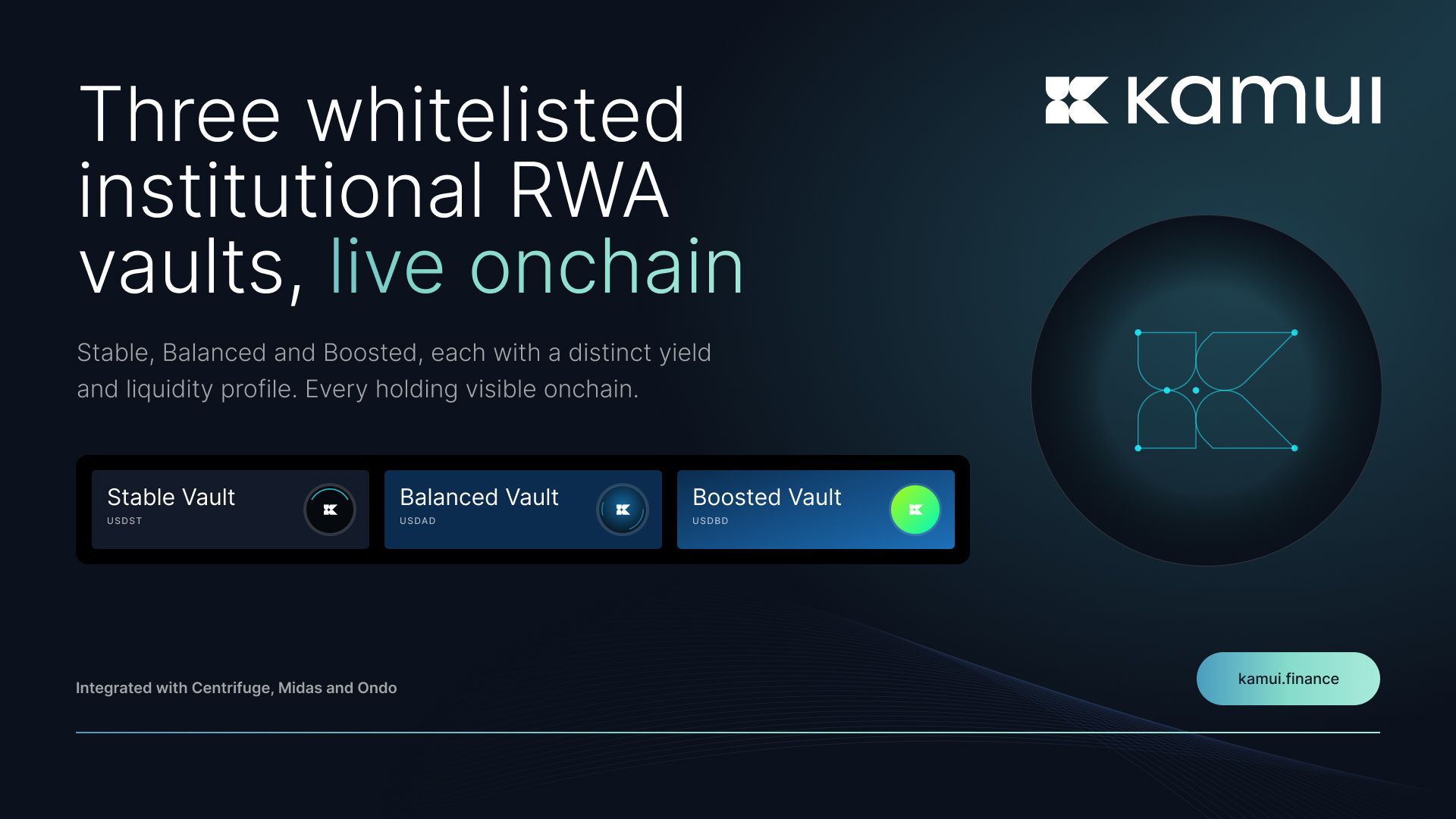
Kamui Finance today announced bringing its first three real-world asset (RWA) vaults live onchain along with its operational infrastructure, giving professional and sophisticated investors different levels of exposure to tokenized real-world assets.

Ondo’s new in-kind conversion system allows approved institutions to mint and redeem tokenized stocks and ETFs using the underlying securities instead of cash.

Read the latest update on Ondo's Oasis Pro Joins DTCC Fund/SERV In Tokenized Fund Milestone.

Ondo Finance could benefit as regulated tokenized stock trading expands across the United States.
At least 49 people have died and 182 others were hospitalised after suspected alcohol poisoning in Nigeria's southwestern Ondo state, the state's health commissioner said... Reuters Health Information
Country: Nigeria Source: Food and Agriculture Organization of the United Nations Please refer to the attached file. OOD SECURITY SNAPSHOT Uncertain production prospects for 2026 cereal crops Food inflation at elevated level in July 2026 Dire food security situation in Borno State due to ongoing conflict Uncertain production prospects for 2026 cereal crops In southern and central bimodal rainfall areas, harvesting of the 2026 main season maize crop is nearing completion. Cumulative rainfall amounts between April and July 2026 were generally near average, supporting crop development and overall favourable production prospects. However, several dry spells between mid‑May and late July affected crops in parts of Oyo, Kwara, Osun, Ekiti, Ondo and Edo states. Satellite‑based data indicated below‑average vegetation conditions in these areas as of late August, and localized production shortfalls are expected. Planting of the second season maize crop is ongoing and is expected to be completed by the end of September. In northern unimodal rainfall areas, planting of the 2026 cereal crops was completed in July and harvesting has recently begun. The onset of seasonal rains was generally timely in May, except in some localized northeastern areas, where delays of up to one month disrupted planting operations and crop establishment. Adequate cumulative precipitation amounts through late August resulted in average to above-average vegetation conditions and favourable yield prospects across most of the far north. However, several dry spells in July and August affected crops in some parts of the Middle Belt and in Borno, Yobe, Kebbi, Sokoto, Bauchi, Gombe and Plateau states, increasing the risk of localized cereal production shortfalls. Weather forecasts for September and October 2026 indicate a high likelihood of average to above‑average rainfall amounts across most central and northern areas, which are expected to support crop development but also increase the risk of localized flooding. Near‑average rainfall amounts are forecast across most southern areas, except in the southwest, where below-average amounts may adversely affect planting operations and the establishment of the second season maize crop. Conflict is severely disrupting agricultural activities in Benue, Borno, Kaduna, Katsina, Niger, Plateau, Sokoto and Zamfara states, where key cereal‑producing areas are located. Attacks by non-state armed groups have constrained access to farmland, while their imposition of levies and cultivation bans has forced some farming households to reduce the area planted or suspend agricultural activities, with production shortfalls expected in affected areas. High agricultural input prices are expected to constrain cereal production in 2026. Rising fuel prices have increased transportation and production costs, while sharp increases in fertilizer prices, estimated at 12 percent for NPK and 43 percent for urea between February and May 2026, have likely curtailed fertilizer application rates, with negative effects on yields. Food inflation at elevated level in July 2026 The annual food inflation rate increased for the sixth consecutive month in July 2026, reaching 20.3 percent, up from 8.9 percent in January 2026, but remaining below the 26.2 percent recorded a year earlier. Sharp increases in domestic petrol prices during the first half of 2026 have raised transportation costs, while reduced market supply and strong household demand exerted further upward pressure on food prices. Dire food security situation in Borno State due to ongoing conflict According to the latest available Cadre Harmonisé (CH) analysis, nearly 36.3 million people (17 percent of the analysed population) were estimated to face severe acute food insecurity (CH Phase 3 [Crisis] and above) during the June to August 2026 lean season, including about 2.1 million people in CH Phase 4 (Emergency) and approximately 10 300 people in CH Phase 5 (Catastrophe). This represents a deterioration compared to the corresponding period in 2025, when more than 30.6 million people (15 percent of the analysed population) were estimated to be in CH Phase 3 and above, mainly reflecting the effects of escalating conflict and ongoing economic challenges. High levels of violence were reported between January and August 2026, particularly in the North‑East, North‑Central and North‑West zones, where livelihoods and market activities were severely disrupted. As of early August 2026, over 3.7 million people were internally displaced nationwide, with about two‑thirds located in Borno State, where humanitarian needs are particularly high and some populations were estimated to have faced CH Phase 5 (Catastrophe) conditions during the 2026 lean season. Movement restrictions in Abadam, Bama, Guzamala and Marte Local Government Areas (LGAs) continue to impede access to farmland, grazing areas and markets and also hamper the delivery of humanitarian assistance, thereby severely constraining food availability and access. The ongoing cholera outbreak in Borno State has further exacerbated humanitarian needs among affected households. Income‑earning opportunities remain limited, reflecting reduced demand for agricultural labour amid high input costs and conflict‑related disruptions, as well as increased competition for available jobs. Although daily wage rates have reportedly remained near their year‑earlier levels, sustained inflationary pressures have eroded the purchasing power of poor households across the country, constraining their access to food.

Drinking locally made alcohol is common in Nigeria, especially in rural areas where it is more affordable and poorly regulated At least 48 people have died and about 100 others are receiving treatment in southern Nigeria after consuming a locally brewed alcoholic concoction suspected to contain methanol, officials said on Thursday. Banji Ajaka, Ondo state’s commissioner for health, said the cases had been reported in the Odigbo and Irele local government areas. A total of 182 people are believed to have been affected and some are being treated in the hospital, he said. Continue reading...

Ondo’s tokenized funds now have a direct route into established financial distribution channels, putting real adoption to the test.

The standardized connection replaces bespoke links to fund counterparties; the joint release named no specific Ondo product or transaction start date for Fund/SERV.

Ondo Finance has become the first tokenization company to enter DTCC’s Fund/SERV network, connecting its regulated U.S. subsidiary with infrastructure that processes more than 85% of domestic mutual fund transaction volume. Ondo Finance said its subsidiary Oasis Pro Markets has…

The self-custodial wallet lists rTokens on Arbitrum and Morph from Sept. 15. Reality is part of the Bitget ecosystem, and the announcement's asset count does not match Bitget's own product pages.

#ONDO The price is moving within a descending channel on the 1-hour timeframe; it has reached the lower boundary and appears poised for a rebound, suggesting a potential upward move. The Relative Strength Index (RSI) indicates a bearish trend, but an upward breakout is likely due to oversold conditions on the 1-hour chart. There is initial support at 0.3286. A key support zone (marked in green) exists at 0.3144; the price has bounced off this area multiple times, making it a strong support level. The price is moving toward the 100-period moving average—a level we are currently approaching—which supports the case for an upward move. Entry Price: 0.3468 Target 1: 0.3516 Target 2: 0.3582 Target 3: 0.3662 Stop Loss: At the green resistance zone. Remember this simple rule: capital management. If you have any questions, please leave a comment. Thank you.

CEXs and market markets scramble to find liquidity for ONDO, moving over $6 million worth of ONDO.
Uniswap founder Hayden Adams compared Robinhood's and Ondo's stock tokens to early stablecoins on Friday, hours after Dinari co-founder Gabriel Otte called the same instruments "indisputably worse for the end investors than even common stocks." Three models are competing for $2.91 billion of