
Polygon prepares permissionless burn of 100M POL tokens
Polygon's token burn strategy could enhance scarcity, potentially boosting token value and incentivizing network activity, impacting market dynamics.
 CryptoBriefing•Editorial Team18 Sept
Polygon's token burn strategy could enhance scarcity, potentially boosting token value and incentivizing network activity, impacting market dynamics.
CryptoBriefing•Editorial Team18 Sept
Contracts are on testnet and await final Security Council signatures, with later base-fee burns set to become community-callable each quarter, Sandeep Nailwal said.
 The Defiant•The Defiant Team18 Sept
Polygon is trading around 0.09833 on the 6H timeframe, grinding sideways just above the ascending trendline that has held every pullback since mid August and now supports this entire consolidation range. The move began with a sharp rally off the trendline near 0.0740, spiking hard through mid August all the way to a high near 0.1280 before sellers took control and dragged price back down through nearly the entire advance. That correction found footing right around 0.0970, and price has spent the last two weeks building a tight range between roughly 0.0930 and 0.0990 directly on top of the rising trendline. The trendline has now caught up to this range and is intersecting it directly, making this the critical zone where the broader trend either reasserts itself or breaks down. Price is currently sitting at the upper edge of this range near 0.09833 after a recent dip tagged the trendline and reversed sharply, showing buyers are still defending this level closely. Key Levels To Watch: → 0.1090 Prior swing high, resistance above the range → 0.0990 Range high, recent resistance → 0.0930 Range low, trendline confluence support → 0.0910 Trendline support, current intersection with range → 0.0759 Prior consolidation, deeper support → 0.0740 Trendline origin, mid August low A break and hold above 0.0990 opens the door back toward 0.1090 and a retest of the highs from late August, confirming the trendline has successfully absorbed the correction and the broader uptrend is resuming. Losing the trendline near 0.0910 would be the first real break of structure since this rally began, exposing 0.0759 as the next area of support and putting the entire recovery from the August low into question. Hold the trendline and POL continues consolidating for another leg higher. Lose it and this turns into a deeper breakdown. Bias stays neutral to cautiously bullish given the trendline is still holding, but a clean break in either direction here will define the next major move.
The glitch highlights vulnerabilities in stablecoin systems, affecting market stability and liquidity, and underscores the need for robust infrastructure.
CryptoBriefing•Editorial Team17 Sept
Stable com has integrated Polygon’s OMS, enabling stablecoin transfers across 180 countries. This development highlights the growing trend towards seamless digital currency transactions. As reported by the influencer @0xPolygon, users can now move USDT or PYUSD directly from their wallets into bank accounts, significantly enhancing accessibility in the crypto space. This move is expected to attract more users to the Polygon network and increase transaction volumes. What Went Down The integration of Stable.com with Polygon’s OMS marks a significant advancement in the accessibility of stablecoin transfers. Users can now transfer USDT or PYUSD seamlessly into their bank accounts, tapping into a network that spans over 180 countries. This initiative is part of a broader trend within the crypto market to enhance user experience and facilitate easier transactions. Given the current mixed signals across the broader crypto market, this development could drive increased network activity on Polygon as users seek more efficient ways to transact. Polygon is a layer-2 scaling solution designed to improve the transaction throughput of Ethereum by providing faster and cheaper transactions. The integration with Stable.com is a strategic move that aligns with Polygon’s mission to enhance accessibility and usability within the blockchain ecosystem. Given its jurisdiction over financial technology, Stable.com aims to leverage this integration to facilitate a more efficient transfer process for users globally. What to Watch Traders should observe the impact of this integration on Polygon’s transaction volume and active addresses. As more users engage with the platform, we may see a notable increase in on-chain activity. Additionally, keeping an eye on how this integration influences the broader market dynamics will be crucial. The potential for increased liquidity and user engagement could set the stage for future developments within the Polygon ecosystem.

Circle's x402 Facilitator Service could centralize control over digital payments, raising concerns about dependency on a single corporate entity.
CryptoBriefing•Editorial Team16 Sept
A Cumberland linked wallet withdrew 14.6 million POL worth $1.41 million from exchanges.
 AMBCrypto•Gladys Makena15 Sept
POL defended its demand zone as reversing RSI supported a possible double-bottom rebound toward $0.09846.
AMBCrypto•Erastus Chami11 Sept
Polygon CEO triggers the crypto community with a vacation take, then schools critics on Bitcoin maxi mentality.
 BeInCrypto•Phil Haunhorst5 Sept
Polygon's crypto donation platform for Nepal's disaster relief showcases blockchain's potential for transparent, efficient global aid distribution.
CryptoBriefing•Editorial Team4 Sept
Polygon co-founder Sandeep Nailwal has launched a stablecoin donation channel for Nepal’s official disaster fund, with Blockchain for Impact pledging $100,000 to the campaign. Stablecoins provide a route into Nepal’s disaster fund Sandeep Nailwal said in a Sep. 4 X…

The surge in USDT transfers highlights the growing importance of Layer-2 networks in reducing transaction costs and enhancing crypto liquidity.
CryptoBriefing•Editorial Team3 Sept
Polygon's revenue growth and token burn mechanism highlight its potential for sustainable economic activity and long-term value appreciation.
CryptoBriefing•Editorial Team2 Sept
POL dropped 8.9% to a low of $0.092 amid intense selling pressure.
AMBCrypto•Gladys Makena1 Sept
Polygon PoS deployed Austin and Kyoto hard forks to close resource-exhaustion and consensus risks after testing, with no mainnet disruption observed.

Polygon Labs has patched several security flaws across its proof-of-stake network through two coordinated hard forks, including a vulnerability that could have forced the full validator set to perform costly processing from a single crafted transaction. Polygon’s Validators Support Team…
The Austin and Kyoto hard forks, deployed quietly on the Bor and Heimdall clients before public disclosure, closed denial-of-service and consensus-hardening flaws that Polygon says were never exploited.

Polygon's proactive security measures highlight the importance of timely upgrades to maintain network integrity and prevent potential disruptions.
CryptoBriefing•Editorial Team29 Aug
The vulnerabilities posed denial-of-service and validator resource risks but were patched before Polygon publicly disclosed them.
 Cointelegraph•Cointelegraph by Nate Kostar29 Aug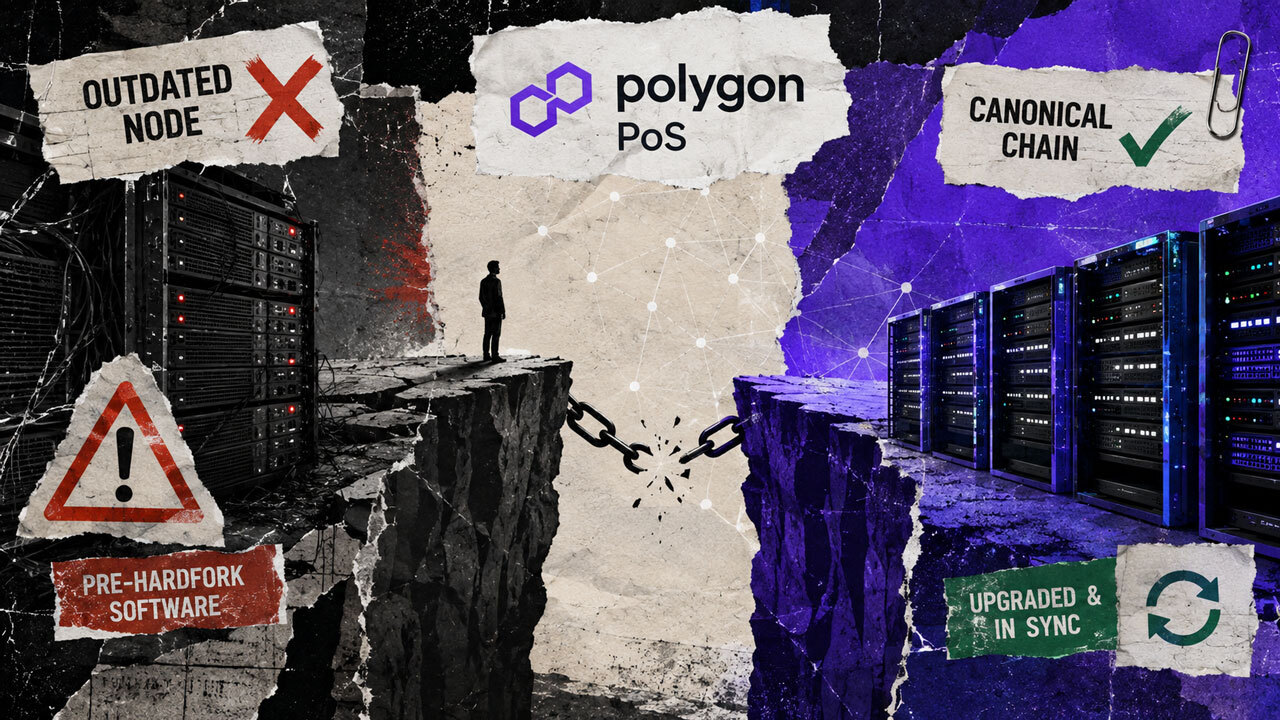
The completed upgrades closed separate block-stall, peer-crash and validator-work risks, leaving nodes on older binaries outside canonical consensus.
 CryptoSlate•Liam 'Akiba' Wright29 Aug