Red Seapage 2

Place · 175 articles
Share

Coverage, page 2

page 2 of 9

Yemen Market and Trade Bulletin August 2026 - Issued on 20th September 2026

Country: Yemen Source: Food and Agriculture Organization of the United Nations Please refer to the attached file. SHORT-TERM OUTLOOK AND IMPLICATIONS ON FOOD SECURITY: While Yemen’s acute food security crisis—with 18.3 million people facing acute food insecurity and over half the population in urgent need of humanitarian assistance—remains heavily driven by import dependency, rising prices, global humanitarian funding deficits, and severe climate impacts, conditions have been worsened by rapid frontline escalations in recent months. The resumption of fighting and the SBA capture of Yemen’s southern Red Sea coast have driven severe secondary impacts: according to IOM between June and mid-September 2026, displacement reached about 120 000 individuals (about 20 000 households), with 115,000 displaced during the first two weeks of September alone—concentrated primarily in Ta’iz (57%) and Lahj (26%) governorates. The territorial shifts and road closures have cut off key transit corridors, doubling transit times for goods transport, while restricting staff mobility and aggravating humanitarian access. This supply chain disruption, coupled with a 10% hike in domestic fuel prices announced by the SBA-run Yemen Petroleum Company, acts as a compounding driver of severe food insecurity —triggering a major inflationary wave across basic food commodities, agricultural inputs, transport, and essential services. KEY HIGHLIGHTS: EXCHANGE RATES: The Yemeni rial remained stable in GoY-controlled areas at around YER 1,555/USD in August—up 4% year-on-year and 6% above the three-year average—helping cushion immediate import costs despite fragile fiscal conditions. FOOD PRICES: Staple food prices remained broadly stable in August, with minor monthly shifts (sunflower oil up 2%, others under 1%) and most key commodities—including wheat flour, rice, and beans—falling year-on-year and remaining at or below three-year averages. MINIMUM FOOD BASKET (MFB): While Minimum Food Basket (MFB) costs remained stable—rising 1% from July but staying below 2025 and three-year averages—weak purchasing power and irregular government salaries continue to restrict household food access. FOOD AND FUEL IMPORTS: Recorded wheat and flour imports fell sharply in August (down 48% month-on-month and 32% below three-year averages), while fuel imports collapsed even further—dropping 67% from July and 89% below historical averages, with no petrol or diesel reaching northern ports. FUEL PRICES: Fuel prices showed mixed monthly trends in August—diesel rose 3% while petrol fell 1%—but both remained significantly elevated year-on-year and above three-year averages, continuing to drive up essential operational costs across transport, agriculture, water, and food distribution. TERMS OF TRADE (ToT): Agricultural terms of trade remained strong (4% above last year and 15% above three-year averages), whereas casual-labor terms of trade remained severely depressed—standing 13% below 2025 levels—highlighting continued purchasing-power stress for casual earners. CASUAL LABOR WAGE RATES: Agricultural wages held steady in August—remaining above 2025 and three-year averages—while unskilled casual wages saw a slight 1% monthly gain but stayed severely depressed year-on-year (-14%), highlighting stagnant non-agricultural earning potential. LIVESTOCK PRICES: Livestock prices continued to normalize in August with a 1% monthly drop for goats and sheep following the May pre-Eid peak, remaining significantly lower year-on-year (down 22% and 18%, respectively) but slightly above three-year historical averages.

ReliefWebReliefWebFood and Agriculture Organization of the United Nations20 Sept

Time to stop suggesting AI is conscious?, Riyadh Calling: Saudi’s Hour of News, Russian elections

This week, Saudi Arabia has turned to its allies for military support as Iran-backed Houthi rebels tighten their grip on Yemen’s Red Sea coast and the Bab el Mandeb shipping choke point, while drone attacks on the Kingdom’s oil infrastructure deepen an emerging energy crisis. In Russia, voters head to the polls for a tightly controlled parliamentary election with little meaningful opposition, as Putin insists there will be no new mobilisation. Meanwhile, warnings about the risks of AI are coming from inside the industry itself, with Microsoft AI chief Mustafa Suleyman warning against treating AI models like humans—and raising the prospect of a new “silicon species” competing with us for resources. Finally, in Britain, the royal family is back on the defensive as Earl Spencer’s new claims about Princess Diana’s funeral prompt an unusually pointed response from Buckingham Palace.

France 24France 24Gavin LEE18 Sept

Japan's Refiners Have Enough Crude to Last Through November, Industry Body Says

Japanese refiners have procured enough crude oil to last them through November, the head of the Petroleum Association of Japan (PAJ) said on Friday, amid yet another twist in supply availability from the Middle East.  The temporary shutdown of the East-West oil pipeline in Saudi Arabia following attacks last week added another uncertainty in oil cargo movements from the Middle East region after the Kingdom halted loadings at the Red Sea port of Yanbu.    The Saudis, however, have boosted shuttle-shipping through the Strait of…

OilPrice.comOilPrice.comMichael Kern18 Sept

Hormuz Tanker Traffic Slumps as Saudi Arabia Scrambles for New Oil Routes

Only four commodity vessels were detected to have moved inbound or out of the Strait of Hormuz on Thursday, shipping data showed early on Friday, while oil shipping options out of the Middle East became fewer with the closure of the Saudi pipeline to the Red Sea port of Yanbu. Three vessels moved into the Persian Gulf, and one exited the Strait on Thursday, down from the 10-day average of as many as 16 ships daily transiting the chokepoint, according to preliminary data from Kpler cited by Reuters. The tracking excludes any movements of ships that…

OilPrice.comOilPrice.comTsvetana Paraskova18 Sept

Thursday briefing: Yemen’s war continues to threaten oil supplies– but what about its people?

In today’s newsletter: The Houthi advance along the Red Sea coast raised fears for global trade and energy supplies, while more than 100,000 Yemenis have been displaced by the fighting Good morning. The lightning advance of Houthi militants along the west coast of Yemen over the past week has prompted fears of a spiralling conflict in the region and a new oil supply crisis. For families living in the Middle East’s poorest country, the most significant fighting between the Iran-aligned Houthis and the Saudi-backed Yemeni government forces in years is a crisis upon a catastrophe, with escalating civilian casualties and at least 100,000 displaced in recent days. UK politics | Key allies of Andy Burnham have warned the prime minister not to back down over his promises to put water companies under public control, after details emerged about the prime minister’s plan to give mayors more oversight of the industry. Environment | Climate breakdown probably weakened the glacier that collapsed causing catastrophic floods and killing hundreds of people in Nepal and Tibet last month, the first scientific study of the disaster has found. Health | Women with the same medical condition as men are less likely to be offered treatment such as surgery, a stent or a strong painkiller, research has found . Europe | The UK government’s EU reset summit will be delayed again unless the bloc agrees to discuss legislation that could lock British business out of parts of EU industry, government sources have said. UK news | Police searching for a three-year-old boy who went missing from a playground on the Suffolk-Essex border have found a body . Continue reading...

The GuardianThe GuardianLibby Brooks17 Sept
R

Atrocity Alert No. 494: Yemen, Belarus and Myanmar (Burma) - Global Centre for the Responsibility to Protect

Countries: Yemen, Belarus, Myanmar Source: Global Centre for the Responsibility to Protect Atrocity Alert is a weekly publication by the Global Centre for the Responsibility to Protect highlighting situations where populations are at risk of, or are enduring, mass atrocity crimes. THREAT OF RETURN TO LARGE-SCALE CONFLICT IN YEMEN AMID MAJOR ESCALATION Following months of heightened tensions, on 3 September the Houthis launched a widespread offensive against Saudi Arabia-backed Yemeni government forces in Taiz governorate, seeking to seize strategic areas along Yemen’s western coast. In the days since, fighting has dramatically expanded across several governorates, while the Houthis have intensified attacks on civilian and energy infrastructure in Saudi Arabia and reportedly assumed control of Yemen’s entire Red Sea coastline. According to the International Organization for Migration, over 100,000 people have been displaced in Yemen since the start of September, further compounding a crisis in which more than half of the population relies on aid and faces acute food insecurity. The past two weeks have marked one of the gravest escalations after years of reduced hostilities since the UN-brokered truce in 2022. During an emergency UN Security Council (UNSC) meeting on the situation on 10 September, Hans Grundberg, UN Special Envoy of the Secretary-General for Yemen, warned, “The question before the international community is no longer whether Yemen’s war will resume, but how to address a new and more dangerous phase – one whose consequences, if left unchecked, will not stay within Yemen’s borders.” Grundberg also stressed that the risks he outlined to the Council a month prior amid mounting tensions had now “turned into a harsh reality” and urged for Yemen not to “slip from the Council’s attention.” The latest escalation follows a deterioration in tensions since July, when an Iranian aircraft landed in Yemen – reportedly for the first time in a decade – and allegedly transported a Houthi delegation to Tehran for the funeral of Iran’s late Supreme Leader. The Yemeni government denounced the landing as a violation of national sovereignty and requested an emergency UNSC meeting to address Houthi violations of Council resolutions. On the day of the meeting, Yemeni government forces, in cooperation with Saudi Arabia, launched attacks on the Houthi-controlled Sanaa International Airport to prevent additional Iranian aircraft from landing. The Houthis subsequently launched attacks on Saudi Arabia, while fighting intensified throughout August. Dozens of casualties have since been reported, including from a Saudi strike on a prison in Yemen, a Houthi strike on an oil refinery in Saudi Arabia and clashes between the Houthis and Yemeni government forces. The international community must take decisive action to confront a return to large-scale conflict in Yemen, prevent further regional escalation and uphold civilian protection. States should support urgent diplomatic efforts to de-escalate the fighting and preserve prospects for a political process. They must also resolutely denounce attacks on civilians and civilian infrastructure by all parties to the conflict, ensure accountability for violations and scale up financial support for Yemen’s humanitarian appeal. BELARUS’ CRIMINAL JUSTICE SYSTEM WEAPONIZED AS AN “INSTRUMENT OF REPRESSION” The UN Group of Independent Experts on the Situation of Human Rights in Belarus warned on 15 September that the authorities have weaponized Belarus’ criminal justice system as an “instrument of repression” to systematically suppress dissent and fundamental freedoms and persecute perceived opponents. Karinna Moskalenko, Chair of the Group of Independent Experts, said, “Criminal justice processes are an integral part of a broader machinery of repression.” The repression extends beyond political opposition to human rights defenders, journalists and lawyers who defend people targeted by the authorities. The warning comes just days after the Minsk City Court sentenced human rights lawyer Dmitry Laevski to three years in prison on charges of “aiding extremist organization” and “discrediting” Belarus. According to Human Rights Watch and the Viasna Human Rights Center, the charges were linked to interviews Laevski gave to independent media about political trials, including those of opposition politician Viktar Babaryka and lawyer Maksim Znak, and the treatment of lawyers representing political prisoners. Laevski gave the interviews before the outlets were designated “extremist,” and prosecutors did not present evidence that his statements were false. He had previously represented Ales Bialiatski, the prominent human rights defender and 2022 Nobel Peace Prize co-laureate. Laevski’s imprisonment is part of a broader crackdown on the legal community in Belarus. Human Rights Watch says at least six other lawyers remain behind bars and dozens have lost their licenses on politically motivated grounds. The case illustrates the UN expert’s warning that Belarus’ “machinery of repression” remains operational not only against political opponents, but against those who defend them. Although Belarus has released dozens of political prisoners following negotiations with the United States (US) and recently pushed for the lifting of remaining US sanctions, the releases do not demonstrate broader human rights improvements and should not mask the staggering scale of ongoing repression. Bialiatski was among those released in December and expelled to Lithuania. Echoing documented patterns of transnational repression , his release did not end the persecution. In August he was placed on the Commonwealth of Independent States’ interstate wanted list at the request of Belarus’ Ministry of Internal Affairs. More than 5,000 Belarusians, including human rights defenders, journalists and activists, have reportedly been placed on this list. The Belarusian government must immediately and unconditionally release all political prisoners, halt politically motivated prosecutions and guarantee that civil society can carry out its work without fear of reprisal. The international community must maintain scrutiny of the human rights situation in Belarus and take all appropriate measures to advance accountability and protect victims. Any diplomatic concessions and sanctions relief should be tied to measurable structural changes, including an end to politically motivated prosecutions, legislative reforms and meaningful accountability for possible crimes against humanity and serious human rights violations. MYANMAR’S MILITARY SEEKS LEGITIMACY WHILE COMMITTING ATROCITIES AGAINST CIVILIANS While addressing the UN Human Rights Council on 7 September, High Commissioner Volker Türk deplored the deepening crisis across Myanmar (Burma) , noting that credible sources verified more than 1,200 civilian killings from 1 June 2025 to 31 May 2026, with airstrikes remaining the primary cause of deaths. Open sources indicate the true figure may exceed 3,000 civilian deaths. In July and August alone, local monitors documented 27 airstrikes across Rakhine and Chin states that killed 53 civilians and injured 163 others. According to High Commissioner Türk, forced conscription has also become a key tactic for the military “to sustain its advances on the battlefield, control the population, and spread fear.” High Commissioner Türk also emphasized, “The catastrophic situation of the Rohingya is a wound that affects the entire country.” Last month marked nine years since the military’s genocide of the Rohingya in Rakhine State. Today, Rohingya remaining in Rakhine face widespread and systematic abuses by both the military and the Arakan Army, including killings, arbitrary detention, torture, sexual violence, forced recruitment and forced labor. The UN Independent Investigative Mechanism for Myanmar (IIMM) reported that more than 154,000 Rohingya have fled to Bangladesh since early 2024, joining nearly one million refugees who still cannot safely return home. Despite this deteriorating crisis, the military continues efforts to secure international legitimacy. The junta’s sham elections excluded opposition candidates, displaced civilian populations, while voting took place in only 263 of 330 townships. High Commissioner Türk described the elections as an attempt to gain international recognition and warned that normalizing relations without changes in the military’s conduct would fuel further violence against civilians. Meanwhile, on 8 September the UN General Assembly appointed the new Credentials Committee, a nine-member body of member states responsible for examining the credentials of representatives to the UN. Five days later, the military-backed authorities announced that they had revoked the status of Myanmar’s Ambassador Kyaw Moe Tun. For five years, the General Assembly has deferred competing credentials claims, allowing Ambassador Kyaw Moe Tun, appointed by the democratically elected government before the 2021 coup, to continue representing Myanmar. The Credentials Committee and General Assembly should reject any attempt to transfer Myanmar’s UN representation to the military-backed authorities and ensure Ambassador Kyaw Moe Tun remains in place. Member states should also avoid actions that confer legitimacy on the military and halt transfers of arms, aviation fuel and dual-use items that facilitate attacks on civilians. The international community must also support accountability for atrocities through the International Criminal Court, International Court of Justice and the IIMM and increase humanitarian assistance for Rohingya and other affected communities.

ReliefWebReliefWebGlobal Centre for the Responsibility to Protect16 Sept
US officials decide against backing Saudi Arabia in Yemen after meeting Houthi leaders

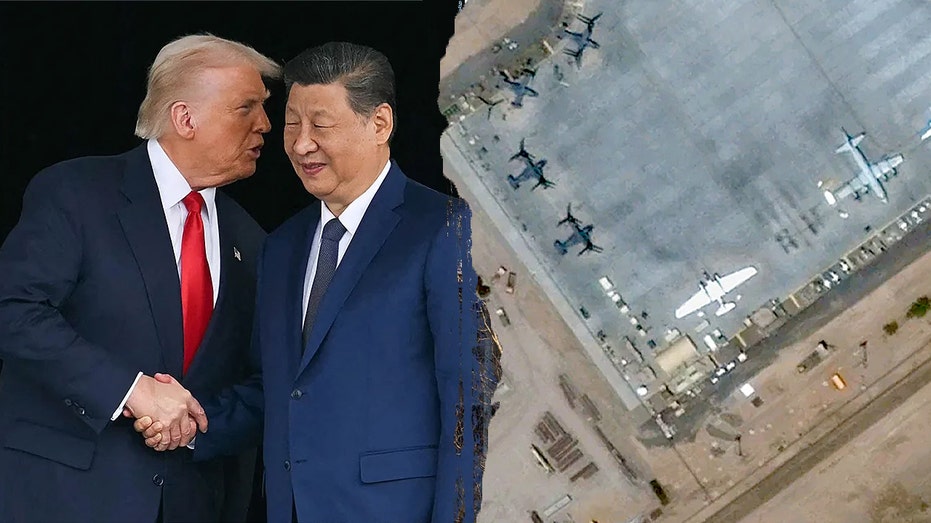
Armed group appears to reach agreement with Trump administration over safety of Red Sea shipping Officials from the US met Houthi leaders over the weekend at the country’s embassy in Muscat, Oman, it has been confirmed, leading to the US decision not to intervene to help Saudi Arabia drive back a Houthi advance inside Yemen . The Houthis reassured the US that the ceasefire agreement between the two sides struck in 2025 still held and the movement had no intention of attacking US shipping in the Red Sea. Only Saudi-linked shipping was regarded as a target owing to its blockade of Yemen, the Houthis confirmed. Continue reading...

The GuardianThe GuardianPatrick Wintour Diplomatic editor16 Sept
  • neutral toward Houthis · 93%
R

ASG Khiari's remarks to the Security Council on developments in Yemen [as delivered]

Countries: Yemen, Djibouti Source: UN Department of Political and Peacebuilding Affairs New York, UN Khaled Khiari, Assistant Secretary-General for the Middle East, Europe, the Americas, Asia and the Pacific Mr. President, The situation in and around the Bab al Mandab Strait has become increasingly volatile in recent days. Further to the briefing of Special Envoy Grundberg to this Council on 10 September, fighting has intensified along Yemen’s west coast, as the Houthis continued their advance towards the Bab al Mandab Strait, reportedly capturing several islands in the southern Red Sea. According to maritime tracking sites, commercial shipping flows through the Red Sea appear to remain unaffected for the time being. Nevertheless, the Houthi advance has added to market concerns, amid continuing disruptions in the Strait of Hormuz. In parallel, the Government of Yemen reportedly launched a counteroffensive following the Houthi advances over the past week, with localized clashes reported across several frontlines in Marib, Lahj, Al-Jawf, Hajjah, Al-Bayda and Sa’ada. The counteroffensive, reportedly including extensive airstrikes, also extends to Taiz. Unconfirmed estimates indicate hundreds of combatant casualties in recent days. Mr. President, The impact of these hostilities also extends to the civilian population, forcing people to flee their homes, causing civilian casualties and putting already stretched humanitarian operations under growing pressure. Our colleagues from the Office for the Coordination of Humanitarian Affairs (OCHA) warn that at least 125,000 people have now been displaced across Yemen since the start of the month. Over this same period, the UN Human Rights Office has reported 40 civilian casualties – eight people killed and 32 others injured. Women and children account for half of those killed and more than half of those injured. Meanwhile, across the Red Sea in Djibouti, UN teams are working closely with the Government of Djibouti in response to the arrival of people fleeing the latest escalation of conflict in Yemen. As of 14 September, approximately 2,300 people had arrived in the Obock region in northern Djibouti. Registration is continuing, and further arrivals are expected. We call on all parties to protect civilians, respect international humanitarian law, and facilitate safe and unimpeded humanitarian access so that urgently needed assistance can reach communities in need. Mr. President, The ongoing escalation is not limited to the Bab al Mandab Strait and Yemen. On 14 September, the spokesperson for the Saudi coalition forces said 13 individuals were injured, and seven residences were damaged in Houthi missile and drone strikes on Abha, Khamis Mushait, and Taif in Saudi Arabia. On 12 September, the Kingdom of Saudi Arabia condemned the targeting of the East-West Pipeline in the Riyadh and Madinah regions by several drones reportedly launched from an area inside Iraq. The attacks reportedly resulted in injuries and material damage. The strikes caused the pipeline to shut down for repairs, interrupting the crucial artery Saudi Arabia had been using as an alternative to the Strait of Hormuz. In a statement, the Saudi Ministry of Foreign Affairs indicated it had decided to avoid escalatory countermeasures following a request from Iraq’s Prime Minister. On 12 September, the Office of the Iraqi Prime Minister released a statement expressing appreciation for “the Kingdom’s response to the efforts made by Iraq to contain the situation.” The statement also noted that Prime Minister al-Zaidi had ordered an urgent investigation into the attacks and the parties behind them. Iraq also reaffirmed that “its territory and airspace will not be a launching pad for aggression against any State”. Mr. President, On 14 September, the Houthis claimed to have targeted the King Khaled Airbase in Khamis Mushait in southern Saudi Arabia with several ballistic missiles and drones in response to “300 Saudi airstrikes over the past five days”. This follows an earlier attack on 8 September on civilian and economic targets across Abha, Khamis Mushait, Jizan and Najran in southern Saudi Arabia, reportedly injuring 73 civilians, including women and children. We reiterate our firm condemnation of Houthi cross-border attacks on civilian and energy infrastructure in Saudi Arabia. Navigational rights and freedoms in and around the Red Sea and the Bab al Mandab Strait must be fully restored and respected by all, in accordance with international law and consistent with relevant resolutions of this Council, including resolution 2722. We remain concerned by the continued intensification of military clashes across multiple frontlines in Yemen, and call upon all parties to exercise restraint, prevent further escalation, and engage constructively with UN-led political efforts. Mr. President, We remain deeply concerned by the continued instability affecting another critical maritime waterway in the region – the Strait of Hormuz. Navigational rights and freedoms in and around international maritime corridors must be fully restored and respected in accordance with international law. The longer the Strait remains choked, the higher the cost globally. Further escalation risks grave consequences for international peace and security, global energy markets, food security, and the economies of countries far beyond the region, particularly the most vulnerable. All parties must take every feasible precaution to protect civilian vessels, crews and infrastructure. Mr. President, Developments around the Bab al-Mandab underline the urgent need to prevent Yemen’s conflict from further threatening the security of the Red Sea and this vital international maritime route. What is needed now is sustained engagement that reduces tensions, prevents further escalation and safeguards freedom of navigation. The parties in Yemen should prioritize dialogue and engage constructively with UN-led efforts toward a negotiated political solution. Thank you.

ReliefWebReliefWebUN Department of Political and Peacebuilding Affairs15 Sept

Saudi crown prince seeks neighbours' backing as Houthi attacks rattle Red Sea oil routes

Saudi Crown Prince Mohammed bin Salman and Egyptian President Abdel Fattah al-Sisi called for free and secure navigation in the Red Sea during talks in Cairo on Tuesday, as the kingdom vowed to respond "firmly" to attacks by Yemen's Houthis. The two regional powers discussed the threat posed by the Iran-backed group's control over the Bab al-Mandab Strait. FRANCE 24's Emerald Maxwell has more.

France 24France 24FRANCE2415 Sept