




How much is UK supporting Saudi Arabia in its war with Iran-backed Houthis?
UK to refuel Saudi fighter jets and France to secure energy infrastructure amid fighting with Yemen's Houthi group.
 Al Jazeera3h ago
UK to refuel Saudi fighter jets and France to secure energy infrastructure amid fighting with Yemen's Houthi group.
Al Jazeera3h ago
François Picard is pleased to welcome Eoghan Gilmartin, an award-winning investigative journalist and part of The Guardian team whose investigation examined links between IPCC authors and Saudi Arabia’s oil industry, including Saudi Aramco. Their findings take us to the intersection of climate science, political and economic interests, and institutional credibility, and into the politically consequential terrain of climate mitigation: how societies decide to respond to climate change.
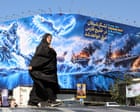
Oil prices decline for a sixth session, as Saudi Arabia reportedly restarts its east-west pipeline Good morning, and welcome to our rolling coverage of business, the financial markets and the world economy. Oil prices have fallen for a sixth session, dropping further below $100 a barrel on reports of increased supply from the Middle East, and amid hopes of progress in talks between the US and Iran. 9am BST: Eurozone S&P Global flash manufacturing PMI for September 9.30am BST: UK S&P Global flash manufacturing PMI for September 2.45pm BST: US S&P Global flash manufacturing PMI for September Continue reading...
 The Guardian•Julia Kollewe10h ago
Brent crude fell in early Asian trading after Donald Trump said US and Iranian representatives had held what he called “very productive” talks. Reports that Saudi Arabia is restarting a key oil pipeline also weighed on prices.
 Euronews11h ago
Brent crude fell on Wednesday morning after Donald Trump said US and Iranian representatives had held what he called “very productive” talks. Reports that Saudi Arabia is restarting a key oil pipeline also weighed on prices.
Euronews11h ago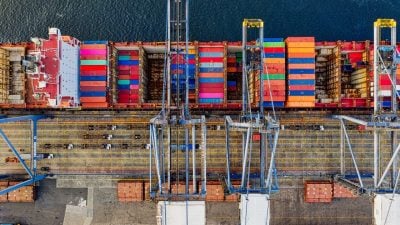
The UK's military support to Saudi Arabia highlights the strategic importance of securing global trade routes amid regional instability.
 CryptoBriefing•Estefano Gomez13h ago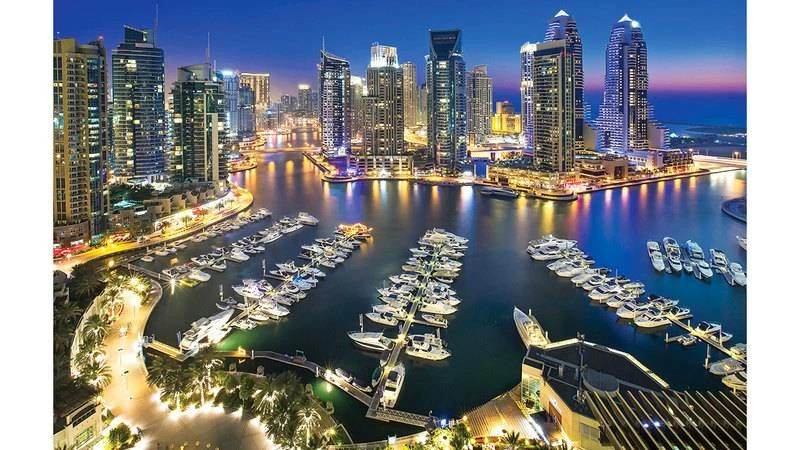
Dubai: An analysis conducted by the real estate platform DXBinteract showed that Indian investors topped the list of international interest in buying properties in Dubai, with a share of 16.3% of the total interest and digital search observed during the period from June to August 2026, while the United States recorded a remarkable jump to occupy second place with a share of 13%. The platform found that America’s second-place ranking on the list represents the highest ranking the United States has ever recorded in its readings, making the rise in American interest the most prominent shift during the analysis period, and an indication of the expansion of the potential demand base for Dubai real estate to include markets that were not ahead in previous rankings. According to the data, the United Kingdom came in third place with 10.7%, while Pakistan was fourth with a share of 5.4%, followed by Saudi Arabia with 4.4%, and then Egypt with 3.7%. Canada came in seventh with a share of 3.5%, followed by Australia with 3%, then France with 2.9%, and Singapore with 2.5%. The top 10 countries collectively accounted for 65.4% of the observed international attention, while the top 20 countries accounted for 80.4%, and the remaining 19.6% was distributed among the rest of the markets. Fatih Al-Masdi, founder of the real estate platform, DXBinteract, said that the Dubai Land Department provides accurate and reliable data on transactions, prices, sizes, areas and projects, but it does not currently publish a public and updated database that allows for the classification of actual transactions according to the nationality of the buyer. Fatih Al-Masdi, founder of the real estate platform, DXBinteract. Picture credit: Supplied Al-Masdi added that this deficiency makes some of the rankings circulating about “the most purchasing nationalities” unverifiable at the level of the entire market. He explained that “the reports of some real estate companies regarding the nationalities of buyers mainly reflect the mix of their clients, not the entire market, as some companies specialise in certain clients.” Al-Masdi stressed that the analysis of search results, digital interest, and the distribution of platform visits by country provides, in his estimation, the best proactive indicator available for monitoring the source of international interest, in the absence of official, public, and up-to-date data on the nationalities of buyers. He stressed that these indicators are not a substitute for transaction data, but rather measure the stage that precedes it, when the potential buyer begins to research, compare and explore projects and prices. He said that “the high levels of international interest in Dubai real estate reflect the existence of a base of potential buyers that could turn into actual demand during the fourth quarter of 2026.” He added: "This data helps us identify the markets from which future demand may come, while actual transaction data remains the decisive indicator of whether interest will turn into buying." He explained that a decrease in a country’s digital presence should be interpreted as a decrease in detectable online interest, and not as a definitive judgment on the actual size of demand or the number of transactions. Interest from outside the country The DXBinteract real estate platform's analysis covers the period from June to August 2026, excluding domestic demand from within the UAE. The figures reflect the distribution of digital interest by country for potential demand, not data on confirmed transactions or buyer nationalities. Therefore, the published percentages reflect each country's share of the total interest coming from outside the UAE, and do not represent its share of total platform visits, including visits from the local market.

Aramco is preparing to reopen Yanbu to Asian buyers while pushing more crude through Hormuz than it has in a month

Saudi monarch's rare condemnation hints at sense of urgency in the kingdom amid ramped-up attacks from Yemen.
Al Jazeera21h ago
The Kingdom of Saudi Arabia is mostly known for its global dominance over petroleum production and oil reserves - not necessarily cars and auto manufacturing, and certainly not electric vehicle production. So it was a little surprising on Monday when a Saudi startup called Ceer unveiled a pair of hyper-angular, spaceship-like EVs, with plans to […]
 The Verge•Andrew J. Hawkins21h ago
The strike came days after Saudi Arabia accused the Houthis of targeting the holy city of Mecca, though the fighters denied the claim.
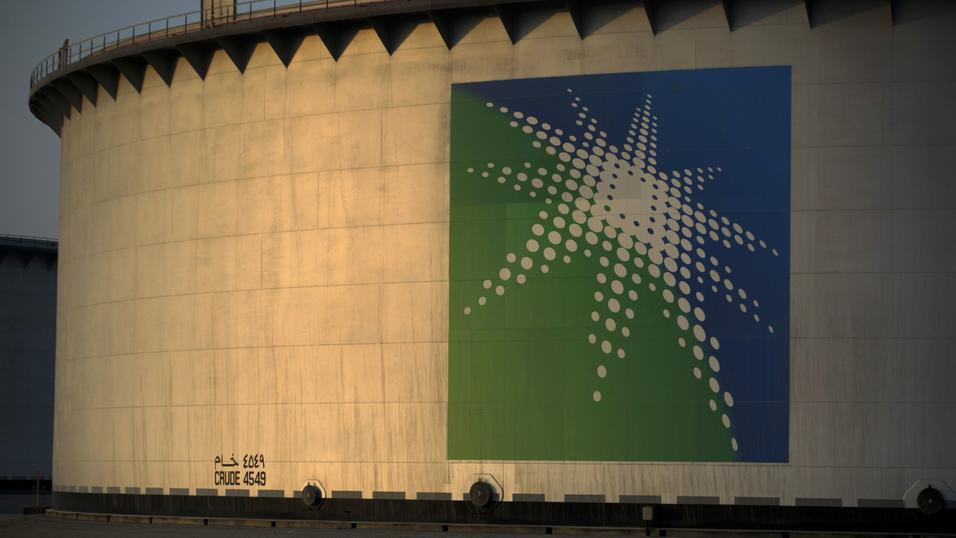
Saudi Arabia has restarted its East-West oil pipeline, restoring at least some flow through the 4-million-barrel-per-day route that had become the kingdom’s main escape hatch around the Strait of Hormuz. The pipeline is running at a low rate for now, according to Reuters sources, with Aramco working to return flows to roughly 4 million bpd. A full restart could still take weeks. One cargo was scheduled to load at the Red Sea port of Yanbu Tuesday for China. Oil traders didn’t wait for full capacity. Brent saw a temporary dip of more…
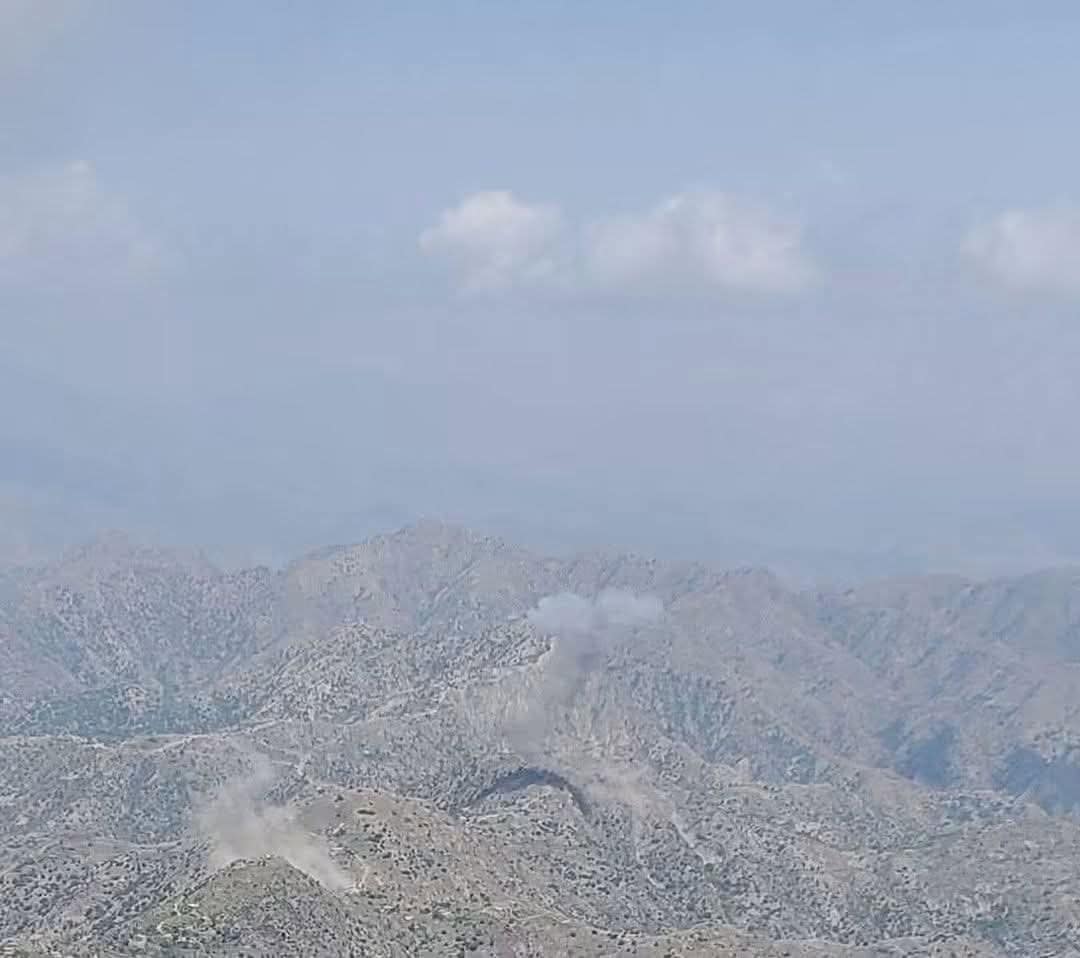
The Houthis and the Yemeni Armed Forces, along with allied militias, have continued fighting on multiple fronts across the country, with the Houthis particularly focused on the highlands inland from their recent coastal advance. The Houthis have also maintained their attacks on Saudi Arabia, prompting Riyadh to renew its request for US airstrikes, which President Donald Trump has repeatedly rejected.
A conflict that has simmered in Yemen for years has flared in recent weeks, with consequences that could reach far beyond the Middle East. The Houthi rebels have seized nearly all of Yemen’s Red Sea coastline, giving the Iran-aligned militant group control of the Bab al-Mandab Strait, a key chokepoint for global trade. The Houthis have also intensified attacks on energy facilities in Saudi Arabia, the group’s foe and the world’s biggest oil exporter. Riyadh has been forced to temporarily shut down a crucial oil pipeline after…

Key route for Saudi crude to reach Red Sea has been closed for two weeks following drone strikes

Saudi Arabia's exit from mBridge may impact global digital currency collaboration, potentially slowing advancements in cross-border payment solutions.
CryptoBriefing•Vivian Nguyen22 Sept
Saudi Arabia's strategic pipeline expansion could mitigate geopolitical risks, stabilizing oil markets by reducing reliance on the Strait of Hormuz.
CryptoBriefing•Editorial Team22 Sept
Trump will meet with leaders from Saudi Arabia, the UAE, Qatar, Bahrain, Kuwait and Oman on the sidelines of UNGA.
Al Jazeera22 Sept
The Iran war and the fight between the Houthis and Saudi Arabia in Yemen have forced Gulf Arab states to reckon with spiraling conflicts and to reassess U.S. security guarantees.
 The New York Times•Ismaeel Naar22 Sept
US hesitation has amplified doubts in Riyadh about Washington’s reliability as its prime defence partner