

Syria’s al-Sharaa answers questions on Israel’s violations in Syria
Syria’s President Ahmed al-Sharaa says Donald Trump should give New Jersey to Israel, instead of the Golan Heights.
 Al Jazeera1h ago
Syria’s President Ahmed al-Sharaa says Donald Trump should give New Jersey to Israel, instead of the Golan Heights.
Al Jazeera1h ago
Second day of UN General Assembly kicks off with speeches from world leaders, including from Syria, Iran and Ukraine.
Al Jazeera3h ago
President Ahmed al-Sharaa has improved his diplomatic standing since he last addressed the U.N. General Assembly but faces mounting domestic economic and security challenges.
 The New York Times•Christina Goldbaum4h ago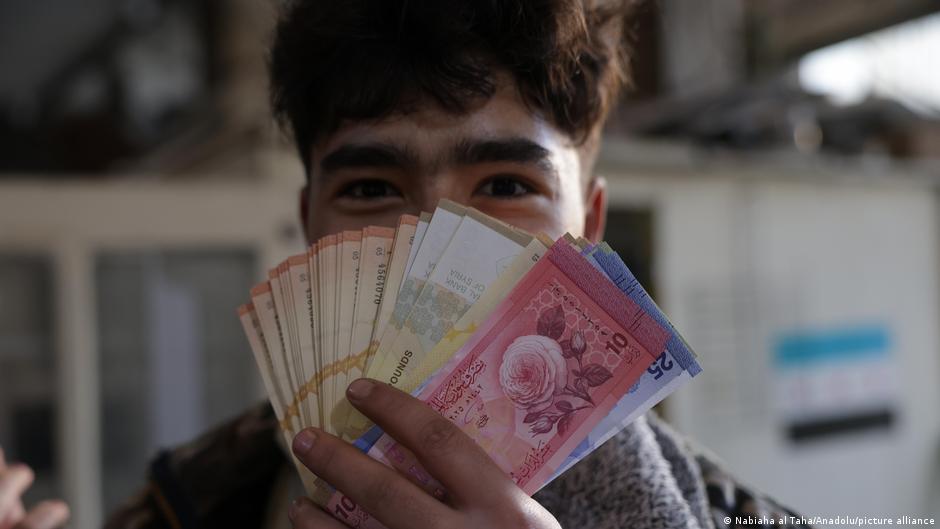
The Syrian government says it is restructuring the economy and announces prosperity. But ordinary Syrians are not feeling it. In fact, they say their lives are getting worse. Who exactly is likely to benefit then?
 Deutsche Welle8h ago
Countries: Syrian Arab Republic, Lebanon Source: International Organization for Migration Please refer to the attached file. Cross-border movements from Lebanon into Syria have continued to stabilise since the ceasefire announced on 17 April 2026, with recent movement patterns becoming more gradual. Between 2 March and 21 September, DTM identified 128,129 arrivals across 1,185 communities spanning all 14 governorates. Syrian nationals accounted for 99 per cent of recorded arrivals, while Lebanese nationals represented less than 1 per cent. Flow monitoring at four assessed Syrian-Lebanese border crossings recorded approximately 813,000 movements into Syria during the same period. Of these, around 98 per cent were Syrian nationals and 2 per cent were Lebanese nationals. A further 4,100 Lebanese nationals were recorded transiting through Syria towards Jordan, indicating that Syria continues to serve as a transit route for onward regional movement alongside arrivals into the country. Access conditions at the border have also continued to shape observed movement patterns. The Arida crossing has remained closed for more than six weeks following its temporary closure on 6 August for technical works on the Lebanese side, with movement data therefore available only through 5 August. KIs reported that those who previously relied on Arida have had to use alternative crossings located further from Tartous Governorate, contributing to longer journeys and increased travel costs.
 ReliefWeb•International Organization for Migration15h ago
Countries: Iran (Islamic Republic of), Lebanon, Yemen Source: World Health Organization Please refer to the attached file. ACUTE HEALTH THREATS Following a period of relative calm since late July, hostilities began to re-intensify on 30 August in Iran, with additional reported impacts in military bases in Jordan and the United Arab Emirates. Additional sanctions announced on 24 August on Iran have had significant effects on the economy, including on health. Currency depreciation and access restrictions to international financial systems are adding additional complexities to humanitarian imports, including medicines. WHO offices are reporting frequent power cuts impacting power continuity in hospitals. In Lebanon, despite the June ceasefire, hostilities continue to be reported around Nabatieh with people unable to return home in the affected areas. In Syria, hostilities reported in southern Syria and along the Israel-Lebanon border raise concerns of localized escalation and potential spillover effects. In Yemen, the current escalation has greatly increased trauma needs and resulting in increased displacement and additional pressure on an overstretched health system, with conflict occurring in areas affected by diseases such as measles, cholera, dengue, food insecurity, and malnutrition. The security situation in Iraq has also deteriorated, with several airstrikes reported across multiple governorates since late July. Across the Middle East, attacks impacting oil infrastructure and shipping raise additional concerns on the continued effects of the current escalation on oil supplies and prices in addition to the potential environmental health consequences
ReliefWeb•World Health Organization17h ago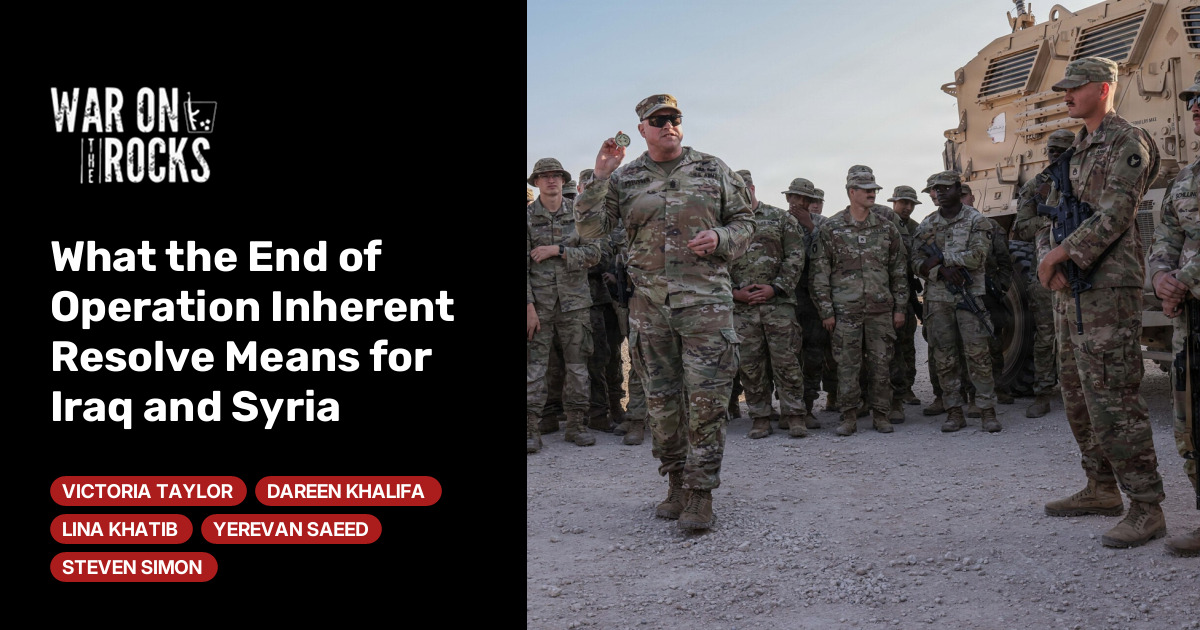
Operation Inherent Resolve is scheduled to end on Sept. 30, as remaining U.S. troops in northern Iraq complete their withdrawal. The United States formed Combined Joint Task Force – Operation Inherent Resolve in October 2014 to bring together partners to combat the Islamic State of Iraq and the Levant (ISIL), which had seized territory in parts of Iraq and Syria. The end of Operation Inherent Resolve highlights the success of coalition efforts against ISIL but also raises questions about future political stability and security in Iraq and Syria — and whether ISIL could rise again. The U.S. departure from northern
 War on the Rocks•Steven Simon19h ago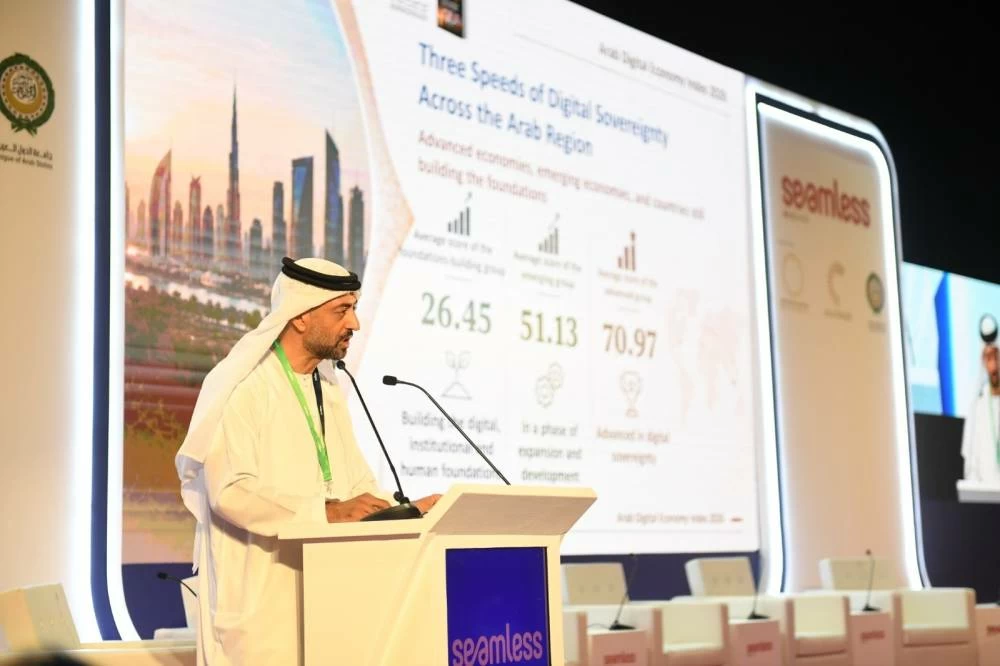
Dubai: The UAE has topped the Arab Digital Economy Index 2026, whose results were announced on Tuesday as Seamless Middle East 2026 opened in Dubai under the patronage of H.H. Lt. General Sheikh Saif bin Zayed Al Nahyan, Deputy Prime Minister and Minister of the Interior, and Supreme President of the Arab Federation for Digital Economy. Held at Dubai World Trade Centre from 22nd - 24th September, the event brings together the payments, fintech, banking, digital commerce, retail, identity and logistics sectors, with more than 25,000 participants, around 800 speakers and 750 exhibitors. The opening session drew Arab and international diplomatic, government and institutional representatives, including ambassadors and delegates from Egypt, Oman, Qatar, Lebanon, Mauritania, Tunisia, Syria, Djibouti and Palestine, alongside Russian representatives and officials from international and regional organisations. UAE government, economic, financial and academic officials also attended, along with representatives of the finance, energy, customs and economic development sectors, banks, chambers of commerce, research and innovation centres and international organisations. The opening programme featured an address by Dr. Ali Mohammed Al-Khouri, Chairman of the Board of Directors of the Arab Federation for Digital Economy and Advisor to the Council of Arab Economic Unity, followed by the launch of the Arab Digital Economy Index 2026. Officials from the Sharjah Research, Technology and Innovation Park and the UAE Banks Federation also addressed the event before delegates toured the exhibition. The index assesses digital-economy performance across a framework covering institutions, infrastructure, workforce, digital government, innovation, knowledge and technology, market forces, capital-market growth and sustainable development. The UAE led the highest-performing group, which also included Saudi Arabia, Bahrain, Qatar and Oman. The second group, comprising countries with medium levels of performance, included Jordan, Kuwait, Morocco, Egypt, Tunisia and Algeria. The third group, representing countries in the process of building their digital foundations, comprised Lebanon, Mauritania, Iraq, Djibouti, Comoros, Libya, Palestine, Syria, Sudan, Somalia and Yemen. The results showed stronger progress across the Arab world in digital infrastructure, government services and cybersecurity, while wider gaps remained in innovation, the data economy, research and development, and the ability to translate digital investment into productivity and economic value. Al-Khouri said the latest edition of the index places digital sovereignty at the heart of discussions on the future of Arab economies, as data, artificial intelligence, cloud infrastructure, semiconductors and cybersecurity become increasingly important to countries' economic and institutional capabilities. Commenting on the UAE's ranking, he said it reflects years of sustained investment in digital infrastructure, government services, cybersecurity, artificial intelligence and the knowledge economy, establishing the country as a leading model for building an innovation-driven economy that translates technological advancement into higher productivity and economic value. Al-Khouri thanked the UAE for supporting the development of the Arab digital economy and expressed appreciation to President His Highness Sheikh Mohamed bin Zayed Al Nahyan for his support and patronage of the Arab Digital Economy Vision, which he said has helped advance joint Arab action in the sector. He also praised the continued support of H.H. Lt. General Sheikh Saif bin Zayed Al Nahyan, saying his supportive role has helped transform several Arab initiatives from concepts and strategies into practical programmes, platforms and projects. The Arab Digital Economy Vision was launched in Abu Dhabi in 2018 with the support and patronage of President His Highness Sheikh Mohamed bin Zayed Al Nahyan and was subsequently adopted at the Arab leaders' level in 2022 as a framework for regional cooperation in the digital economy and technological transformation. The Arab Digital Economy Index is among the tools developed by the federation to measure progress, identify gaps and determine future priorities. Seamless Middle East 2026 features three days of discussions on fintech, digital payments, e-commerce, artificial intelligence, data analytics, cybersecurity and emerging technologies, bringing together government entities, financial institutions, technology companies, investors and experts from the region and beyond.

Countries: Syrian Arab Republic, Egypt, Iraq, Jordan, Lebanon, Türkiye Source: UN High Commissioner for Refugees Please refer to the attached file. REGIONAL OVERVIEW As of 31 August 2026, an estimated 1.8 million Syrians had returned from neighbouring countries, alongside over 2 million internally displaced persons (IDPs) who returned to their areas of origin. Return movements continued across the region, although patterns and volumes varied by operation. This edition focuses on the role of cash assistance in supporting voluntary return and reintegration. Across host countries and inside Syria, cash assistance helps refugees and returnees address practical barriers before departure, during movement and after arrival, including transportation, documentation, baggage, food, shelterrelated costs and other immediate household needs. Cash assistance is one part of UNHCR’s broader protection and durable solutions response. It complements counselling, legal assistance, information provision, protection monitoring, in-kind support, referrals and community-based services. It is not designed as an incentive to return; rather, it supports refugees and returnees who have already made, or declared, an informed and voluntary decision to return.
ReliefWeb•UN High Commissioner for Refugees22 Sept
Country: Syrian Arab Republic Source: UN Office for the Coordination of Humanitarian Affairs Please refer to the attached file. New York, 17 September 2026 As delivered Mr. President, Thank you for the opportunity to brief the Council on the humanitarian situation in Syria. And thank you, as ever, to my colleague [UN Deputy Special Envoy for Syria, Claudio Cordone] for his work. Mr President, my briefings tend to feature many numbers, but here is the most important one. Since December 2024, more than 2 million internally displaced Syrians and 1.8 million refugees have gone home voluntarily. This historic wave of return – the highest in Syria in decades – is a profound sign of hope. Improved security, eased sanctions and resilient communities are driving this recovery. Through 300 partners, we have reached over 2.5 million people monthly this year with humanitarian support, reopening key routes into Al-Hassakeh and flights to Deir ez Zour in August. However, four obstacles threaten this progress: continued displacement, localized insecurity, regional escalation and landmines. First, 5.5 million people inside Syria have not yet gone home, nearly 800,000 of them still in camps – over 75 per cent of them women and children. And currently only 18 per cent of Syrians outside the country say that they plan to return home in the coming year. Without homes, schools or clean water, today’s returnees risk becoming tomorrow’s displaced. So, we must continue to support all efforts to see the Government’s No Tents and No Camps initiative to achieve safe return for all those who choose to go home. A second challenge, localized insecurity risks choking recovery. ISIL attacks in the east and northeast, sporadic violence, rebuilding challenges, and bureaucratic hurdles threaten lasting peace. True stability is not possible until every community, most crucially Syria’s women, are fully integrated in the nation’s political and economic fabric. Third, and as you’ve just heard, the mounting risks beyond Syria's borders. The escalation of tension across the region means maritime choke points, disrupted supply chains, reduced humanitarian access and even greater economic pressure on Syrian families. Alongside the weeks of disruption to the Strait of Hormuz, we now face blockages in Bab al-Mandab. And for Syrians, I fear that means increased fuel prices, freight charges, insurance premiums, procurement lead times, as well as disruptions to imports from Asia and the Gulf and to shipping through Tartous and Latakia. Higher diesel costs – up 40 per cent only this week – will hit agricultural production, water pumping, electricity generation, bakeries and heating as winter approaches, with disproportionate consequences for displaced people and other vulnerable households. For families already struggling, higher fuel and transport costs will increase the prices of food, medicines and other essential goods. The cost of what we call a Minimum Expenditure Basket has increased 33 per cent since June 2025, while electricity tariffs have increased in some places by several hundred per cent. And those price increases, of course, drive up the cost of our humanitarian response. A fourth challenge: mines are making recovery efforts a lethal gamble. Since December 2024, explosive ordnance has killed 880 people, including 269 children, and maimed 1,616 more, nearly 40 per cent of them children. Mines block the fields, orchards, grazing lands that families need to feed themselves. You cannot build an economy over a minefield. So, it is right that the Syrian government has made the No Mines initiative a centrepiece of its planning, backed by the humanitarian community. Mr. President, I close with three asks of this Council, all in pursuit of the effort to help Syrians return, rebuild and move beyond crisis – and beyond the need for Security Council discussion. First, we must invest in the transition out of humanitarian need and towards reconstruction and growth. We should be making a collective push alongside the Syrian authorities to move through this transition in the coming year. But while humanitarian organizations continue to deliver, resources fall dramatically short of what is needed. Agencies are being forced to reduce, delay or stop activities just when families with the most severe needs need help to make the journey from displacement to recovery. Food assistance for the most vulnerable is being halved. Our hyper-prioritized appeal may be 57 per cent funded now, but key sectors lag behind. Our food and education plans are only 26 per cent funded. So, I thank all donors who are stepping up to fund the appeal. All of this tracked in our publicly available system, including the US with $297 million; the European Commission $221 million; the UK, $46 million; Japan, $42 million; and Germany, $40 million. All those figures publicly available, and many more. And I thank donors for doing so in line with the Humanitarian Reset. As of the end of August, the Syria Humanitarian Fund has received $325 million, over twice last year’s figure. As winter approaches and the regional situation remains unstable, funding will be vital as a bulwark against losing those advances that Syria has fought so hard to achieve. If we fail to invest today, the costs will be higher tomorrow – in renewed displacement, deteriorating services and lost opportunities to consolidate stability and transition towards reconstruction and development in Syria. My second ask: remove the obstacles standing between recovery and development. We must work with the Syrian authorities to clear the mines. Remove the rubble. And continue progress in unblocking administrative delays. And to fund livelihoods. Third, we must invest the political capital needed to keep Syria out of regional conflict. We must redouble diplomatic efforts in support of Syria’s territorial integrity. We must take every measure so that the Syrian people are not subjected to further conflict, displacement and chaos. Mr. President, Syrians have endured enough. They are making progress that has defied many who predicted or wished it impossible. Let us also meet this moment. Thank you.
ReliefWeb•UN Office for the Coordination of Humanitarian Affairs22 Sept
Countries: Syrian Arab Republic, Jordan, Lebanon, Türkiye Source: International Organization for Migration Please refer to the attached file. This report provides insights into the evolving displacement and return trends of key population groups across all governorates in Syria. Data was collected between 1 and 31 August through a network of 30,164 Key Informants across 9,755 locations. Key findings include: 9,004 new internally displaced persons (IDPs) were recorded in August. 32,823 IDPs returned to their locations of origin during the same period. The cumulative number of IDP returnees since December 2024 stands at 2,244,736 . The total number of IDPs since 2011 who remain displaced is 5,625,935 . 17,725 Syrians arrived from abroad to their areas of origin in August, bringing total arrivals since December 2024 who returned to their areas of origin to 1,306,055 . 1,396 Syrians arrived from abroad to other locations in August, bringing total arrivals since December 2024 who returned to other locations to 112,815 .
ReliefWeb•International Organization for Migration22 Sept
As President al-Sharaa is set to present a ‘new Syria’ at UNGA, Syrians at home demand safety and justice.
Al Jazeera22 Sept
Country: Syrian Arab Republic Source: UN Office of the Special Envoy for Syria Please refer to the attached file. Mr. President (Ambassador Jérôme Bonnafont, France), 1. In my latest stay in Syria, I have seen further progress in institutional development, while Syrians continue to grapple with dire economic conditions and the country confronts internal and external security challenges. Above all, I had the opportunity to hear from local officials and civil society in different parts of the country a strong commitment to build a Syria where everyone feels they belong, with representative institutions, a culture of accountability for both past and present, and tangible improvements in people’s lives with sustained international support. Mr. President, 2. On 27 August, the People's Assembly announced the composition of the 26 standing committees established following last month's adoption of a comprehensive set of rules of procedure. Five of the 26 committees are chaired by women. And Syrian women interlocutors continue to seek further leadership roles in the Assembly and a commitment by all its members to meet the diverse expectations of Syrian women, and those of Syrians as a whole. 3. Throughout this week, the People’s Assembly has been holding an Extraordinary Session to adopt its budget and start consideration of a number of laws – notable is the abrogation yesterday of the Court on Terrorism. MPs have also been hearing from the Minister of Education on challenges related to access to schools. These are notable initial steps in the Assembly's developing oversight role. 4. Last week I met with Speaker al-Awwak to discuss how my Office can best support the Assembly, including as it establishes its administrative structure and considers multiple offers of international assistance. And I agreed with the Speaker that these offers should be well coordinated and tailored to the needs of the Assembly. Mr. President, 5. Earlier this month, I also discussed with the Syrian authorities preparations for the holding of future parliamentary and presidential elections, and possibly other elections, in line with a new constitution. We considered legal, political and operational challenges for future polls, drawing on lessons from the experience of establishing the People's Assembly. The heavy lifting needed for the implementation of these electoral plans within the remaining three-and-a-half years of the transition must not be underestimated. But I am pleased with the developing cooperation with the Syrian authorities also in this field, including in exploring potential opportunities for UN electoral assistance. 6. As for the drawing up of a new constitution, the inclusive, transparent and participatory nature of any process is essential if a genuine social contract and shared vision of a future state is to be forged, and we will be ready to support a Syrian-led process in this regard. Mr. President, 7. Two days after the United States removed Syria from its list of State Sponsors of Terrorism last month, the first international Visa and Mastercard transactions were successfully conducted in Syria. This comes alongside deeper engagement by international financial institutions and growing interest from international business. Syria is also seeking to position itself as a regional corridor for energy and trade. These moves towards economic integration are notable. And I urge donor countries to facilitate investment and economic cooperation, on the understanding that these should be equitable and accompanied by strong safeguards. Ultimately, ordinary Syrians will judge economic recovery through their daily lives: jobs, affordable food and housing, functioning electricity and other basic services, and the ability to return and rebuild their lives. 8. Yet these opportunities stand in stark contrast to the economic pressures confronting ordinary Syrians. The sharp increases in fuel prices announced last weekend triggered demonstrations and roadblocks across several parts of the country. These protests reflect the immediate impact of higher energy costs, but also wider concerns over whether economic recovery is translating into tangible improvements in people's lives, especially the poorest. Mr. President, 9. In the past weeks, I visited Aleppo, Tartous, Latakia and Idlib where I met the Governors and a wide range of civil society actors. Local officials illustrated encouraging developments in several areas, including steps to strengthen local governance and efforts to expand participation of different components of Syrian society in State institutions. They welcomed close cooperation with the United Nations and urged more coordination in humanitarian and recovery programming. 10. Civil society interlocutors stressed the need for further progress on transitional justice, for women’s economic and political participation and for greater clarity on the vision for the transition. The message from many was clear: progress at the national level must translate into greater inclusion, security, services and economic opportunity at the local level. And I look forward to further engagement across the country, with officials as well as with women and civil society. 11. In this context, we are currently working with the Government, civil society and other UN entities on initiatives to address the proliferation of hate speech. Mr. President, 12. On the Northeast, we see important progress. Three days after Mazloum Abdi announced the dissolution of the Syrian Democratic Forces and integration into the Syrian military, he was appointed as a Presidential Adviser. There have also been further steps on military, police and civilian administration integration in Hasakah. 13. I am, however, concerned that a former SDF fighter was recently abducted and killed, triggering demonstrations in several Kurdish-majority towns and a standoff between General Security and some other security forces around a detention centre, which some detainees then set on fire. I note that several suspects have reportedly been arrested and that investigations are continuing. And it is important that the abduction and killing are fully investigated and that those responsible are held accountable. And I welcome efforts of senior Government officials and Presidential Adviser Mazloum Abdi on restoring calm. 14. Returns also continue to take place. On 1 September, approximately 50 families displaced for more than a decade returned voluntarily from Ras al-Ain to al-Hasakeh city in the first organized return convoy of its kind, a pilot initiative facilitated by the authorities to support and inform future return movements in north-eastern Syria. 15. And discussions are continuing on the use of the Kurdish language. Attention continues on the future role of women who served in the Women’s Protection Units. It will be important that women who played prominent roles in the political and social life of northeastern Syria can continue to participate meaningfully in the institutions of the new Syria. Mr. President, 16. The situation in Sweida remains deeply concerning. On 1 September, renewed clashes between Internal Security Forces and the National Guard affiliated with Sheikh Hikmat al-Hijri left several casualties. 17. I also deplore the abduction and expulsion from Sweida on 4 September of Druze notable Atef Hneidi by armed men reportedly affiliated with the National Guard. He had publicly rejected statements associating the Druze community’s future with Israel and expressed his support for Syria’s unity. These and other forms of repression of freedom of expression cannot provide a path forward. 18. Following the Presidential Decree last month granting students from Sweida Governorate an exceptional examination, only around 150 of approximately 14,000 eligible students participated. The examination centers were in areas under Government control, specifically in some of the villages devastated during the events of July 2025, and students from within Sweida were prevented from reaching examination centers and faced other restrictions of movement. At this point, unless these children can sit for examinations in a safe, secure, and supportive environment, without pressure or disruption of movement, other solutions should be considered to ensure that their right to education is upheld. And my Office and UN agencies stand ready to help. 19. I wish to take this opportunity to stress that the issue of Sweida and the future of its Druze community must ultimately be resolved by Syrians themselves, within a united Syria, and without disruptive foreign interference. I look forward to renewed efforts to reinvigorate the September 2025 roadmap, promoting the restoration of state authority while addressing the real trust deficit that followed the events of July 2025 and continued grievances within the community in Sweida. A phased but determined process could be initiated to address detainees and missing persons, and support gradual sustainable returns, among confidence-building measures to build trust between the state and the Druze community and promote reconciliation between the Druze and Bedouin communities. And my Office and the rest of the United Nations in Syria are ready to cooperate in exploring these dimensions and provide operational support, while supporting mediation efforts aimed at reaching broader political and security agreements. Mr. President, 20. Israeli presence and military activity in southern Syria has continued in violation of the 1974 Disengagement of Forces Agreement, with near-daily incursions, temporary checkpoints, searches of homes and artillery fire, particularly in Quneitra and western Daraa. Two Syrians who were taken to Israel and held there were returned home, but others remain in Israeli custody. 21. On 9 September, Israeli Prime Minister Netanyahu visited Israeli forces on Jabal alSheikh/Mount Hermon, reiterating that Israel would not permit hostile forces to establish themselves along its border. I have taken very clear note of the statement by the Syrian Permanent Representative and 43 member states last week in response to this other violation of Syrian sovereignty. 22. The Secretary-General has been very clear: violations of Syria's sovereignty and territorial integrity must cease and the 1974 Agreement must be respected. Security concerns cannot be addressed in any sustainable way through unilateral military action or an open-ended military presence. Diplomacy must prevail. And I welcome in this regard the mediation efforts led by the United States, aimed at reaching an understanding among Syria and its neigbours that reduces tensions and promotes sustainable security arrangements. And these must respect Syria’s sovereignty and territorial integrity, and comply fully with international law. Mr. President, 23. I welcome the General Assembly’s unanimous adoption on 1 September of a Syriansponsored resolution establishing 19 December as the International Day for the Recognition of Women Searchers for Missing Persons. It is an important recognition of Syrian women who have spent years seeking truth and accountability. Their experience is also a reminder that Syrian women have been among key political, civic and social actors in this transition, and must be able to participate fully in shaping its future. 24. I also welcome Syria’s cooperation with the OPCW, which has verified the destruction of materiel related to chemical weapons in Syria, and with the IAEA, whose Board of Governors declared on 9 September that Syria is no longer in noncompliance with its nuclear non-proliferation obligations. Mr. President, 25. As attention turns to this General Assembly period, we can reinforce a simple message. Syria has made important advances, and these should be recognized and supported. At the same time, progress should create momentum for the next steps, addressing the significant challenges that persist. 26. For the Syrian authorities, this requires strengthening accountable institutions, widening participation, protecting civic space and advancing transitional justice. For international partners, it entails sustained political and practical support for recovery, reconstruction and safe, dignified and voluntary returns. 27. And for our part, this requires my Office consolidating in Damascus to fit the growing cooperation with the Government and engagement with Syrian society, to better implement our mandate of support to the Syrian-led political transition. And the UN as a whole remains committed to develop its partnership with Syria. Thank you.
ReliefWeb•UN Office of the Special Envoy for Syria22 Sept
Country: World Source: Oxfam Please refer to the attached files. Overview This report, produced as part of Oxfam’s engagement for the UN General Assembly, brings together the personal testimonies of civil society leaders living and working on the frontlines of conflict. Their voices come from the Democratic Republic of Congo, Ukraine, Lebanon, the Occupied Palestinian Territory, Colombia, Yemen, Syria, South Sudan and Ethiopia. Through these testimonies, Oxfam’s partners call on the next UN Secretary-General to transform global peace and security systems to better protect civilians. The paper builds on Oxfam’s ongoing advocacy to reform the Peace and Security System, which began with the 2024 UNGA report Vetoing Humanity and continued through the 2025 report A (More) Feminist Approach to Principled Humanitarian Aid. Together, these reports envision a humanitarian system grounded in meaningful power sharing and the leadership of affected communities, creating a genuine and trusted local-to-global movement.
ReliefWeb•Oxfam21 Sept
The suspects were part of a group of 47 French nationals transferred last year from Syria to Iraq, where numerous suspected IS members were already being held.
 Euronews21 Sept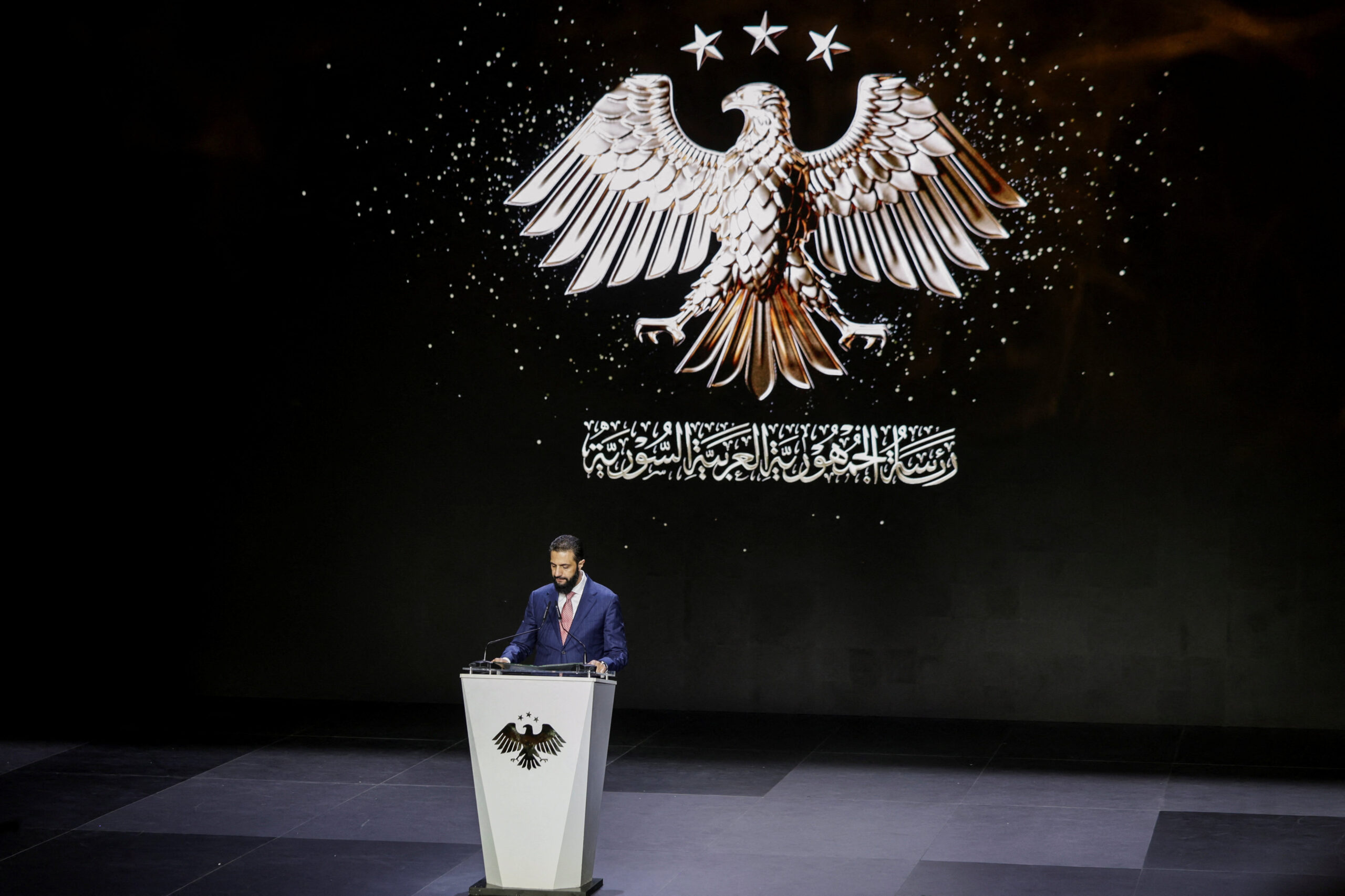
A former State Department official dissects how the US helped defeat ISIS but didn't protect the Syrian people.
 Atlantic Council•Wa’el Alzayat21 Sept
Repeated blasts at military sites expose the risks facing Syria as it rebuilds its army after years of war.
Al Jazeera21 Sept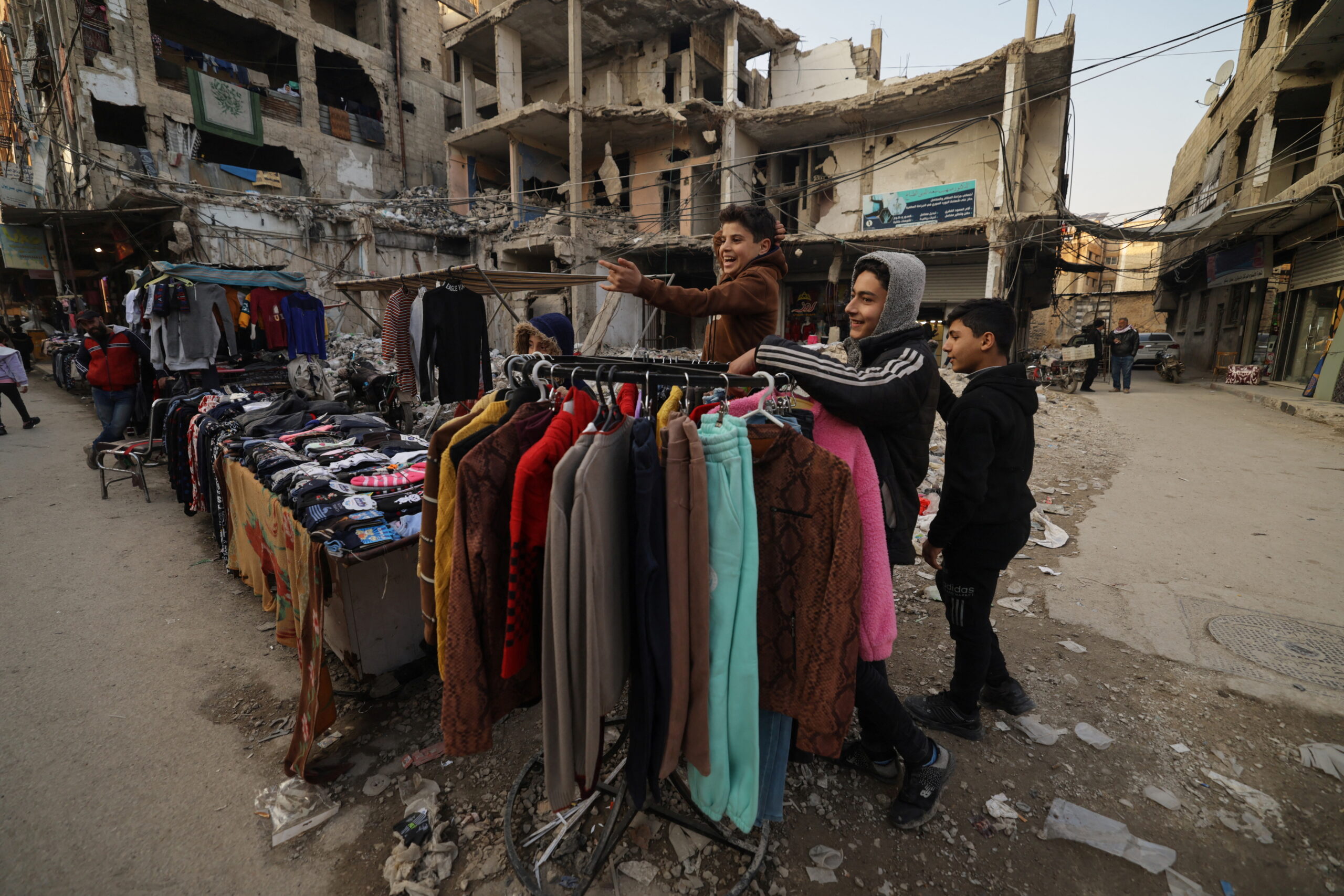
It’s been twenty months since Bashar al-Assad’s fall. People expect more, and patience is wearing thin.
Atlantic Council•Arwa Damon21 Sept
From protests against rising fuel prices in Syria to Canadian Prime Minister Mark Carney’s EU charm offensive to Quito’s wildfires and Céline Dion’s return to the stage, FRANCE 24 looks back at the week's most striking pictures.

Thousands of people cheered as they welcomed Syrian icon Assala Nasri back at a sold-out concert in Damascus.
Al Jazeera18 Sept