
Protests erupt across Syria over sharp fuel price hikes
Protests have erupted in Syria after the government raised fuel prices.
 Al Jazeera14 Sept
Protests have erupted in Syria after the government raised fuel prices.
Al Jazeera14 Sept
Country: Jordan Source: World Food Programme Please refer to the attached file. IN NUMBERS 80,000 people assisted in August (50% female) - estimate USD 1.7M cash transferred in August USD 30.4M required in the next six months (September 2026 – February 2027) 221,600 Syrian refugees returned to Syria (December 2024 – August 2026) KEY HIGHLIGHTS WFP provided food assistance to 80,000 refugees in camps only, at reduced transfer value. The Government of Jordan approved the National School Feeding Strategy for 2026–2030 and tasked the Ministry of Education with implementing the strategy in coordination with relevant stakeholders, including WFP. WFP Jordan suspended its call centre due to budget constraints and a reduction in the number of assisted refugees Beneficiaries were informed of the change in advance and will continue to reach WFP through social media platforms and helpdesks.
 ReliefWeb•World Food Programme13 Sept
Inmates rioted following protests in the city of Kobane over the killing of former Kurdish fighter, state media reports.
Al Jazeera12 Sept
The Trump administration declined this week to terminate TPS for Salvadorans, even though it has done so for people from other countries like Haiti and Syria. But it also hasn't said whether it will extend the protection in the future.
 NPR•Vanessa Romo11 Sept
Syria’s Kurdish women fighters in northeast Syria as pushing to join the country’s new army.
Al Jazeera10 Sept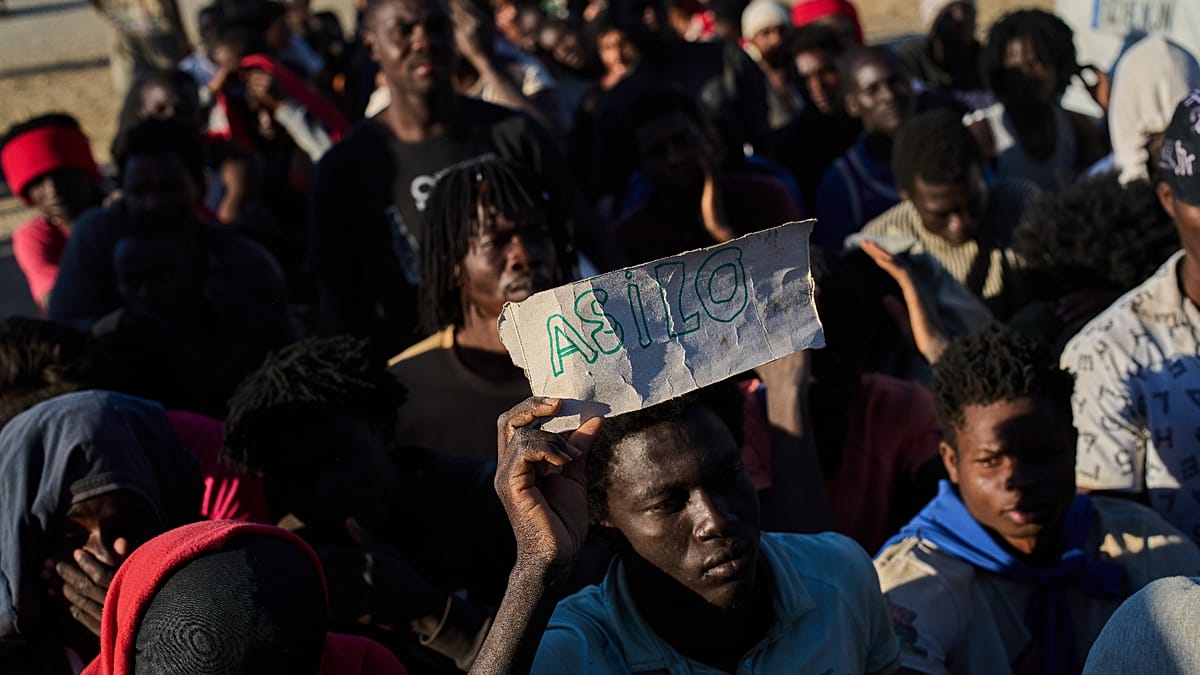
The European Union Agency for Asylum said this decline is due to the ongoing political transition in Syria as well as the EU's cooperation with countries of origin and transit.
 Euronews10 Sept
Officials said they had not determined the cause of the explosion. Years of fighting have left Syria littered with weapons and ordnance left over from the civil war.
 The New York Times•Reham Mourshed and Abdi Latif Dahir9 Sept
Josh Baker is the journalist behind the BBC’s smash hit I’m Not a Monster. He’s back with his most extraordinary investigation yet – to solve the mystery of Austin Tice, who disappeared in Syria 14 years ago In 2012, the US marine turned freelance foreign correspondent Austin Tice disappeared in Syria. If he’s still alive, he’ll be the second-longest detained journalist in the world. That, says Josh Baker (speaking to me from Wales), was the podcast he thought he was making: “We thought we were looking for a missing person, and what we fell into was almost like a Bourne novel, utterly extraordinary. A world of espionage, spies, dictatorship.” It’s also a story of American exceptionalism – the way the US saw itself in relation to the rest of the world. Moreover, “I don’t mean this in a crass way,” Baker says, “but through Austin’s story, we also learn a lot about the last 14 years of the civil war in Syria. We really go inside the regime’s industrial complex of disappearance and torture. As episode two begins, Assad is gone, and we enter into these facilities.” Continue reading...
 The Guardian•Zoe Williams9 Sept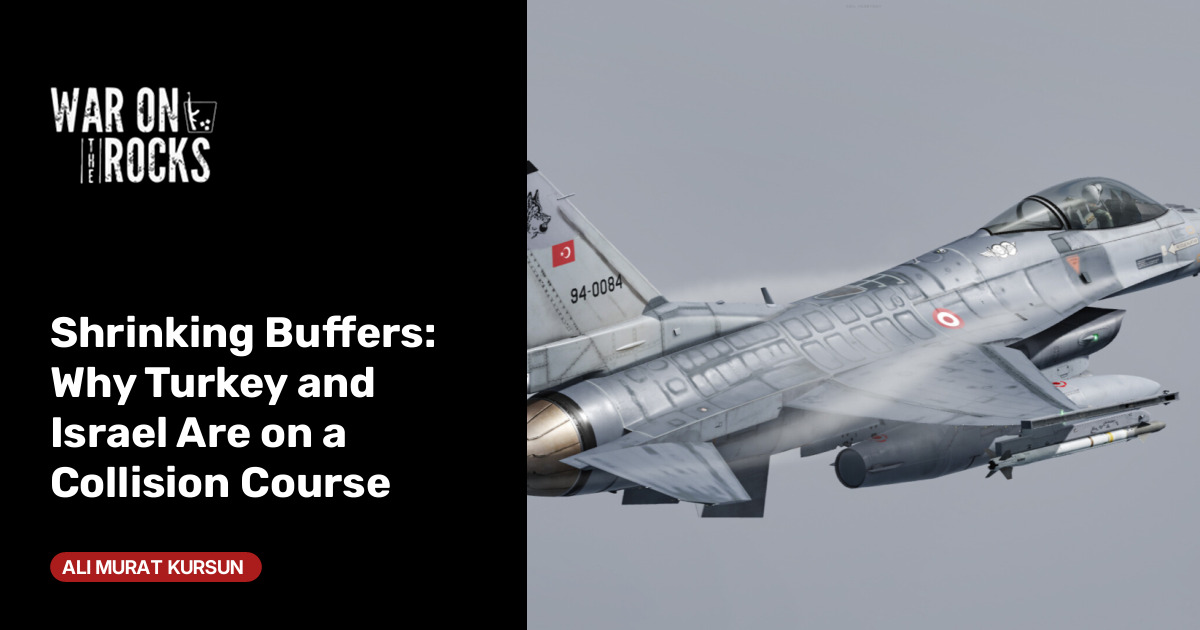
When Israeli warplanes struck the Abu al-Duhur airbase in Syria on Aug. 18, 2026, the smoke rose over the demolition of an old geopolitical assumption about the Middle East. This time, Israel directly targeted a strategic sphere of influence where the Turkish military had been working to build local security capacity.Turkey rapidly filled the power vacuum in post-Assad Syria, expanding its military and intelligence footprint southward and positioning itself as a founding actor in the Levant’s new security architecture. With this military move, Israel aimed to draw a new line of engagement on the ground for both Ankara and Damascus.
 War on the Rocks•Ali Murat Kursun7 Sept
The US marine turned journalist went missing in Syria 14 years ago – and now, a suspenseful new pod uncovers essential evidence. Plus, the charming Julie Andrews serenades audiences with Jane Austen’s Emma It has been 14 years since US marine turned journalist Austin Tice went missing in Syria. Much has changed in the embattled nation since then – not least the end of Bashar al-Assad’s regime – but Tice is yet to be found. In this series , Josh Baker and Sara Obeidat uncover crucial new evidence, some of which has already made headlines. Sensitive and highly suspenseful. Hannah J Davies Widely available, episodes weekly Continue reading...
The Guardian•Hannah J Davies and Hollie Richardson7 Sept
Syria's new biometric passport features a photo of a Damascus souq lifted from a photographer online — complete with his watermark still visible.
 One Mile at a Time•Ben Schlappig2 Sept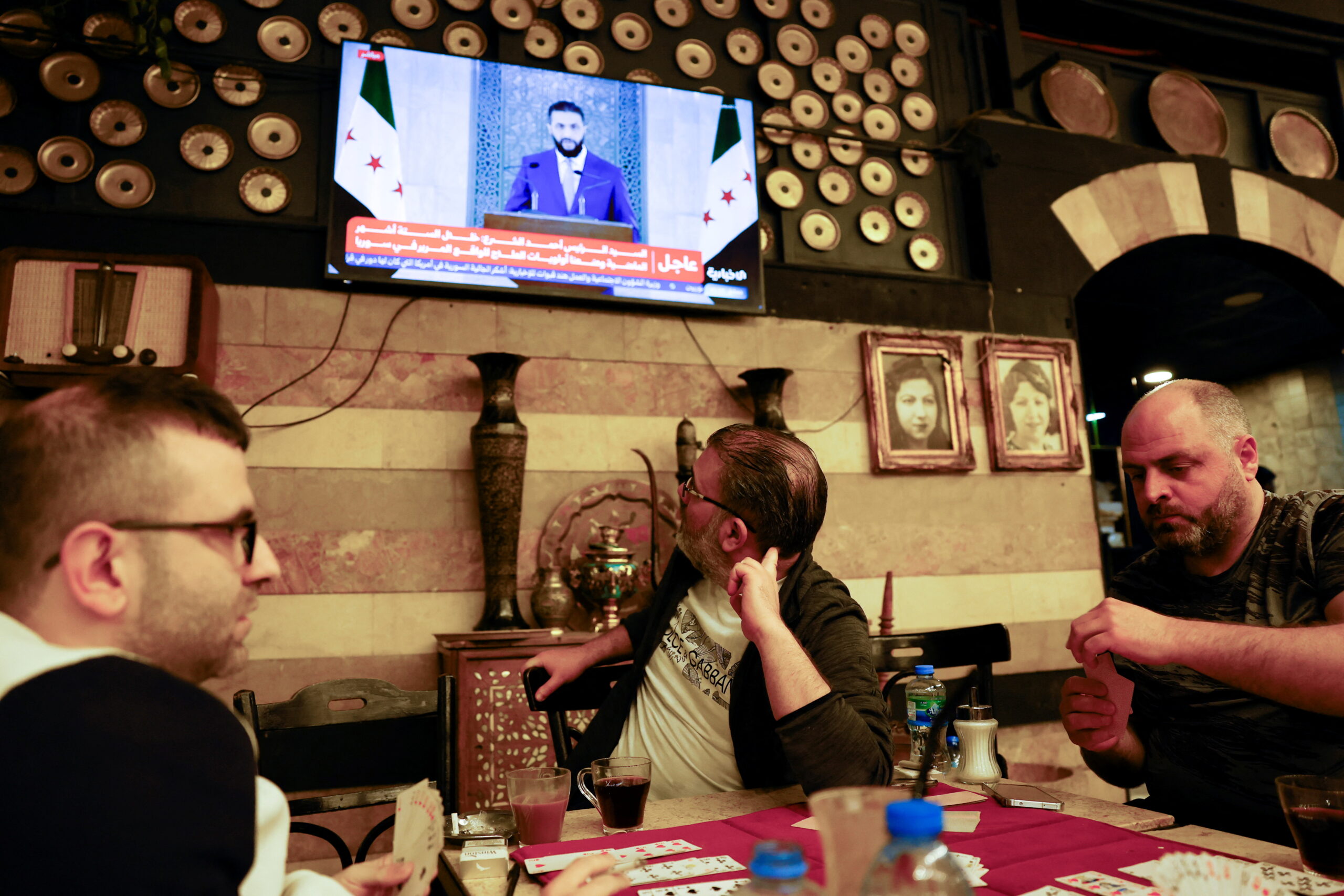
The US removal of the country from its list of state sponsors of terrorism is big step for Syria toward its post-Assad future.
 Atlantic Council•jcookson29 Aug
The reintroduction of international card payments in Syria could catalyze economic recovery, attract foreign investment, and modernize financial systems.
 CryptoBriefing•Editorial Team27 Aug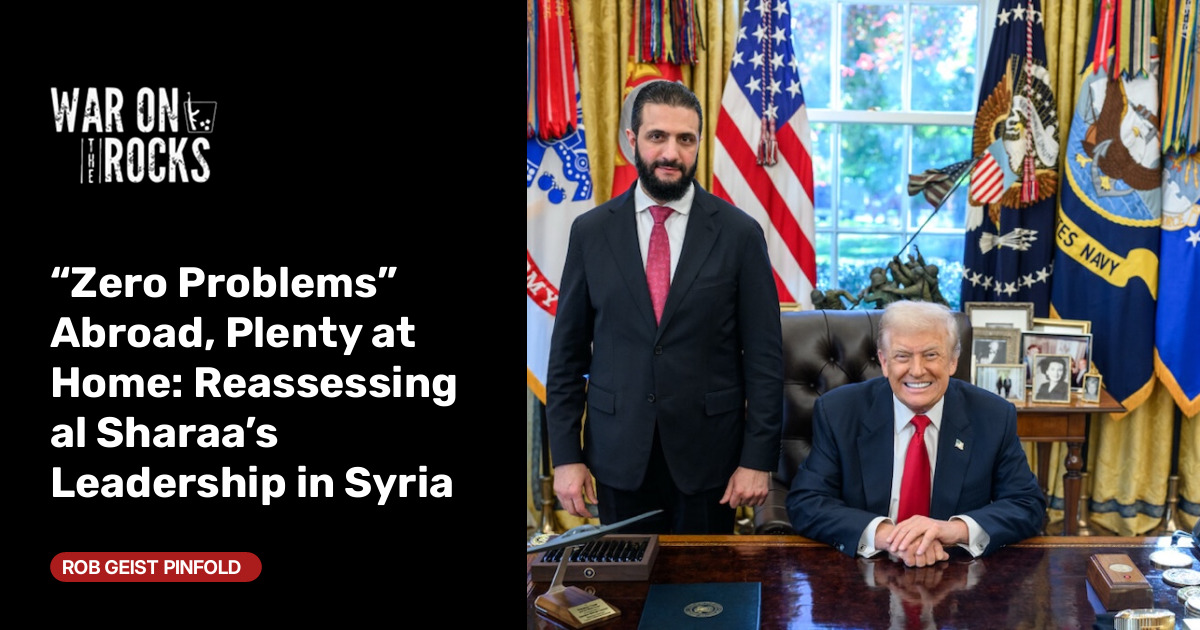
In 2025, Rob Geist Pinfold wrote, “The March Massacres Show That Syria Urgently Needs Solutions, Not Sanctions,” in which he argued that sanctions relief was a major way the West could positively engage with the new Syrian government. A year later, after sanctions relief materialized and the United States removed Syria from its list of terrorism sponsors, we asked him to revisit his arguments and reassess President Ahmed al Sharaa’s leadership, both foreign and domestic. Image: Voice of America via Wikimedia CommonsIn your 2025 article, you argued that one way the West should engage with post-Assad Syria was through sanctions relief.
War on the Rocks•Rob Geist Pinfold26 Aug
The dissolution of the Syrian Democratic Forces (SDF), the main US-backed anti-Islamic State group in Syria, ends more than a decade of Kurdish-led autonomy in the country’s northeast, as the SDF’s military, security, and civilian institutions are integrated into the state.
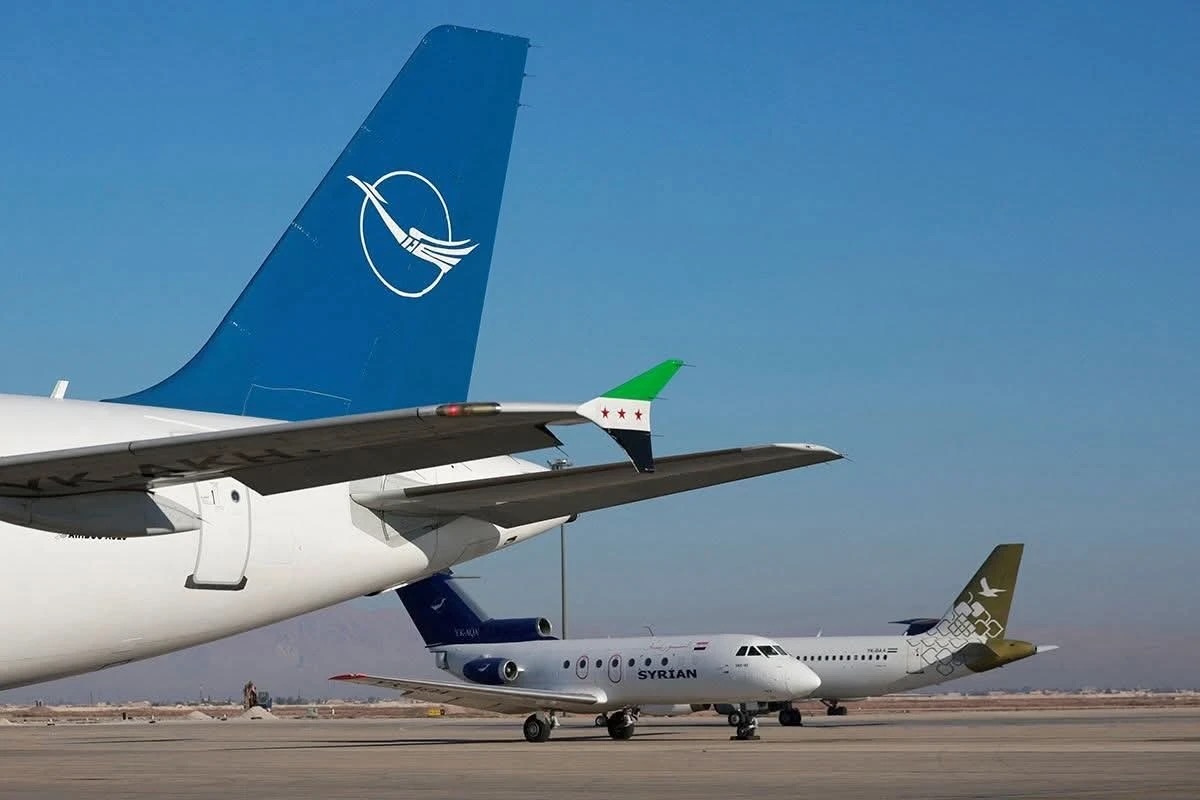
The United States has removed Syria from its list of state sponsors of terrorism and moved to lift…
 AeroTime•Stephen Pope25 Aug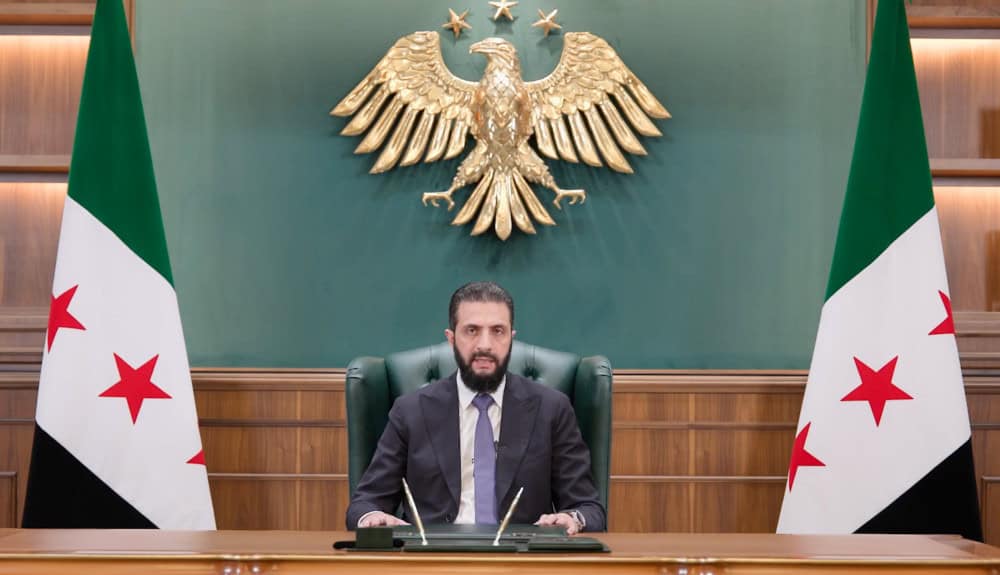
On August 24, the United States formally rescinded Syria's designation as a State Sponsor of Terrorism, marking a milestone in Washington's effort to improve relations with Damascus. The decision came as the US has sought to advance security talks between Syria and Israel.

Syria's removal from the terrorism list opens doors for investment, potentially stabilizing its economy but posing geopolitical risks.
CryptoBriefing•Editorial Team25 Aug
Trump's decision may reshape U.S. Middle East diplomacy, potentially easing tensions and fostering economic opportunities in Syria.
CryptoBriefing•Estefano Gomez24 Aug
The removal of Syria's terrorism designation could significantly boost its economy and international relations, fostering regional stability.
CryptoBriefing•Editorial Team24 Aug