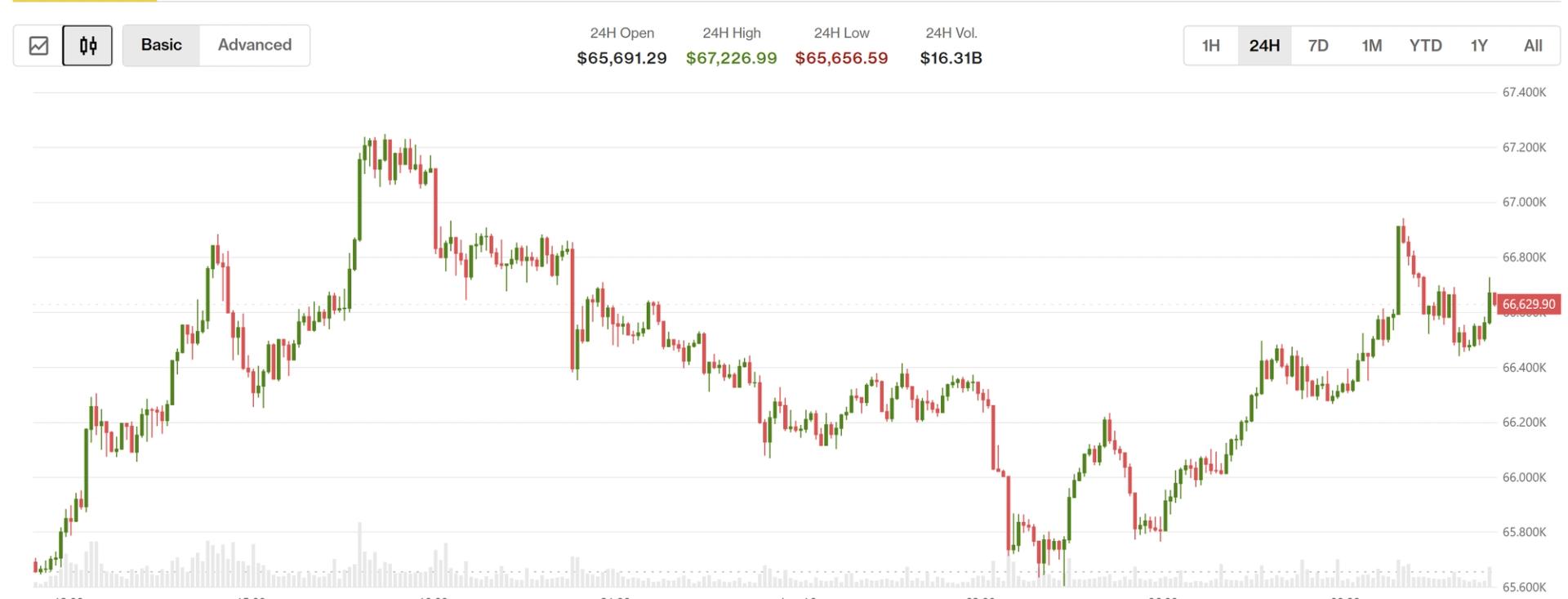
Bitcoin rallies after Japan rate increase with XLM, INJ, UNI advancing
 CoinDesk•Shaurya Malwa16 JunCoinDesk•Shaurya Malwa16 Jun
Some analysts casted doubt on UNI's potential to rival Coinbase's COIN, BTC and ETH in investor returns
 AMBCrypto•Benjamin Njiri16 Jun
In this Uniswap (UNI) price prediction 2026, 2027-2030, we will analyze the price patterns of UNI by using accurate trader-friendly technical analysis indicators and predict the future movement of the cryptocurrency. TABLE OF CONTENTS INTRODUCTION Uniswap (UNI) Current Market Status What is Uniswap (UNI)? Uniswap (UNI) 24H Technicals UNISWAP (UNI)
 TheNewsCrypto•Cianna Joy16 Jun
XLM and UNI are the other big gainers over the past 24 hours.

Uniswap’s UNI token has been projected to climb from about $2.70 to $100 by the end of 2030 as tokenized assets increasingly enter decentralized finance, according to a new forecast from Standard Chartered Bank. Standard Chartered Bank initiated coverage of…
Standard Chartered began Uniswap coverage with a $100 UNI forecast, projecting the token could outpace BTC and ETH through the decade. The bank’s outlook centers on DeFi growth, tokenized assets, and a potential 40x rise from $2.50. Standard Chartered Initiates Coverage With $100 UNI Target Standard Chartered Bank’s Global Head of Digital Assets Research, Geoff […]
 Bitcoin.com News•Kevin Helms16 Jun
The forecast highlights the transformative potential of DeFi and tokenized assets, suggesting significant shifts in financial ecosystems by 2030.
 CryptoBriefing•Editorial Team15 Jun
Hyperliquid's innovative revenue model challenges traditional DEX structures, potentially reshaping DeFi's economic landscape and investor strategies.
CryptoBriefing•Editorial Team15 Jun
Standard Chartered Bank has initiated coverage of Uniswap and forecasts its UNI token could rise 40x to $100 by the end of 2030.
 The Block•Yogita Khatri15 Jun
Uniswap’s native token UNI is set to surge nearly fortyfold in the coming years as Wall Street migrates on-chain, Standard Chartered said.
Standard Chartered Global Research initiated coverage of Uniswap, with Geoff Kendrick framing the decentralized exchange as the trading hub for tokenized real-world assets and setting a $100 UNI price target for end-2030, roughly 40x current levels.
 The Defiant•The Defiant Team15 Jun
Standard Chartered forecasts UNI could hit $100 by 2030, betting Uniswap captures a 37x surge in tokenized DeFi assets.
 BeInCrypto•Lockridge Okoth15 Jun
The Fidelity Digital Dollar stablecoin deployed Curve Finance Stableswap LP positions and Uniswap LP positions simultaneously in a single Ethereum block Thursday evening, with Curve founder Michael Egorov noting the same-block execution as evidence of DeFi operational expertise.
The Defiant•The Defiant Team11 Jun
The digital cooperative governing Uniswap, the biggest decentralised exchange, is voting on a proposal to take back some $42 million worth of governance tokens from delegates. Between 2022 and 2023, Uniswap’s decentralised autonomous organisation, or DAO, loaned out 12.5 million UNI to the nonprofit Uniswap Foundation and several top delegates in a bid to boost governance participation. According to Erin Koen, the proposal’s author and governance lead at Uniswap Labs, the protocol’s governance is now much more active, meaning that the loaned tokens have served their purpose. “Today, Uniswap’s governance environment looks very different,” Koen said. “UNI holders have been actively delegating voting power, and since DUNI was established, passed proposals have averaged roughly 75 million votes in turnout, exceeding quorum by approximately 88%.” DUNI, Uniswap’s Decentralized Unincorporated Nonprofit Association, is a legal entity that recognises onchain governance votes as legally binding and shields DAO members from personal liability for collective decisions. Truly decentralised? The proposal to take back the loaned tokens comes as Uniswap Labs and the Uniswap Foundation work to address criticism that the protocol’s governance system isn’t as decentralised as it appears to be. Critics have previously argued that the Uniswap Foundation holds too much influence. They say it often makes key decisions unilaterally or pushes proposals without sufficient community input. Others lament how much of the decision-making at the DAO happens behind the scenes, and how large token holders and venture capital firms — in Uniswap’s case a16z crypto — dominate voting power, creating circumstances where smaller holders have little real say. The situation has even attracted the attention of US Representatives. Sean Casten, a Democrat from Illinois, questioned Uniswap DAO’s decentralisation during a hearing regarding the Clarity Act in June. Misalignment issue In response, Uniswap Labs and the Uniswap Foundation authored a proposal aiming to align incentives across Uniswap Labs, the Foundation, and the DAO, which passed a DAO vote in December. Its main objectives are to add fees to the Uniswap protocol and use the proceeds to buy UNI tokens and remove them from circulation, accelerate protocol growth, and to merge the Uniswap Labs and the Foundation, among other things. That, in addition to other changes, such as setting up a legal entity for the DAO, incentivising governance participation, and reforming governance processes are all aimed at increasing governance decentralisation. There are now 56 delegates with greater than 1 million UNI of voting power, according to data compiled by Snapshot, a DAO voting platform. Taking back the loaned governance tokens also resolves a potential incentive misalignment, Koen said. When the tokens were distributed, the Uniswap community selected delegates based on their participation in governance. However, it didn’t ensure alignment between delegates’ voting power and economic exposure. In other words, delegates with little of their own skin in the game could potentially command an outsized amount of voting power in the DAO. “The potential for this misalignment should not persist indefinitely when the original reason for implementing it is no longer a concern,” Koen said. The vote to return the governance tokens to the DAO ends on May 8. So far, 53% of votes have been cast in favour, 46% voting to abstain, and a negligible amount against the proposal. Tim Craig is DL News’ Edinburgh-based DeFi Correspondent. Reach out with tips at tim@dlnews.com .