Washington

Place · 603 articles
Share

All coverage

page 1 of 30

China's 80% Grip on Iranian Oil Looms Over Trump-Xi Summit

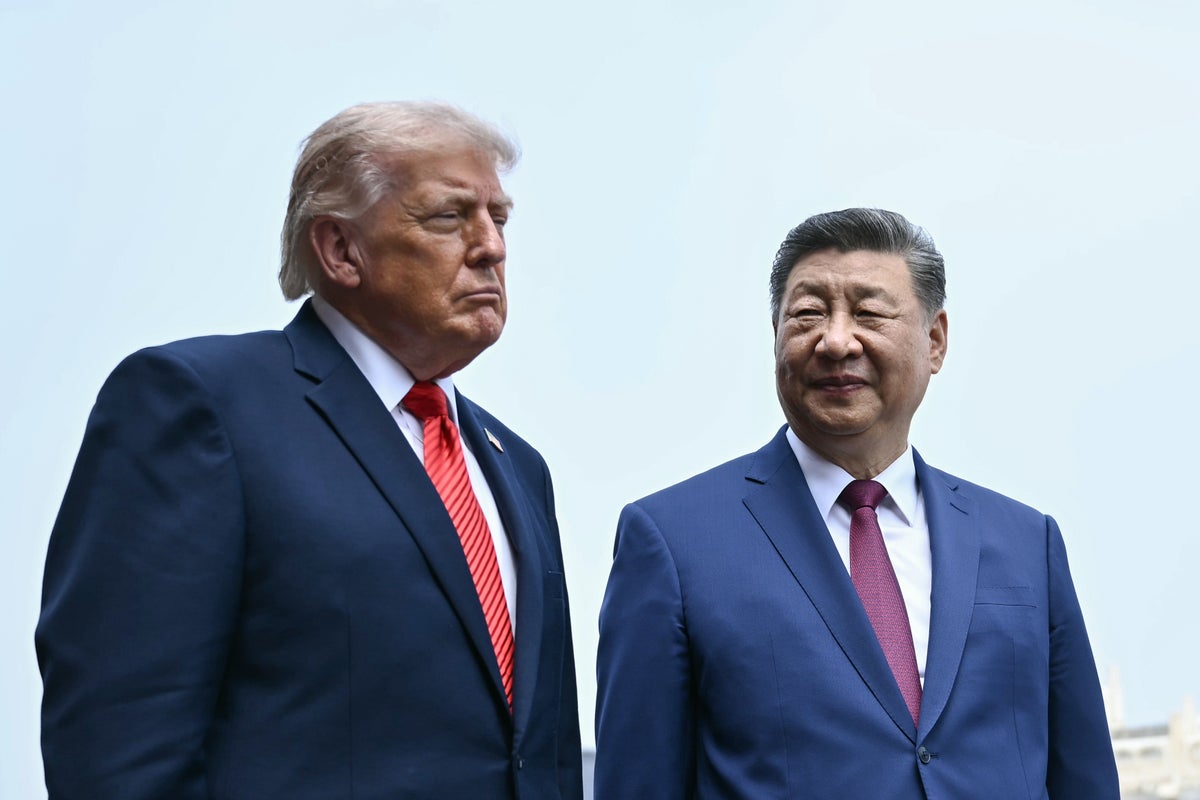
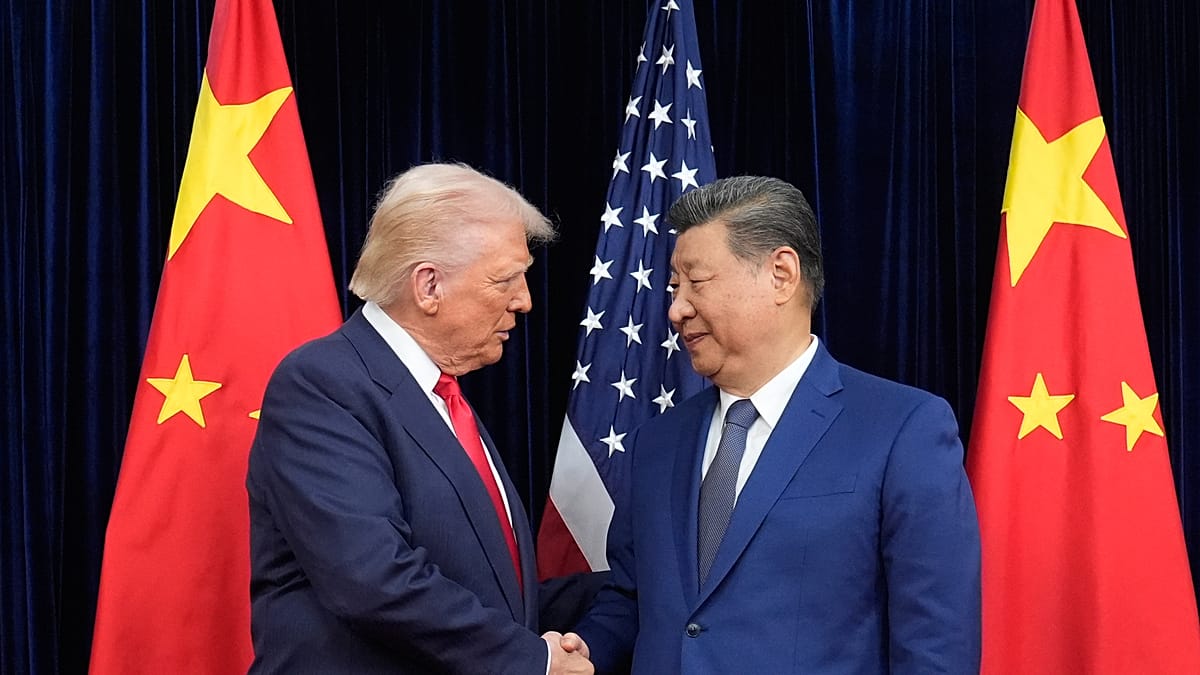
Ahead of a high-stakes US-China summit planned for September 24 at the White House, Beijing appears to be spotlighting its influence over Iran to gain leverage during negotiations with its chief geopolitical rival. Expectations for a US-China breakthrough on Iran at the upcoming summit in Washington are low. Trump has signaled a focus on economic outcomes for this meeting with Xi and the Chinese leader has reciprocated by assembling a delegation of top business executives. But in the run-up to the meeting, Chinese Foreign Minister Wang Yi met his…

OilPrice.comOilPrice.comRFE/RL staff29m ago

Chinese beauty products prove resilient amid US-China trade war

The US-China trade war has hit exports ranging from soybeans to solar panels, but one industry appears to be weathering the tariffs remarkably well. As Donald Trump and Xi Jinping prepare to meet in Washington this week, big-ticket exports are likely to be high on the agenda. But Chinese beauty products such as wigs, hair extensions and false eyelashes have proved highly resilient, with low prices and strong demand encouraging consumers to absorb the extra costs. China’s press-on nail industry, concentrated largely in one city, is also coming through the trade war without a scratch. Bryan Quinn

France 24France 24FRANCE242h ago

AI, trade, Taiwan and climate: what will and won’t be on agenda at Trump-Xi summit

Two leaders could discuss tech safety issues and US-China trade ties but may skip over climate emergency Analysis: AI looms large over Trump-Xi meeting The leaders of the world’s two superpowers are meeting in the US this week . It is Xi Jinping’s first state visit to the US in more than a decade. The last time the Chinese president was hosted in Washington (by Barack Obama in 2015), the issues on the agenda included cybercrime, technology, the climate crisis and human rights. The star of the day was Ne-Yo , who serenaded Xi and his wife, Peng Liyuan, with Peng reportedly singing along at the state dinner . This time, Xi is meeting Donald Trump, who has overhauled the world order and recalibrated the US-China relationship. Trump is contending with a China that is in a much stronger position than it was 10 years ago. Here are five things to look out for at this week’s US-China summit. Continue reading...

The GuardianThe GuardianAmy Hawkins2h ago
  • neutral toward Trump-Xi · 91%

Trump's deal with Denmark and Greenland: Key takeaways

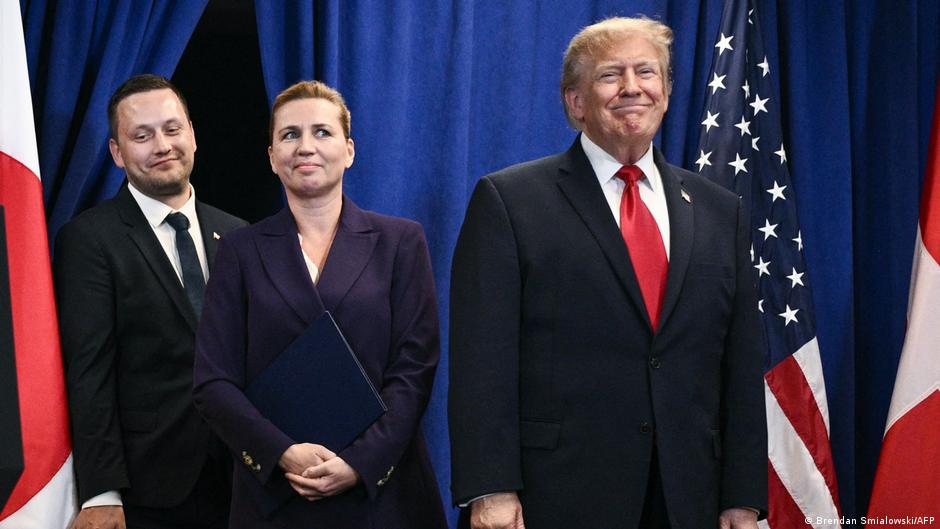
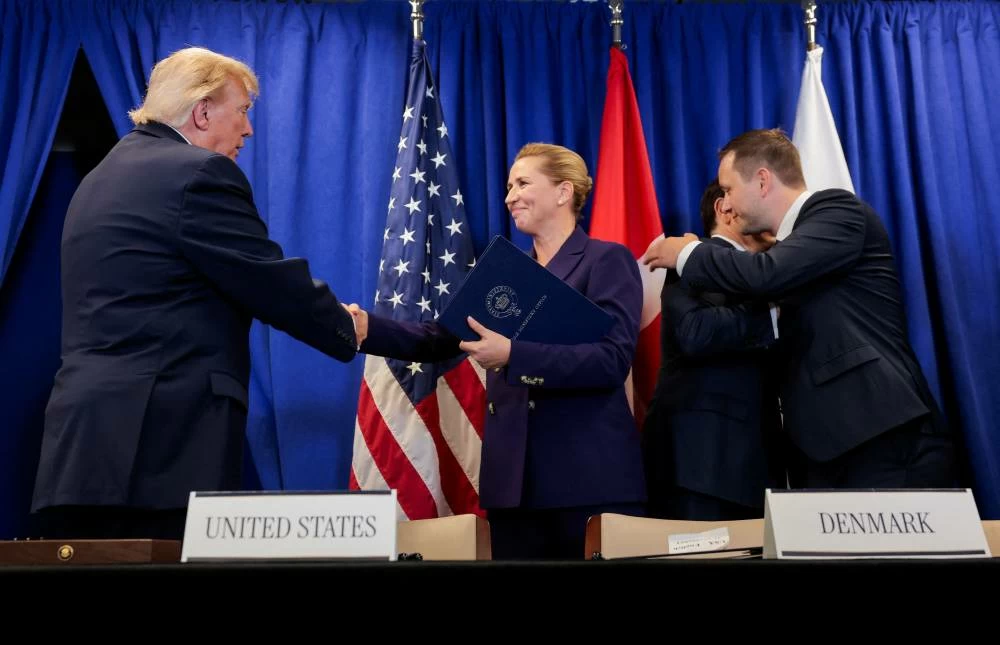
U.S. President Donald Trump and the leaders of Denmark and Greenland signed an agreement about the status of the Arctic island after months of threats by Trump to seize the semiautonomous territory of a NATO ally. The deal was officially signed Tuesday in New York, after U.S., Greenlandic and Danish officials had quietly negotiated for months behind the scenes - searching both for solutions to address some of Trump’s security concerns about the territory, as well as alleviating Danish and Greenlandic fears of being taken over by the U.S. The three parties expressed satisfaction with the deal at the signing ceremony - but what exactly does it say? Washington is allowed to "modernize and expand” its activities at the remote Pituffik Space Base in the northwest, according to the agreement. The U.S. can also set up "defence areas” at Narsarsuaq in the south and Mestersvig in the east, and "may establish additional defense areas in Greenland and strengthen its military operations or facilities.” The accord calls for wide U.S. military mobility on Greenland’s territory, including "undersea access," noting that " the security situation in the Arctic is changing and that more efforts are needed to ensure security there in the future.” US President Donald Trump, Danish Prime Minister Mette Frederiksen and Greenland Prime Minister Jens-Frederik Nielsen attend a trilateral signing event regarding a deal on Greenland The agreement reaffirms "the sovereignty and territorial integrity of the Kingdom of Denmark,” and recognizes the Greenlanders' "right to self-determination.” The agreement says all three parties "support a stronger NATO engagement in the Arctic, including as regards planning, presence, exercises, and joint intelligence gathering.” It allows U.S. military access to Greenland to defend the NATO area, Greenland itself and the American continent - including through a "Golden Dome defense system." The deal spells out that "no state that is not a member of NATO shall be allowed to establish its own manned or unmanned military installations in Greenland nor shall they be allowed a persistent presence of military forces in Greenland." In the preamble, the signatories recognize "the need to protect the pristine environment of Greenland.” It also stresses "the economic, social, and cultural rights of the people of Greenland, including with respect to their lands and their way of life, including hunting, fishing, and other traditional, cultural, historical, future activities.” The accord "does not have an end date” and, if Greenland chooses to become independent, it will agree to remain in NATO and take on Denmark’s rights and obligations under the deal. The deal will only "enter into force” once the "necessary parliamentary processes of the Kingdom of Denmark, in conjunction with Greenland, have been completed.”

MBMobile BusinessAssociated Press2h ago
  • critical toward Donald Trump · 95%

US air traffic control exposed: Outdated computers, cut cables, and parts bought on eBay

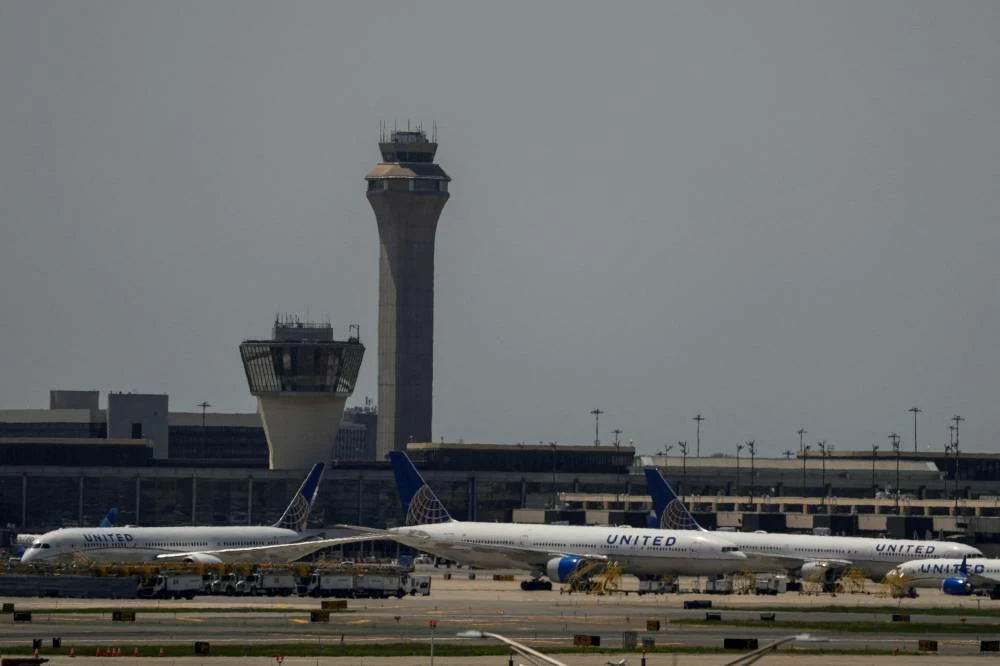
WASHINGTON: America's aging air traffic control system - reliant on outdated telecom systems, decades-old ‌Compaq computers and replacement parts bought on eBay - keeps failing. In the latest example, thousands of flights across the densely populated Northeast were delayed or canceled on Monday due to the dual failures of a circuit at a Philadelphia air traffic facility and the accidental cut of a fiber-optic cable near New Brunswick, New Jersey, by a construction crew. "The architecture of our telecom is still a 40-year-old architecture, which means you could have a switch go down and a line be cut yesterday and the Northeast goes down," U.S. Transportation Secretary Sean Duffy said on Tuesday. The disruption underscores how fragile the nation's air traffic control network ⁠has become after decades of delayed modernization efforts, underfunding and piecemeal fixes. Despite billions already spent or approved, the Federal Aviation Administration still relies on aging, often incompatible systems that can turn a single equipment failure or severed cable into flight chaos - a risk officials warn will persist without a far larger overhaul. In January 2023, all flights departing the U.S. were grounded for the first time since the September 11, 2001, attacks after a contractor accidentally deleted ‌computer files, affecting a key pilot messaging database. The outage disrupted 11,000 flights before the issue was solved. In September 2025, more than 2,000 flights were delayed and hundreds were canceled at two Dallas-area airports due to a telecom outage after a contractor cut fiber lines, impacting communication systems at the Dallas airports. It disrupted flights for 100,000 American ‌Airlines passengers alone. There have been repeated serious technology issues, which last year convinced Congress to approve $12.5 billion ‌to modernize air traffic control systems. Duffy said on Tuesday he wants another $30 billion to complete upgrades and fix facilities. "These incidents will continue to happen ‌unless we get the resources and actually build the architecture fit ‌for the 21st century," Duffy said. Across the Atlantic, Britain has also suffered major air traffic control outages this month that have led airlines to question the resilience of its systems. Aging technology The FAA has been forced to use 3D printing or to go ‌to eBay for replacement parts for some of its aging systems. In other cases, the FAA can no longer get ⁠spare parts. The Government Accountability Office in 2024 said the FAA needed to take "urgent action" to address aging air traffic control systems, noting that one-third are unsustainable. The FAA's more than 300 air traffic facilities cannot talk to one another and operate on individual analog computers. "Every facility is a silo," FAA Administrator Bryan Bedford told Reuters in a recent interview. "We're behind 20 ⁠years." He said effectively the FAA's towers are ⁠run on individual Compaq computers. The brand, which was acquired by HP, stopped producing computers in 2013. The FAA still has aging telephone systems and three telecom systems that are not interoperable and have a "clunky connection" that often forces delays, Bedford said. At the same time, the US has the world's most complex airspace and faces ⁠a shortage of several thousand air traffic controllers. One big step is expected in late 2027 when air traffic control will move from analog to digital communications. The FAA will later shift all of the facilities from running on individual computers to the cloud. The FAA has tried for decades to modernize the system, but those efforts have repeatedly fallen short. In 1982, the FAA first released a comprehensive plan for improving air traffic control services, estimating it would cost about $10 billion by the late 1990s. The Government Accountability Office in 1995 said the cost had ballooned to at least $36 billion on ‌the effort to consolidate facilities and standardize computer hardware and software. Another FAA reform effort dubbed "NextGen" launched in 2004 was pegged at $15 billion, but a report last year said it has faced numerous delays and cost overruns and is less ambitious than what was envisioned more than 20 years ago. "FAA has delivered a delayed, over budget, and less transformational NextGen than originally planned," said the Transportation Department Office of Inspector General. The FAA has also been working for years to end a long-ridiculed, decades-old practice of air traffic controllers using paper flight strips to keep track of aircraft. But adopting the change, which started in 2022, at 49 major airports will take the FAA until at least 2028. The FAA said 18 major airports have already ‌gotten rid of the paper strips.

MBMobile BusinessReuters3h ago

Washington Needs This LNG Deal More Than Beijing Does

Xi Jinping arrives in Washington September 24, prepared to discuss reviving a $6 billion-a-year trade in US liquefied natural gas, contingent on lifting a 15% Chinese tariff that has blocked American gas since Q1 2025. Iranian missiles destroyed 17% of Qatar's LNG export capacity in March, and China absorbed that shock by buying more from everyone except the United States: Australia took 36% of its LNG imports from January through July, Southeast Asia 20%, Russia 12%, and Canada, a new entrant, 4%, according to Banchero Costa data. American cargoes…

OilPrice.comOilPrice.comCharles Kennedy14h ago
  • neutral toward LNG · 86%

Trump Proposes $5 Billion Fund to Rebuild Gulf Energy Infrastructure

U.S. President Donald Trump has proposed a fund to finance infrastructure rebuilding damaged in the war with Iran, offering $5 billion in U.S. money for starters. The information comes from the Wall Street Journal, which cited unnamed sources from Washington and Gulf states. The money from the fund would also be used to help Gulf states develop alternative oil export routes bypassing the Strait of Hormuz, the report also said, adding that the United States will ask these states to also contribute to the fund, eyeing a total size of $10 billion.…

OilPrice.comOilPrice.comIrina Slav15h ago
  • neutral toward Donald Trump · 98%
CN

Washington voter rolls

SEATTLE — A federal court in Washington dismissed the federal government’s lawsuit attempting to force the Washington secretary of state to provide an unredacted statewide voter registration list. The federal government says the secretary’s refusal to provide the records violates Title III of the Civil Rights Act, but the list is not subject to demand under that law because Congress did not intend for it to cover all documents in a state’s possession. The list at issue is constantly updated with new information, and the federal government did not adequately explain the retention and preservation requirements of the applicable statute could apply to such a list.

Courthouse NewsCourthouse NewsBrief17h ago