Is it time to rethink the office of the chief justice of the United States?
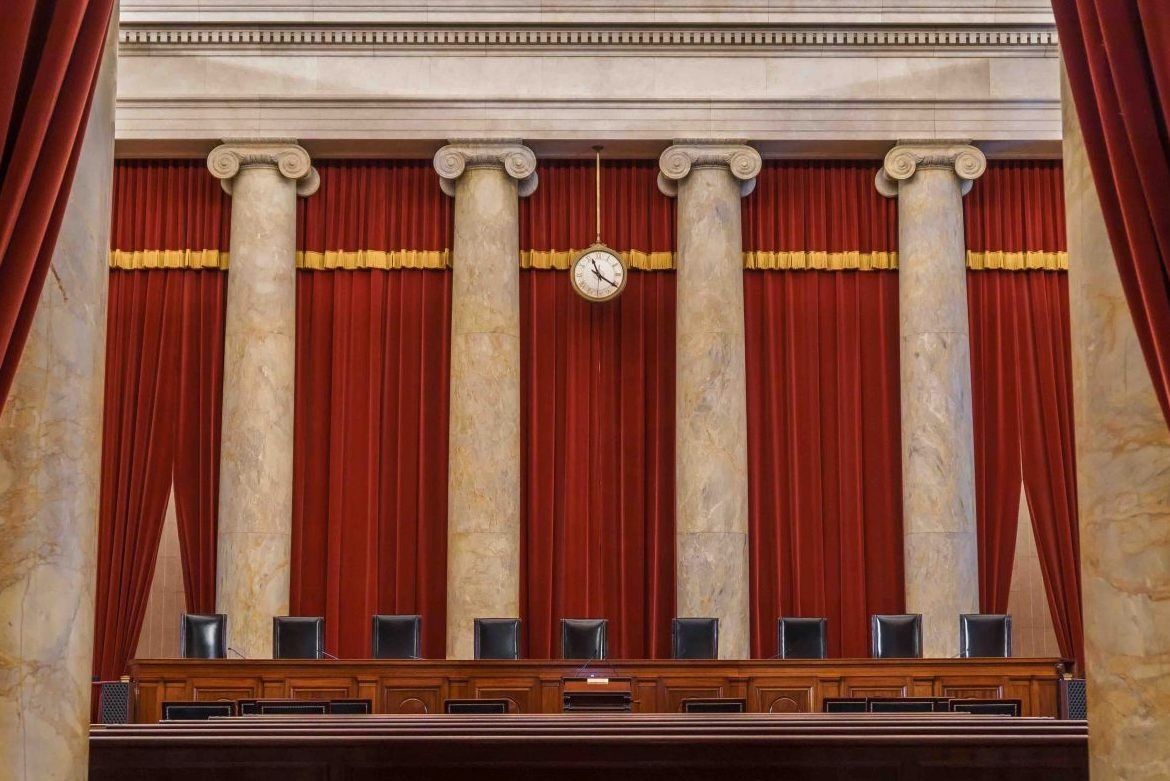
In a recent SCOTUSblog article, law professor Josh Blackman proposed that the chief justice farm out to his colleagues his roles of presiding at oral argument and assigning opinions when in the majority. “[S]ometimes old traditions run their course,” he wrote, “and new traditions should begin.” This is not the first proposal to rearrange the chief justice’s duties. Indeed, the office has evolved haphazardly within its meager constitutional moorings; the only mention of it in the Constitution is that the chief justice preside at presidential impeachment trials. In the beginning In 1790, George Washington told the Marquis de Lafayette that “[b]y having Mr. Jefferson at the head of the department of state, Mr. Jay of the judiciary, Hamilton of the treasury, and Knox of that of war, I feel myself supported by able coadjutors, who harmonize extremely well together.” Washington sought no control over judicial decisions but saw the chief justice – John Jay at the time – as an executive branch advisor, reflecting English practice. In that vein, Washington turned to Jay for all types of help. When preparing a state-of-the-union message, for example, he sought “every matter which may occur to the heads of the Departments” and thus asked Jay for “anything in the judiciary line, anything of a more general nature.” Congress assigned the chief justice other high visibility executive branch tasks, making what Constitutional Convention delegate George Mason called “further use . . . of the Judges.” The chief justice became an administrator of the sinking fund to retire the Revolutionary War debt. Additionally, to protect the integrity of the nation’s coins, Congress directed an annual assay “under the inspection of the Chief Justice” and several others. Gradually, Jay and his colleagues took exception to these ex officio side jobs. Jay skipped a sinking fund meeting because he saw his “[d]uty to attend the Courts as being in point of legal Obligation primary, and to attend the Trustees as secondary.” He also led the justices in declining Washington’s invitation to become on-tap legal advisors. Today, the only major vestige of the early republic’s efforts to use the chief justice outside the judiciary is as an ex officio regent of the Smithsonian institution and related bodies , a role dating to 1846 . That said, presidents and others have occasionally turned to justices for non- ex officio tasks. For instance, Washington designated Jay – an experienced diplomat – to be an “ envoy extraordinary” to Great Britain. More recently, President Harry Truman assigned Justice Robert Jackson as chief Nuremberg prosecutor , and President Lyndon Johnson implored a reluctant Chief Justice Earl Warren to chair the Kennedy assassination commission because, Warren recalled , Johnson “thought no less a personage than the Chief Justice of the United States. . . should head it.” These days, such assignments are largely relics of the past. The chief justice’s roles Currently, the chief justice’s only major role beyond the Supreme Court (and the Smithsonian) is what the judiciary’s initial long-range plan called “the head of the federal judicial system . . . in matters of judicial administration.” It is a position with three components: judicial administrator, judicial spokesperson, and judge designator. First, chief justices oversee the administration of a small federal agency – the federal judiciary. He does so, not by an all-inclusive congressional designation, but because by statute he presides over the U.S. Judicial Conference – 26 judges serving ex officio or by election. By tradition, the chief justice appoints its now-25 committees , which do much of the conference’s work. He also appoints the Director of the Administrative Office of U.S. Courts and chairs the Federal Judicial Center board . The judiciary is tiny. (Its $10 billion budget is less than two-tenths of one percent of total federal spending, and its 30,000 employees pale in comparison to the Justice Department’s 115,000 .) But its administration is not a simple matter. The Administrative Office exercises pages of financial, personnel, automation, and security duties under the conference’s supervision. These and other matters in the conference’s remit have recently blossomed into controversies over judges’ workplace conduct , oversight of financial disclosures , judges’ physical security , and administration of the judicial discipline machinery (e.g., here and here ). Amendments to the courts’ procedure and evidence rules and even some Federal Judicial Center educational programs make news. The chief justice is ultimately responsible for these activities even if he isn’t personally involved in most of them and goes unmentioned in news reports. Second, chief justices are the federal judiciary’s major spokesperson and in that role promote policies they regard as significant, often in conference and lecture settings. The press covers this doggedly , and the chief provides a year-end report (since the Burger era) on the status of the judiciary. Third, chief justices designate judges for the Foreign Intelligence Surveillance Court , which entertains government applications to conduct national security investigations, as well as on the Judicial Panel on Multi-District Litigation , which assigns related cases in multiple districts to a single district for pretrial procedures. How did we get here? Ultimately, these roles are the result of incremental adaptations, not some grand design. Chief Justice William Howard Taft persuaded Congress to create the Judicial Conference’s forerunner in 1922. Comprising nine senior appellate judges and chaired by the chief justice, it coordinated the chief justice’s temporary assignment of judges to other courts. The chief justice gained more authority in 1939 when Congress revised and enacted a remnant of President Franklin Roosevelt’s Judicial Procedures Reform Bill of 1937 (which also included his “court-packing” plan) by transferring the Justice Department’s court administration functions to the new Administrative Office to function under the conference’s supervision. The chief justice’s sole authority to appoint conference committees then emerged without much consideration of other approaches. Likewise, when Congress created the FISA court in 1978, vesting appointments in the chief justice created “only a small amount of debate.” “[H]istorical practice” (namely, chief justice appointments since 1971 to a temporary wage-and-price controls court ) was said to have “served as a persuasive justification.” Rethinking the office In 1978, Chief Justice Warren Burger warned that the duties of the office were almost overwhelming. To ease the burdens, he floated the idea of a statutory “circuit justice for administration,” in which sitting judges could serve temporarily. This idea remained under discussion in the judiciary as late as 1995 . Others raised different concerns following the courts’ considerable growth during the Burger and Rehnquist eras. Commentators agreed that the chief justice had too much work, but further argued that because that work has policy implications, vesting it in one person with unlimited tenure is undemocratic. Such commentators asked, and continue to ask, whether chief justice appointments to the conference committee and the FISA court reflect systematic preferences for judges likely to agree with the chief justice’s views. Alternative approaches fall into two broad categories: chief justice term limits and statutory reassignment (or chief justice delegation) of some or all duties to other justices or judges. Term limiting the chief justice is consistent with how Congress in 1982 sought turnover and stability in the positions of the chief circuit and district judge – designation by age and seniority, an age cap of 70, and seven-year maximum terms, thus making it likely that judges with different approaches to the job, and appointees of presidents of both parties, rotate in and out of the position. As to chief justices, however, who have more administrative clout than chief district and circuit judges, the last year in which a Democratic appointee served in that office was 1953 (the year Chief Justice Fred Vinson died). Delegating the chief justices’ duties to lower court judges is hardly a new idea. Since 1945, the Conference’s Committee on Intercircuit Assignments and its forerunners have had the lead role in implementing the chief justice’s statutory authority to approve voluntary intercircuit assignments of judges to other courts, a slimmed-down version of the conference’s original task. Upon becoming chief justice in 1986, William Rehnquist launched a study of the entire committee system, which recommended “strengthening the authority of the Executive Committee to deal with internal and external Conference business [and] allow[ing] the Chief Justice to delegate some of his Conference duties to another Conference member.” The executive committee is now a powerful and constant overseer of the conference’s activities, no doubt taking actions that might otherwise reach the chief justice’s desk. These delegations have provided greater administrative efficiency but not necessarily the policy diversity that advocates seek. Given the deference within the judicial hierarchy, as long as the chief justice is “the head of the federal judicial system,” other judges will likely try to administer consistent with the chief justice’s perceived preferences. And there is value, whatever duties are delegated, for the chief justice to retain that role. (Whatever the force of Chief Justice John Roberts’ admonitions to stop personal attacks on judges, they have more strength than if issued by a lower court judge who by rotation was presiding over the Judicial Conference.) Delegation to other justices would lessen the likelihood of deference but enhance the likelihood of resistance. Other justices might like a turn at presiding at oral argument but not at overseeing federal judicial administration, which Roberts acknowledged in 2023 is “an acquired taste.” Indeed, when in 1939 Congress deliberated who would supervise the new Administrative Office, the justices were cool to their possible involvement. “[T]he duty of the Court,” said Justice Louis Brandeis, was “to adjudicate, not administer.” Even at that, the 1939 Congress put the Administrative Office under the conference’s supervision but told the entire court to appoint its director. Only in 1990 did it transfer that formal authority to the chief justice, the only justice with lower-court judicial administration duties. No associate justice, to my knowledge, contested the reassignment. In the final analysis, there is something of a quandary. It’s no disrespect to any recent chief justice to worry that their powerful, life-tenured executive position sits uneasily within the principles of democratic government. But, as is often the case, it’s not clear if or how well alternative approaches would work.
 SCOTUSblog•Russell Wheeler21 Sept
 The Hill•Max Rego21 Sept