
Xi Jinping meets Narendra Modi to stabilize ties during India visit
Xi and Modi's meeting signals a shift towards managed rivalry, aiming to balance competition with cooperation to prevent future conflicts.
 CryptoBriefing•Editorial Team12 Sept
Xi and Modi's meeting signals a shift towards managed rivalry, aiming to balance competition with cooperation to prevent future conflicts.
CryptoBriefing•Editorial Team12 Sept
Xi Jinping's potential visit to the White House could signal a pivotal shift in U.S.-China relations, impacting global trade dynamics.
CryptoBriefing•Estefano Gomez12 Sept
Chinese president’s arrival in Delhi seen as step towards reconciliation after deadly 2020 military clash The Chinese president, Xi Jinping, has received a red-carpet welcome in India for a summit of Brics developing nations, as regional rivals Beijing and Delhi make a public display of thawing relations while quietly competing to lead at a time of shaky US global dominance. As Xi stepped off the plane, he was walked past an honour guard of Indian soldiers and traditional dancers in colourful dresses. Continue reading...
 The Guardian•Oliver Holmes12 Sept
Indian Prime Minister Narendra Modi hosts Russian President Vladimir Putin, Chinese President Xi Jinping and other leaders of the BRICS nations for a summit on trade, investment, and global conflicts.
 NPR•The Associated Press12 Sept
Keeping people in charge means little if supercomputers determine the evidence, choices and time on which their decisions depend If there were a 10% chance that AI could wipe out humanity, no responsible government would leave its development to companies racing to build it. Yet until recently, that seemed to be the case. The warning was all the more ominous because it was made by a researcher at Anthropic , the trillion-dollar AI company behind the Claude chatbot. The dangers of AI-enabled pandemics or attacks on nuclear systems are real. Countries need not agree on democracy or trade policy to accept this. The US and China will hold, reportedly , their first bilateral AI-safety talks before a planned White House summit between Donald Trump and Xi Jinping. Despite their tech rivalry, neither Washington nor Beijing can make the most advanced AI safe on their own. A US-China settlement won’t be able to say how AI works everywhere. Countries deploying AI must help write the global rulebook. The odds on an extinction event are shortening. This week Anthropic said that it identified five cases in which attempts were made using its models to support biological weapons development. It banned the accounts. In one case, a platform sent requests rejected by Claude to a rival with weaker safeguards . AI safety, clearly, cannot be that of the least responsible model. Do you have an opinion on the issues raised in this article? If you would like to submit a response of up to 300 words by email to be considered for publication in our letters section, please click here . Continue reading...
The Guardian•Editorial11 Sept
Modi will also meet Xi Jinping as India seeks to balance ties with China and Russia. The wars in Ukraine and Iran could test the group's unity at the summit. Follow DW for more.
 Deutsche Welle11 Sept
Chinese President Xi Jinping is also set to attend the two-day summit, in what would be his first visit to India since 2019.
 Euronews11 Sept
Russian President Vladimir Putin arrived in New Delhi on Friday for a two-day BRICS summit expected to focus on wars in Ukraine and the Middle East and economic challenges. Putin and Iran’s Masoud Pezeshkian are due to meet Prime Minister Narendra Modi, while China’s Xi Jinping is also expected to hold talks.
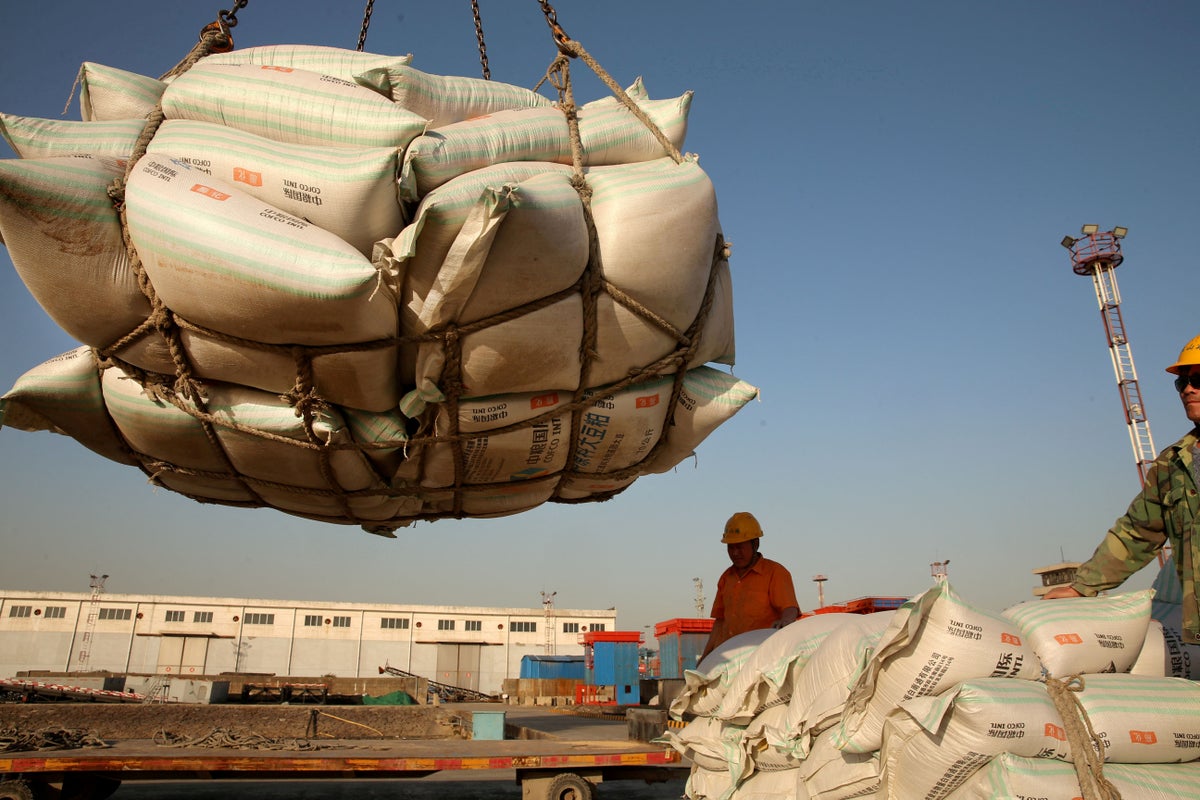
China has bought around 1 million metric tons of U.S. soybeans this week
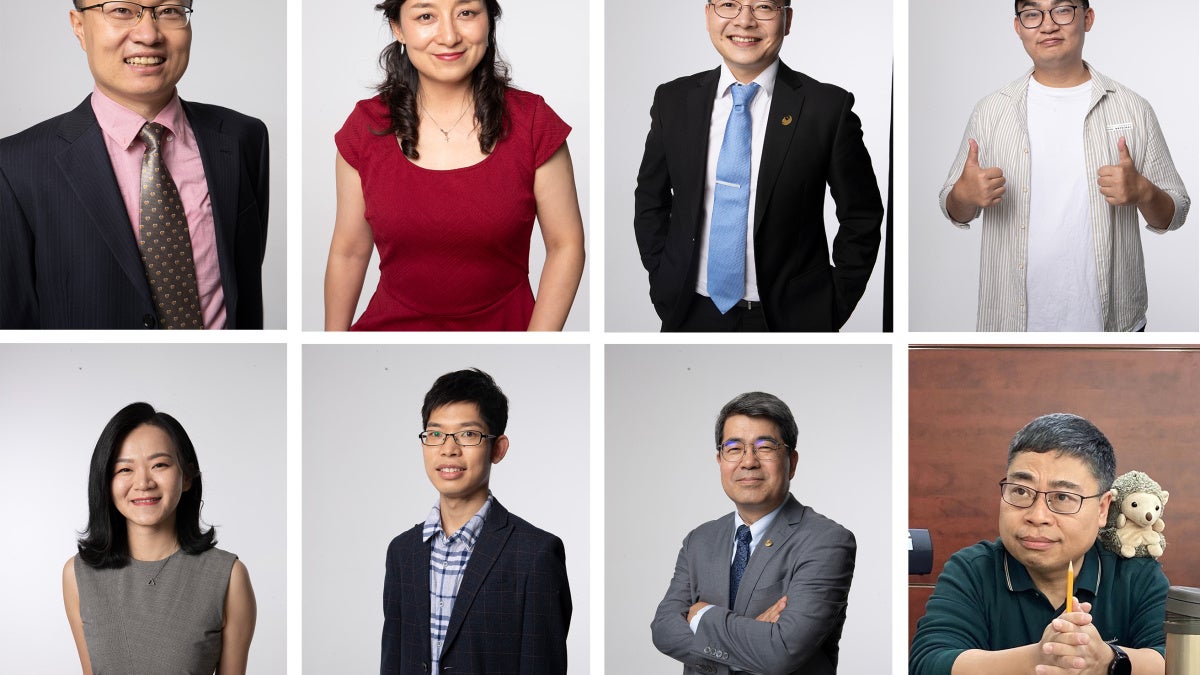
Click to expand Image The eight members of Zion Church who remain detained. Top from left to right: Gao Yingjia, Wang Cong, Wang Lin, Lin ShuchengBottom from left to right: Wu Qiuyu, Liu Zhenbin, Yin Huibin, Wang Zhong © Private Chinese lawyer Ruth Wang fled to Taiwan on September 2 after authorities threatened to shut down her law firm. Her offense? Representing members of China’s Zion Church, a prominent underground Protestant congregation. While founding pastor Ezra Jin was freed from custody in July following high-level US intervention, eight other church members have remained wrongfully detained since their October 2025 arrests. Chinese leader Xi Jinping launched his “Sinicization of religion” policy in 2016, which included government regulations tightening controls over religious life. Beijing is not only punishing people for independent religious practice but also those defending their rights. Recently, authorities have continued to tighten surveillance over religious activities. In the first half of 2026 alone, more than a dozen cities across the country introduced measures encouraging or rewarding people to report religious activities the government labels “illegal.” The reporting rules are sweeping. In February, authorities in Honghe prefecture, Yunnan province, listed 35 categories of reportable “illegal religious activity.” These include holding collective religious activities or ceremonies in private homes or other “unapproved” venues, clergy preaching through livestreams or WeChat groups, distributing religious materials in public places, and organizing religious education or training without official approval. Authorities in Haidong, Qinghai province, extended reporting obligations to businesses, ordering hotels and travel agencies to screen the events they host and report any “suspicious situation.” Almost all of the new regulations offer informants rewards. In Chengdu, Sichuan province, authorities are offering up to 800 RMB (US$120) for verified tips about vaguely defined “illegal” religious conduct. These measures, which appear to build upon similar ones in Xinjiang since 2013 and in Guangdong since 2019, send yet another chilling signal to Christians, Muslims, and Tibetan Buddhists in China who have faced intense pressure to closely reflect and follow Han Chinese culture and Chinese Communist Party ideology. The new measures followed changes to the Public Security Administration Punishment Law, which took effect on January 1. For the first time, the law made “illegal religious activities” grounds for 5 to 15 days of administrative detention. The Chinese government insists that people in China can freely worship. While many people in China continue to practice religion, they can only do so strictly within the authorities’ ever-tightening bounds. That is what “Sinicization” means in practice. Beijing’s claims won’t be taken seriously so long as churchgoers and other religious adherents are being detained for exercising their religious freedom.

Senator Elissa Slotkin (D-MI) says she’s hearing rumors that President Trump is preparing to let Chinese cars be sold in the US as part of a broader deal with China. She raised the claim Wednesday, tying it to Trump’s upcoming meeting with Chinese President Xi Jinping in Washington, which she said is coming “in just a few weeks.” There are many reasons to doubt these rumors. more…
 Electrek•Fred Lambert9 Sept
China’s exports grew by a quarter in the month of August, weeks before its leader, Xi Jinping, is set to meet with President Trump in Washington.
 The New York Times•Alexandra Stevenson8 Sept
Xi's diplomatic strategy may enhance China's global influence, potentially reshaping international alliances and economic partnerships.
CryptoBriefing•Estefano Gomez6 Sept
Xi's visit could ease U.S.-China tensions, potentially stabilizing global markets and fostering diplomatic and economic cooperation.
CryptoBriefing•Estefano Gomez5 Sept
Xi's inclusion of CEOs in his U.S. visit may signal a strategic shift towards enhancing economic diplomacy amid ongoing trade tensions.
CryptoBriefing•Estefano Gomez5 Sept
Xi's CEO delegation signals potential for renewed US-China business ties, impacting trade stability and political narratives amid global tensions.
CryptoBriefing•Editorial Team4 Sept
Xi Jinping's travel aims to enhance China's global influence, potentially reshaping international power dynamics and economic relations.
CryptoBriefing•Estefano Gomez1 Sept
Gates' initiative could catalyze global AI governance, fostering international collaboration amid US-China tech tensions and AI safety concerns.
CryptoBriefing•Editorial Team26 Aug
Xi's focus on US relations over multilateral diplomacy highlights China's strategic prioritization of bilateral ties amid global tensions.
CryptoBriefing•Editorial Team17 Aug
The escalating US-China tech tensions could disrupt global supply chains, impacting AI development and crypto markets significantly.
CryptoBriefing•Editorial Team6 Aug