TRIP REPORT: TAROM, Belgrade - Bucharest
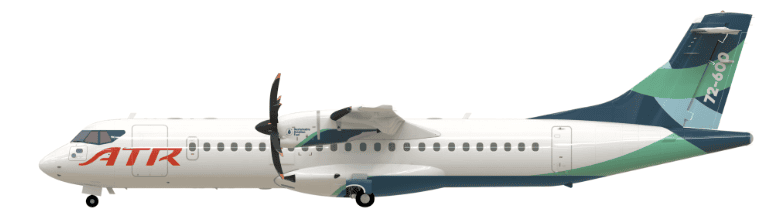
Trip Report Last week, I flew TAROM from Belgrade to Bucharest. It was my first time with the airline, although I have travelled between the two cities several times this year, each time with Air Serbia. This time around, I chose TAROM because its 9AM departure suited me much better than Air Serbia’s two flights that day - one just after midnight and the other in the early afternoon. I had an unrelated onward flight from Bucharest with another airline, so the TAROM service was really the only practical option. I could have taken Air Serbia’s midnight departure, but I did not particularly feel like flying in the middle of the night and then spending around twelve hours in Bucharest. I booked the flight roughly two weeks in advance. A one-way ticket without checked luggage cost 90 euros, while adding a bag would have been another 50 euros. TAROM was also selling business class on the ATR for something like 350 euros. I chose the light fare, remembering at the last minute that I still had SkyTeam status through Kenya Airways as a result of a status match I had done with another programme several years ago. That meant I was entitled to complimentary checked luggage. I was also lucky because my tier status was due to expire just a few days after this flight. I thought there might be an issue explaining to the Belgrade Airport check-in agent that I was entitled to free luggage through this status, and I was not particularly convinced it would be honoured. However, I need not have worried. I arrived at the airport two hours before departure and, for the first time in quite a while, it was remarkably peaceful. It was just after Air Serbia’s morning wave, leaving a roughly two-hour period during which there are comparatively few departures. There were around ten people ahead of me at check-in. To my surprise, the agent immediately mentioned that I had status without me having to say anything. She apologised that she did not have a priority baggage tag at her desk and offered to go to the KLM counter to get one, which I told her was obviously unnecessary. She also said she would block the seat next to me, although she noted that there were only 25 passengers booked on the ATR 72-600. This was quite a contrast to all four Air Serbia flights I have taken to or from Bucharest this year, all of which were full to the very last seat. Admittedly, those were all afternoon services. Before heading through passport control and security, both of which were quick, I had a short walk around the airport. The new cafés that appear ready to open are still closed, including the WHSmith shop, although I did notice some progress in Terminal 1, where it looks like several new cafés and restaurants are being prepared. The aircraft arrived in Belgrade slightly behind schedule, although the delay was not significant. It parked opposite Terminal 1. A China Southern Boeing 787 was also parked across the terminal at the time and was later towed to the gate, as the aircraft has several hours on the ground between arrival and departure. Boarding took place from gate A7A, followed by a very short bus ride to the ATR. There were two middle-aged female cabin crew members, neither of whom was particularly welcoming, although that was hardly an issue. Boarding was completed quickly and I overheard the crew saying there were 23 passengers onboard, meaning there had presumably been two no-shows. I was seated in the second-last row. There was one passenger in business class and I was somewhat surprised to see that TAROM places its business class in row one. During the Jat era, business class on the ATR was located in the final two rows, which Air Serbia still sells as preferred seating today. That arrangement always made sense to me because those rows are closest to the aircraft’s exit, lavatory and galley. It was also interesting to see that TAROM has a proper curtain separating business class from economy. Later during the flight, I saw one of the crew members bring the business class passenger a large, full meal tray - it actually looked bigger than the tray table itself. The passenger declined it and the crew member returned with the tray seconds later. Still, the whole setup felt very old school, in a good way. As for us, we were provided with a packaged cup of water. There does seem to be a buy on board menu, but it was not offered on this flight. The flight itself was smooth and uneventful, lasting around one hour and fifteen minutes. I spent some time looking through TAROM’s inflight magazine and was surprised by just how small the airline’s network has become. I am aware of the financial difficulties TAROM has faced over the years, but I have never really followed the airline closely. The lavatory was small, as is standard on ATRs, but it was clean and, thankfully, odourless. Bucharest Airport remains a complete mystery to me. In my personal opinion, it makes Belgrade Airport look like Changi. It seems to consist of various buildings, or at least what feel like various buildings, connected by numerous elevated corridors and air bridges. Passport control, both on arrival and departure, has somehow been placed in some of the narrowest sections of the terminal. The camera used at passport control is positioned so low that many passengers actually have to bend down for their photo to be taken. That said, I have found the Romanian border police to be very friendly on every occasion I have passed through the airport, unlike their colleagues in Belgrade. Perhaps I have simply been lucky. Once you leave baggage reclaim, there is around a ten-minute walk to reach the check-in hall, which is in another part of the airport and connected by yet another elevated corridor. Departures have their own problems. Every passenger has to scan their boarding pass before entering the security area, but the scanners are positioned in such a way that queues for them mix with the queues of passengers checking in nearby. At busy times of the day, it becomes quite a mess. Passport control for non-Schengen departures is again situated in a narrow section of the building, while the non-TAROM lounge is somehow worse than the Belgrade Airport lounge, which says quite a lot. I simply find the airport and its infrastructure surprisingly poor considering the volume of traffic it handles. Overall, TAROM was perfectly fine for such a short flight. I am glad I had the opportunity to try the airline before it discontinues its Belgrade service next month. The very light load on this particular flight might offer some indication as to why the route is being dropped, although obviously no conclusions can really be drawn from a single one-way journey. Share your travel experience by submitting a trip report to exyu@exyuaviation.com EX-YU Aviation News
EAEX-YU Aviation News•EX-YU Aviation (noreply@blogger.com)6 Sept
- neutral toward TAROM · 97%


 Air Insight•Addison Schonland18h ago