Bangladesh: BGD: Epidemic - 09-2026 - Dengue Outbreak (2026-09-14)
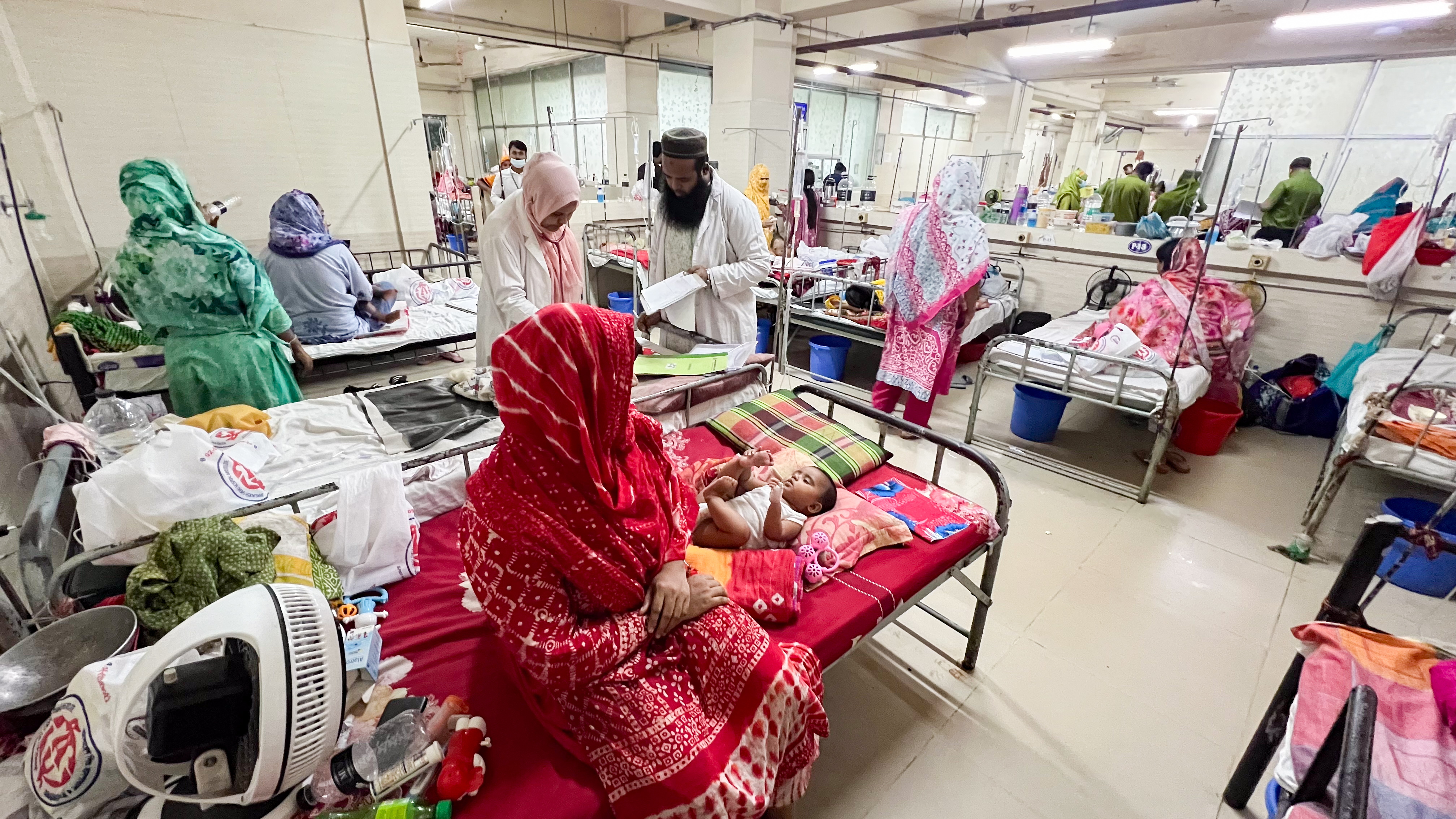
Country: Bangladesh Sources: Bangladesh Red Crescent Society, International Federation of Red Cross and Red Crescent Societies Please refer to the attached file. Description Dengue remains a major public health concern in Bangladesh, with recurrent seasonal outbreaks that threaten life and stretch the health system's capacity. The 2026 outbreak has followed an unusual trajectory: national figures ran below the 2025 pace through mid-August, before a sharp monsoon-driven surge from late August pushed the cumulative case count past last year's comparable tally within weeks. According to the Directorate General of Health Services (DGHS), from the beginning of the year to 13 September 2026, more than 51,000 dengue cases and 149 deaths have been recorded nationwide. The dengue situation has continued to deteriorate in recent days. Between 8 and 14 September 2026, more than 8,000 new dengue cases were reported, with 16 deaths recorded during this six-day period. In September 2026, more than 15,000 new dengue cases and 52 deaths have been reported up to 14 September. During the first 14 days of September, the country recorded an average of more than 1,200 hospital admissions per day, indicating a continued sharp increase in dengue transmission and the pressure on health facilities. August recorded 20,536 hospital admissions and 43 deaths — more than double the 9,206 admissions recorded in July 2026. In August 2026, Bangladesh recorded its third-highest monthly dengue morbidity and mortality since the country's major outbreak in 2000. Cases in August have more than tripled compared to 2024 (6,521 → 20,536) and nearly doubled year-on-year from 2025 to 2026. Moreover, according to some popular news portals, hospitals are currently managing a dual caseload of measles and dengue admissions, placing additional pressure on an already stretched health system. Health authorities report that measles patients require strict isolation owing to the disease's high transmissibility and cannot be co-located with dengue admissions. This is constraining ward capacity and complicating patient triage and management across affected facilities. A further rise in dengue cases is expected to compound this pressure. Health experts anticipate a sharp increase in dengue infections over the coming two months, driven by continued wet weather conditions and gaps in vector control coverage. The current surge has affected all eight divisions, with Dhaka Division the hardest hit. From 1 January to 8 September 2026, Dhaka Division (including its two city corporations) reported 18,209 cases approximately 40% of the national total. Khulna (7,298), Barishal (6,808) and Chattogram (6,721) reported the next-highest numbers, followed by Rajshahi (2,557) and Mymensingh (2,499). Sylhet and Rangpur reported the lowest numbers. Men accounted for 62.2% of reported cases against 37.8% for women, consistent with the male-dominant infection pattern of recent years, generally attributed to greater outdoor and inter-location mobility. The mortality pattern, however, runs in the opposite direction, women accounted for 55.4% of deaths against 44.6% for men. Request For Assistance Government Requests International Assistance: No NS Requests International Assistance: Yes Information Bulletin Published Completed Actions taken by RCRC Summary The RCRC Movement partners, in coordination with the IFRC and BDRCS, are closely monitoring the dengue situation and supporting the national response efforts. As part of this support, 29,375 NS1 test kits were handed over to the DGHS with funding from the Danish Red Cross and the Swiss Red Cross, contributing to strengthened dengue surveillance and early case detection across the country. Actions taken by Federation General NS Institutional readiness Summary The IFRC is closely monitoring the dengue situation in coordination with BDRCS, in-country partners, and the Directorate General of Health Services (DGHS) of the Ministry of Health and Family Welfare. To support the national dengue response, 38,000 NS1 test kits were provided to DGHS through the IFRC stockpile project, while 50 apheresis kits were handed over to the BDRCS Dhaka Blood Centre. Actions taken by National Society Health Community-based surveillance (CBS) RCCE for Health and hygiene promotion Vector control General NS Institutional readiness Volunteer Support Summary In response to the 2026 dengue outbreak, BDRCS supported government efforts by mobilizing volunteers for a national dengue campaign in Dhaka, canal and waterbody clean-up activities in Pirojpur, and continued Community-Based Surveillance in Puthia and Godagari upazilas of Rajshahi. Additionally, 67,375 NS1 test kits were provided to DGHS with support from IFRC, Swiss Red Cross, and Danish Red Cross, while 50 apheresis kits were handed over to the BDRCS Dhaka Blood Centre to strengthen dengue case management. Actions taken by others The Government of Bangladesh has intensified its dengue response through a three-month nationwide awareness and cleanliness campaign, weekly vector-control drives, mobile court inspections to eliminate Aedes mosquito breeding sites, and broad community engagement involving volunteers, youth organizations, and educational institutions. Preparedness and response measures include the establishment of dengue corners at upazila hospitals, a standby field hospital in Dhaka, free dengue testing in public hospitals, subsidized dengue-related testing in diagnostic centres, and reserved treatment capacity in private hospitals. To strengthen clinical case management, the Directorate General of Health Services (DGHS), in collaboration with the Bangladesh Society of Medicine and with support from UNICEF, updated national dengue treatment guidelines and conducted a divisional-level Training of Trainers (ToT) on Clinical Management of Dengue on 31 August 2026, enhancing the capacity of healthcare professionals to effectively manage the growing number of dengue cases and hospital admissions. Planned International Response DREF: Requested
 ReliefWeb•International Federation of Red Cross and Red Crescent Societies15 Sept