Here’s why BlackRock believes autonomous AI systems will drive next stablecoin boom
BlackRock’s machine-economy outlook is gaining traction through stablecoins, tokenized assets, and emerging AI-agent payments.
- favorable toward BlackRock · 78%

BlackRock’s machine-economy outlook is gaining traction through stablecoins, tokenized assets, and emerging AI-agent payments.

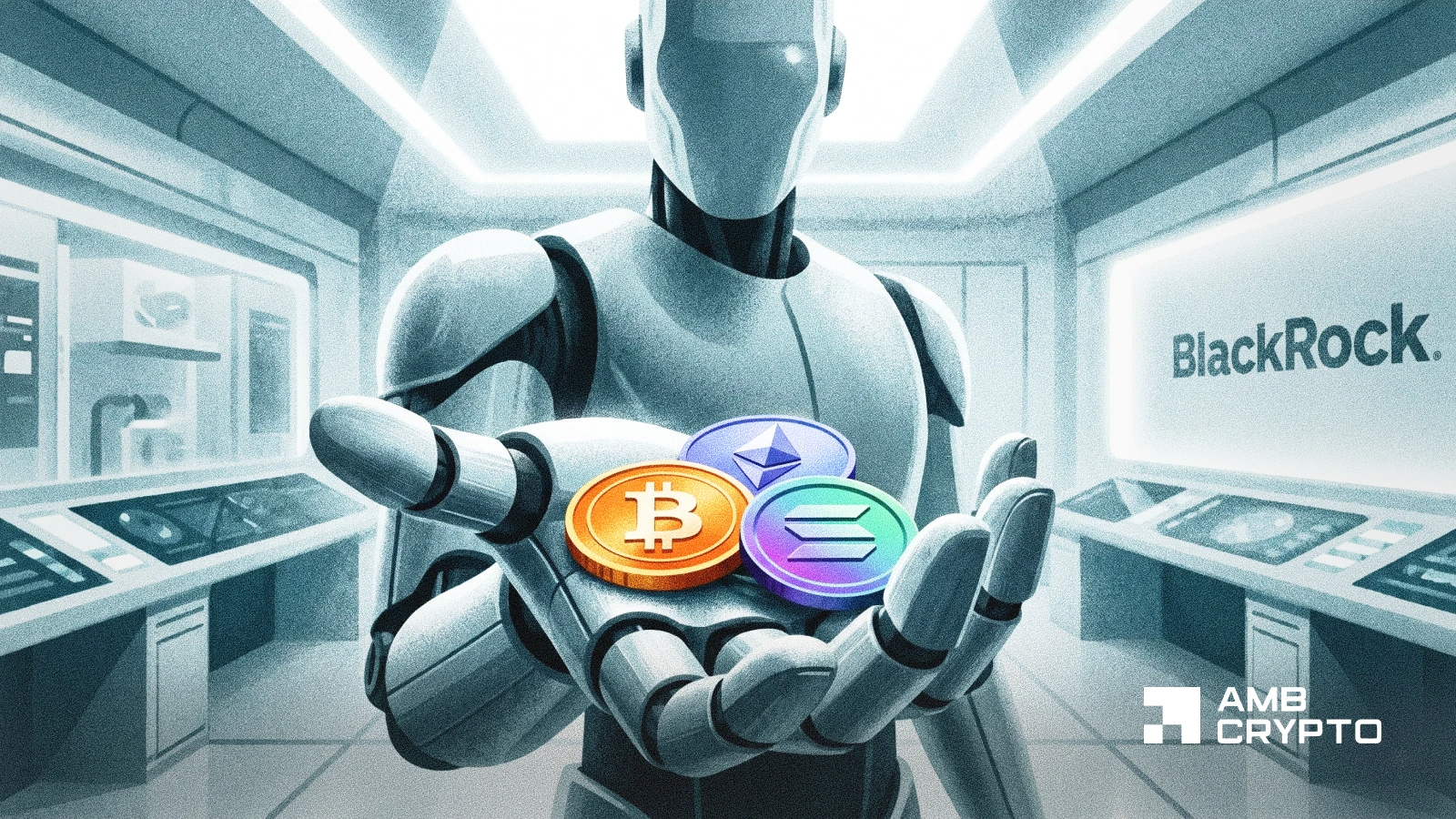
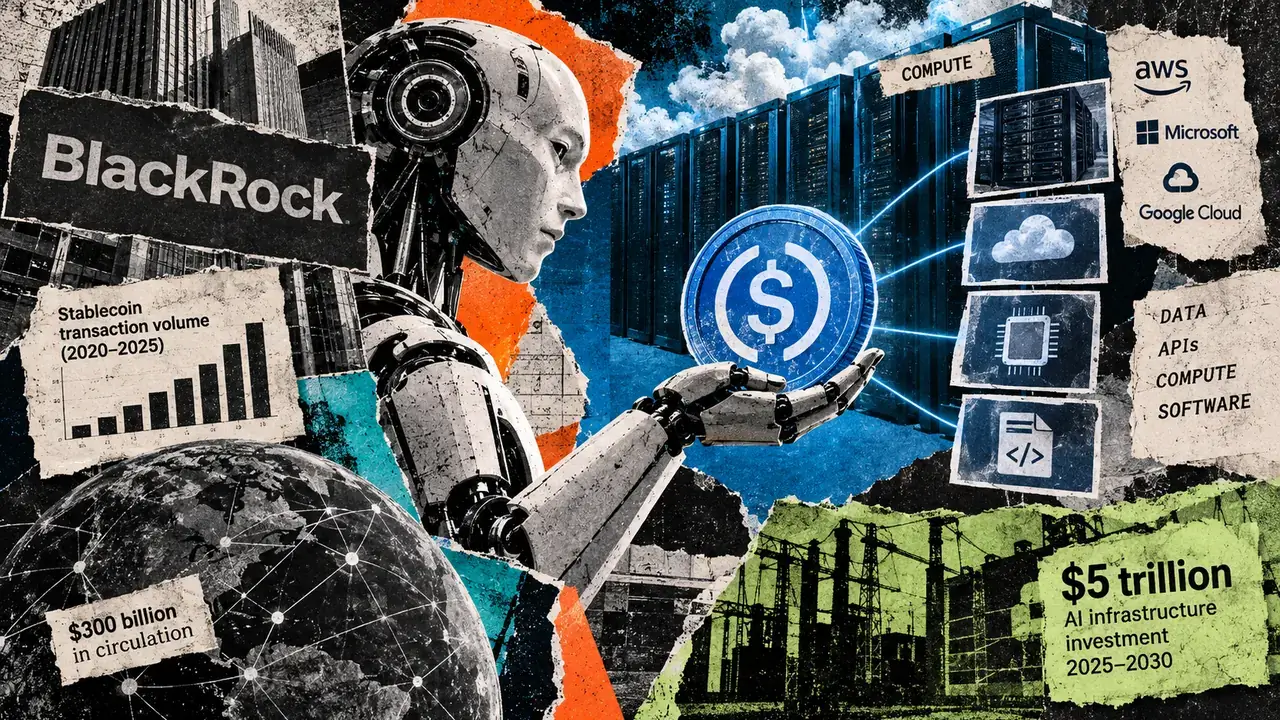
BlackRock says AI could create a new class of stablecoin customer: machines that spend continuously without human approval. The world’s largest asset manager sees increasingly autonomous AI systems purchasing data, accessing software, and acquiring computing resources on their own, potentially adding a new source of transaction demand to digital assets beyond trading and human payments. […]

A new report from Blackrock and new findings by the Bitcoin Policy Institute show that bitcoin is losing the agentic payment battle in the medium term at least, but the longer-term war is still undecided. The latest paper from Blackrock on “The Machine-Native Economy” essentially omits bitcoin, assigning it only the role of a savings […]

BlackRock says AI agents could drive stablecoin payments and help create new markets for trading and financing compute.

BlackRock's strategy may drive increased volatility in risk assets, influencing broader market dynamics and potentially boosting Bitcoin valuations.

The world's largest asset manager argues that autonomous AI agents buying data, paying for services, and renting computing power could quietly become one of the biggest forces pushing money into crypto.

Traditional card networks and ACH already automate payments, but BlackRock is questioning their fit for tiny, continuous transactions.

BlackRock believes the artificial intelligence boom could emerge as a major new source of demand for crypto.

BlackRock says AI agents need “machine-native money,” and stablecoins are its leading candidate. A new research paper from the world’s largest asset manager argues that card networks and bank transfers were never built for software that pays software. The paper sketches a two-tier money system for machines. Stablecoins handle the spending, and Bitcoin, according to

BlackRock is taking an overweight stance on U.S. equities since AI boosts profits for corporations even amid rising borrowing costs. BlackRock stresses the lack of AI, sustainable earnings, and cross-asset plays. AI development needs an increase in the supply of computing capacity, energy, semiconductors, memory, and data center build-out. BlackRock

TL;DR US spot Ethereum ETFs recorded $270.0 million of net inflows for the September 21 session. BlackRock’s ETHA led the day with $110.0 million, while Fidelity’s FETH added roughly $73.0 million. The numbers are single-session ETF flows, not direct purchases by the Ethereum network or protocol. US spot Ethereum ETFs bounced back with a $270 million net inflow day, giving the market one of its stronger institutional-demand readings of the month. The figures cover the September 21 trading session and were reported on September 22. BlackRock And Fidelity Lead The Day BlackRock’s ETHA took in $110.0 million, while Fidelity’s FETH added approximately $72.96 million. Those two products accounted for most of the day’s net demand. According to the validated fund-flow data, ETHA’s cumulative inflows reached roughly $13.067 billion, while FETH’s cumulative figure moved to about $2.32 billion. The important point is the direction of travel: after a period in which Ethereum products had struggled to match the consistency of Bitcoin ETF demand, the September 21 session produced a clear positive reversal. That does not guarantee the trend will persist, but it does put fresh institutional capital back into the Ethereum ETF conversation. ETF Demand Gives ETH A Cleaner Institutional Signal Spot ETF flows are useful because they isolate one specific channel of demand. They do not tell us everything about Ethereum’s market structure, and they should not be confused with protocol revenue, staking deposits or direct onchain activity. What they do show is whether regulated US investment products are receiving or losing capital. On September 21, that answer was unambiguously positive. A $270 million net inflow day does not erase prior redemptions or establish a permanent shift, but it gives ETH traders a new institutional datapoint at a time when the market has been closely watching whether Ethereum can attract sustained capital alongside Bitcoin. This article was written by the News Desk and edited by Samuel Rae.

BlackRock says AI agents could drive demand for stablecoins and programmable payment rails, while tokenized computing capacity could create another opportunity for digital assets.

BlackRock's Q4 outlook keeps U.S. equities overweight as AI lifts earnings, while higher yields favor short-term bonds and selective credit.

Tokenizing AI compute could revolutionize digital asset markets, enabling autonomous economic activity and reshaping financial infrastructures.

Dubai: BlackRock's Aladdin today released Market Evolution: The Middle East, a new report examining the region's shift from a source of global private markets capital to a destination for private capital deployment. The report identifies the UAE as the region's leading private capital market, supported by economic transformation programmes, expanding infrastructure investment and growing institutional sophistication. The report also analyses the allocations, deal activity and investor trends reshaping private markets across the Middle East and shows growing investor conviction, rising domestic deployment and expanding opportunities, particularly in technology and infrastructure. That shift is visible across the region's largest investors. Middle East sovereign wealth funds tracked by Preqin allocate 43% of their exposure to private capital, compared with 35% for their rest-of-world peers, and appetite continues to build. The share of Middle East LP investors positive on or considering private equity mandates has climbed from 70% in 2019 to 83% in 2026. Among LP investors elsewhere in the world, that figure has moved only marginally over the same period, from 60% to 61%, showing regional conviction is growing well ahead of the global baseline. Ayman Daif, Managing Director and Head of Aladdin Business Development for the Middle East, Central Asia, Africa and India, said, "The direction of travel in the region points to a structural shift: capital is increasingly being deployed at home, and the institutions and ecosystems are being built around it. The next phase of growth will be shaped by continued collaboration between sovereign wealth funds, family offices and global investment managers, alongside broader adoption of technology and data-driven investment approaches. "This comes as BlackRock Investment Institute research suggests GCC countries will invest about $2.1 trillion by 2030, with spending focused on making economies more resilient to disruptions in trade, shipping and energy markets." The findings also highlight the growing importance of infrastructure and digital infrastructure investment. Regional investors cite opportunities across energy, utilities, transport, data centres and artificial intelligence-related infrastructure as key drivers of future growth. Family offices are also playing an increasingly important role in the region's investment ecosystem. The report finds family offices now account for nearly half of active private capital investors in the Middle East, with private equity representing their largest area of investment interest. Key findings include: Family offices remain the largest investor group since 2023. They account for almost 50% of active Middle East-based private capital investors in 2026. GCC family offices tilt toward private equity at 27% of future search mandates, ahead of real estate at 19%, private credit at 16%, infrastructure at 14%, hedge funds at 13%, and natural resources at 11%. Venture capital remains resilient. Aggregate Middle East VC deal value averaged $2.4bn per year between 2021 and 2025, holding steady while the US and Europe faced a tougher funding environment.

BlackRock's MUB and Vanguard's VTEB posted record weekly inflows after a muni bond rout, while Schwab's SCMB saw $530 million in redemptions.

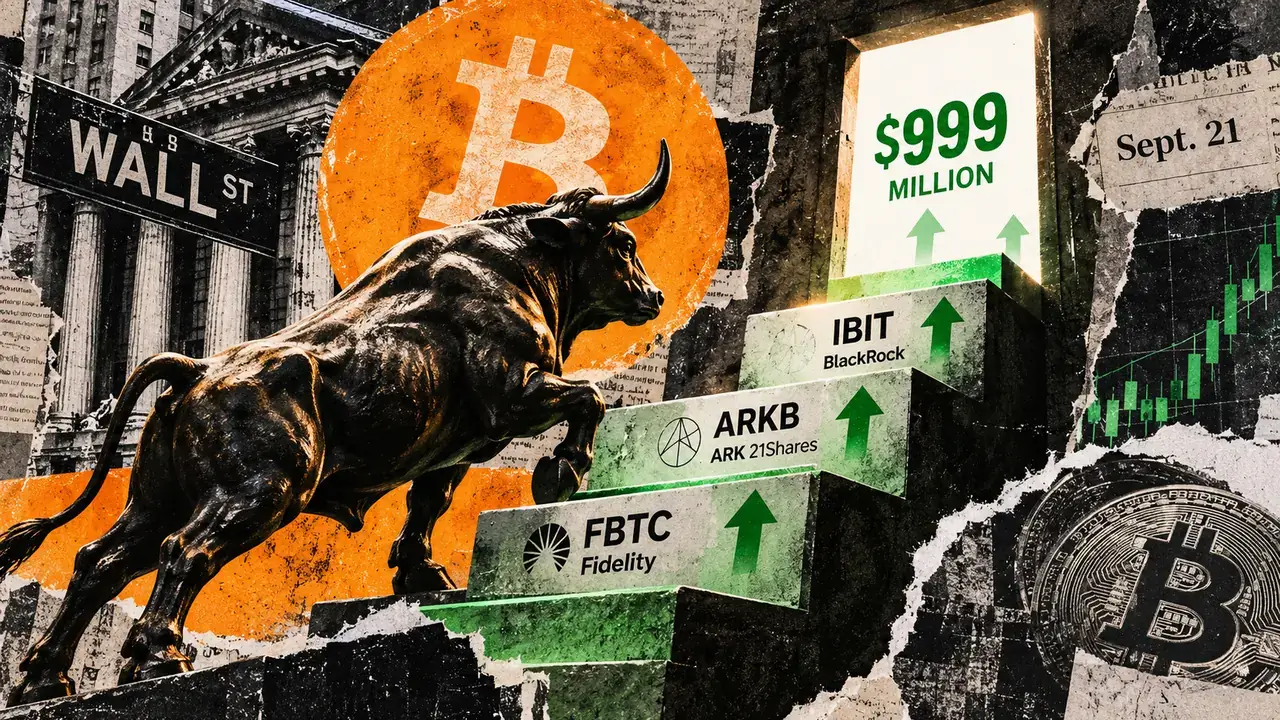
ARKB and FBTC each drew substantial capital, widening participation without displacing BlackRock from the top spot.

AI's integration into digital assets could redefine financial systems, boosting stablecoins and transforming Bitcoin mining into AI infrastructure.

BlackRock's investment in Mynt's IPO could significantly boost fintech growth in Southeast Asia, enhancing digital financial inclusion.