The Timeline Broke, Not the Crypto Thesis
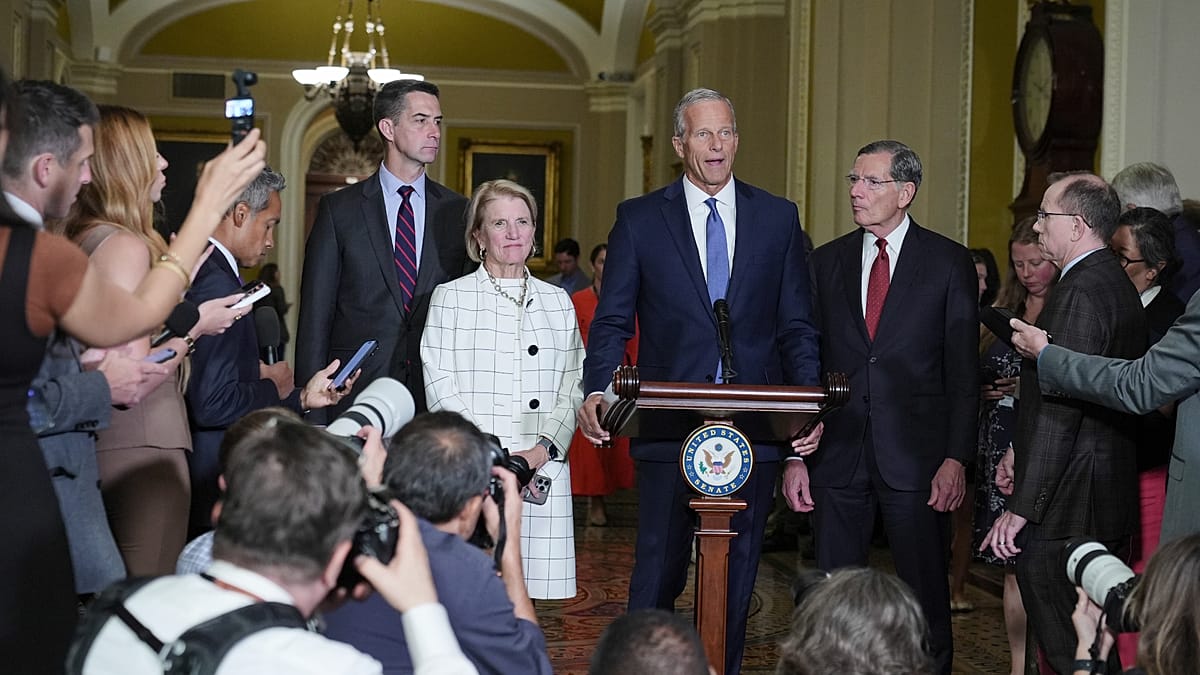
Ahead of the Fed Decision Bitcoin has just absorbed one major shock and is about to face another: **the CLARITY vote failed, and the Fed decides in hours.** On September 15, the U.S. Senate failed to invoke cloture on the motion to proceed to the Digital Asset Market Clarity Act. The official vote was **49–50**, below the 60 votes needed to advance the legislation. This was a procedural failure to move the bill forward, not a final vote rejecting the bill itself. That distinction matters. Near-term regulatory certainty has been pushed further out. But one failed procedural vote does not, by itself, invalidate the longer-term case for digital assets. The market reaction helps show what was actually repriced. ## The Relative Damage Tells the Story Bitcoin fell about 4% after the Senate setback. Coinbase and Circle fell roughly 9% — about twice as much. That relative performance is important. If this were primarily a crisis of confidence in Bitcoin itself, Bitcoin should be at the center of the damage. Instead, assets with much greater exposure to U.S. regulatory outcomes were hit harder. That suggests at least part of the selloff was a **regulatory-premium adjustment**. For months, markets had increasingly priced in the possibility that comprehensive U.S. crypto rules were getting closer. When that timeline suddenly became less certain, companies whose business models depend heavily on U.S. regulatory clarity absorbed the larger shock. Bitcoin was pulled lower with them. But the Bitcoin network itself did not change because of the Senate vote. So the real question is not whether CLARITY was bad news. It clearly was for the near-term policy timeline. The question is whether the market is simply repricing that expectation — or beginning a broader structural breakdown. ## Regulation Has Slowed, Not Stopped Near-term congressional passage is now significantly more difficult. But the regulatory process has not returned to zero. The SEC proposed **Regulation Crypto Assets** in August, creating a tailored framework for certain investment contracts involving crypto assets. SEC Chair Paul Atkins has also said congressional legislation remains important for establishing more durable rules. So there are still two separate tracks: **Congressional legislation has slowed. Administrative rulemaking continues.** That does not guarantee CLARITY — in its current form or another form — will pass on any particular timetable. It simply means the Senate setback should be understood mainly as a delay in regulatory certainty, not evidence that the entire U.S. regulatory direction has reversed. For markets, timing matters. But timing and direction are not the same thing. ## The Fed Is the Second Test **The FOMC decision lands in hours. Markets are pricing a 25bp hike. What matters is what comes next.** The Fed releases its decision at **2:00 p.m. ET**, followed by Chair Kevin Warsh's press conference at **2:30 p.m. ET**. Markets currently assign roughly a **93% probability** to a 25-basis-point increase, taking the target range to **3.75%–4.00%**. Because the hike itself is heavily priced, the bigger variables are: * whether policymakers signal further tightening this year; * how concerned they remain about inflation; * how the Fed treats elevated energy prices; * and whether Warsh keeps future policy data-dependent or signals a more persistent hiking cycle. This matters because Bitcoin is not dealing with the CLARITY setback in isolation. The market is simultaneously removing regulatory optimism, reducing leverage and preparing for tighter monetary policy. That combination can produce a much larger short-term move than any single headline. ## Is This a Constructive Reset? It is too early to call the current decline a bottom. A constructive reset has to produce evidence. Over the next **48–72 hours**, four things matter. ### 1. Bitcoin Stops Making Impulsive New Lows Bitcoin does not need an immediate V-shaped recovery. But once the FOMC reaction has been fully absorbed, continued aggressive new lows would weaken the reset interpretation. Stabilization matters more than the first rebound. ### 2. Regulatory-Sensitive Assets Stop Underperforming Coinbase and Circle were hit roughly twice as hard as Bitcoin in the initial reaction. If that gap begins to narrow, it would suggest much of the regulatory premium has already been removed. If the gap keeps widening, the repricing is probably not finished. ### 3. Leverage Cools Without Another Disorderly Flush A healthy reset removes crowded positioning and allows the market to rebuild from a cleaner base. Cooling leverage followed by stable prices would be constructive. Weak prices combined with rapidly rebuilding leverage would not. ### 4. Bitcoin Absorbs the Fed The first move after an FOMC announcement is often noisy. The better signal comes after the statement, projections and press conference have all been digested. If Bitcoin can absorb both the regulatory disappointment and the Fed without starting another impulsive leg lower, the constructive-reset argument becomes much stronger. If it cannot, the correction probably has further to run. ## What Matters From Here The CLARITY vote changed something real: **the path toward near-term U.S. regulatory clarity became harder.** But the market now has to determine how much of that disappointment was already priced during the selloff — and whether the Fed adds a second layer of pressure. For short-term traders, the next 48–72 hours matter more than the last 48. Watch price stabilization, relative performance, leverage and the post-FOMC reaction. For longer-term investors, the more important question is different: Are institutional participation, regulatory development and the integration of digital assets into the financial system actually reversing? One failed procedural vote is not enough evidence to answer yes. The current move therefore deserves respect, but not an automatic conclusion that the broader crypto thesis has failed. **By tomorrow we'll know whether this is a one-punch or two-punch correction.** **Today, the evidence says the timeline broke, not the thesis.**