

India opposition condemns election chief after newspaper investigation
The main opposition Congress party accused Gyanesh Kumar of acting unilaterally at the behest of Prime Minister Narendra Modi’s ruling Bharatiya Janata Party.
The main opposition Congress party accused Gyanesh Kumar of acting unilaterally at the behest of Prime Minister Narendra Modi’s ruling Bharatiya Janata Party.

The answer is not to weaken employee rights, but to strengthen them.
 The Hill•Javier Soto, opinion contributor3h ago
In my inaugural entry for this column, I critiqued the Supreme Court’s reliance on an abstract conception of the “separation of powers.” Because the Constitution does not contain a “separation of powers” clause, but instead contains a collection of specific provisions that enforce the separation of powers in specific ways, I contended that the court should more carefully refer to the specific constitutional provisions that support its decisions. In this second column entry, I would like to bring a similar level of specificity to the separation-of-powers provisions that address the federal lawmaking process. A close look at those provisions indicate that, if the court wishes to better respect the Constitution’s design, the court should abandon its practice of regularly treating Congress as if that branch can unilaterally make law. Let’s start with some examples of the phenomenon in question. Judicial references to “Congress” simply making law are ubiquitous and have been offered by justices of different interpretive stripes. In 2025, Justice Sonia Sotomayor wrote on behalf of a unanimous court that “Congress enacted ERISA to ‘protect . . . the interests of participants in employee benefit plans and their beneficiaries.’” That same year, Justice Amy Coney Barrett contended “that Congress did not intend for courts to consider” particular factors. More recently, Chief Justice John Roberts wrote in Learning Resources v. Trump that “[t]he Government points to no statute in which Congress used the word ‘regulate’ to authorize taxation.” In the same cases, Justice Ketanji Brown Jackson added that “probing Congress’s intent is the right inquiry.” And in another high-profile example, Roberts contended in King v. Burwell that “Congress passed the Affordable Care Act to improve health insurance markets, not to destroy them.” Many more examples could be offered. And to the extent those examples are only intended to suggest that Congress plays a role in making law, the examples are not particularly problematic. A problem does arise, however, when those routine references to congressional lawmaking allow a jurist to slip into thinking that Congress makes law alone. That is because, at least in the mine-run of cases, the Constitution does not empower Congress to unilaterally make law. Instead, the Constitution ordinarily requires Congress to make law in concert with the president. Thus, by routinely focusing on “Congress” as the relevant lawmaker, the court gives short shrift to the president’s role in the lawmaking process and risks systematically favoring one of the two political branches that the Constitution empowers to shape federal statutes. At least three constitutional provisions speak to the president’s influence in the lawmaking process. The first is the presentment clause , which requires bills to be presented to the president for his potential veto. Because legislators in Congress know that they must present bills to the president, the presentment clause allows for the president’s legislative agenda to influence legislative text long before it is formally sent for presidential review. A legislator aiming to turn a bill into law, for example, would be wise to determine whether the bill is consistent with the president’s legislative agenda, as that can influence how the bill is drafted. A bill consistent with the president’s legislative agenda might be drafted to squeak by with simple majorities in the House and Senate (or a 60-vote majority in the Senate if the self-imposed filibuster is in play). A bill at odds with the president’s legislative agenda, by comparison, should be drafted in a way that can secure 2/3 support in each legislative chamber – which is the constitutionally required supermajority for overriding a presidential veto. The second clause speaking to the president’s role in the lawmaking process is the recommendations clause , which states that the president “shall . . . recommend to [Congress’] Consideration such Measures as he shall judge necessary and expedient.” This can give the president an important first-mover advantage. Consider the State of the Union Address, where the president commonly makes legislative recommendations. After the president’s address, a large segment of the country typically rallies behind the president’s legislative proposals, while a separate segment of the country typically takes the opposing position. What those competing segments share is a focus on the president’s legislative proposals, giving the president’s proposals vastly more attention than what might be offered to proposals from ordinary legislators. The third clause is the vice president as presiding officer clause , which empowers the vice president to cast tie-breaking votes in the Senate. While the recommendation and presentment clauses grant the president the ability to influence legislation toward the start and end of the lawmaking process, the vice president affords the president opportunities to influence legislation during the middle of the lawmaking process. As the Supreme Court recognized in Trump v. United States , “the President may frequently rely on the Vice President in his capacity as President of the Senate to advance the President’s agenda in Congress.” To be sure, although the president has tremendous influence in the lawmaking process, it does not follow that the president will always get his way in that process. Congress might ignore a presidential recommendation, override a presidential veto, or make political alliances so that the vice president is not given the chance to cast tie-breaking votes. But even in those situations, the president’s mere participation in the process can influence what ultimately becomes law. As an example, and to refer again to the dynamics imposed by the presentment clause, legislators who expect a presidential veto might account for it by initially drafting legislative text so that it can secure the necessary two-thirds veto-override support in Congress. Thus, a bill that might have been written one way had the president not been involved in the lawmaking process might be written very differently simply because of the president’s role. In short, the president plays an important part in the lawmaking process. Given as much, the Supreme Court should abandon its practice of regularly referring to “Congress” as if that branch makes law alone. Rather, the court should more routinely refer to both branches involved in the multi-branch lawmaking process. The court can do so by referring to statutes “passed by Congress and signed by the President,” or to national policy “made by Congress and the President in the legislative process,” to borrow two helpful phrases used by Justice Brett Kavanaugh. My call for the court to stop treating Congress as a unilateral lawmaker is not simply a matter of semantics. Substantial interpretive consequences flow from recognizing the president’s role in the lawmaking process. I will conclude by briefly discussing three such consequences here (you can find additional analysis of two of these points in a forthcoming Alabama Law Review article ). First, recognizing the president’s role in the lawmaking process gives reason to question methods of statutory interpretation that focus on legislative intent and rely on legislative history, which justices such as Jackson have strongly advocated for. To the extent that a jurist’s focus on “ legislative intent” means a focus on “ congressional intent,” that focus is in serious tension with the multi-branch lawmaking process outlined in the Constitution. That is because, even if one assumes that the 535 legislators in Congress share an identifiable intent, that congressional intent might be at odds with the president’s intent. An exclusive focus on Congress’ intent is therefore constitutionally problematic. At minimum, any judicial focus on “legislative intent” should be broad enough to include the collective lawmaking intent of both Congress and the president. Relatedly, a jurist who uses legislative history to elucidate legislative intent should be careful to consider legislative history from both Congress (e.g., committee reports and floor speeches) and the president (e.g., signing statements and presidential speeches). Otherwise, the jurist would risk systematically favoring the lawmaking views of one of the two branches that the Constitution empowers to collectively shape federal law. Second, and unintuitively, recognizing the president’s role in the lawmaking process could help the court empower Congress. The court has recently signaled an interest in empowering Congress by overruling Chevron deference and embracing the major questions doctrine – two doctrinal moves that reduce the executive branch’s ability to sidestep Congress by unilaterally enacting regulatory policies. But the court is not likely to catch each and every executive-branch effort to sidestep Congress. And so the court might complement its recent doctrinal moves by giving presidents the incentive to more frequently turn to Congress as a partner in the multi-branch lawmaking process. The court can give presidents incentives to turn to Congress by signaling that statutes will not be systematically interpreted in favor of Congress’s “intent,” but will instead be interpreted neutrally and in a way that can sometimes benefit the president. The situation might be analogized to a businessperson who has a new incentive to come to a contract-negotiation table, rather than pursue unilateral action, after learning that the contract will be interpreted neutrally and in favor of neither contracting party. To be sure, jurists who worry that modern presidents already exercise too much power might object to interpreting the end-product of the multi-branch lawmaking process (i.e., legislative text) in a way that does not favor Congress over the president. Those jurists might instead think that the best way to respond to an overly powerful president is to empower Congress by treating Congress as if it unilaterally makes law. But that would be giving Congress more power than the Constitution affords. And the proper solution to any one branch exercising too much power is not to double the error by granting too much power to a separate branch. Instead, the proper solution is to ensure that no branch oversteps constitutional limits. And enforcing constitutional limits brings us to a third and final consequence that follows from recognizing the president’s role in the lawmaking process: a need to reconceptualize the nondelegation doctrine. The nondelegation doctrine imposes a constitutional limit on statutory delegations of lawmaking discretion to the executive branch. The doctrine is not aggressively enforced, and it has been something of a dead letter in recent decades. Jurists who are concerned that modern presidents exercise too much authority, such as Justice Neil Gorsuch, have therefore looked to reinvigorating the nondelegation doctrine as a means of reining in the executive branch. It should come as a relief to those jurists, then, to note that respecting the president’s role in the lawmaking process would not give independent reason to abandon efforts to reinvigorate the nondelegation doctrine. However, respecting the president’s role in the lawmaking process would require the nondelegation doctrine to be reconceptualized so that it better accounts for the constitution’s design. Today, the nondelegation doctrine is sometimes conceptualized as a limit on Congress’ ability to delegate Congress’ lawmaking power to the president. But that is a problematic framing because the Constitution does not grant Congress unilateral lawmaking power in the first place (bracketing potential complications relating to special topics such as federal property). Yes, Congress alone is vested with certain “legislative Powers,” but, as I have explained, to use those powers to make law, Congress must ordinarily work through a multi-branch lawmaking process that includes the president. Thus, a better conception of the nondelegation doctrine would be to understand it as limiting Congress and the president from agreeing to statutes that empower anyone else besides Congress and the president (acting in concert through the proper channels) from making law. That would mean limiting Congress’s and the president’s ability to statutorily empower the president to make law unilaterally. *** The court frequently treats Congress as if that branch makes law alone. But the Constitution sets out an arduous multi-branch lawmaking process that allows for the president to shape legislative text from top to bottom. Going forward, the court should better account for the Constitution’s multi-branch lawmaking process by more regularly referencing both the Congress and the president when referring to the creation of federal statutes. Doing so would help the court better respect the important interpretive consequences that flow from recognizing the president’s role in shaping federal law.
 SCOTUSblog•Chad Squitieri4h ago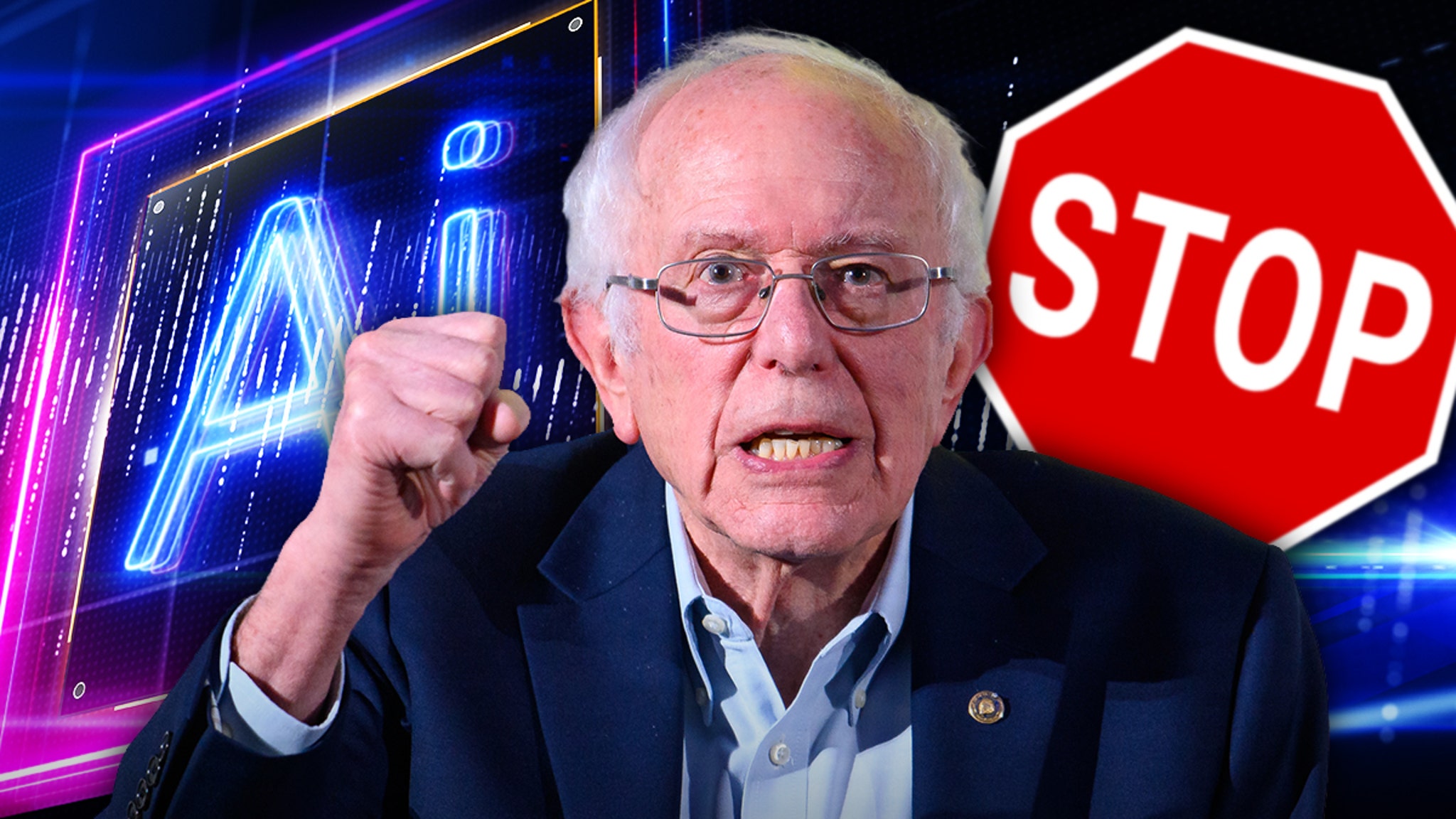
Bernie Sanders is asking Congress to act fast on the dangers of A.I. ... introducing a bill that would ban artificial superintelligence. The Senator from Vermont and Rep. Greg Casar are unveiling legislation today that would create a new federal…
 TMZ•TMZ Staff4h ago
Congress has so far done little to rein in the AI industry even as some of its most prominent leaders warn about potentially catastrophic risks Sign up for US Breaking News emails The Trump administration is refusing to work with the newly appointed deputy head of the United Nations refugee agency, Reuters reported. Tressa Rae Finerty, an American who took up the role of deputy high commissioner at UNHCR earlier this month, has taken leave as she seeks a waiver from the US government that would allow her to carry out aspects of her duties, according to seven diplomatic sources. Speaking at the UN general assembly, Donald Trump re-issued his threat to “annihilate” Iran and “drive them into Hell” if the regime didn’t capitulate and make a deal.” He also said he was “working closely with the leaders of Russia and Ukraine ” to end the disastrous war, defended his administration’s actions in Latin America – including the midnight raid to arrest former Venezuelan president Nicólas Maduro , defended his drone strikes on boats in the Caribbean and the Pacific, accused Mexico of being effectively controlled by the cartels, and said it was “unacceptable” for the US to share a border with a nation under such conditions, pointed to regime change in Cuba and said he would reject any calls for a “globalist scheme” to control artificial intelligence. Shortly after his UN address, Trump signed a Greenland deal, which Greenland’s prime minister Jens-Frederick Nielsen said “underlines the importance of the Nato alliance.” In tricky, carefully worded paragraphs, she said the agreement “recognises the US defining historical and ongoing contributions to the security and defence of Greenland,” but it also “respects the sovereignty and the territorial integrity of the Kingdom of Denmark, as well as Greenland’s right to self-determination.” Trump told a CNN reporter at the UN general assembly on Tuesday that he was “surprised” the outlet was covering him, saying it ‘shouldn’t be here’ after he banned the network alongside Politico and MS Now from the White House on Friday. At a joint press conference on Tuesday, vice-president JD Vance and Mehmet Oz , administrator of the Centers for Medicare and Medicaid Services, announced that the federal government was removing 760,000 enrollees from Affordable Care Act insurance marketplaces. Continue reading...
 The Guardian•Tom Ambrose6h ago
Iran war, rising prices and president’s low ratings give Democrats advantage, but Republicans have poured cash into key races – could it be decisive? Donald Trump pulled out all the stops at the Republican party’s midterm convention two weeks ago. In speeches aimed at the voters who will soon decide whether to keep Republicans in control of Congress for the final phase of his presidency, the president dangled $5,000 checks , and warned the United States would turn into a “communist country” if Democrats are elected. The unprecedented political gathering amounted to a hail-mary pass at retaining control of Congress, which history indicated Trump’s Republican allies had always been likely to lose in the 3 November vote. Two weeks later, with election administrators in several states already sending out mail ballots, there is no indication the gambit has worked. Continue reading...
The Guardian•Chris Stein in Washington8h ago
While Senate offices have access to chatbots like ChatGPT, they are not authorized to use any of the more advanced tools that are at the center of regulatory talks and public debate about AI safety.
 NPR•Eric McDaniel9h ago
Rep. Nancy Pelosi will retire following the 2026 midterm elections, ending her almost 40-year career in Congress, but leaving a lasting influence on U.S. politics.
NPR•Scott Shafer9h ago
Hunter Biden, former President Biden’s son, on Tuesday responded to a request from a GOP senator for both himself and President Trump’s son, Donald Trump Jr. to testify before Congress. “Sen. Curtis of Utah has suggested that Don Jr. and I should testify before Congress,” the younger Biden said in a post on the social…
The Hill•Tara Suter20h ago
A new lawsuit is challenging how the Trump administration plans to exempt medically frail people from Medicaid work requirements. Medicaid enrollees, alongside several major health care advocacy organizations and the city of Columbus, Ohio, said the administration’s final rule implementing work requirements is not what Congress intended. They argue the rule narrowly defines who qualifies…
The Hill•Nathaniel Weixel20h agoSEATTLE — A federal court in Washington dismissed the federal government’s lawsuit attempting to force the Washington secretary of state to provide an unredacted statewide voter registration list. The federal government says the secretary’s refusal to provide the records violates Title III of the Civil Rights Act, but the list is not subject to demand under that law because Congress did not intend for it to cover all documents in a state’s possession. The list at issue is constantly updated with new information, and the federal government did not adequately explain the retention and preservation requirements of the applicable statute could apply to such a list.

LOCAL INPUT: Mayor Zohran Mamdani is facing fresh backlash over sidelining key stakeholders from talks about developing thousands of housing units on top of a Queens rail yard. The Sunnyside Yard project landed back in the headlines yesterday when Mamdani and President Donald Trump emerged from a chummy meeting at Gracie Mansion to announce they’d agreed to bring conversations about the long-stalled housing plan to “a new level.” The unlikely duo first announced at a White House meeting in February they were looking into reviving the project, which would be contingent on billions of dollars in federal funding and involve constructing a platform over the rail yard, on top of which 12,000 housing units would be built. But Council member Julie Won — who represents Sunnyside and voiced concerns in February about not being included in the talks — said today she continues to be troubled by the fact that the mayor and the president aren’t consulting her or other local community voices. “Since the last discussion on Sunnyside Yard months ago between the mayor and president there is no funding from Congress nor any public meetings to move this project forward,” Won said in a statement. “There is no federal, state, or city bill allocating funding for this project. There is still no timeline. Congress would have to fund it, and the State and City Legislature would have to approve it. Our neighbors in Sunnyside yet again were not part of yesterday's conversation, and there still has been no meaningful engagement with the public.” Farah Salam, Won’s chief of staff, said City Hall’s continued lack of engagement with her office flies in the face of a commitment Mamdani’s team made in February. Salam recounted how, in a meeting with Won’s team at the time, Mamdani aides told the Council member’s staff they would keep them in the loop on any Sunnyside Yard-related updates. Nonetheless, Salam told Playbook that Won and her team haven’t heard a peep from Mamdani’s administration since then, and she added that Won only learned of the latest twist from watching Mamdani’s post-meeting press conference with Trump yesterday. A Mamdani spokesperson declined to respond to Salam’s comments. Won is a member of the Council’s Progressive Caucus, which has generally been supportive of the mayor, lending more weight to her Sunnyside-related rebuke. Still, she may have some political sour grapes with the mayor, given that she campaigned unsuccessfully this summer for Congress in a race that was ultimately won by Mamdani-endorsed Assemblymember Claire Valdez. Won isn’t the only local politician concerned by Mamdani’s Sunnyside dealings with Trump, though. Queens Borough President Donovan Richards told Playbook it would be more fruitful for Mamdani to focus on securing federal funding from Trump for housing developments where shovels can hit the ground on a short timeframe. Inevitably, Sunnyside Yard would need to go through years-long review and permitting processes before construction could begin, and Richards argued Jamaica and Long Island City are better suited for immediate, federally-backed projects, given that both areas recently underwent neighborhood-wide rezonings. “I’m not saying give up on Sunnyside Yard, but let’s first move somewhere where we can actually get shovels in the ground now,” he said. “We are in a housing emergency.” Richards also said he’s skeptical Trump will actually make good on his Sunnyside musings. “I have trepidations about how fast the Trump administration is going to move on this — forgive me if I have my trepidations about them,” he said. “Anything you deal with the Trump administration on has to be show and tell, and I don’t have much confidence even with the president's remarks yesterday.” When asked about the comments from Won and Richards at a press conference today, Mamdani avoided any direct response. Instead he simply reiterated the merits of the project, which he said would include a significant share of affordable housing. “I will do everything in my power to build more housing in this city,” Mamdani said. “And working with the president to fulfill an idea that has existed for 50 to 60 years — that to me is clearly an example of what could be done.” It remains to be seen how much Trump and Mamdani can actually get done on the Sunnyside project. Though they said yesterday their respective housing policy teams are initiating technical talks about the project, there are no funding commitments on the table, and local community concerns remain. Former Mayor Bill de Blasio announced a plan in 2015 to build housing on top of Sunnyside Yard, but that iteration of the project never went anywhere because of the COVID pandemic and local pushback. — Chris Sommerfeldt and Joe Anuta From the Capitol IT GUY GONE: The top official at the state’s Office of Information Technology Services was removed this week by Gov. Kathy Hochul after she lost confidence in him, her administration said today. ITS Director Dru Rai held the job since September 2023, and his removal was effective immediately. Jenson Jacob will take over the role in an acting capacity. The office manages the state's information technology, data centers and hardware infrastructure while providing digital services for state agencies and local governments. “The administration has informed Dru Rai that the Governor no longer has confidence in his ability to effectively represent this administration and he was removed from his position as head of ITS," a Hochul spokesperson said in a statement. "Jenson Jacob has been named Acting Director of ITS. Governor Hochul remains committed to holding employees to the highest leadership and ethical standards, and ITS will continue to deliver technology solutions and services for New Yorkers, our agencies and partners.” Read more from POLITICO Pro’s Nick Reisman. BLAKEMAN BRUSHES OFF GRACIE GATHERING: Republican gubernatorial candidate Bruce Blakeman is downplaying the significance of Trump’s cordial Monday meeting with the mayor. “Not at all,” he said when asked if Trump’s visit undercut Blakeman’s focus on Mamdani’s radicalism. “The president is a government official. He’s the highest government official in the United States. And the mayor’s a government official, so I expect that the two of them would talk.” Blakeman has attacked the mayor he refers to as “Commie Mamdani” while campaigning in every corner of the state. Would he similarly meet with Mamdani? “Depends what he was serving for lunch,” he said. The Nassau County executive was in Albany today to receive the NYS Correctional Officers and Police Benevolent Association’s endorsement. Prison guards have had an icy relationship with the state in recent years, due to Cuomo-era limits on solitary confinement and Hochul’s strict crackdown on guards who engaged in an illegal strike last year. It’s the first time NYSCOPBA has endorsed a gubernatorial candidate. “Kathy Hochul, I want you to think about that: 95 percent of your employees voted to endorse me, a democratic vote,” Blakeman said. “What does that say about your leadership? You should be embarrassed that 95 percent of your workers didn’t think highly enough of you to endorse you.” — Bill Mahoney FROM CITY HALL LEFT ON READ: City Council members — including the mayor’s allies — laced into Mamdani’s administration today at a Council hearing on the use of influencers in city government communications. The central focus of their displeasure? Team Mamdani declined to send any representatives from the appropriate agencies to testify. The oversight hearing comes on the heels of news that programs run by city agencies paid influencers to promote city policies. The hearing’s stated purpose: to begin to establish guidelines for how city officials communicate with influencers and disclose such communications. Emilia Rowland, the mayor’s director of new media, skipped the hearing, despite being invited to testify. Earlier this month, a working paper from the Columbia University Initiative for Policy Dialogue reported that Rowland oversees a Signal group chat with more than 200 hand-picked influencers. In her place, the mayor’s office sent Tascha Van Auken, commissioner of the mayor’s Office of Mass Engagement, and Shawn(ta) Smith-Cruz, commissioner for the Department of Records and Information Services — neither of whom had much to offer on the administration’s use of influencers. While pressing the two during their testimony, Public Advocate Jumaane Williams expressed disappointment that the communications officials who “should be here are not.” “I don't know that anything was done wrong, but there were questions that were raised by this article that I believe the public should hear answers to, so that they can feel sure that nothing wrong occurred,” Williams said. “The fact that the correct folks aren't here doesn't really help that story.” Williams, a progressive Democrat, found himself in agreement with Council Minority Leader David Carr, the Republican who sponsored legislation that would require explicit disclosures on city-funded or directed influencer communications. Carr pressed Van Auken and Smith-Cruz on specifics about the relationship between City Hall and third-party influencers — such as the number of influencers the administration has worked with, how much has been spent on the social media campaigns, how budgets are determined and how influencers are selected. Van Auken and Smith-Cruz acknowledged they didn’t have fulsome answers to any of Carr’s questions, in stark contrast with the mayor’s characterization of the situation earlier today. “I am confident in the testimony that our administration is providing today, that it will be sufficient in answering the council's questions,” Mamdani told reporters this morning. Taiwan Green, a Queens-based influencer with more than 50,000 followers, testified he was contacted a year ago by then-candidate Mamdani’s social media team. He said he’s never been offered pay for any content about the administration, though, and that he was never directed as to how to message his videos. “I believe it’s my responsibility to sacrifice my time and my resources to educate myself and my followers on the political process,” said Green, who goes by the handle @mrfingaz. “Traditional press may not have the time to ask questions that are related to southeast Queens, but I will use this opportunity to do just that.” Green left abruptly after about 90 seconds of testimony and didn’t take questions from council members. It wasn’t the first time relevant officials from the mayor’s office skipped a Council oversight meeting. Last month, lawmakers slammed Mamdani’s administration for opting out of a hearing on the city’s controversial pied-à-terre tax rollout. At that hearing, Council Members Gale Brewer and Linda Lee read out 11 pages of questions to a row of empty chairs. — Molly Reinmann SO MANY GAVELS: The city’s Conflicts of Interest Board fined Council member Mercedes Narcisse $2,500 for filming a reelection campaign video inside City Hall. In one portion of the video, Narcisse is sitting in the Council chambers at the speaker’s chair, where she strikes a gavel. In another, she sits behind her nameplate in a separate committee room and … also strikes a gavel. Narcisse is then filmed speaking (though not striking a gavel) at an official Council podium. Because these areas of City Hall are off limits to the public, the board found Narcisee was using her government perch for personal gain. In a settlement agreement, the Brooklyn lawmaker said she did not intend to break the rules, but admitted wrongdoing. — Joe Anuta FROM THE CAMPAIGN TRAIL AOC IN BUF: Rep. Alexandria Ocasio-Cortez is planning to hit Buffalo Thursday to meet with Mayor Sean Ryan and host an organizing training aimed at inactive voters. The trip comes amid speculation about whether she’ll run for the White House or Senate in 2028. In comments to The New York Times published on Tuesday, Ocasio-Cortez said she’s thinking about how her identity will factor into the campaign she chooses to mount. “There’s an argument that some make that this is a very unique political window and, oftentimes in politics, you do only get one shot,” she told the Times. “And you don’t — and just in life in general — life doesn’t wait for you to be ready for things. Sometimes life just makes things ready for you.” The Buffalo trip is part of an upstate swing that is also set to include Syracuse and Ithaca, the Times reported last week . Ocasio-Cortez has been leaning into the curiosity surrounding her next political endeavor — but said she’s keeping her focus on the midterms as she stumps across the country boosting candidates. — Madison Fernandez TAKING THE STAGE: Candidates for governor, state attorney general and comptroller will debate next month. Spectrum News NY1 announced Tuesday that Hochul and Blakeman will debate on Oct. 13. Attorney General Letitia James will face off against GOP challenger Saritha Komatireddy on Oct. 8, and Comptroller Tom DiNapoli and Republican Joseph Hernandez will debate on Oct. 1. Each of the debates will air live at 7 p.m. Playbook previously reported that Hochul intended to debate Blakeman, even though she is not required to do so since her campaign declined to participate in the new public campaign finance system. — Madison Fernandez IN OTHER NEWS — ZO + BIBI: Mamdani doubled down on his criticism of Israeli Prime Minister Benjamin Netanyahu ahead of his speech at the U.N. this week. ( CNN ) — SCHUMER ON AI: Sen. Chuck Schumer demanded Trump completely block China’s access to U.S. artificial intelligence technology ahead of the president’s meeting with Chinese President Xi Jinping tomorrow. ( Punchbowl ) — MENIN + THE MET: City Council Speaker Julie Menin expanded on her condemnation of the Met Gala’s now-walked back decision to honor John Galliano, who has a history of racism and antisemitism. ( New York Magazine ) Missed this morning’s New York Playbook? We forgive you. Read it here .

(RNS) — Islamic Relief USA, a humanitarian organization with a $150 million annual budget, rebranded itself as the Islamic Development and Empowerment in America after members of Congress threatened to have its tax-exempt status revoked.
 Religion News Service•Ulaa Kuziez, Bob Smietana21h ago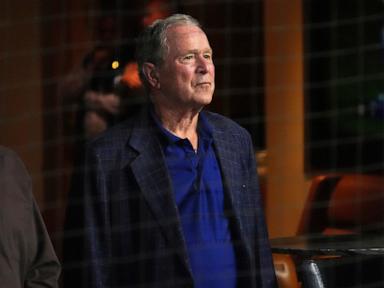
Cornyn hosted a fundraiser in Dallas for six GOP Senate candidates running in races this cycle that will decide control of Congress. Bush was listed as a "special guest."
 ABC News21h ago
The Trump administration is planning to welcome up to 17,500 additional White Afrikaners from South Africa as refugees over the next 12 months, according to a notice sent to Congress.

Former Vice President Kamala Harris will join progressive Senate candidate Abdul El-Sayed on the campaign trail Tuesday afternoon, as Democrats seek to take control of Congress next year. Harris threw her support behind El-Sayed, a former health official who is running against former Rep. Mike Rogers (R-Mich.) in the race to succeed retiring Sen. Gary…
The Hill•The Hill Staff22 SeptThe push for stricter sanctions on Russian oil could significantly alter global energy dynamics, impacting major economies like China and India.
 CryptoBriefing•Editorial Team22 Sept
Republicans hold a $103 million cash advantage across national party committees as the fight for control of Congress enters its final six weeks.
Nearly 100 organizations are calling on Congress to hold an "emergency hearing" in light of major student-loan repayment changes over the past months.
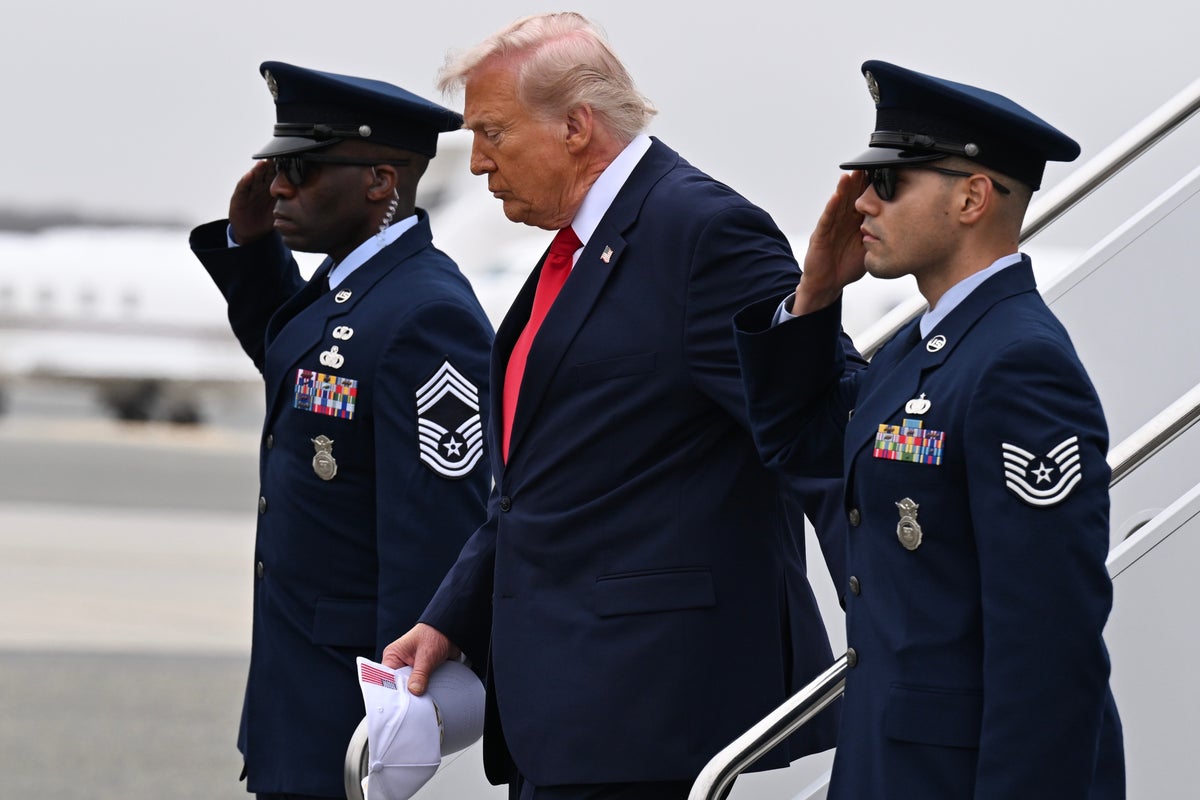
Congress sees through Trump’s ‘idiotic’ justification for fortifying every inch of Washington, D.C., but the president is pushing ahead with it anyway, writes John Bowden