Egyptpage 3

Place · 188 articles
Share

Coverage, page 3

page 3 of 10

Men deported from US bound and beaten in Equatorial Guinea detention hotel, lawyers say

Group trapped at Hotel Bamy after US removal as rights groups sound alarm over poor conditions and violence Two men that the Trump administration expelled to Equatorial Guinea were bound, fitted with bags over their heads, beaten and pushed down a flight of stairs, all in plain view of other US deportees, according to witnesses and human rights lawyers. The men – one from Egypt and one from Eritrea – were then taken to a prison. About 30 detainees from the US remain trapped at a hotel in the outskirts of the coastal city of Malabo after being deported from the US. Detainees have said they believe the men were beaten for telling the press and human rights advocates about the poor conditions and violence inside the hotel, and that they are haunted by flashbacks and terrified they will be retaliated against next. Continue reading...

The GuardianThe GuardianMaanvi Singh18 Sept

UNHCR Regional Bureau for Europe: Sudanese movement to Europe - Profiles, routes and challenges along the way (September 2026)

Countries: Sudan, Greece, Italy, Libya, Tunisia, Türkiye Source: UN High Commissioner for Refugees Please refer to the attached file. BACKGROUND Since April 2023, Sudan has experienced a devastating conflict marked by severe civilian harm, reports of conflict-related sexual violence, and large-scale displacement.1 As of 6 July 2026, more than 11.4 million people have been displaced, including over 6.5 million internally within Sudan and more than 4.5 million Sudanese who have fled the country. Nearly 60% of Sudanese refugees and asylum-seekers are hosted in just seven neighbouring countries, with the largest populations in Chad, Egypt, Libya, and South Sudan. While the majority remain in neighbouring countries, Mediterranean Europe4 has witnessed a noticeable increase in Sudanese arrivals since the outbreak of the conflict. Journeys to Europe are often long and dangerous. Insights from focus group discussions reveal that onward movement to Europe is primarily driven by unmet protection and basic needs in first countries of asylum. UNHCR considers that persons originating from Sudan who cannot return there because of the conflict are likely to be in need of international protection. UNHCR continues to call on States to ensure access to territory and asylum for people fleeing Sudan, and to respect and uphold the principle of non-refoulement at all times. In this context, this report analyses the situation of Sudanese nationals arriving in Europe, including their profiles, routes taken to reach Europe, and risks and challenges faced along the route. The report is based on arrivals data, 173 protection monitoring interviews with Sudanese nationals in South-Eastern Europe conducted between January 2025 and July 20266, and focus group discussions with Sudanese nationals held in Greece, Italy and Spain. The findings provide insights into the experiences and perspectives of participating individuals and should not be interpreted as statistically representative of all Sudanese refugees and asylum-seekers in Europe or first countries of asylum.

ReliefWebReliefWebUN High Commissioner for Refugees18 Sept

Socceroos captain Maty Ryan axed for Brazil friendlies

Goalkeeper dropped despite strong start to La Liga season Seven uncapped players called into 26-man Australia squad Captain Maty Ryan has been left out of the Socceroos squad altogether for upcoming games against Brazil, while coach Tony Popovic has called up seven uncapped players for Australia’s first matches since the World Cup. Ryan lost his starting spot to young goalkeeper Patrick Beach at the World Cup, then was bizarrely substituted on for the round-of-32 penalty shootout against Egypt. Continue reading...

The GuardianThe GuardianAustralian Associated Press18 Sept

The Guardian’s Black Box: The Chatbots dissects AI psychosis

🎧🤖 What are AI chatbots doing to us? More specifically, why are more and more people convinced they’re geniuses because of their chatbot companions? This, in essence, is the premise of Black Box: The Chatbots — the latest podcast series by The Guardian Investigates. What to expect: We’ve noticed it, and you’ve likely noticed it: more […]

EEEnterpriseAM EgyptThe Enterprise Company18 Sept
  • neutral toward The Guardian · 92%

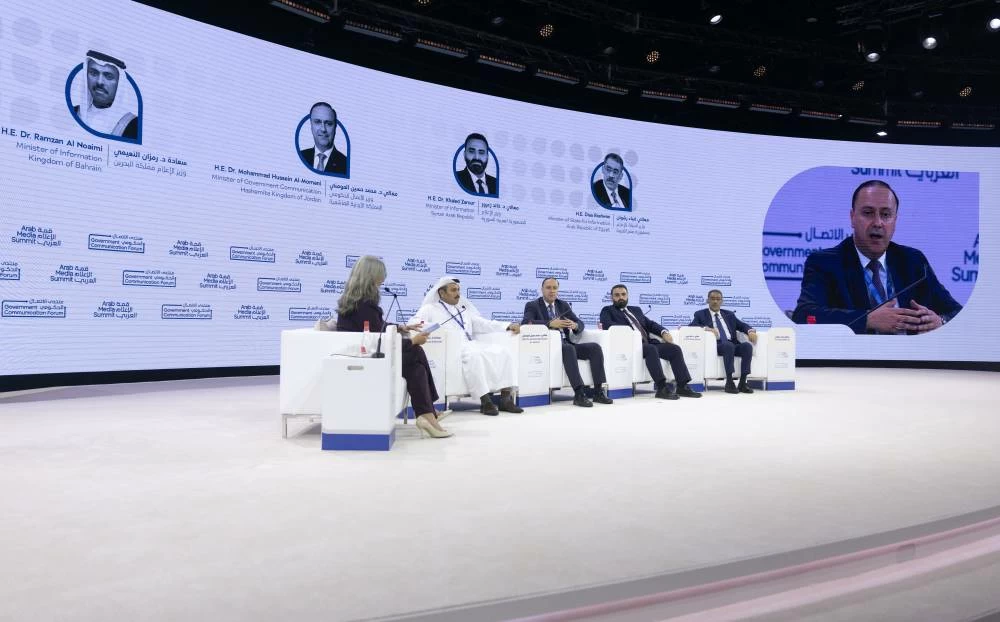
Arab ministers call for faster government communication while safeguarding media independence

Dubai: Governments must communicate verified information more quickly and clearly without compromising the independence of professional media, Arab information ministers said at the Arab Media Summit 2026. The discussion highlighted how information gaps can quickly create information disorder, particularly during crises, making it essential for official institutions to provide timely facts while allowing media organisations to examine, explain and deliver them professionally. The discussion took place during “The Ministers Roundtable”, featuring His Excellency Dr. Ramzan Al Noaimi, Minister of Information, Kingdom of Bahrain; His Excellency Dr. Khaled Zarour, Minister of Information, Syrian Arab Republic; His Excellency Diaa Rashwan, Minister of State for Information, Arab Republic of Egypt; and His Excellency Dr. Mohammad Hussein Al-Momani, Minister of Government Communication, Hashemite Kingdom of Jordan. The session was moderated by Naoufer Ramoul, Media Presenter at DMI. His Excellency Dr. Mohammad Hussein Al-Momani said official institutions must communicate quickly, accurately and continuously, especially when complete information is not immediately available. He said that, when an incident is unfolding, governments should acknowledge it and commit to providing verified updates, helping prevent unverified information from filling the gap. At the same time, he stressed that media organisations must be given sufficient space to work independently and professionally. The speakers’ remarks highlighted the need for stronger professional capabilities, greater regional coordination and more effective formats for communicating beyond domestic audiences. Picture credit: GDMO His Excellency Diaa Rashwan reinforced this distinction, arguing that the role of government is to facilitate professional media through appropriate constitutional and legal frameworks rather than act as its guardian. He said the weakening of professional journalism had allowed social media in parts of the Arab world to shift from being a tool for accessing news to becoming a primary source of news, creating greater space for rumours and inaccurate information. His Excellency Dr. Khaled Zarour said speed alone could not build trust without credibility. He highlighted the importance of protecting media freedom, developing specialised journalism and presenting information within its proper context. Media, he added, must help audiences recognise verified facts rather than simply reinforcing selective narratives or existing biases. Drawing on Bahrain’s crisis-communication experience, His Excellency Dr. Ramzan Al Noaimi said public trust depended on providing honest information and practical guidance, even when developments were difficult. He also said official media institutions should treat technological change as an opportunity, highlighting AI’s potential across news monitoring, editing, production and analysis of content consumption. The discussion also turned to the ability of Arab media to reach international audiences. The speakers’ remarks highlighted the need for stronger professional capabilities, greater regional coordination and more effective formats for communicating beyond domestic audiences. Taken together, their remarks pointed to a shared direction for strengthening trust: official institutions provide verified information promptly, professional media retain the freedom to examine and contextualise it and technology expands its reach without weakening accuracy.

MBMobile BusinessEmirates24717 Sept

UNHCR Armenia Fact Sheet, February 2026

Countries: Armenia, Azerbaijan, Egypt, Iran (Islamic Republic of), Iraq, Syrian Arab Republic Source: UN High Commissioner for Refugees Please refer to the attached file. Strengthening asylum, protection, and legal frameworks to ensure access to territory, fair procedures, and durable solutions for refugees Delivering protection and solutions on the ground, including legal aid, community-based protection, livelihoods and inclusion, and support to refugee-led initiatives. Building preparedness and response capacity, working with government, municipalities, and partners to strengthen contingency planning, emergency readiness, and protection-sensitive responses. HIGHLIGHTS Advancing National Framework on Inclusive Livelihoods for refugees and host communities UNHCR, together with UNDP and UNRCO, supported the Government of Armenia and the Deputy Prime Minister’s Office to develop and launch a national livelihoods and employment framework for refugees from Karabakh, strengthening coordination with development and humanitarian partners. The framework focuses on jobs and skills, access to social protection and services, housing and local economic development, and private-sector engagement, benefiting both refugees and host communities through a whole-of-government, multi-partner approach.

ReliefWebReliefWebUN High Commissioner for Refugees17 Sept