
Global bonds follow US Treasuries lower
Japan 10-year yield surpasses 3% as investors continue to sell government debt after landmark rise in American borrowing costs
Japan 10-year yield surpasses 3% as investors continue to sell government debt after landmark rise in American borrowing costs

As the Bank of Japan weighs another rate increase on Friday, a divide over how Japan should confront inflation is widening.
 The New York Times•River Akira Davis and Hisako Ueno15 Sept
Comprised of smelly soya beans held together by strands of mucus, the ancient dish is appearing in health food shops across the world It is smelly, slimy and contains bacteria – and a sizeable number of Japanese wouldn’t touch it with a pair of barge pole-length chopsticks. But after centuries as a breakfast food for Japanese diners with nerves of steel, natto is emerging as a global superfood to rival kimchi , kombucha and kefir . Its exact origins are unknown. Some believe it was introduced to Japan from China by Buddhist monks during the Yayoi period (300BC-AD300), before becoming a staple among rural communities during the Edo period (1603-1868). Continue reading...
 The Guardian•Justin McCurry in Tokyo14 Sept
Japan's Digital Agency has discovered a data breach that may have exposed around 246,000 record rows containing personal information of government employees. [...]

Japan's investment could significantly transform the US energy landscape, fostering nuclear growth and impacting global energy dynamics.
 CryptoBriefing•Editorial Team14 Sept
In plain English This week the US central bank (Wednesday) and Japan's central bank (Friday) are both expected to raise interest rates. On the same Friday, about $6 trillion of options and futures expire. Some people think this combination will crash stocks. My view: probably not, but the risk is higher than normal. Here is why in simple terms: Both rate hikes are already expected, so they won't shock anyone. The surprise would be what the banks say about future hikes. The thing that can actually hurt stocks is the US 10-year bond yield sitting at 5%. Higher yields make stocks less attractive and loans more expensive. The Japanese yen is the wild card. If it strengthens fast, traders who borrowed yen to buy US stocks have to sell. Right now the yen is getting weaker, not stronger, so that risk is not live. Friday's expiry doesn't pick a direction. It just makes whatever move happens bigger. I have 5 things that all need to happen, in order, for this to become a crash. Today none of them have happened. Bottom line: I'm positioned for a drop on the Nasdaq of roughly 1,250 to 3,000 points (5,000 to 12,000 ticks on NQ), which takes it from 29,200 down toward 27,900 at the shallow end and 26,200 at the deep end. That is a correction inside a bull market, not the end of it. I'll be buying into it, and I've written down exactly what would make me stop. Details below. --- Fed Wednesday. BOJ Friday. $6T triple witching Friday. Three events in 72 hours, and the crowd is watching the wrong one. Here is how I'm reading it on the two charts that matter. The setup Both hikes are priced. Fed funds futures put a 25bp hike at roughly 80-87%. BOJ to 1.25% is described as almost fully priced. The hikes are not the event. The surprise has to come from guidance: the dot plot on Wednesday, or the BOJ's pace and JGB purchase language on Friday. The real stress variable is the US 10Y . It closed 4.97% Friday and printed 5.017% intraday, right at the Oct 2023 cycle high. The 2Y is up 44bp since Aug 26. This is a bond-led repricing hitting a market with: VIX at 15.8 SPX skew at the 1st percentile (nobody is hedged) CTA and vol-control exposure rebuilt from the July lows Buybacks going into blackout from Sep 12 A dealer gamma reset on Friday's expiry Cheap protection plus a gamma reset into a two-hike week. That is the fat left tail. It is not the base case. USDJPY (4H, left chart) The naive thesis: two hikes = yen rallies = carry unwind = August 2024 again. The chart disagrees. USDJPY is 154.40 and rising into the BOJ meeting, not falling. The US-Japan 10Y differential is about 198bp and has not narrowed, because both bond markets are selling off together. Late-July intervention already squeezed the yen shorts. The marginal seller of yen today is a Japanese pension rebuilding foreign assets, not a hedge fund. Levels on the chart: 163.99 = July high. The 40-year yen low was 162.8 on Jul 1, then intervention 160.39 = the shelf that broke in early Sep 155.23 = broken support, now resistance (blue zone). Price is testing it from below right now. 4H EMA 154.20 154.50 = intraday pivot 152.89 = Sep 8 low. This is the line. A BOJ hike that takes USDJPY below 152.89 within a day is the only outcome that puts the carry channel in play. Anything holding above 153 and the yen leg of the thesis is dead MNQ (Daily, right chart) Structure: HH at 30,975 (mid-Jun), HL at 27,200 (early Aug). Price 29,192, inside the range, below the 29,812 pivot, above the 28,927 pivot. The pink Area of Interest (30,250-30,750) is where the last rally failed. The green one (26,750-27,250) sits on the HL and the rising daily MA. Target: 5,000 to 12,000 ticks lower. From 29,192 that is 27,940 at the shallow end (the HL retest) and 26,190 at the deep end (through the 26,400 level into the lower green zone). The chain below decides which end prints. What I'm watching: 29,812 reclaimed = hike absorbed, range continues, no trade 28,927 lost on the Wednesday close = first real signal 27,940 = 5,000 ticks. Minimum target if checks 1 and 2 print. HL retest zone 27,200 HL = the line between a correction and something worse. Two daily closes below with HY spreads widening is the crash setup 26,400 to 26,190 = 11,000 to 12,000 ticks. Full target if the whole chain completes. Needs all five checks The chain: 5 checks, in order, all must print 1. Wed: Fed hikes AND 10Y closes above 5.02%. No = 2-3% dip, done. 2. Thu night: BOJ hikes AND USDJPY breaks 152.89 within a day. No = 4-6% correction max. 3. Fri close: VIX above 25. No = two-day shakeout. 4. Fri open: expiry gap down not reclaimed by 10:30am ET. No = high-volume day, nothing more. 5. Mon-Wed next week: HY OAS above 320bp and two closes below the HL. Yes = this is the crash. Today: 0 of 5. Friday's expiry is the only piece already in place, and it only matters if Wed and Thu both print. Expiration changes the size of the move, not the direction. My bias Short NQ into the week, targeting 5,000 to 12,000 ticks. Shallow target 27,940 if the Fed and BOJ both print (checks 1 and 2). Deep target 26,190 only if all five checks print. Entry is Wednesday after the Fed, not before; a short is wrong if NQ closes back above 29,812. Constructive on a 12-month view. Q2 earnings grew 33%. Midterm-year Septembers average a 6% pullback that bottoms in October and runs into year-end. Anything that breaks this month is a reset inside a bull market, so the short is a rental. The drop is the buying window, not the trade. I cover on the first of: Target hit: half at 27,940, rest at 26,400 or the HL breakdown failing Any check fails VIX above 35 intraday (that is the panic peak, not the start; Aug 2024 topped above 60 and SPX was back in 3 weeks) 10Y back below 4.85% on a down day (bonds cushioning again) Wed Sep 23 close, regardless The second leg: real estate CMBS delinquency is 7.55% (9.5% counting matured loans still paying interest). $1.1T of CRE debt matures in 2026-27 against a 5% 10Y. REITs were up 18% YTD into that. If the equity chain prints, listed REITs and CMBS reprice in weeks. Private marks and housing are a 2027 story. Order of entry when the reset comes: equities first, listed REITs second, private property last and only once the Fed has turned. Not financial advice. Levels are for testing the thesis, not a signal service.

Japan Airlines (JAL) and French drone manufacturer Donecle have launched Japan’s first joint project using fully autonomous drones…
 AeroTime•Jean Carmela Lim14 Sept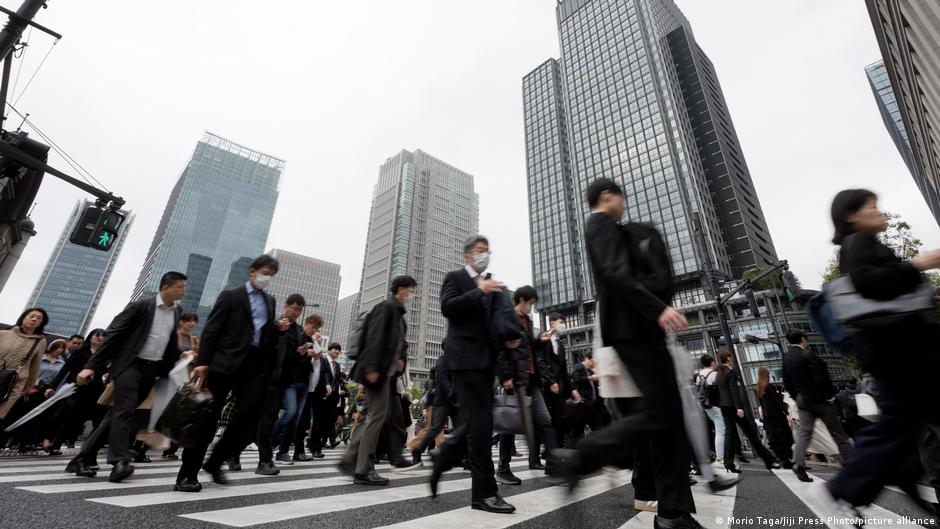
Resignation agencies in Japan help employees seamlessly erase themselves from a job in just 15 minutes, and young people are especially eager to use their services.
 Deutsche Welle14 Sept
A Japan rate hike on Friday would set a 31-year high. Japanese assets are sliding, but Bitcoin is not.
 BeInCrypto•Jakub Dziadkowiec14 Sept
From a cappy-cafe owner in Japan to an escaped capybara in the UK, this homespun film takes the temperature of an international obsession One of Midlands-based film-maker Sharon Walia’s previous works was The Keepers of the Pigs , proudly described on her production company’s website as “the first ever documentary about guinea pigs”. So it makes zoological sense that her latest film takes on capybaras, guinea pigs’ ridiculously cute semi-aquatic cousins that are indigenous to Latin America, and relatively recently became ubiquitous on social media in memes and short films alike. As glimpsed here, there was even a capybara in the recent Academy Award-winning animated feature Flow , some pro-cappy boosterism that captured the creatures’ chill vibe and snuffly sweetness. Walia’s celebration of the species stays on script, rejoicing in the animals’ natural geniality, friendliness to other species in their natural habitat, and their compelling, remunerative charm that seems to have bolstered the fortunes of several animal attractions around the world. Continue reading...
The Guardian•Leslie Felperin14 Sept
Global stocks fell on Monday as investors were unnerved by another surge in the oil price ahead of likely interest-rate hikes in the United States and Japan this week
“We are taking those five cases seriously. We have been raising awareness on the issue, but we have imposed the restrictions to make it more effective.” Source: Ken Sawahara, a transport ministry official on aviation safety, commenting as Japan is tightening measures against private jet pilots who fail to follow instructions from air traffic control (ATC), with three strikes resulting in a ban from Tokyo’s Haneda Airport.
 Aero-News Network14 Sept
Organisers in Japan say they had 'neither the manpower nor the budget' to deal with the accommodation shortage.
 Al Jazeera14 Sept
Why fainting fans and perspiring players are a worry for the Asian league seeking to follow Japan and align with Europe South Korean football is trying to find the goldilocks time to play the K-League. Winters have long been too cold and, increasingly, summers are too hot. This may be the Land of the Morning Calm but, for much of the time, the weather can be pretty extreme. Last week a survey revealed that more than 70% of 29 respondent coaches in Asia’s oldest professional league support a shift from the traditional March to November schedule to one that matches the European format, which starts in late August and has a winter break. Continue reading...
The Guardian•John Duerden14 Sept
Japan's accelerated rate hikes could reshape global financial dynamics, impacting currency values, trade relationships, and investment strategies.
CryptoBriefing•Editorial Team14 Sept
North Korea carried out a coordinated live-fire exercise involving multiple weapons systems over the weekend. The drill came after the US, South Korea and Japan wrapped up five days of joint maritime exercises.
Deutsche Welle14 Sept
A surge in Indonesia's wood pellet and chip production is driving a new wave of deforestation, threatening the vast archipelago's remaining tropical forests, vital biodiversity hot spots and the land of Indigenous peoples, according to new satellite analysis from environmental nongovernmental organizations.

PayPay has added UnionPay QR at Japanese merchants, while SMBC is deploying an OpenAI-powered interpreter for multilingual banking.
Aviation News – Germany is considering joining the Global Combat Air Programme (GCAP), a next-generation fighter initiative led by the United Kingdom, Italy and Japan,...

Governor Kazuo Ueda is facing competing pressures from Tokyo and Washington