


Israel’s destruction leaves Lebanon’s border villages in ruins
Israel’s destruction leaves Lebanon’s border villages in ruins
 Al Jazeera2h ago
Israel’s destruction leaves Lebanon’s border villages in ruins
Al Jazeera2h ago
Country: Lebanon Source: UN High Commissioner for Refugees Please refer to the attached Infographic.
 ReliefWeb•UN High Commissioner for Refugees7h ago
Countries: Syrian Arab Republic, Lebanon Source: International Organization for Migration Please refer to the attached file. Cross-border movements from Lebanon into Syria have continued to stabilise since the ceasefire announced on 17 April 2026, with recent movement patterns becoming more gradual. Between 2 March and 21 September, DTM identified 128,129 arrivals across 1,185 communities spanning all 14 governorates. Syrian nationals accounted for 99 per cent of recorded arrivals, while Lebanese nationals represented less than 1 per cent. Flow monitoring at four assessed Syrian-Lebanese border crossings recorded approximately 813,000 movements into Syria during the same period. Of these, around 98 per cent were Syrian nationals and 2 per cent were Lebanese nationals. A further 4,100 Lebanese nationals were recorded transiting through Syria towards Jordan, indicating that Syria continues to serve as a transit route for onward regional movement alongside arrivals into the country. Access conditions at the border have also continued to shape observed movement patterns. The Arida crossing has remained closed for more than six weeks following its temporary closure on 6 August for technical works on the Lebanese side, with movement data therefore available only through 5 August. KIs reported that those who previously relied on Arida have had to use alternative crossings located further from Tartous Governorate, contributing to longer journeys and increased travel costs.
ReliefWeb•International Organization for Migration19h ago
Countries: Iran (Islamic Republic of), Lebanon, Yemen Source: World Health Organization Please refer to the attached file. ACUTE HEALTH THREATS Following a period of relative calm since late July, hostilities began to re-intensify on 30 August in Iran, with additional reported impacts in military bases in Jordan and the United Arab Emirates. Additional sanctions announced on 24 August on Iran have had significant effects on the economy, including on health. Currency depreciation and access restrictions to international financial systems are adding additional complexities to humanitarian imports, including medicines. WHO offices are reporting frequent power cuts impacting power continuity in hospitals. In Lebanon, despite the June ceasefire, hostilities continue to be reported around Nabatieh with people unable to return home in the affected areas. In Syria, hostilities reported in southern Syria and along the Israel-Lebanon border raise concerns of localized escalation and potential spillover effects. In Yemen, the current escalation has greatly increased trauma needs and resulting in increased displacement and additional pressure on an overstretched health system, with conflict occurring in areas affected by diseases such as measles, cholera, dengue, food insecurity, and malnutrition. The security situation in Iraq has also deteriorated, with several airstrikes reported across multiple governorates since late July. Across the Middle East, attacks impacting oil infrastructure and shipping raise additional concerns on the continued effects of the current escalation on oil supplies and prices in addition to the potential environmental health consequences
ReliefWeb•World Health Organization21h ago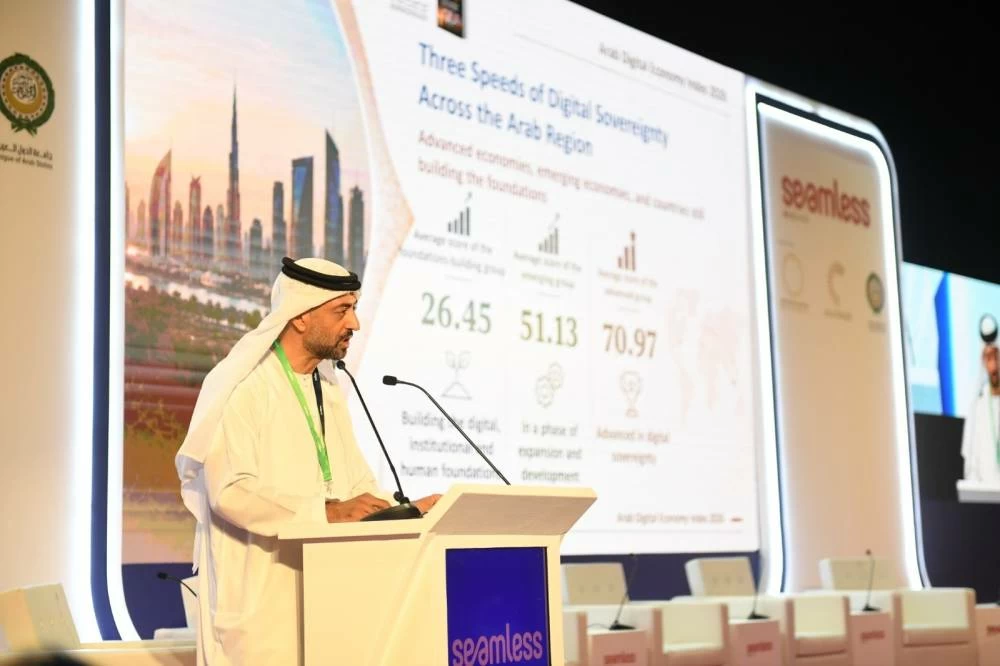
Dubai: The UAE has topped the Arab Digital Economy Index 2026, whose results were announced on Tuesday as Seamless Middle East 2026 opened in Dubai under the patronage of H.H. Lt. General Sheikh Saif bin Zayed Al Nahyan, Deputy Prime Minister and Minister of the Interior, and Supreme President of the Arab Federation for Digital Economy. Held at Dubai World Trade Centre from 22nd - 24th September, the event brings together the payments, fintech, banking, digital commerce, retail, identity and logistics sectors, with more than 25,000 participants, around 800 speakers and 750 exhibitors. The opening session drew Arab and international diplomatic, government and institutional representatives, including ambassadors and delegates from Egypt, Oman, Qatar, Lebanon, Mauritania, Tunisia, Syria, Djibouti and Palestine, alongside Russian representatives and officials from international and regional organisations. UAE government, economic, financial and academic officials also attended, along with representatives of the finance, energy, customs and economic development sectors, banks, chambers of commerce, research and innovation centres and international organisations. The opening programme featured an address by Dr. Ali Mohammed Al-Khouri, Chairman of the Board of Directors of the Arab Federation for Digital Economy and Advisor to the Council of Arab Economic Unity, followed by the launch of the Arab Digital Economy Index 2026. Officials from the Sharjah Research, Technology and Innovation Park and the UAE Banks Federation also addressed the event before delegates toured the exhibition. The index assesses digital-economy performance across a framework covering institutions, infrastructure, workforce, digital government, innovation, knowledge and technology, market forces, capital-market growth and sustainable development. The UAE led the highest-performing group, which also included Saudi Arabia, Bahrain, Qatar and Oman. The second group, comprising countries with medium levels of performance, included Jordan, Kuwait, Morocco, Egypt, Tunisia and Algeria. The third group, representing countries in the process of building their digital foundations, comprised Lebanon, Mauritania, Iraq, Djibouti, Comoros, Libya, Palestine, Syria, Sudan, Somalia and Yemen. The results showed stronger progress across the Arab world in digital infrastructure, government services and cybersecurity, while wider gaps remained in innovation, the data economy, research and development, and the ability to translate digital investment into productivity and economic value. Al-Khouri said the latest edition of the index places digital sovereignty at the heart of discussions on the future of Arab economies, as data, artificial intelligence, cloud infrastructure, semiconductors and cybersecurity become increasingly important to countries' economic and institutional capabilities. Commenting on the UAE's ranking, he said it reflects years of sustained investment in digital infrastructure, government services, cybersecurity, artificial intelligence and the knowledge economy, establishing the country as a leading model for building an innovation-driven economy that translates technological advancement into higher productivity and economic value. Al-Khouri thanked the UAE for supporting the development of the Arab digital economy and expressed appreciation to President His Highness Sheikh Mohamed bin Zayed Al Nahyan for his support and patronage of the Arab Digital Economy Vision, which he said has helped advance joint Arab action in the sector. He also praised the continued support of H.H. Lt. General Sheikh Saif bin Zayed Al Nahyan, saying his supportive role has helped transform several Arab initiatives from concepts and strategies into practical programmes, platforms and projects. The Arab Digital Economy Vision was launched in Abu Dhabi in 2018 with the support and patronage of President His Highness Sheikh Mohamed bin Zayed Al Nahyan and was subsequently adopted at the Arab leaders' level in 2022 as a framework for regional cooperation in the digital economy and technological transformation. The Arab Digital Economy Index is among the tools developed by the federation to measure progress, identify gaps and determine future priorities. Seamless Middle East 2026 features three days of discussions on fintech, digital payments, e-commerce, artificial intelligence, data analytics, cybersecurity and emerging technologies, bringing together government entities, financial institutions, technology companies, investors and experts from the region and beyond.

Turkish leader says UN has been forced into 'dysfunction' and was 'bleeding out' in Palestine, Lebanon, Sudan.
Al Jazeera22 Sept
Countries: Syrian Arab Republic, Egypt, Iraq, Jordan, Lebanon, Türkiye Source: UN High Commissioner for Refugees Please refer to the attached file. REGIONAL OVERVIEW As of 31 August 2026, an estimated 1.8 million Syrians had returned from neighbouring countries, alongside over 2 million internally displaced persons (IDPs) who returned to their areas of origin. Return movements continued across the region, although patterns and volumes varied by operation. This edition focuses on the role of cash assistance in supporting voluntary return and reintegration. Across host countries and inside Syria, cash assistance helps refugees and returnees address practical barriers before departure, during movement and after arrival, including transportation, documentation, baggage, food, shelterrelated costs and other immediate household needs. Cash assistance is one part of UNHCR’s broader protection and durable solutions response. It complements counselling, legal assistance, information provision, protection monitoring, in-kind support, referrals and community-based services. It is not designed as an incentive to return; rather, it supports refugees and returnees who have already made, or declared, an informed and voluntary decision to return.
ReliefWeb•UN High Commissioner for Refugees22 Sept
Countries: Syrian Arab Republic, Jordan, Lebanon, Türkiye Source: International Organization for Migration Please refer to the attached file. This report provides insights into the evolving displacement and return trends of key population groups across all governorates in Syria. Data was collected between 1 and 31 August through a network of 30,164 Key Informants across 9,755 locations. Key findings include: 9,004 new internally displaced persons (IDPs) were recorded in August. 32,823 IDPs returned to their locations of origin during the same period. The cumulative number of IDP returnees since December 2024 stands at 2,244,736 . The total number of IDPs since 2011 who remain displaced is 5,625,935 . 17,725 Syrians arrived from abroad to their areas of origin in August, bringing total arrivals since December 2024 who returned to their areas of origin to 1,306,055 . 1,396 Syrians arrived from abroad to other locations in August, bringing total arrivals since December 2024 who returned to other locations to 112,815 .
ReliefWeb•International Organization for Migration22 Sept
A London-dwelling émigrée goes back to Lebanon to see her dying father in this somewhat overwrought film examining a difficult childhood This somewhat overwrought drama was apparently shot during the Covid-19 pandemic, partly in the city of the title and partly on sets in a Bulgarian studio. Its higgledy-piggledy production schedule perhaps accounts for the film’s fractured, frenetic quality and the feeling that the characters are perpetually in motion. Mind you, to be fair, the shredded editing might also be meant to reflect the distraught mental state of protagonist Lana (Tala Calil, also co-writer and producer) and the energy of the city itself, a municipality ravaged by wars that also has some of the most chaotic traffic in the Middle East. There’s even a scene where Lana’s new friend Sirine (Flavia Bechara) is driving and wants to take her coat off so she makes Lana take the wheel, much to Lana’s terror and distress, a nonchalance about safety believable for a city where traffic lights appear to be only a suggestion. That said, Lana has a lot going on so she’s easily rattled. She left Beirut 25 years earlier, and has only come back to see her biological father of whom she has only negative memories, from a childhood blighted by his alcoholism and violence. These days she lives in London with her boyfriend Ben (Michael E Rodgers) and her mother, but the former relationship is also rocky due to Lana’s OCD. She’s obsessed with wearing as much sanitary PPE kit as possible, including not just an N95 (in UK FFP2) mask but one of those full-face clear plastic ones, too. However, she suddenly finds the strength to stop wearing all the gear when she gets back to Beirut and reconnects with her cousin Rami (Assaad Bouab). She starts to open up a bit more, and befriends the aforementioned Sirine, who helps Lana when she’s having a panic attack at the hospital. By slow degrees she works up enough fortitude to face her father before he dies, but that means confronting some family secrets she never knew. Continue reading...
 The Guardian•Leslie Felperin22 Sept
Country: Lebanon Sources: Health Cluster, World Health Organization Please refer to the attached file.
ReliefWeb•World Health Organization22 Sept
Country: World Source: Oxfam Please refer to the attached files. Overview This report, produced as part of Oxfam’s engagement for the UN General Assembly, brings together the personal testimonies of civil society leaders living and working on the frontlines of conflict. Their voices come from the Democratic Republic of Congo, Ukraine, Lebanon, the Occupied Palestinian Territory, Colombia, Yemen, Syria, South Sudan and Ethiopia. Through these testimonies, Oxfam’s partners call on the next UN Secretary-General to transform global peace and security systems to better protect civilians. The paper builds on Oxfam’s ongoing advocacy to reform the Peace and Security System, which began with the 2024 UNGA report Vetoing Humanity and continued through the 2025 report A (More) Feminist Approach to Principled Humanitarian Aid. Together, these reports envision a humanitarian system grounded in meaningful power sharing and the leadership of affected communities, creating a genuine and trusted local-to-global movement.
ReliefWeb•Oxfam21 Sept
An amnesty measure was supposed to ease prison overcrowding and pressure on the judiciary. Instead, it highlighted the country’s divides.
 The New York Times•Abdi Latif Dahir and Hwaida Saad21 Sept
An amnesty measure was supposed to ease prison overcrowding and pressure on the judiciary. Instead, it highlighted the country’s divides.
The New York Times•Abdi Latif Dahir and Hwaida Saad21 Sept
Country: Lebanon Source: United Nations Population Fund Please refer to the attached file. The humanitarian situation in Lebanon remains fragile, marked by a significant intensification of hostilities in southern Lebanon during the reporting period. Between September 4 and 7, intensified strikes across Nabatieh and other southern areas reportedly killed at least 27 people and injured 69, including women, children and paramedics . Continued airstrikes, shelling, demolitions and localised military activity are affecting civilian safety, restricting humanitarian access and undermining safe and sustainable returns. Women and girls face heightened protection and gender-based violence (GBV) risks, compounded by disrupted access to sexual and reproductive health (SRH) services. Women and girls account for 53 per cent of the remaining internally displaced populations (IDPs), while an estimated 16,000 pregnant women are among displaced and returning populations. Attacks on health infrastructure, including the destruction of a hospital in Nabatieh and the suspension of maternity services at two hospitals in Bint Jbeil, are further constraining access to life-saving maternal care. Since the onset of the crisis, UNFPA has supported access to SRH and GBV services for over 172,000 displaced people. These services have been delivered through the provision of interagency reproductive health kits, support to 58 health facilities, nine mobile medical units, 24 mobile GBV teams, and 21 women and girls’ safe spaces (WGSSs), reaching people in collective shelters and host communities.
ReliefWeb•United Nations Population Fund21 Sept
In southern Lebanon, visual artist Lina Jouni transforms debris from Israeli missile strikes into pieces of art.
Al Jazeera18 Sept
After Houthi victories in Yemen, the group's importance in the US-Iran war has grown. Previously Lebanon's Hezbollah was considered most significant in Iran's "axis of resistance." Now the Houthis are rising to the top.
 Deutsche Welle18 Sept
Israeli forces withdraw from outskirts of a town in southern Lebanon after a standoff with Lebanese forces.
Al Jazeera18 SeptGeneration Jihad guest host David Daoud, an FDD senior fellow focused on Lebanon and Hezbollah, talks with Lina Khatib, an associate fellow in Chatham House’s Middle East and North Africa Programme, about her July trip in southern Lebanon, why the 2006 war never put the LAF in charge of the border, and whether Beirut can take Hezbollah’s weapons now that the group is weaker and Assad is gone.

Country: Lebanon Source: International Organization for Migration Please refer to the attached file. The MPM is an annual assessment implemented through IOM’s Displacement Tracking Matrix (DTM) to provide updated information on the presence and characteristics of migrant populations in Lebanon. The assessment supports evidence-based humanitarian programming, planning and decision-making by providing information on migrants’ geographic distribution, nationalities, sex and age profiles, and living arrangements. Key findings include: 164,490 migrants were identified across Lebanon, representing a 0.24% increase from 164,097 in 2025. 81% of the identified migrant population is concentrated in Mount Lebanon and Beirut Governorates. Compared with 2025, notable geographic shifts were observed, including a 26% increase in Beirut, alongside decreases of 57% in El Nabatieh and 18% in the South. The largest nationality groups are Ethiopian (43%), Bangladeshi (22%), Sudanese (9%), Filipino (8%), and Egyptian (5%). 71% of identified migrants are women and 29% are men. Approximately 3% (5,749 individuals) are children. 52% (85,521 individuals) are classified as “live-in” migrants, while 48% (78,969 individuals) are “live-out”. Overall, the assessment identified migrants from 77 nationalities across Lebanon. The report provides further analysis at governorate, district and cadaster levels, including demographic characteristics and living arrangements, as well as comparisons with the previous MPM round.
ReliefWeb•International Organization for Migration18 Sept
Countries: Lebanon, Syrian Arab Republic, World Source: International Organization for Migration Please refer to the attached Infographic. The IOM Cross Border Movement Update for August 2026 was produced jointly with the General Directorate of General Security (GSD) and the Border Control Committee (BCC). Key updates for August 2026: 229,508 Lebanese nationals entered Lebanon, and 271,163 departed through land, air, and sea routes. 142,568 Syrian nationals entered Lebanon, and 167,901 departed through land, air, and sea routes. 176,293 individuals of other nationalities entered Lebanon, and 223,022 departed through land, air, and sea routes. For more detailed information on entries and exits by nationalities across land, air, and sea border crossing points, please see the attached report.
ReliefWeb•International Organization for Migration18 Sept