
Mexico braces for Hurricane Polo gathering strength
Hurricane Polo, one of the strongest Pacific cyclones in decades, brought dangerous waves and heavy rain to Mexico.
 Al Jazeera1h ago
Hurricane Polo, one of the strongest Pacific cyclones in decades, brought dangerous waves and heavy rain to Mexico.
Al Jazeera1h ago
Mexican Air Force has only three legacy Hercules left after operating a much larger fleet in previous decades
 Air Data News•Ricardo Meier2h ago
Kate and Daniel O'Phalen bought a used RV for $18,000 and renovated it. They've traveled all over the US, as well as Canada and Mexico, in it.
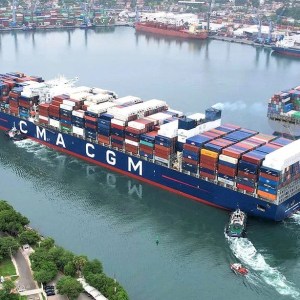
Hurricane Polo is disrupting maritime operations along Mexico’s Pacific coast, but large commercial vessels continue operating at the Port of Manzanillo.
 FreightWaves•Noi Mahoney4h ago
For years, we've split our time living in a van in the US in summer and on a sailboat in Mexico in winter. The nomadic lifestyle has pros and cons.
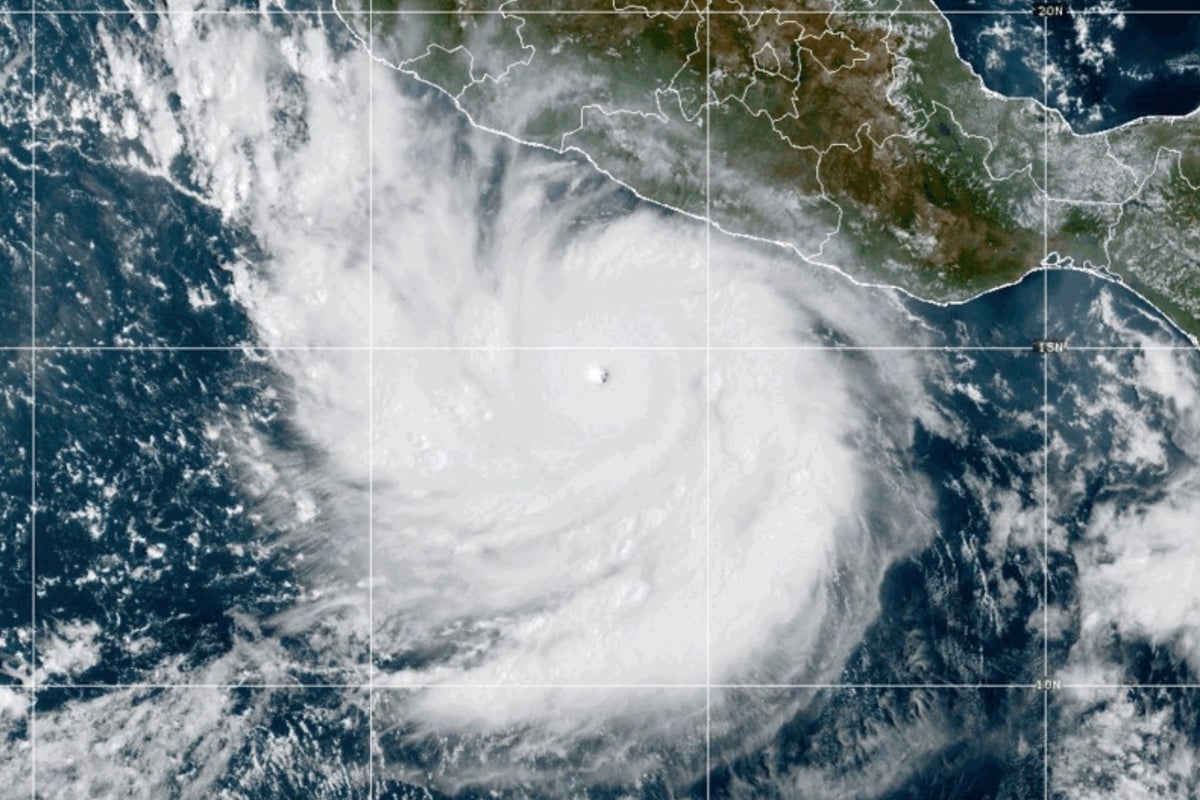
Experts have linked the rapid intensification of the ‘extremely dangerous’ storm to El Nino

The Canadian government sees Mexico as a growing market for tourism and projects visits to rise by 40 per cent over the next four years, hitting nearly half a million visitors spending about $1 billion a year by 2030.

Country: World Source: Ruhr-Universität Bochum Please refer to the attached file. The new WorldRiskReport focuses on storms and presents the first-ever global storm risk ranking for 193 countries. The Philippines, Mexico, and Madagascar hold the top three spots, while Germany ranks 167th with a very low storm risk. Tropical cyclones are becoming more intense, their paths are shifting, and more and more people living on coastlines are falling within their reach. However, it is not the wind that determines whether a storm turns into a disaster. Why does the same storm lead to a once-in-a-century disaster in one country, while in a neighboring country it causes only minor damage? This question is explored in the WorldRiskReport 2026, which Bündnis Entwicklung Hilft and the Institute for International Law of Peace and Armed Conflict (IFHV) at Ruhr University Bochum are publishing today at the Extreme Weather Congress in Hamburg. Since 2011, the report has analyzed the disaster risk for 193 countries on an annual basis. This year, the focus is on storms – one of the most devastating natural hazards. The data reveal a clear trend. While the number of cyclones remains stable, their intensity is increasing. At the same time, their paths are shifting toward the poles, affecting regions that were never built to withstand severe storms. It is not the wind but the storm surge that claims the most lives, and as sea levels rise, coastlines that were once considered safe will be flooded in the future. Small island states and the rapidly growing coastal cities of the Global South will be hit the hardest. “Storms are natural phenomena. Disasters are not. Whether people die is decided long before a storm makes landfall – in building regulations, warning systems and social welfare systems,” says Dr. Katrin Radtke, scientific director of the WorldRiskReport at the IFHV. The storm ranking, published for the first time, illustrates just how unevenly the risk is distributed: 123 of the 193 countries are scarcely exposed to storms, while ten countries bear the brunt of the global storm risk. Leading the list is the Philippines, which has the highest overall risk. A look at Japan and the USA shows that high exposure does not necessarily result in a disaster. Although they are just as heavily exposed as many countries in the Global South, thanks to early warning systems, building standards and stable institutions, they bear only a fraction of the risk. The report also highlights a dangerous convergence, which political scientist Dr. Stephan Klingebiel analyzes in a commentary. While extreme weather events are on the rise, funding for humanitarian aid is coming under pressure worldwide. “Storms are becoming stronger, and people are increasingly living within their reach. At the same time, funding for humanitarian aid is being cut. The WorldRiskReport 2026 makes it clear just how costly this convergence will be if we do not invest in preparedness now,” says Dr. Ilona Auer Frege, Executive Director of Bündnis Entwicklung Hilft. Climate scientist Dr. Friederike Otto explains in an interview how climate change is altering storms. From this issue onwards, the report will appear in a fundamentally revised design.
 ReliefWeb•Ruhr-Universität Bochum6h ago
AviationNews – The Mexican Air Force has secured an order for a second Lockheed Martin C-130J-30 Super Hercules tactical airlifter, reinforcing the nation’s air mobility...

Congress has so far done little to rein in the AI industry even as some of its most prominent leaders warn about potentially catastrophic risks Sign up for US Breaking News emails The Trump administration is refusing to work with the newly appointed deputy head of the United Nations refugee agency, Reuters reported. Tressa Rae Finerty, an American who took up the role of deputy high commissioner at UNHCR earlier this month, has taken leave as she seeks a waiver from the US government that would allow her to carry out aspects of her duties, according to seven diplomatic sources. Speaking at the UN general assembly, Donald Trump re-issued his threat to “annihilate” Iran and “drive them into Hell” if the regime didn’t capitulate and make a deal.” He also said he was “working closely with the leaders of Russia and Ukraine ” to end the disastrous war, defended his administration’s actions in Latin America – including the midnight raid to arrest former Venezuelan president Nicólas Maduro , defended his drone strikes on boats in the Caribbean and the Pacific, accused Mexico of being effectively controlled by the cartels, and said it was “unacceptable” for the US to share a border with a nation under such conditions, pointed to regime change in Cuba and said he would reject any calls for a “globalist scheme” to control artificial intelligence. Shortly after his UN address, Trump signed a Greenland deal, which Greenland’s prime minister Jens-Frederick Nielsen said “underlines the importance of the Nato alliance.” In tricky, carefully worded paragraphs, she said the agreement “recognises the US defining historical and ongoing contributions to the security and defence of Greenland,” but it also “respects the sovereignty and the territorial integrity of the Kingdom of Denmark, as well as Greenland’s right to self-determination.” Trump told a CNN reporter at the UN general assembly on Tuesday that he was “surprised” the outlet was covering him, saying it ‘shouldn’t be here’ after he banned the network alongside Politico and MS Now from the White House on Friday. At a joint press conference on Tuesday, vice-president JD Vance and Mehmet Oz , administrator of the Centers for Medicare and Medicaid Services, announced that the federal government was removing 760,000 enrollees from Affordable Care Act insurance marketplaces. Continue reading...
 The Guardian•Tom Ambrose7h ago
Hurricane Polo has grown into one of the most powerful Pacific cyclones in decades, and it was expected to skirt Mexico's southwestern coast as a Category 5 storm.

Hurricane Polo has strengthened into one of the most powerful Pacific cyclones in decades and is expected to skirt Mexico’s southwestern coast as a Category 5 storm. The Miami-based National Hurricane Center described Polo as an “extremely dangerous” storm, with maximum sustained winds of 165 miles per hour.

President Trump built his political brand in part on bashing Mexico. Now his second presidency depends on deepening partnerships with the country.
 The New York Times•Jack Nicas, Emiliano Rodríguez Mega and Zolan Kanno-Youngs9h ago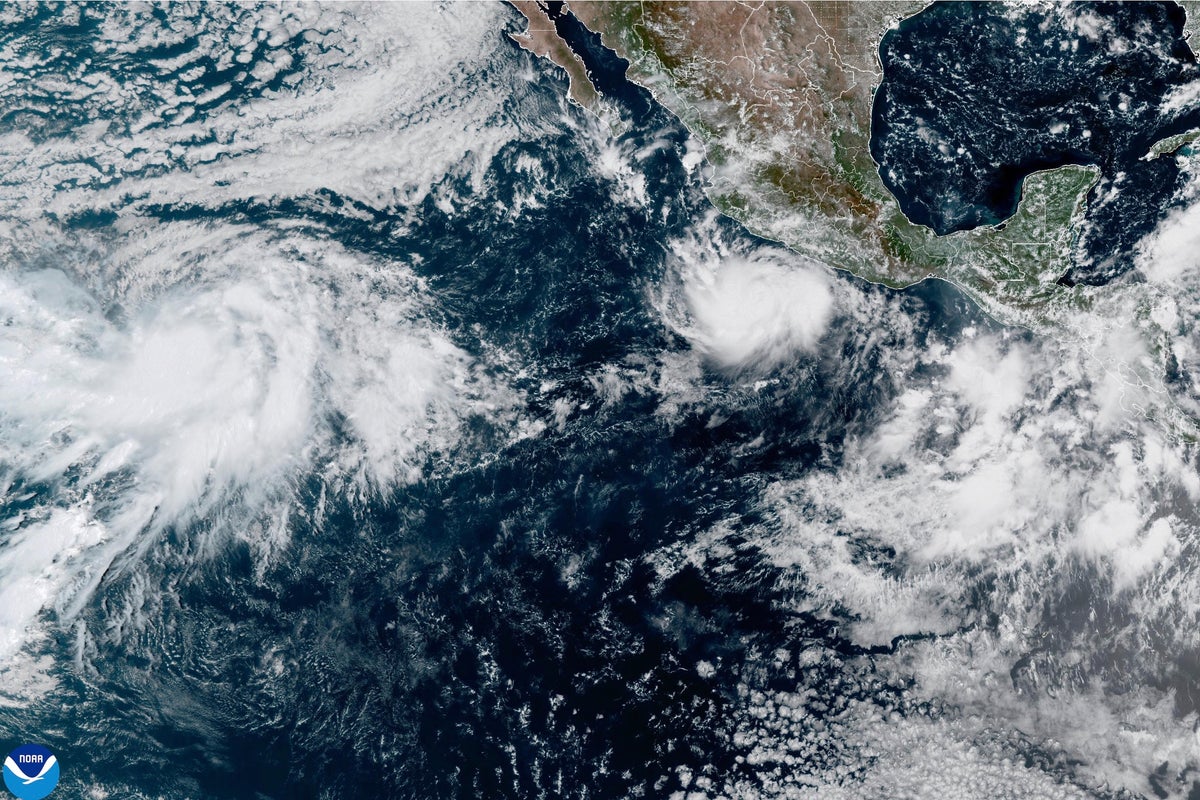
Category 5 represents the highest rank on the Saffir-Simpson scale, applied when wind speeds top 157 mph
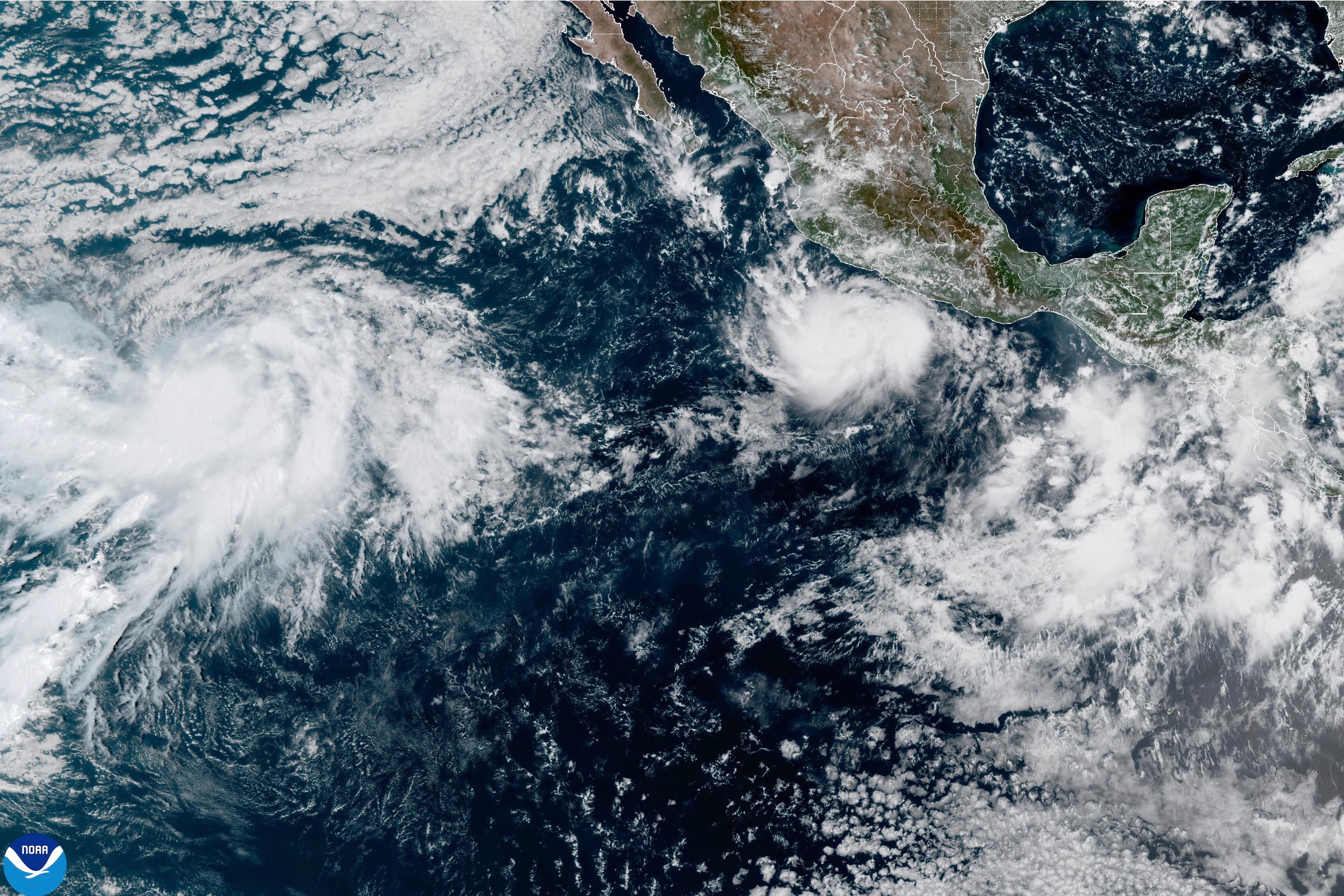
Hurricane Polo has grown into one of the most powerful Pacific cyclones in decades, and it was expected to skirt Mexico's southwestern coast as a Category 5 storm.
 NPR•The Associated Press12h ago
The storm's sudden intensification is "truly remarkable", the US hurricane monitoring agency said.
 BBC16h ago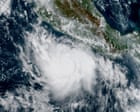
Polo, with sustained winds of 165mph, is churning 215 miles south of Zihuatanejo but is unlikely to directly hit Mexico A tropical storm off the south-west coast of Mexico has intensified into a category 5 monster in fewer than 24 hours, fueled by stronger than usual El Niño weather patterns in the Pacific Ocean. Hurricane Polo was sending out maximum sustained winds of 165mph (266km/h) on Tuesday as its center churned about 215 miles (346km) south of the coastal city of Zihuatanejo, in Guerrero state. Continue reading...
The Guardian•Richard Luscombe23h agoIt is on loan as part of the celebrations for the bicentennial of diplomatic relationships between France and Mexico.
 ARTnews•Maximilíano Durón22 Sept
Hurricane Polo reached maximum Category 5 strength off Mexico's Pacific coast Tuesday but is expected to stay at sea, the U.S. National Hurricane Center (NHC) said.
The WCM Mexico City-based executive will oversee unified U.S. and Mexico strategy as the genre’s global momentum continues.