MicroStrategypage 8

Platform · 2410 articles
Share

Coverage, page 8

page 8 of 121

A Letter to Myself: Buy the Dip — Part II

We're still early. Not early in the sense that Bitcoin was in 2012. Early in the sense that we're watching an entirely new financial infrastructure develop in real time. This is phase one of a global technological financial system. Think about our parents' generation. If they had been able to park even a fraction of their cash into some of the technologies that ended up changing the world 10–20 years later, the long-term payoff could have been significant. But they didn't. And that's okay. They didn't know. They couldn't see what the internet would become. They couldn't have fully understood what social media, smartphones, cloud computing, artificial intelligence, or digital payments would eventually become. We have something they didn't: Hindsight + information + access. We now have the privilege of participating in technologies that were previously out of reach for everyday people because we couldn't even fathom what the future would look like. And cryptocurrency is part of that transition. So What Is Happening Right Now? This is why I'm paying attention to the CLARITY Act, which gets voted on tomorrow. (SEPT 15, 2026) In the simplest terms: The U.S. is trying to establish a rulebook for digital assets. For years, the crypto industry has operated with significant uncertainty around questions like: Is this a security? Is this a commodity? Who regulates this? What rules do exchanges follow? What are institutions actually allowed to do? The CLARITY Act attempts to create clearer lines between the SEC and CFTC and establish a regulatory framework for digital assets. That's important. Not because one piece of legislation magically makes Bitcoin go up. But because clarity creates confidence. And confidence creates participation. And participation creates liquidity. That's the bigger picture I'm watching. Adoption Curve This is also where the adoption curve theory comes into play. We're watching cryptocurrency move from something that most people couldn't explain... to something MOST people aren't aware of... to something people are experimenting with... to something increasingly integrated into financial infrastructure. Current research supports the idea that cryptocurrency adoption isn't simply about speculation; adoption is influenced by perceived usefulness, financial incentives, risk, accessibility and network effects. And we're seeing that participation expand. As of 2026, roughly 1 in 5 U.S. adults (19%) reported having invested in or used cryptocurrency, according to Pew Research Center. That doesn't mean we're guaranteed to see mass adoption. It means we're no longer talking about a technology being used by a handful of people on the internet. It's here. The question is how large the network becomes. And Then There's Government Regardless of sentiment, here's the play I'm watching: The infrastructure is being built. The U.S. established a Strategic Bitcoin Reserve and a U.S. Digital Asset Stockpile in March 2025. The executive order directed the government to maintain forfeited BTC in the reserve and created a framework for managing other government-held digital assets. That doesn't mean the government is buying every altcoin. It doesn't mean every cryptocurrency succeeds. It doesn't mean prices only go up. It means digital assets are increasingly being treated as part of the financial and technological conversation at the highest levels. This isn't just a financial race. It's a technological one. Countries are competing for the future of money, payments, computing, energy, and digital infrastructure. And the U.S. has made it increasingly clear that it wants to remain a major player in that system. At the 2024 Bitcoin Conference in Nashville, Donald Trump spoke directly about this vision, saying he wanted the United States to become the “crypto capital of the planet” and the “Bitcoin superpower of the world.” He also pledged to establish a strategic Bitcoin reserve and retain the government's existing Bitcoin holdings. Whether you agree with the politics or not, the signal is there. Are you paying attention? The conversation has shifted from: “Is crypto real?” to: “Who is going to lead the digital financial system?” That's the war most people don't even realize we're participating in. And my thesis is simple: I want to be positioned while that system is still being built — Early Majority — not after everyone finally understands what it became — Laggards. 🔄 Elliott Wave Structure — Strength in Numbers Now let's bring this back to the chart. My thesis is that we're observing a 1–5 multi-year impulse wave, followed by an A-B-C corrective phase. Impulse 1–5 The larger trend direction. Up. ABC Correction A retracement after a major trend leg. A: First leg down B: Bounce / retracement C: Final leg down My interpretation is that we're currently experiencing an ABC retracement within a larger uptrend. In other words: The market can correct without the entire thesis being broken. A correction doesn't automatically mean the cycle is over. It means we're watching the market determine where the next level of demand comes from. We're also approaching the 200-day moving average, which I'm watching as an important rolling support/resistance area. Not because one indicator can predict the future. But because price + structure + fundamentals + liquidity give us a better picture than any one signal by itself. So What's My Strategy? DCA. Dollar-cost averaging. Buy strength. Buy weakness. Build the position over time instead of trying to perfectly predict the bottom. Because I don't know where the exact bottom is. And neither does anybody else. The goal isn't to win every trade. The goal is to remain positioned. That gives us a disciplined strategy rather than an emotional one. 💰 The Money Flow Cycle Here's another theory I've been watching: Large Caps → Mid Caps → Small Caps → Micro Caps Historically, capital can rotate through different areas of the crypto market as risk appetite changes. BTC establishes direction. Then large-cap assets can respond. Then capital can move further down the risk curve. But here's the important part: The further down the market-cap ladder you go... the more risk you're taking. Higher potential reward comes with higher potential downside. So don't confuse "more upside potential" with "better investment." They're not the same thing. And That's Why I'm Still Watching VET Personally, I'm still heavy on #VeChain. Not because I think it's guaranteed to outperform. And not because I'm trying to convince anybody else to buy it. It's simply part of my personal thesis. I've watched VET survive multiple market environments and have made a huge portion of my profits from this project alone. My thoughts: if it's not broken, why would I try to fix it? It's an established Layer-1 network with an emphasis on enterprise use cases and sustainability, and its relatively low unit price makes it psychologically interesting to retail investors. But here's the part people need to understand: A coin being "cheap per coin" does NOT mean it's undervalued. Market cap matters. Token supply matters. Adoption matters. Execution matters. And ultimately: Price has to prove the thesis. I've been willing to wait because I've watched BTC since 2019 and I've seen how long it can take for capital to rotate. Sometimes the narrative moves first. Then Bitcoin. Then large caps. Then the rest of the market. Patience is part of the position. The Bigger Picture This is what I'm really trying to say. I'm not sitting here pretending I know exactly what Bitcoin will be worth tomorrow. I don't. Nobody does. I'm looking at something much bigger: A financial system becoming increasingly digital. Blockchain infrastructure. Digital assets. Tokenization. Stablecoins. Digital payments. Institutional custody. ETFs. Regulatory frameworks. Government involvement. Global adoption. All of these pieces are developing simultaneously. The CLARITY Act is just one piece of that puzzle. And tomorrow's Senate vote doesn't make or break crypto. If the procedural vote succeeds, there are still additional legislative steps before anything becomes law. But the fact that we're even having these conversations at this level tells me something: We're not talking about whether crypto exists anymore. We're talking about how crypto fits into the financial system. That's a very different conversation. 🧠 My Thesis My strategy has always been built around Elliott Wave Theory, but I'm not married to one way of looking at the market. If you have another theory, model, or framework you think makes sense, drop it in the comments. I'm genuinely interested in seeing how other people are interpreting the same data. Because the truth is: None of us knows if we're right. We can build the best thesis in the world and still be wrong. That's why I'm also looking at supply and demand zones and, more importantly, the amount of time Bitcoin has historically spent inside different ranges. Before the 2020 breakout, Bitcoin spent 1,000+ days developing in a lower range before eventually breaking into a new market regime. Then we spent roughly another 1,000 days developing within that broader range — including the COVID-era volatility — before breaking into the zones we're currently operating in. And now? We're roughly 970 days into this current range. Is that a perfect cycle? No. Does history have to repeat itself? Absolutely not. And this cycle is clearly different. We saw a new all-time high before the halving, which broke from the historical pattern, while the macroeconomic, regulatory, institutional, and geopolitical fundamentals surrounding Bitcoin have also changed. But that's exactly why I think it's worth watching. Maybe we break higher. Maybe we break lower. Maybe the timing is completely different this cycle. That's okay. Because the underlying thesis doesn't depend on me predicting the exact next candle. We're watching the continued development of a digital financial system, and I want to participate in that transition while it's still developing. Elliott Wave is my primary framework. Supply/demand and market structure are additional pieces of the puzzle. I'm not trying to predict the future with certainty. I'm trying to understand it well enough to participate responsibly. So if you have a different theory, drop it below im interested to hear your thoughts! Let's compare ideas instead of pretending any of us know the future because we don't. And at the end of the day, remember this: "Time in the market beats timing the market." — @Zaaylyfts

TITradingView Ideas14 Sept
TI

The Jailbreak plan for Altcoins

This chart is the "Master Key" to your entire Altcoins portfolio.You are looking at the OTHERS on the 3-Month (Quarterly) Timeframe. This chart excludes the giants (Bitcoin/Ethereum) and represents the "strength" of the mid/low-cap altcoins . the "Jailbreak" plan for Altcoins. The Macro Verdict: The "Apex" Moment This is not just a chart; it is a countdown.The Diagonal "Lid": That long blue diagonal line is the Macro Bear Market Resistance. It has suppressed altcoins since the 2021 peak.The Touch: Look closely at the current candle (the red one on the far right). It is literally kissing the trend line.The Timer: it has 16 Days and 6 Hours left in this 3-Month candle. The Bull Case: If this candle closes (in 16 days) outside or on top of that blue line, it signals the start of a 2-year Altcoin Super-Cycle. The Bear Case: If it rejects and closes deep red, your Altcoins will bleed for another 3-6 months. Elbow Theory" Applied to the Levels: The blue horizontal lines are the "Rungs of the Ladder." In my "Arm" metaphor, the price is currently "pinned to the floor" by the diagonal line. It needs to break the pin to stand up.The Breakout Trigger ($0.1466):This is the first horizontal blue line.Significance: This is the "Elbow Joint." Right now, the arm is trapped. Breaking 0.146 is the "flex" that confirms the arm has strength. Once this breaks, the path to 0.21 is nearly vertical. The "Altseason" Zone ($0.18 - $0.21): the next two lines represent the "Forearm."When the ratio hits this zone, this is when the "Zombie Coins" will suddenly wake up and print those 50-100% candles. This is where the Limit Orders will start getting hit.The "Mania" Peak ($0.39):This is the top line. This is the "Middle Finger" distribution top. If the ratio hits this, you should have zero crypto left. You should be 100% in cash. The RSI Reset (Hidden Bull Signal) Look at the top panel (RSI 14).Value: 45.29. Structure: Notice how the RSI line has reset from the "Overbought" highs of 2021 (80+) back down to the mid-40s. The Divergence: It is starting to curl sideways/up while price is still low. This is a Macro Momentum Reset. The tank is refilled. The RSI has plenty of room to run back to 70 or 80, which supports this thesis of a massive breakout. Final Strategy Command The Plan:Watch the Quarterly Close (in 16 days).If it closes above the diagonal 0.1466: Do nothing. Just wait. Targets are given above. The risk: If BTC dumps before the close, this candle could wick down. But structurally, this is the most "coiled" spring in the entire crypto market. Now let the 16-day clock run down.

TITradingView Ideas14 Sept

Zcash (ZEC): Resting at Channel Support — Is Another Move Higher

CRYPTO:ZECUSD Zcash is currently sitting at an important technical area. The broader structure remains bullish, with price moving inside a well-defined ascending channel. After reaching the lower boundary of that channel, ZEC reacted higher and has now entered a period of consolidation. To me, this looks less like a reversal and more like a possible pause before another expansion — but confirmation is still important. Technical Structure The rising channel has been respected multiple times, and the latest reaction from the lower boundary is the key part of this setup. Price is now moving around the support / pullback zone, where buyers could potentially step back in. If we see rejection, bullish price action, or a clean continuation from this area, the next expansion could target: Short-Term Target: 1539 And if the larger channel structure continues to hold: Mid-Term Target: 1849 Setup Bias: Bullish Support / Pullback Zone: 1020–1090 Short-Term Target: 1539 Mid-Term Target: 1849 Invalidation Level: 918 The preferred scenario is simple: Support → Pullback/Consolidation → Bullish Confirmation → Continuation I don't want to chase the current move. The better trade is to let price prove that buyers are actually defending this area. What Would Invalidate the Idea? The rising channel is the foundation of this setup. If CRYPTOCAP:ZEC ZEC decisively breaks below the channel and fails to reclaim it, the bullish continuation thesis becomes much weaker. The marked 918 level is the main invalidation level on this chart. In that situation, I would rather step aside and reassess the structure than try to force a bullish trade. A Quick Fundamental Look at Zcash Zcash remains one of the better-known privacy-focused cryptocurrencies, using zero-knowledge cryptography and shielded transactions to allow transaction details to remain private when users choose the shielded system. There are several things I like fundamentally. Positive points: Strong and recognizable position in the privacy-coin sector. A fixed maximum supply of 21 million ZEC, similar in concept to Bitcoin's scarcity model. Continued development around privacy infrastructure and the Zcash ecosystem. The Zcash Foundation's 2026 strategy includes work on Zebra, privacy-preserving infrastructure and improvements to the network's technical foundation. The project is also working on longer-term protection against potential quantum-computing threats, which is particularly relevant for a privacy-focused blockchain. But there are also meaningful risks. Negative points / Risks: Privacy-focused cryptocurrencies face significantly higher regulatory and exchange-related risks than many mainstream assets. Zcash's privacy is optional rather than mandatory, which creates a different adoption profile compared with fully private networks. The value of ZEC ultimately depends on whether real users continue to demand private digital money and whether the ecosystem can maintain meaningful adoption. Strong rallies in privacy coins can also become highly speculative, so technical invalidation and risk management remain essential. Conclusion For now, the chart is still bullish as long as the rising channel remains intact. The market has already made the large move. I'm more interested in what happens around the current support/pullback zone than in chasing the green candles. If buyers defend the zone and the channel holds, 1539 is the first major objective, followed by 1849. If the channel breaks, the idea changes. We don't need to predict the next move. We just need to know what would confirm it — and what would prove us wrong. Risk Warning: This analysis is for educational purposes only and is not financial advice. Crypto assets are highly volatile and can result in significant losses. Always define your risk and invalidation before entering a trade.

TITradingView Ideas14 Sept

From Concrete to Compute: Why Clichmont Is Building AI Infrastructure Instead of Renting It

Spokesperson: Alexis Cathalifaud, CEO   Angle Every well-funded neocloud in this category – CoreWeave, Crusoe, Lambda is racing toward the same GPU-rental model. Clichmont’s bet is different, and the opinion is to own the data centers, own the power, own the supply chain. This interview should read as a founder thinking out loud about that bet, what it costs, what it risks, and why he thinks the rest of the category has the sequencing backwards. It shouldn’t read as a product pitch or a token launch announcement. As demand for artificial intelligence compute continues to grow, the infrastructure supporting that demand is becoming a strategic consideration in its own right. Companies across the sector are racing to secure access to increasingly powerful GPUs, while questions around electricity, data-center capacity, cooling and connectivity are becoming harder to separate from the compute itself. Clichmont is taking a different approach. Rather than building its model primarily around rented GPU capacity, the company is focused on owning and controlling the physical infrastructure on which successive generations of AI hardware can operate. In this interview, Clichmont CEO Alexis Cathalifaud discusses why the company believes power and data-center infrastructure could become the more durable bottlenecks, how it approaches site selection and the challenges of scaling physical infrastructure, as well as the role of its $CLAI token within the broader ecosystem. 1) Every company in this category is fighting over GPU access right now. Clichmont’s answer is to build the data centers instead of renting the chips. Why does ownership matter more than access? Because GPU access gives you compute; infrastructure ownership gives you control over the economics of compute. For a company like Clichmont, owning or controlling the data-center layer can matter more strategically than simply securing rented GPUs. When you rent GPU capacity from a hyperscaler or GPU cloud, you inherit someone else’s pricing, availability, power constraints, networking architecture, deployment schedule, and margins. When demand spikes, access can become expensive or constrained. Owning the infrastructure changes the equation. Clichmont can potentially decide which GPUs to deploy, when to upgrade them, how densely to install them, how power and cooling are engineered, and how the capacity is commercialized. The same facility can also evolve from one GPU generation to the next rather than tying the business thesis to a particular chip. There is another important distinction: GPUs depreciate quickly; power-ready data-center capacity is a longer-lived strategic asset. A GPU generation may become economically less competitive within a few years, whereas land, grid connections, substations, cooling infrastructure, fiber connectivity and permitted megawatts can remain valuable across multiple generations of accelerators. That makes the scarce resource increasingly not just the GPU itself, but the ability to energize thousands of GPUs at scale. A company can buy chips and still have nowhere suitable to deploy them. Securing 10,000 GPUs is one problem; securing the tens of megawatts of reliable electricity, cooling and network infrastructure required to operate them is another.   2) You’re up against companies that are already public or heading there – CoreWeave, Crusoe, Lambda. What do you think their model gets wrong, if anything? I don’t think CoreWeave, Crusoe or Lambda got the model wrong. They proved that AI compute is a massive market. Where we differ is in what we believe will remain scarce. GPUs change every generation. The durable bottleneck is the infrastructure required to run them — power, land, cooling and connectivity. Clichmont’s thesis is that rather than competing only to rent the latest GPU, we want to control the infrastructure on which successive generations of GPUs will operate. In a market where everyone is chasing chips, we’d rather own the place where the chips have to live    3) There’s a growing argument that energy, not chips, is the actual bottleneck for AI infrastructure. How much does that shape where and how Clichmont builds? Energy shapes almost every infrastructure decision we make. A GPU without reliable power is just expensive hardware sitting in a rack. We believe the real competition over the next decade won’t simply be for GPUs—it will be for megawatts. So when Clichmont evaluates a site, we don’t start by asking where we can find the cheapest building. We ask: where can we secure reliable power, at the right economics, with the ability to scale? What’s the time-to-power? What’s the grid situation? What cooling architecture does the climate allow? And can that site support the next generation of GPUs, not just the ones we’re installing today? That’s one reason locations with strong energy fundamentals are strategically interesting to us. Chips can be shipped around the world. You can’t ship 100 megawatts. The compute ultimately has to go where the energy is. So I wouldn’t say chips stop being a bottleneck. They remain critical. But increasingly, owning GPUs isn’t enough. The competitive advantage is being able to power, cool and operate them economically at scale. That’s what we’re building Clichmont around.   4) Clichmont’s sites range from a solar-powered facility in Alicante to a new build in Bodo, Norway. What actually decides where a data center gets built – is it about energy, land, climate, something else? We don’t choose a location because one variable looks attractive. We choose it because the entire infrastructure equation works. Power is the first filter: how many megawatts can we secure, at what cost, how reliable is that supply, and—critically—how quickly can it actually be delivered? Then we look at cooling, climate, fiber connectivity, land, permitting, security and the ability to expand. Bodø and Alicante are interesting precisely because they represent different strengths. Northern Norway gives us a climate that can support efficient cooling and a strong energy environment. Alicante gives us a different energy profile and the opportunity to integrate solar into the infrastructure strategy. We don’t believe every Clichmont data center needs to look identical—the architecture should respond to the resources of the location. And land by itself isn’t particularly valuable to us. A cheap parcel with no scalable power or fiber is not a data-center site. What matters is whether we can turn that location into reliable, economically competitive compute capacity. Ultimately, we’re not really looking for land. We’re looking for places where energy, connectivity, cooling and scalability converge. That’s where we build.   5) This is an infrastructure company with a token attached to it. For a reader who’s skeptical of that combination, what’s the honest case for why $CLAI exists at all? The skeptical view is completely fair. A token shouldn’t exist just because a company operates in AI. If $CLAI were simply a financing wrapper around our data centers, I wouldn’t consider that a compelling reason to create it. Clichmont is the infrastructure business. It builds and operates compute capacity. $CLAI is intended to be a digital economic layer around the broader ecosystem — something that can eventually support on-chain participation, treasury activity and community governance in ways that conventional equity isn’t designed to do. And we have to earn the right to make that distinction. The physical infrastructure has to exist independently of the token, and the token has to demonstrate real utility independently of speculation. If we can’t show both, then the skepticism is justified. So I wouldn’t ask anyone to believe in $CLAI simply because Clichmont owns GPUs or builds data centers. The test is much simpler: does the token eventually do something useful, transparent and measurable that couldn’t be accomplished as effectively with a normal database or conventional corporate structure? That’s the standard we should be held to.   6) What’s the hardest part of scaling physical infrastructure that people who’ve only built software tend to underestimate? The hardest part is that physical infrastructure doesn’t scale at software speed. In software, if demand doubles, you can often provision more capacity quickly. In a data center, every additional megawatt has a physical dependency behind it — grid capacity, transformers, switchgear, cooling, fiber, permits, construction and ultimately hardware. And those dependencies don’t move in parallel as neatly as people imagine. You can have the land and not have the power. You can have the power allocation and wait months for electrical equipment. You can have the building ready and still be waiting for a grid connection. One missing component can delay an entire deployment. The other difference is that mistakes are expensive and difficult to reverse. Software can be patched overnight. You can’t patch a badly designed 50-megawatt electrical system overnight. You’re making capital decisions today based on what GPUs, power densities and cooling requirements may look like several years from now. So the real skill isn’t simply building data centers. It’s sequencing capital, power, construction and customer demand so that they arrive at roughly the same moment. Build too early and you have expensive idle infrastructure. Build too late and the customer goes somewhere else. That execution discipline is probably what people coming purely from software underestimate most. In physical AI infrastructure, speed matters — but timing matters even more.   7) If you had to name the biggest risk in betting on a build-it-yourself model instead of a capital-light rental model, what would it be? The biggest risk is capital intensity combined with timing. When you build infrastructure yourself, you’re committing significant capital today against assumptions about demand, power economics and technology several years into the future. A rental model gives you flexibility. If the market changes, you can reduce capacity, move providers or adopt the next generation of hardware. When you own the infrastructure, you don’t have that luxury. A substation, cooling system or data-center building is a long-duration decision. For us, the biggest danger therefore isn’t simply spending too much — it’s building the wrong capacity, in the wrong place, at the wrong time. If you build ahead of demand, capital sits idle. If you build too slowly, you miss the market. That’s why we don’t view ownership as ‘build everything ourselves.’ The objective is to control the strategic infrastructure while remaining flexible around technology. The building, power, cooling and connectivity should survive multiple generations of GPUs rather than becoming dependent on one hardware cycle. So yes, the capital-light model has a real advantage: optionality. Our bet is that if we execute correctly, giving up some short-term optionality creates something more valuable over the long term — control over capacity, power economics and the physical infrastructure that AI increasingly depends on.   8) Three years from now, where do you want Clichmont to sit relative to the CoreWeaves and Nebiuses of the world? Three years from now, I don’t expect Clichmont to be the biggest company in the category, and that’s not the objective. CoreWeave and Nebius have enormous scale and access to capital. Trying to replicate them would be the wrong strategy for us. I want Clichmont to be recognized as one of the most efficient independent AI infrastructure operators in Europe — with real operating assets, secured power, high-density GPU capacity and a track record of bringing new compute online quickly. Our advantage has to come from being disciplined about where we build and what we own. We want locations where the energy economics make sense, infrastructure designed around successive generations of accelerated computing, and the flexibility to serve enterprise AI, HPC and private compute rather than simply competing for GPU rental volume.” If CoreWeave and Nebius are building hyperscale AI clouds, Clichmont can occupy a different position: a focused owner and operator of compute-ready infrastructure in strategically selected markets.   Conclusion Clichmont’s strategy ultimately comes down to a long-term infrastructure bet: that access to GPUs will remain important, but the ability to power, cool, connect and operate those GPUs efficiently at scale will become an increasingly valuable advantage. That approach comes with meaningful trade-offs. Building physical infrastructure requires substantial capital, long planning horizons and careful coordination between power, construction, hardware and demand. Clichmont’s thesis is that accepting those constraints can provide greater control over the infrastructure required for successive generations of AI compute. Whether that thesis proves out will depend less on the ambition of the model than on the company’s ability to execute it efficiently and at the right time.

NewsBTCNewsBTCBlockmanPR14 Sept

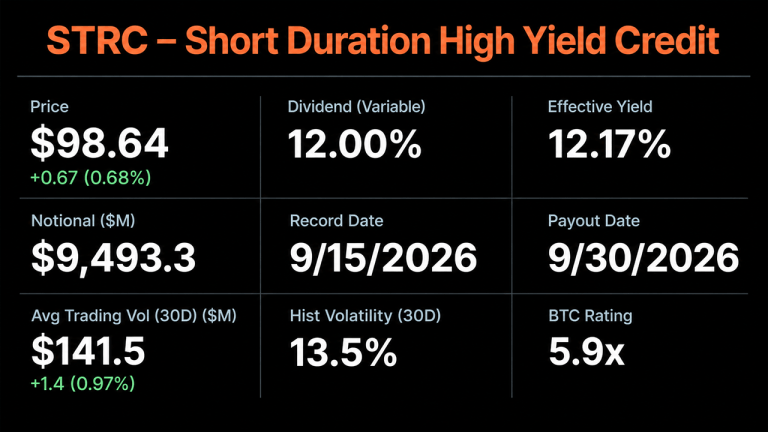
Strategy’s Bitcoin War Chest Sat Still While Saylor Defended STRC

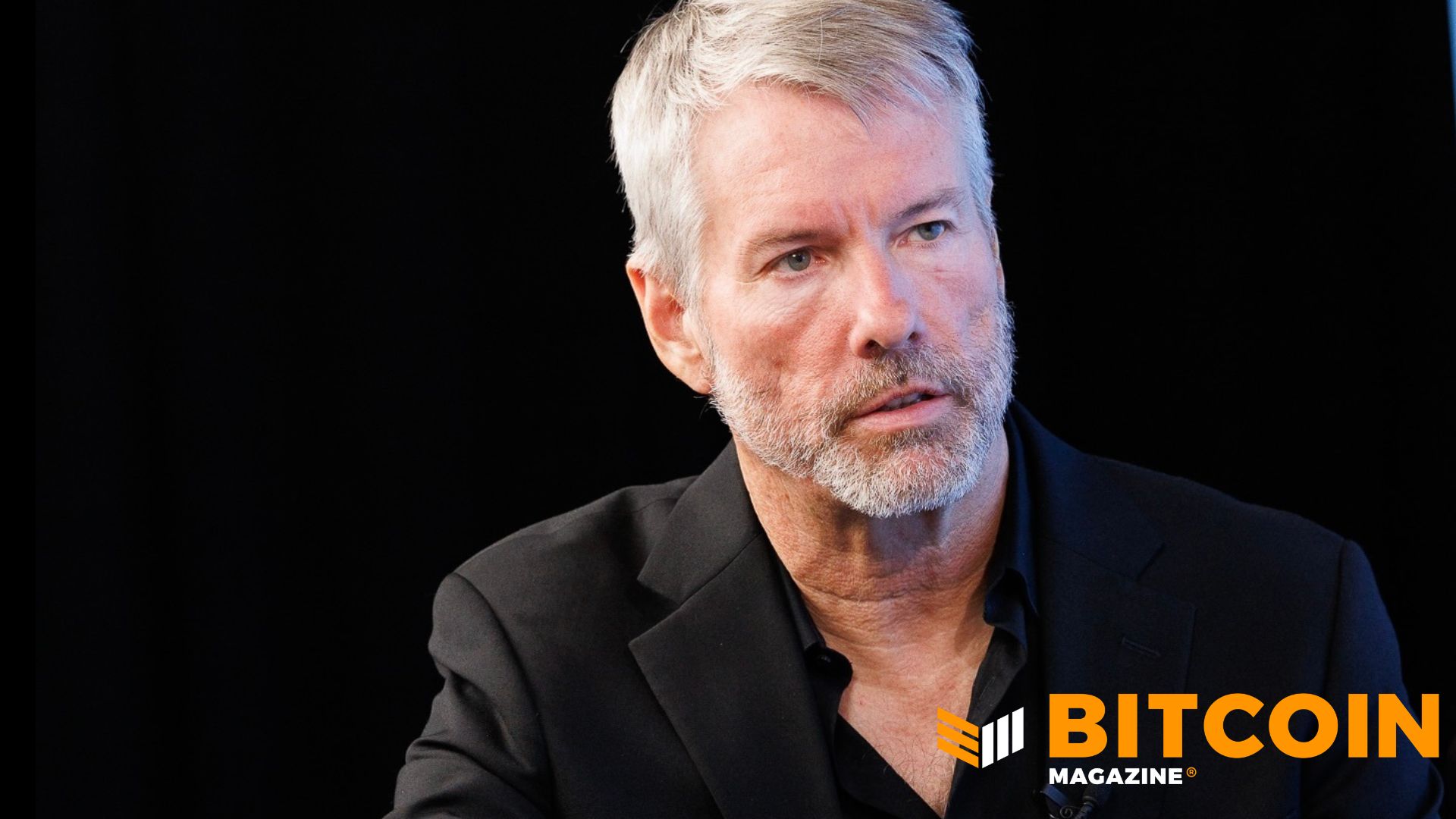
The world’s largest bitcoin treasury company, Strategy, announced it has repurchased $139 million worth of its preferred stock STRC. The company did not sell or acquire any bitcoin over the past week and defended the preferred instead. Strategy Spends $139 Million Defending STRC “Strategy has repurchased $139M of STRC,” Strategy founder Michael Saylor wrote on […]

Bitcoin.com NewsBitcoin.com NewsJamie Redman14 Sept