
JD Vance: US cannot be ‘subservient’ to Israel on Middle East policy
The U.S. vice president delivered another warning to Israeli officials, amid ongoing conflict in the Middle East.
The U.S. vice president delivered another warning to Israeli officials, amid ongoing conflict in the Middle East.

The American invasion of Iraq in 2003 paved the way for Tehran to dominate its neighbor and whetted its appetite to expand its influence across the greater Middle East.
 The New York Times•Neil MacFarquhar16 Sept
Oil prices fell today as reports that Saudi Arabia was offering additional crude cargoes via Oman eased concerns about the scale of Middle East supply disruptions, while European diesel prices hovered near a record high.

Summer holidays and disruption to global oil supplies by the Middle East conflict stoked price growth.
 BBC16 Sept
Gold is trading around $4,326 after a corrective recovery from the recent sell-side liquidity sweep. Despite the bounce, H1 price remains beneath the descending HTF trendline, and the broader sequence of lower highs continues to favor bearish delivery. Macro risk is concentrated around today’s FOMC decision. Markets are pricing roughly a 92% probability of at least a 25 bp Fed hike, while the U.S. dollar remains near multi-week highs. Gold has recovered modestly ahead of the announcement, but a hawkish Fed message could reinforce yield pressure on the metal. Oil has eased after an unexpected rise in U.S. inventories, although Brent remains above $100 and Middle East supply disruptions continue to keep inflation risk elevated. SMC View The H1 structure remains bearish below dynamic supply. The recent bullish MSS explains the current corrective repricing, but it has not yet broken the broader bearish structure. Price is now moving back toward the $4,395-$4,405 Internal Supply area. This is the nearest mitigation zone and the main location where sellers may attempt to regain control. The $4,385–$4,405 Premium Bearish OB remains the higher resistance zone if FOMC volatility drives a deeper liquidity sweep. Main Trading Scenario Sell Priority: $4,395-4,405 Condition: Wait for price to retrace into Internal Supply and show bearish rejection, failed acceptance above the zone, or a lower-timeframe bearish MSS/CHOCH. Entry: $4,395-4,405 after confirmation SL: Above $4,355 and the rejection structure TP1: $4,280–$4,295 TP2: $4,252–$4,268 Key Zones to Watch $4,395-$4,405 — Premium Bearish OB $4,330–$4,345 — Main Internal Supply $4,283–$4,318 — FVG / mitigation area $4,252–$4,268 — Internal SSL HTF descending trendline — Dynamic resistance Above $4,355 — Immediate sell setup weakens Prime Gold View The sell bias remains favored while Gold stays beneath Internal Supply and the HTF bearish trendline. A confirmed rejection from $4,395-$4,405 could reopen delivery toward the exposed sell-side liquidity below. With the FOMC decision approaching, sharp two-sided liquidity sweeps are possible, so the reaction after mitigation matters more than anticipating the first move. No confirmation, no trade.

Saudi Arabia's air defences claim to have intercepted and destroyed a Houthi drone south of Mecca on Tuesday, which the Iran-aligned rebels denied. Meanwhile, several explosions were heard on the island of Qeshm, near the Strait of Hormuz. Follow our liveblog for the latest updates.

The war in Iran that had to be over and won by the United States in about six weeks is now in its seventh month and the oil markets are starting to crack. Gone are most of the cushions the market had in the early weeks and months of the Middle East conflict. The oversupply from early this year has disappeared as oil on water was drawn down quickly when the Strait of Hormuz was closed to tanker traffic in March. Record stock releases led by the International Energy Agency (IEA) depleted strategic inventories in developed economies, including in…

Blinken's remarks may signal a U.S. policy shift, potentially influencing geopolitical dynamics and market optimism for Middle East peace.
 CryptoBriefing•Estefano Gomez15 Sept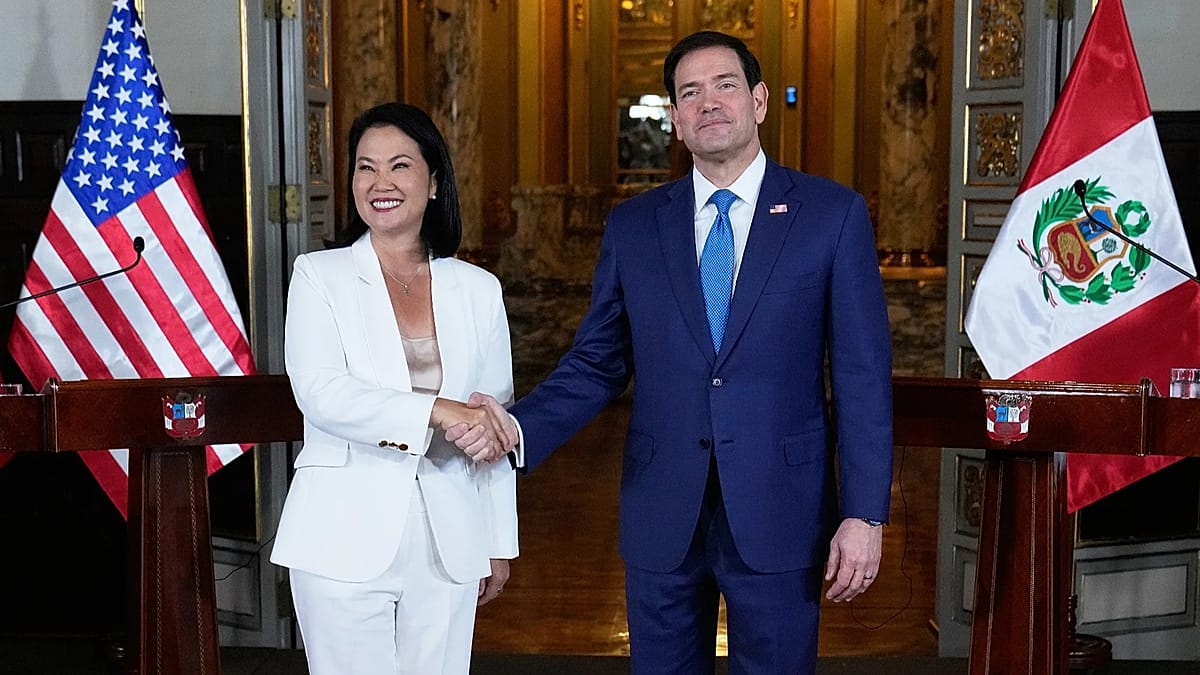
It comes after US Secretary of State Marco Rubio made a trip to South America last week, where he met with the conservative leaders of Peru, Colombia and Ecuador to pledge further support and cooperation.
 Euronews15 Sept
WTI is trading near $103.40 after another push toward the $104.30 resistance. The move is still driven by two forces: Middle East supply risk today and tomorrow’s EIA inventory data. The news background remains supportive. Reports of regional supply and shipping risks are keeping a geopolitical premium in oil. When traders see risk to export routes, pipelines or tanker traffic, oil can rise before the disruption fully appears in inventories. Tomorrow’s EIA report is the next test. After the previous crude draw of -0.391M barrels, another draw would support the bullish story and could help buyers break $104.30. A surprise inventory build may trigger profit-taking after the sharp rally. Technically, the 4H chart remains bullish. WTI is above EMA 9, SMA 50, EMA 200 and SMA 200. RSI near 65 shows strong momentum, but price is now testing an important resistance area rather than a fresh support zone. Scenario: a clean 4H close above $104.30 may open the way toward $105.50 and $108.00. If price rejects from $104.30, the first pullback zone is around $101.50, followed by $97.23. Key idea: WTI is still supported by supply-risk premium, but $104.30 is the breakout test. EIA data tomorrow may decide whether the rally extends or cools. ⚠️ Not financial advice.

Top Air Force officials praised the F-35's warfighting prowess during combat operations in the Middle East despite recent concerns over readiness rates.

Rolf Habben Jansen says container demand has held up better than expected despite tariffs and geopolitical turmoil, while higher costs and uncertainty over Red Sea routings continue to cloud the market outlook.
 FreightWaves•Stuart Chirls15 Sept
Estimated 100,000 Yemenis displaced amid renewed fighting as Qatar sounds alarm over Bab al-Mandab strait Saudi cities faced the threat of a second day of Houthi attacks as fighting across Yemen led the UN to warn of a humanitarian crisis with 100,000 Yemenis already displaced. As oil prices remained well over $100 (£74) a barrel, Qatar warned of a catastrophe if the Iran-backed Houthi militants won full control of the Bab al-Mandab strait, the narrow waterway at the bottom of the Red Sea dominating the key naval route to Asia. The strait has become vital to Saudi crude oil exports as the wider Middle East war chokes the strait of Hormuz in the Gulf. Continue reading...
 The Guardian•Patrick Wintour Diplomatic editor15 Sept
Rising oil prices amid Middle East tensions could strain global economies, increase inflation, and shift energy policy priorities worldwide.
CryptoBriefing•Estefano Gomez15 Sept
Fundamental Analysis Gold remains under pressure ahead of the September 15–16 Fed meeting. Markets are pricing roughly a 92% probability of a 25 bp rate hike, while a firmer U.S. dollar and rising Treasury yields continue to raise the opportunity cost of holding gold. The macro backdrop is also being complicated by oil prices above $100 and renewed Middle East supply concerns. U.S. Treasury yields have pushed to fresh multi-year highs, with the 10-year recently moving above 5%, reinforcing the higher-for-longer pressure on precious metals. Technical Analysis On the H1 chart, XAUUSD is trading near 4,277 after rebounding from the 4,253.64 low but failing to establish a sustained bullish structure. Price remains below the broader bearish structure, while the latest Fibonacci retracement identifies 4,293–4,305 as the most attractive short-term sell area. This zone combines the 0.618–0.786 retracement, previous structure, and nearby H1 imbalance. A deeper recovery could test 4,318, but acceptance above that level would weaken the immediate bearish setup. If sellers defend the Fibonacci zone, price may rotate back toward 4,278, followed by 4,268–4,270 and eventually the 4,253–4,255 liquidity low. Important Key Levels 4,378–4,390 — Major H1 FVG 4,305–4,318 — Upper resistance 4,293–4,305 — Main sell zone 4,278 — First downside pivot 4,268–4,270 — Lower demand 4,253–4,255 — Main liquidity target Trading Scenario Main Sell Setup Entry: 4,293–4,305 Stop Loss: 4,322 Take Profit 1: 4,278 Take Profit 2: 4,268–4,270 Take Profit 3: 4,253–4,255 Sell Condition Wait for price to retrace into 4,293–4,305 and show bearish confirmation. A rejection wick, bearish engulfing candle, failed reclaim above 4,305, or H1 close back below 4,293 may confirm renewed seller pressure. A sustained break above 4,318–4,322 would invalidate the immediate sell idea. Overall View The H1 bias remains bearish while XAUUSD trades below 4,318. With price already near lower support, chasing shorts around 4,277 offers poor positioning. The preferred plan is to wait for a corrective rebound into 4,293–4,305, then look for confirmation toward 4,278, 4,268, and potentially a retest of the 4,253 liquidity low. The Fed decision is now the main volatility risk, and the tone of the policy statement may be as important as the expected rate hike itself. Do you expect gold to retest 4,293–4,305 before sellers attack 4,253 again?

📊 Technical Analysis ● XAU/USD remains below the major descending resistance line and has now broken beneath the previous key support around 4,300. The sequence of lower highs and lower lows keeps the broader 3H structure bearish. ● Price is moving inside the local bearish channel, with the 4,320–4,350 resistance zone becoming the main area for a possible corrective rebound. If sellers defend this zone, the next downside objective remains the 4,180–4,200 target zone shown on the chart. 💡 Fundamental Analysis ● Gold remains under pressure as the Fed begins its September 15–16 meeting. Markets are heavily pricing a 25 bp rate hike, while U.S. Treasury yields have climbed above 5% and the dollar remains firm. At the same time, oil above $108 is reinforcing inflation concerns, which is keeping rate expectations elevated despite ongoing Middle East tensions. ✨ Summary ● Bearish continuation remains the main scenario while XAU/USD stays below 4,320–4,350; target 4,180–4,200. A sustained recovery above resistance would weaken the bearish setup. Share your opinion in the comments and support the idea with a like. Thanks for your support!
Sri Lanka's GDP growth slows amid rising oil prices from Middle East conflict. Crude oil reaching a new all-time high by December 31 at 15.5% YES.
CryptoBriefing•Estefano Gomez15 Sept
Medical professionals have long warned that drones would cause higher U.S. battlefield casualties. A new Inspector General report shows the military is still scrambling to meet that challenge.

Macroeconomics and Economic Realities The EUR/PLN exchange rate recently climbed toward 4.34, having moved above 4.30 for a sustained period for the first time in almost two years. Poland's National Bank held its benchmark reference rate at 3.75% at its September 2026 meeting, the fifth consecutive hold and the lowest level since 2022. The Monetary Policy Council has cut rates only once during 2026, at its March meeting. Inflation reached 3.4% year over year in August, its highest level since June 2025 and just below the upper limit of the central bank's 2.5% target band, driven by rising fuel prices linked to Middle East tensions and by the expiry of fuel price caps. With the European Central Bank expected to raise its reference rate toward 2.5%, the interest rate differential between the euro area and Poland is narrowing, putting steady pressure on the zloty. Meanwhile, second-quarter gross domestic product expanded 3.9%, faster than expected, as investment growth accelerated. Consumption slowed as wage growth decreased. Household caution has risen alongside two military conflicts, one on Poland's border, and an ING survey found 76.9% of Poles now hold savings. Investors now weigh whether narrowing yield buffers will force EUR/PLN toward higher resistance levels. Geopolitics and Geostrategy Poland occupies a crucial position on NATO's eastern flank. Ongoing regional geopolitical tensions generate persistent risk premiums for Central European assets. However, significant structural inflows of European Union funds in late 2026 bolster Poland's sovereign balance sheet. Western multinational corporations increasingly view Poland as a safe nearshoring hub to de-risk supply chains. Strategic infrastructure investments strengthen transport corridors connecting Central Europe with global trade routes. Consequently, foreign direct investment partially offsets geopolitical risk, creating a solid floor for the zloty. Sovereign currency stability remains a vital national security priority for Polish policymakers. High-Tech Industry Trends and Cybersecurity Poland continues its transformation into a major European technology and software development hub. Major global corporations expand advanced engineering centers across Warsaw, Krakow, and Wroclaw. High-tech service exports generate substantial foreign currency inflows, stabilizing broader balance of payments metrics. Sentiment has cooled somewhat, however. Optimism in Poland's IT sector weakened during the first half of 2026, with only 54% of surveyed companies assessing both recent performance and the coming six months positively, citing demand, geopolitics, and new-client acquisition as leading risks. Furthermore, elevated geopolitical risks demand advanced cybersecurity protocols across Polish financial infrastructure. Polish companies are simultaneously implementing KSeF e-invoicing, new cybersecurity requirements, the AI Act, PPWR packaging rules and labour-law changes. Robust technological resilience reinforces foreign investor trust in the zloty. Science, Pharmaceuticals, and Patent Analysis Poland's scientific ecosystem fuels growing high-value exports across the pharmaceutical and biotech sectors. Research centers in Warsaw and Poznan accelerate clinical trials for European pharmaceutical giants. Rising intellectual property filings appear in biopharmaceuticals and specialized medical equipment. Polish exporters handle clinical research contracts priced primarily in euros. This currency alignment creates a natural hedge for domestic biotech firms against exchange rate volatility. Strong patent activity and high-tech exports diversify Poland's economy away from low-margin assembly manufacturing. Business Models, Leadership, and Management National Bank of Poland Governor Adam Glapiński navigates a delicate monetary policy balancing act. His July signalling was notably dovish, openly discussing a possible 25 basis point cut, and he later said he might be the only Council member considering a reduction this year. That stance has since been overtaken by events. Fuel-driven inflation and a weaker zloty have led Commerzbank to describe those earlier hints as obsolete, with cuts unlikely before year-end, while markets have moved to price roughly 85 basis points of tightening. Executive leadership across Polish export companies adapts to shifting currency margins with disciplined hedging programs. Polish manufacturing businesses adopt flexible supply chain models to mitigate input cost inflation. High-margin food and agricultural exporters capture expanded market share across Western Europe. Strong corporate leadership keeps export volumes resilient even during periods of euro exchange rate volatility. Currency Outlook and Future Path Will EUR/PLN break above 4.35 or reverse back toward historical averages? Massive upcoming European Union fund conversions could soon provide powerful support for the zloty. Strong economic fundamentals and expanding tech exports set Poland apart from regional peers. However, short-term energy shocks and shifting central bank signals could create temporary exchange rate friction. NBP projections place inflation within 2.4% to 3.3% for 2026 and 1.5% to 4% for 2027, with GDP growth of 3% to 4% in 2026 slowing to 1.8% to 3.7% in 2027. Investors should monitor central bank communications and energy market trends very closely. The zloty retains strong long-term fundamentals as Poland continues its economic expansion.
Market Context Gold is trading near $4,293 after extending deeper into the lower half of the H1 descending channel. Price continues to print lower highs beneath HTF dynamic supply, keeping short-term order flow bearish despite the latest corrective rebounds. Macro conditions remain restrictive for Gold ahead of the September 15–16 FOMC meeting. Markets are heavily positioned for a 25 bp Fed hike, while the U.S. dollar is near a two-week high and the 10-year Treasury yield has moved above 5%. At the same time, renewed Middle East tensions have pushed Brent crude above $106, reinforcing inflation concerns and supporting higher-rate expectations. SMC View H1 structure remains bearish inside the descending delivery channel. Price has repeatedly failed to sustain recovery above the internal structure, while the latest MSS keeps lower sell-side liquidity exposed. The immediate $4,308–$4,325 Mitigation POI is the most important decision area. A corrective retracement into this zone could rebalance the latest downside displacement before sellers attempt another continuation lower. The current price is already close to discount, so chasing shorts near $4,290 offers weaker positioning. The cleaner setup is a mitigation rally followed by fresh bearish confirmation. Main Trading Scenario Sell Priority: $4,308–$4,325 Condition: Wait for price to retrace into the Mitigation POI and show bearish rejection, failed acceptance above the zone, or a lower-timeframe bearish MSS/CHOCH. Entry: $4,308–$4,325 after confirmation SL: Above $4,340 and the rejection structure TP1: $4,270–$4,280 TP2: $4,250–$4,260 TP3: $4,220–$4,235 Key Zones to Watch $4,400.899 — Premium Bearish OB $4,308–$4,325 — Main Mitigation POI $4,255–$4,270 — Discount POI $4,220–$4,235 — Deep SSL Objective $4,280 area — Nearby sell-side liquidity Above $4,340 — Immediate bearish setup weakens Prime Gold View The sell bias remains favored while XAUUSD stays beneath the Mitigation POI and continues respecting the H1 descending channel. A confirmed rejection from $4,308–$4,325 could reopen delivery toward the Discount POI and eventually the $4,220–$4,235 Deep SSL Objective. With the Fed decision approaching and rate-hike expectations already elevated, volatility may increase sharply, so confirmation remains more important than anticipating the move. No confirmation, no trade.