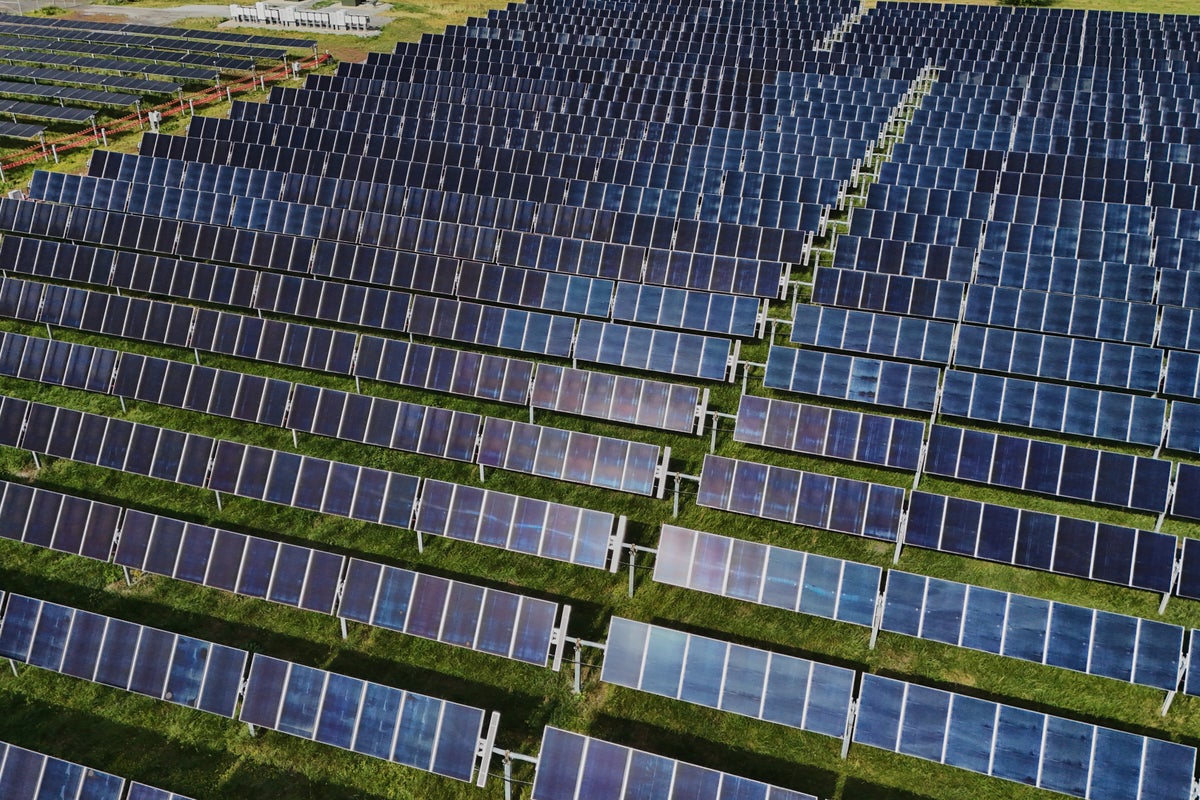
World leaders in New York to grapple with climate. Fuel prices, AI and disasters complicate things
World and business leaders this week will grapple with the urgent costs of climate change
World and business leaders this week will grapple with the urgent costs of climate change

‘In the street or at restaurants, people still come up to me and say, “I became a lawyer because of you.” But I just went to work and said my lines!’ I was doing a play in New York, Three Sisters by Chekhov. We regularly got scripts sent to us. One going around was written by David E Kelley. I flew out to Los Angeles to screen test, and I got the part right in the moment. It was a difficult transition as I felt very much settled and happy in New York and I had only been to LA briefly, to shoot The Birdcage. I was such a bad driver that I didn’t get on the freeway in LA for a year. I was afraid of it. Continue reading...
 The Guardian•Interviews by Lee Campbell21 Sept
For his trek across New York City, the singer wore a pair of Prada slip-ons. I tried to do the same in my penny loafers – and soon found out why experts advise against it Last month, just before his 30-night residency at Madison Square Garden, Harry Styles was spotted walking the streets of New York. According to the paparazzi who trailed him throughout his journey, he walked eight miles – all the way from Brooklyn into Manhattan – in loafers. If, like me, you own a pair of loafers, your first thought is probably: that doesn’t sound like a good idea. On Instagram, Grazia called Styles’ shoes “perhaps the least sensible footwear for such an undertaking”. Continue reading...
The Guardian•Tim Dowling21 Sept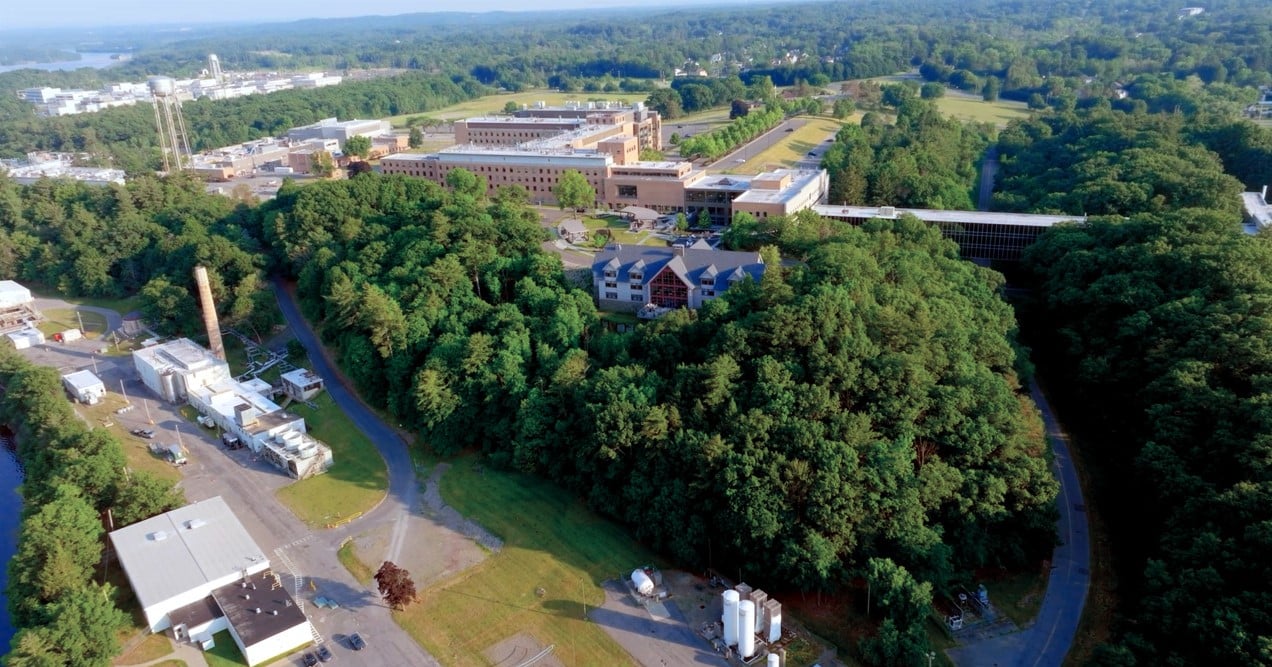
GE Aerospace will invest US$225 million to modernise its research centre in Niskayuna, New York, as the aerospace company expands its research capabilities in areas including artificial intelligence, autonomy, robotics and advanced propulsion. The state of New York has committed US$8.4 million in tax credits through Empire State Development, while the Schenectady County Metroplex Development […]
 AviTrader•Heike Tamm21 Sept
Why Cardiff is set to beat competition from London and New York to host the long-awaited fight between Tyson Fury and Anthony Joshua.
 BBC21 Sept
The move was an escalation of President Trump’s clashes with the news media and left uncertain which network would cover his visit to New York to address the United Nations General Assembly.
 The New York Times•Ali Watkins21 Sept
Governments need to rein in increasingly capable AI agents before their risks are fully understood, a United Nations scientific panel warned in the global organization's first major assessment of OpenAI's hack of Hugging Face earlier this year. The report cements AI's place on the global diplomatic agenda this week as leaders gather in New York […]
 The Verge•Robert Hart21 Sept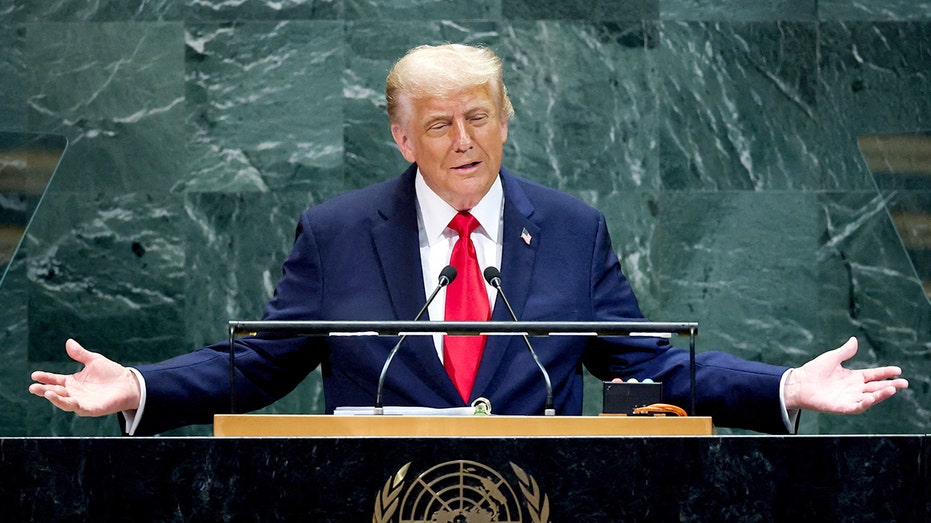
Over 100 world leaders descend on the United Nations General Assembly as wars in the Middle East and Ukraine dominate the diplomatic agenda.

One candidate has been making headlines in Berlin in recent weeks: Elif Eralp of the left-wing Die Linke party. Her campaign methods and rhetoric have drawn comparisons with New York Mayor Zohran Mamdani. Anne Mailliet, Paul-Louis Godard and Leyla Sobler report.
Country: World Source: Save the Children Annually, governments worldwide spend about US$725 billion on direct fossil fuel subsidies - 145X more than the US$5 billion needed to support education across 96 countries. NEW YORK, 21 September 2026 - The world spends more on fossil fuel subsidies every three days than the amount needed to support the education of nearly 750 million children over a five-year period, Save the Children said. The analysis comes ahead of the Global Partnership for Education (GPE) Replenishment Summit this week at the UN General Assembly (UNGA) in New York, where world leaders are gathering. At the summit, GPE - which works with governments to strengthen education systems – will seek at least US$5 billion to support education across 96 countries. Annually, governments worldwide spend about US$725 billion on direct fossil fuel subsidies - financial support that lower the cost of producing or consuming coal, oil, and natural gas. These measures come in the form of tax breaks, low-interest loans, and other policies that reduce the operating expenses of oil, gas, or coal industries. It would take just two-and-a-half days in direct fossil fuel subsidies to reach the US$5 billion GPE is seeking to strengthen education systems for 750 million children – about one-third of all children globally - by 2030, Save the Children found. Burning fossil fuels for heat, electricity, transportation, and manufacturing and construction is the single-largest contributor to the climate crisis, which is now the biggest threat to children's lives, including their education. At least one in 10 students globally had their schooling disrupted due to climate-related hazards in 2025, according to the UN . Last month in Nepal, a deadly flash flood, triggered by a partial glacier collapse due to warming permafrost , disrupted the education of thousands of students, including 13-year-old Roma*, with dozens of schools damaged, destroyed or are being used as shelters Roma was at school when word spread that the river was rising. Her father rushed to the school to pick her up and together they headed to safety at a temporary holding centre. Within hours, the flood had swept away her family's home and belongings. "Everything was taken by the flood," she said quietly. "But we all survived. That is the biggest thing. My school bag and books were buried in the flood. I had hoped to come first in the second term. Now I don't know what will happen. I don't even know whether exams will take place.” Today, Roma, a Grade 8 student, is living in temporary accommodation with her parents, brother and two sisters while her family begins the long process of recovery. While humanitarian assistance has helped meet some immediate needs, it is her education that she worries about most. “I miss school,” she said. “I miss studying and seeing my friends.” As the climate crisis continues to increase the frequency and severity of these hazards, students will keep being affected directly through school disruptions - and indirectly through lost learning, reduced lifetime earnings, and widening education inequities. Marian Hodgkin, Head of Education at Save the Children said: “The world is currently grappling with an unprecedented learning crisis that urgently needs investment. World leaders have no problem spending public money to fund fossil fuel subsidies - investments which are fuelling the climate crisis and further deepening the global learning crisis. Yet, when it comes to funding aid and education responses, budgets are drying up. “Every year, governments spend US$725 billion tipping the scales in favour of oil, gas and coal. Yet just US$5 billion over five years could help fund the education of nearly 750 million children whose learning is being disrupted by the climate crisis these same industries are fuelling. The money exists. It is a question of what we choose to invest in - the industries driving the climate crisis, or the children who will inherit it.” Save the Children is calling on world leaders gathering in New York this week for the UNGA, to change course and reinvest in tackling the global learning crisis. This includes pledging at least US$5 billion to fund the Global Partnership for Education (GPE) replenishment, so governments can build stronger, more resilient education systems, so that every child can access their right to education even when disasters strike. Save the Children is also calling on leaders to fund an additional US$600 million at the Education Cannot Wait (ECW) replenishment event in November, to help ensure 10 million of the world's most vulnerable children in crisis can continue learning. Ahead of COP31, the child rights organisation is calling for the urgent phase out of fossil fuels to limit global warming to 1.5 degrees Celsius above pre-industrial levels and increase investments being directed towards renewable energy. Save the Children works with GPE to help governments across 35 climate-vulnerable countries and territories strengthen school safety, access new climate finance, and build education systems that can withstand increasing floods, storms and extreme weather, helping protect the learning and future of millions of children. The US$5 billion figure refers to the investment the Global Partnership for Education is seeking from donor governments. This investment is expected to mobilise an additional US$10 billion in co-financing, helping support the education of almost 750 million children between 2026 and 2030. Alondra* (37) is the mother of nine-year-old Emma*. Following the earthquake in Venezuela, she faces many uncertainties, but one of her greatest concerns is the impact on children's education. Save the Children is supporting the family through its Safe Space where Emma* can continue learning, playing and socialising with other children. Save the Children also provided clean water, food, recreational kits and psychosocial support, helping children and caregivers cope with the impact of the disaster and begin to recover. Save the Children When disasters or climate emergencies disrupt children’s education, as they have for children in Nepal, Venezuela, Colombia and elsewhere this summer, children must be able to continue their education through crisis. Governments also need stronger, more inclusive, and resilient education systems that can last. Duke of Sussex, Prince Harry Mandatory credit: Charlie Forgham-Bailey/Save the Children The Duke of Sussex has renewed his commitment to supporting children injured in conflict at a special event in West London with long-standing partners Save the Children and Imperial College London. Hosted at Imperial College London’s I-HUB centre, the initiative convened humanitarians, innovators and philanthropists around a shared mission to improve the care of children with amputation injuries. The partnership aims to provide children with a holistic package of support – from the latest prosthetic technology to physical rehabilitation and long-term mental health provision. New Save the Children analysis published today reveals the ever-growing humanitarian need caused by the evolving nature of warfare, with children facing a new generation of explosive threats from the air, on the ground, and increasingly enabled by AI. The research found that some 12,000 children - or more than five every day - were killed or injured by landmines, unexploded ordnance, improvised explosive devices and other explosive ordnance between 2020 and 2025. The report highlights how the growing use of drones is changing children's experience of conflict. Drone attacks can kill and injure children directly, while also disrupting the schools, hospitals, homes and humanitarian services they rely on. In Ukraine, drone attacks on schools increased by 358% in 2025 compared with the previous year, forcing many children back into remote learning. Imperial and Save the Children co-founded the Centre for Paediatric Blast Injury Studies in 2023, bringing together medics, engineers, humanitarians and policymakers to address the unique challenges children face when injured by explosive weapons. The partnership has enabled the development of an affordable prosthetic knee joint designed specifically for the needs of children who’ve suffered amputation injuries. In September 2025, Archewell Philanthropies announced a $500,000 donation to support humanitarian causes and injured children in conflict zones like Gaza and Ukraine, including a grant to the Centre for Blast Injuries Studies, which the Duke has visited three times. Charlie Forgham Bailey / Save the Children Save the Children, Imperial College London and Archewell Philanthropies commit to strengthening partnership to support child amputees with the latest prosthetic technology and long-term rehabilitation. New Save the Children research finds that more than five children every day were killed or injured by landmines and UXO between 2020 and 2025. The analysis shows growing use of drones and AI-enabled warfare is exposing children to new threats and disrupting schools, healthcare and humanitarian aid. Save the Children congratulates President von der Leyen’s leadership, expressed in today’s State of the European Union address, to creating safer digital environments for children, by holding technology companies accountable. This is an essential step towards a digital world where every child can fully enjoy their rights and be protected from harm.
 ReliefWeb•Save the Children21 Sept
After opposing the Ukrainian war and settling in Latvia, Chulpan Khamatova now comes to New York to star in a dark comedy by Ionesco.
The New York Times•Elisabeth Vincentelli21 Sept
The Beijing-based artist’s commission for the New York museum were unveiled Thursday.
 ARTnews•Maximilíano Durón21 Sept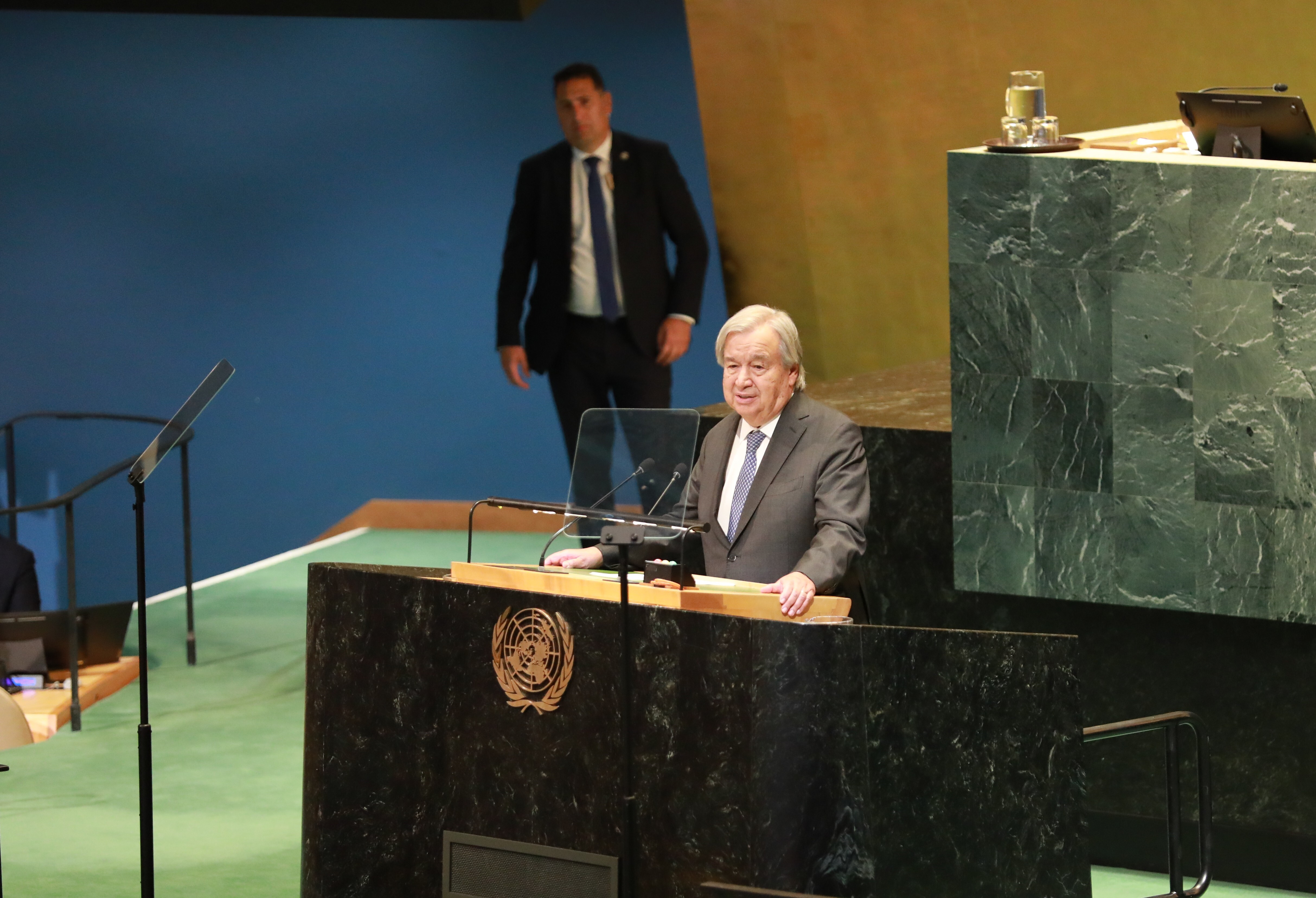
United Nations head António Guterres returns to New York for his final U.N. General Assembly as diplomacy falters over wars in Ukraine and the Middle East, and the global body faces deep divisions.
 NPR•Michele Kelemen21 Sept
US and Chinese delegations held "succesful" and "constructive" talks in New York on Sunday on Artificial Intelligence and trade, ahead of Chinese President Xi Jinping's visit to Washington later this week. The two countries discussed setting up a dialogue mechanism as fears over AI security keep rising, and prepared to ease trade tensions as a truce deal is set to expire in November. Also in this edition, France and Canada seek to deepen ties on critical minerals and energy.
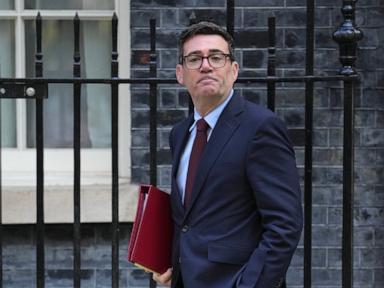
Britain's Prime Minister Andy Burnham is set to meet U.S. President Donald Trump for the first time
 ABC News21 Sept
Can the Liberal Democrats withstand the political turbulence around them? As delegates gather in Brighton for their party conference, Sam Coates gauges the pressure on Sir Ed Davey’s party as it faces a squeeze from the Greens and the Andy Burnham bounce. Elsewhere, the prime minister prepares to go to New York for the UN […]

A potential Trump-Iran meeting in New York could reshape diplomatic dynamics, influencing global market perceptions and future negotiation venues.
 CryptoBriefing•Estefano Gomez21 Sept
Limited review ends Aug. 3, and reserve minimums rise to 15% for applications dated Jan. 4, 2027
 HousingWire•Julie Teitel21 Sept
Talks between officials in New York come ahead of summit between Donald Trump and Xi Jinping later in the week Good morning, and welcome to our rolling coverage of business, the financial markets and the world economy. Stock markets in Asia have risen led by technology shares, lifted by optimism around talks between the US and China on trade and artificial intelligence, while oil prices declined. 2030 is not going to be the end of the world. There is 0% chance that’s going to be the end of the world. Scaring people is unnecessary. It is irresponsible. Scott Bessent and Chinese vice premier He Lifeng have already laid the groundwork [for the Trump-Xi meeting] in New York, with trade, investment and artificial intelligence on the table, but this is not a market waiting for a grand bargain. It is waiting to see whether both sides can keep the next trade grenade in the drawer. 9.30am BST: UK S&P Global Consumer sentiment index 1.30pm BST: US Chicago Fed National Activity Index for August 2.10pm BST: IMF managing director Kristalina Georgieva speaks at the IMF Legal Department 80th anniversary conference in Washington Continue reading...
The Guardian•Julia Kollewe21 Sept
US President Donald Trump will meet with French President Emmanuel Macron on Monday in New York, where both leaders will be attending the United Nations General Assembly this week, the White House said.