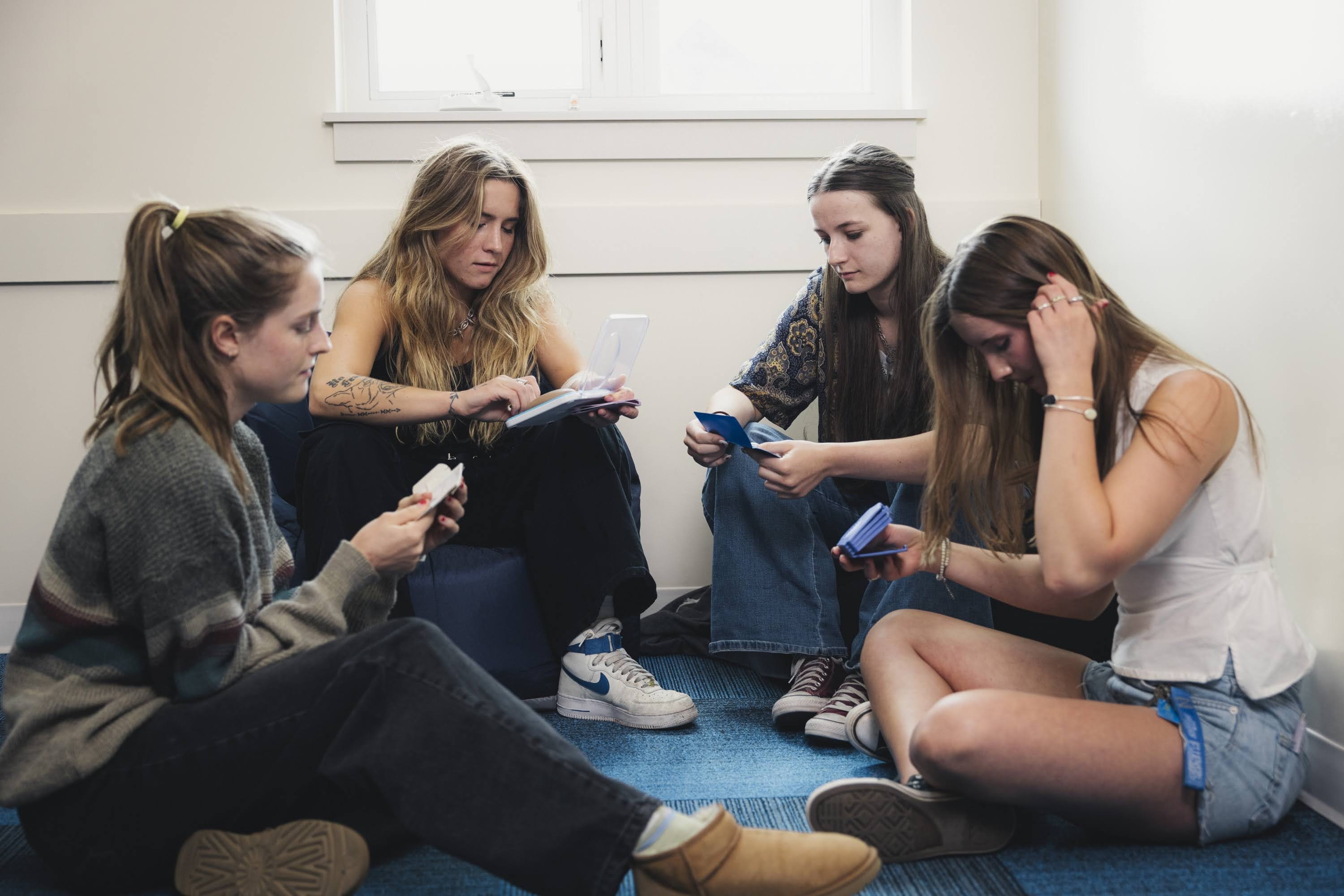
One month after the Nepal floods, women are running community kitchens, feeding their communities, and rebuilding their lives
Country: Nepal Source: UN Women Just weeks earlier, Ranjit, 30, was running a catering business with her husband, a business they had built for nearly a decade. Twelve days before the flood, she had taken a loan of NPR 1.2 million – equivalent to almost USD 8,000 – to purchase new equipment and expand the business. Then the flood came. It swept through the Bhotekoshi and Trishuli river corridors, killing thousands of people, destroying homes and infrastructure across Rasuwa, Nuwakot, and other affected districts, and taking with it everything that people had worked for. According to the United Nations , at least 43,000 women and girls need humanitarian assistance across the 17 most affected municipalities. In all disasters, women and girls face the greatest impacts, including increased risk of violence and exploitation. Women also take on much greater unpaid care responsibilities than men, are forced to travel even further to secure water, and fall quicker and more deeply into poverty. “The flood took everything I had, all my newly purchased utensils, my lifelong savings and hard work, my catering business, my dreams. The business that took almost a decade to build went away in the blink of an eye.” – Reshma Ranjit Shortly after the floods, Ranjit got straight back into the kitchen and is now the head chef of a UN Women-supported community kitchen, working alongside other women from local women’s groups affected by the floods. Together, they prepare meals for displaced families. For families displaced from their homes, preparing a daily meal can be a major undertaking. The kitchen offers cooked meals to people who cannot access food or cooking facilities, while creating temporary paid work for women facing the immediate financial hit of a disaster. UN Women, in partnership with Rural Oriented Youth Movement Nepal (ROYM), National Indigenous Women Forum (NIWF), and four local women’s groups, has established four community kitchens in Nuwakot and Rasuwa districts. Another partner organization, Feminist Dalit Organization (FEDO) will soon be setting up additional kitchens. UN Women’s community kitchens are designed to operate for one to three months post-disaster. In a community where 100 people need access to food, a community kitchen operating for the span of one month can serve up to 9,000 meals. Together, the kitchens set up after the flood have reached 1,145 people, serving four meals per day. More than 15,000 meals have been served in just two weeks. Working with women’s rights organizations and local women’s groups also means drawing on local knowledge and community relationships to organize food preparation and reach affected families. Earning while helping others When Sannani BK heard that the flood was coming, she sent her children away in a vehicle as quickly as she could, hoping that even if something happened to her, they would be safe. Sannani BK’s brother died in the floods and she now cares for her brother’s children as well as her own. After the flood, “I had nowhere to go and no one to talk to”, says BK. “The community kitchen has given me a place where I can share my grief, work alongside my sisters from the community, and support others who are going through the same experience. In times like these, having a warm, cooked meal means so much.” – Sannani BK “The income I earn from working in the kitchen”, explains BK, “is also helping me meet the immediate needs of my children and my brother’s children, whom I am caring for now.” For women like Ranjit and BK, the temporary income does not resolve the losses caused by the disaster, but it helps them meet immediate expenses while longer-term recovery support is being put in place. It has been one month since the floods swept through, and the women are still standing, supporting one another as they recover. “We have lost everything, but we have not lost hope”, says Ranjit. In an emergency, sometimes recovery begins with something as simple as a meal, and with women helping ensure that their communities have one.
 ReliefWeb•UN Women20h ago




 TechCrunch•Connie Loizos8h ago