US officials meet Yemen’s Iran-aligned Houthis in Oman talks
US-Houthi talks in Oman highlight shifting diplomatic strategies, potentially stabilizing Red Sea trade but straining US-Saudi relations.
 CryptoBriefing•Editorial Team16 Sept
US-Houthi talks in Oman highlight shifting diplomatic strategies, potentially stabilizing Red Sea trade but straining US-Saudi relations.
CryptoBriefing•Editorial Team16 Sept
Fundamental Analysis Gold is recovering ahead of today’s Fed decision as the U.S. dollar softens, Treasury yields retreat and oil prices ease. Markets currently price roughly a 92%–93% probability of a 25 bp hike, which would lift the target range to 3.75%–4.00%. With the hike largely priced in, the bigger reaction may come from the Fed’s guidance and outlook for further tightening. Brent has eased toward $108 as Saudi Arabia offers additional crude via Oman and U.S. inventories rise, temporarily reducing some inflation pressure. Technical Analysis On H1, XAUUSD is trading near 4,348 after a strong rebound from the 4,268–4,280 demand area. Price is now testing the descending resistance trendline and the 4,341–4,353 Fibonacci 0.786–0.618 zone. This area is the key short-term decision point. If buyers defend the zone and price confirms a breakout/reclaim above the trendline, the next objectives sit near 4,368, followed by 4,378–4,394. The 4,327 structure low remains the critical bullish invalidation level. Important Key Levels 4,378–4,394 — Main target zone 4,368 — Intermediate resistance 4,341–4,353 — Main buy zone 4,327 — Key support / invalidation 4,295–4,315 — Deeper demand Trading Scenario Main Buy Setup Entry: 4,341–4,353 Stop Loss: 4,324 Take Profit 1: 4,368 Take Profit 2: 4,378 Take Profit 3: 4,390–4,394 Buy Condition Wait for the 4,341–4,353 zone to hold with bullish confirmation. A liquidity sweep, bullish engulfing candle, strong H1 reclaim, or confirmed break above the descending trendline would strengthen the setup. A sustained H1 break below 4,327 invalidates the immediate bullish scenario. Overall View The short-term H1 structure is shifting toward recovery, but price is still confronting the major descending trendline. The preferred plan is to buy only after confirmation around 4,341–4,353, targeting 4,368 and 4,378–4,394. With the Fed hike largely priced in, forward guidance may matter more than the rate decision itself for the next major Gold move. Will Gold hold 4,341–4,353 and break the trendline before the Fed decision?
Oil prices fell today as reports that Saudi Arabia was offering additional crude cargoes via Oman eased concerns about the scale of Middle East supply disruptions, while European diesel prices hovered near a record high.
The tally includes facilities in Kuwait, Bahrain, Qatar, the United Arab Emirates, Saudi Arabia, Iraq, Oman, and Jordan.

Heightened tensions in the Strait of Hormuz could disrupt global oil supply, impacting energy markets and increasing geopolitical instability.
CryptoBriefing•Editorial Team15 Sept
Iran says El Gaia caught fire after hitting mines, but the US says the oil tanker was struck by a missile and then a drone.
 BBC15 Sept
Crude’s move since August has been driven by a series of escalating flashpoints, not a single event. WTI gained nearly 30% from the start of August and crossed USD 100/bbl on 10/Sep. Crude oil initially fell 7.7% during the first week of August as hopes of an Iran-Oman arrangement to ease Strait of Hormuz disruptions grew. Those hopes quickly faded, sending it up 5.1% on 10/Aug (Mon) as talks broke down. The push and pull continued through August, but the broader uptrend remained, with WTI ending the month up 2.2%. https://www.tradingview.com/x/RSeAyLS8/ A second front was already developing in the Red Sea. On 22/Jul, Houthi forces attacked two Saudi tankers near the Bab al Mandab, threatening another key oil shipping route. The attacks and subsequent Saudi-Houthi escalation added to concerns over regional supply security. The decisive escalation came in early September, when the U.S. and Iran began directly targeting each other’s military and oil assets. On 5/Sep, the U.S. destroyed and disabled three Iranian oil tankers after the IRGC launched ballistic missiles at two U.S. Navy warships. On 8/Sep, the U.S. destroyed five more Iranian tankers after another missile attack on a U.S. warship. WTI rose 3.25% on 9/Sep before surging another 6.7% on 10/Sep, reaching an intraday high of USD 104.04/barrel. Although WTI prices fell by 2.4% on 11/Sep, it closed the week 9.7% higher. Major U.S. Oil Producers Uptrend is Measured Oil majors rarely move one-for-one with crude, particularly during geopolitical spikes. Investors tend to discount the rally if they see it as temporary, while spending and returns are based on longer-term oil prices. https://www.tradingview.com/x/iiRBLcOH/ At the same time, inflation and rate concerns can offset some of the earnings benefit, leaving energy stocks well behind the commodity. Why WTI Alone Isn't Always the Answer WTI’s strength is also its weakness: with no business underneath it, the contract captures the full impact of a supply shock but can reverse just as quickly when sentiment changes. September’s move above USD 100 could unwind on the next headline. Oil majors offer a different trade. Their earnings are diversified across crude, refining and chemicals, while buybacks and dividends provide additional support. As a result, their shares tend to move less sharply than WTI. That slower reaction also offers a useful signal: it reflects whether investors see higher oil prices as a lasting earnings shift or a temporary geopolitical spike. The trade-off is clear : less upside torque than WTI, but greater downside protection and a better read on market conviction. WTI Leads, but Equities Apply a Reality Check CME’s Single Stock Futures suite launched on 27/Jul with 55 standard and 22 micro contracts covering more than 50 U.S. stocks. Of the oil names, the standard contracts cover ExxonMobil, Chevron and ConocoPhillips, while only Exxon is also available as a micro contract. Trading nearly 23 hours a day allows investors to reprice these stocks continuously as geopolitical headlines unfold, rather than waiting for the equity market to reopen. CME has also launched 24/7 WTI futures, which we covered in our previous paper . https://www.tradingview.com/x/Ew2CB1E0/ Source: ExxonMobil , Chevron , and ConocoPhillips Exxon and Chevron may appear relatively insulated from crude because upstream contributes only around a quarter of revenue. But refining still depends on crude as a key input, so higher oil prices affect them through both feedstock costs and refining margins. https://www.tradingview.com/x/9do4FslU/ ConocoPhillips offers a cleaner read on crude with its entirely upstream business. Yet even it lagged significantly: WTI gained 25% while COP rose 15%. This suggests business mix is only part of the story. Equity risk appetite, doubts over the durability of the oil spike and company-specific factors also shape the response. That same lag cuts both ways. On the downside, it can work in the investor’s favour: an instrument that captures less of the upside can also absorb less of the drawdown. Historical Trade Example By June, regional tensions appeared to be easing, but oil prices had already pulled back sharply from their April highs. An investor looking to stay exposed to the broader uptrend chose to split the position between Chevron and ConocoPhillips SSFs rather than take the full headline risk of crude oil. Between mid-June and 10/Sep, the hypothetical trade would have generated a 14.19% gain on notional exposure, compared with 12.8% for WTI. WTI fell 25.7% during the mid-June selloff, while Chevron and ConocoPhillips fell just 13.6% and 14.7%, respectively. The SSF position’s resilience during the June drawdown gave it enough of an advantage to remain ahead through the subsequent rally and outperform WTI by September. Since SSFs on these names were not yet listed in June 2026, we use the underlying stocks’ closing prices as a proxy for SSF performance. Margin figures use current CME levels because historical SSF margin data is unavailable. Contract details (as of entry): Chevron SSF (SCVX0U2026): Initial margin per contract = USD 3,214; notional exposure at entry = 100 × USD 192 = USD 19,200 ConocoPhillips SSF (SCOP0U2026): Initial margin per contract = USD 2,063; notional exposure at entry = 100 × USD 118 = USD 11,800 Combined position: USD 5,277 in margin controlling USD 31,000 in notional exposure Long CME Chevron SSF (SCVX0U2026) Entry = USD 192 Exit = USD 216 PnL: 100 × (USD 216 – USD 192) = USD 2,400 https://www.tradingview.com/x/afRMRuTy/ Long CME ConocoPhillips SSF (SCOP0U2026) Entry = USD 118 Exit = USD 138 PnL: 100 × (USD 138 – USD 118) = USD 2,000 https://www.tradingview.com/x/PPyw9gdX/ Combined PnL = USD 2,400 + USD 2,000 = USD 4,400 That translates to an 83.4% return on the USD 5,277 margin committed, controlling USD 31,000 in combined notional exposure. WTI gained 12.8% over the same period, while the blended SSF position gained roughly 14.19% on a notional basis, outperforming the commodity itself while also carrying a materially shallower drawdown through the volatility in between. This content is sponsored. MARKET DATA CME Real-time Market Data helps identify trading setups and more effectively express market views. If you have futures in your trading portfolio, you can check out on CME Group data plans available that suit your trading needs at tradingview.com/cme . DISCLAIMER This case study is for educational purposes only and does not constitute investment recommendations or advice. Nor are they used to promote any specific products, or services. Trading or investment ideas cited here are for illustration only, as an integral part of a case study to demonstrate the fundamental concepts in risk management or trading under the market scenarios being discussed.

Chirag Bahri was working on board a tanker when six men seized it. For almost eight months, he and his colleagues were held captive, an experience that would change his life for ever It was at noon on 8 May 2010 when the pirates came. Chirag Bahri remembers the exact time and date because it marked the start of the seven months and 20 days he was held hostage by a gang of Somali pirates. Bahri was 28 at the time, and working as second engineer on a chemical tanker, Marida Marguerite. It was his 12th journey through the Gulf of Aden in the Indian Ocean. It had been a good job for a young man from landlocked Uttar Pradesh in India, and Bahri was about to be promoted. “But then, piracy,” he says. The ship had been 120 miles off the coast of Oman, partway through a run taking benzene – a raw material used in petrochemicals – from Kandla Port in India to Antwerp in Belgium. The piracy problem in the Indian Ocean was well known; Somalis armed with AK-47s were setting out in fast skiffs and taking ships hostage. Yet commercial vessels, including the Marida Marguerite, remained undefended. Continue reading...
 The Guardian•Rose George15 Sept
Hopes for a breakthrough on the Iran war have taken a hit after talks in Oman between Iran-Gulf nations were postponed.
 Al Jazeera14 Sept
Country: Sudan Source: World Food Programme Remarks as delivered by Carl Skau, Acting Executive Director of the World Food Programme (WFP), to the press following his mission to Sudan. Thanks for this opportunity, and thanks for those of you in the room listening. I'm speaking to you actually from Oman, from Muscat, but all the same. I just wrapped up an eight-days visit to Sudan. I visited Khartoum, I visited El Obeid, El Fasher, Tawila, and I really had a chance on those front lines to see what this terrible conflict and its aftermath in some places do to people, to access and to hunger. If I start with people, I met people across the country. I met people who had been displaced three years ago when the war started, but I also met people who had been displaced the same day that I spoke to them, or some that had walked for four or five days to get to an IDP camp when their houses, their villages had been destroyed. You know, I sat down with women in camps. I had a chance to speak to one, you know, former university student who is now sitting in that hut. All she wanted was to work but there was no opportunity. She had lost family members, her mother depressed, her father sick. And you know, I also spoke to women who were waiting in the queue to get water from a water tank. About noon that water tank ran out of water so they had to return with their empty cans back home, obviously extremely distressed. So I'm just sharing with you illustrating a few examples of what hundreds of thousands of people now in Sudan are going through and the kind of human dimension behind all these numbers that we see. On access, the journey between El Obeidin and El Fasher, which before the war used to take around six hours by car, now that took me three days. I had to take three different flights, an eight-hour all-together flight from Khartoum to Addis, to N'Djamena, to Adra, then about a 30-hour car ride through the Jebel Mara mountains to get to al-Fasher. And this is, of course, because of the conflict, because we are not able to go cross-line, across the fighting lines. And finally on hunger, I mean, it's important to underline here that Sudan is still the world's largest hunger and displacement crisis. 20 million people in acute hunger, 14 million people displaced, some 5 million of those acutely hunger in emergency level, IPC4, and you know, still 200,000 in IPC5 levels of starvation. This is the largest hunger crisis that we are facing right now. And given that, Sudan does, in my view, not get by far the attention it deserves. You know, humanitarians are attacked. We had a hit two weeks ago only on one of our convoys trying to get to dealing in the Kordofan. Access is difficult, as I explained, partly due to security, partly due to not getting the clearances necessary. But it's also possible to work there. WFP reaches between 4 and 5 million people every month. 2 million or 2.5 million of those are in the hardest to reach areas. So it is possible to make a difference. Now what is really our main challenge is funding. Our operations are completely underfunded and there is a risk that we will have to scale back quite significantly in the next few weeks unless more funding is being provided. I will walk you through the trip I took just to kind of illustrate what this looks like. So I'll start with El Fasher because, you know, I'm one of the few who have visited El Fasher following the events of last year. And I must say that this was a very heavy experience. It's a daunting city. You know, it's the city that was under siege for 18 months. The people suffered through famine. They suffered through these unspeakable atrocities. It's a city that once was, you know, home to a million people, the sprawling kind of capital of Darfur. Now there are only a few tens of thousands of people still. You know, we were driving through street after street with homes riddled with bullets. You know, there were burned cars basically everywhere in every street corner. I didn't see any economic activity, no markets, maybe a couple of stands with women selling something. And you know, some families I spoke to had returned because frankly where they had fled to, they had nothing. But they also weren't staying at home. Their homes were burned, so they had decided to be in maybe some other empty house they had found and everyone trying to also, the few who are left, staying more closer to each other. So really a daunting city, a harrowing experience. The largest crowd of people I saw in El Fasher was only where we were doing our WFP distributions. You know, we are reaching some 20,000 people now with life-saving food assistance, but that's the only assistance, frankly, that gets into El Fasher. It's the only thing that the people who are still there rely on. Driving out of El Fasher we went through the Zam-zam camp, you know, this IDP camp that was already there when this besiegement began. And this, if anything, is even worse than El Fasher. It's a completely abandoned place, and with huts and small houses completely destroyed. There was no one there, a complete ghost town. Then moving on from Zam-zam, we took the road, or it's basically driving on the savannah, from El Fasher to Tawila. It's about a 60 km drive. It took us now an hour. But you know, driving through the bush there, you know, it was hard to imagine that only less than a year ago, some 700,000 people had moved through that space, had done that journey. You know, this exodus of people that made it out of and through the atrocities of El-Fasher to seek safety in Tawila, where we also know that many of these atrocities took place on that journey. So arriving in Tawila, it's my second time I mean, Tawila, I was there in April, as some of you may know. It's an endless ocean of grasshuts. It's now close to a million people. When I was there in April, there were 700,000. Now some 250,000 more have arrived. If I compare to back in April, though, despite the fact that there are many more people now and that the area has expanded even more, some now the shelter is better. I then called for the need for better shelter because the women had told me they want plastic heating tarps for the roofing. Because of the rains, there was some of that now. There was nothing when I was there last time. And of course, also we, since then, as WFP, have been able to scale up. And we are now delivering to the entire population, to some 950,000 people every month. But we're only providing a half ration. We are only providing them the food that lasts them for two weeks and that is done every month. And so, you know, it is not enough. And there are many, many women-headed households there. Many have lost their husbands, many have lost their sons. And you know, the women I sat down to speak with, you know, they are really struggling to make it last, given that they're only receiving this half ration. And of course there is not enough education or space for kids to play, not enough shelter and health care. It's just a massive city now of one million people without the basics. On top of that, driving through Darfur, everywhere I stopped what people wanted to talk about was the drought. Darfur hasn't been this dry since 1984 and right now is the rainy season. And so, you know, everyone is frightened that this will have a serious hit on agriculture and the agriculture outcome. And then, of course, also for livestock further down the road. And like some told me, you know, we rely on that agriculture and we rely on the WFP food. And if, you know, the agriculture is now hit by the drought and WFP's food is hit by funding cuts, how will we survive? And I think that is really the concern in Darfur for the next few months. Then I actually started off my trip in the Kordofan, well in Khartoum but then in the Kordofan and the Blue Nile is where the fighting is now escalating. If the epicenter a year ago of the fighting was in Darfur, now it's in the Kordofan in the Blue Nile. And I visited the city of El Obeid, which was under risk of being besieged a few weeks ago with heavy fighting in the surroundings. It's a huge city that had a million people before the war, and it's now kind of doubled in size. It's a city that used to be really the meeting place of Sudan. It's kind of like Rome, all roads in Sudan lead to El Obeid. And so it's become kind of a safe haven where people from across the country have been arriving and now like a melting pot with displaced from all over. There are eight camps there for internally displaced. Many also live in host communities. But these camps are absolutely overstretched. And when I was there, as I said, people kept arriving. I mean, I was at the registration place where people had arrived that morning. The women had been walking for five days in the west Kordofan, in the south of Kordofan. Their houses, their villages had been destroyed. Our challenge there is also funding. So we are providing less and less, but we're also having to cut off assistance to those who arrived three years ago. So we are prioritizing those who are newly arrived, but of course to the detriment of those who have been there longer, which frankly people who have nothing to turn to either, not possible for them to get any jobs. They have been through terrible atrocities, they cannot return home. So it's a very tense and difficult place where we now have to so tightly prioritize. I mean, in terms of challenges, access remains a challenge. There's no doubt, like I explained, you know, we are not able to do the cross-line that we wish we were, but we are being able to, in Darfur, bring food from Cameroon or through Cameroon and Chad into the Darfur. In the Kordofan we are bringing food from from Port Sudan and from Khartoum. So you know we are being able to deliver, we are getting it done. It's very dangerous as we saw when our trucks were hit a couple of weeks ago but we're trying our best. Of course we would like to have more staff permanently on the ground in those difficult places. We would like to have better deconfliction and we would like to be able to drive across lines which would be much cheaper and faster in order to reach more people much faster. We would also like to expand our air service. We are now providing an air service into Khartoum but of course it would be great if we could do that also in Darfur and into El Obeid. Now the big issue though is funding. We now have have the capacity, we have the presence, but we are not fully using that space because of the lack of funding. And in the next few weeks, as I said, the risk is that we will have to scale back even further and then that will be very difficult for us to regain that space. I mean, in concluding, what we see playing out in Sudan is really what we also see at the global level. And it's all hitting at once. So it's the conflict that is driving displacement, disrupting markets and trade. It is the maritime disruptions in Bab el-Mandeb and Hormuz that is really hitting Sudan as well, with its ports on the Red Sea. And thirdly, it's the El Nino and the climate shocks with the drought we now see in the Darfur. And all this is coming together, really putting pressure on the already suffering people in in Sudan. So what's needed clearly is an end to this conflict and I can't underline that enough heading into this year's UN High Level Week General Assembly. I really hope that there will be political investment, political energy in to bring an end to this conflict. That is my number one appeal. But short of that, people deserve to be supported with basic humanitarian assistance. I feel that we are really failing to protect the civilians now in the Kordofan, in the Blue Nile. We certainly failed to protect and prevent the atrocities in El Fasher last year and we have not done enough for those IDPs who have ended up in camps. But we need to do more. We need to step up. We cannot keep failing these people. We need to provide them the basics. We feel that we now have the capacity on the ground. We have the access together with with the UN agencies under the leadership of Denise Brown, the RC. And we just want to get that work done. And we hope that donors will step up and provide us the funding to do so. Note to editors: Broadcast quality video footage from the Acting Executive Director's Mission to Sudan can be downloaded here .
 ReliefWeb•World Food Programme14 Sept
Moments ago, the US President tried to jawbone the oil market lower by suggesting in a social post that Iran "wants to make a deal, quickly and badly. I will determine whether or not the U.S.A. will choose to engage - The concept of which we are open to." However, I am not sure if there is any truth in that. Iran has repeatedly denied such reports and I wouldn't be surprised if we hear another denial this time around too. Crude prices were sharply higher earlier, resuming their rally after Saudi Arabia shut the East-West pipeline following drone attacks from Iraq at the weekend. The route is an important alternative to the Strait of Hormuz, carrying roughly 7 million barrels a day of exports. Meanwhile, Oman-led discussions with Iran and other Gulf states over a temporary shipping route through the Strait have been postponed. Against that backdrop, don't be surprised to see oil rebound off the lows again. Support is now seen around the $100.00 area on WTI, with $99.00 being the next important level. For now, the $102.80-$103.00 area has turned into resistance. Break that and $105 could be the next stop. By Fawad Razaqzada, FOREX.com analyst
Iran said that Saudi Arabia, which is facing threats by Iran-backed Houthi rebels and Iraqi militias, called off a high-level meeting planned in Oman.
Some key leaders at artificial intelligence companies call for a slowdown in AI development. And, Iran-Gulf diplomacy hits a setback as talks in Oman are delayed.
 NPR•Brittney Melton14 Sept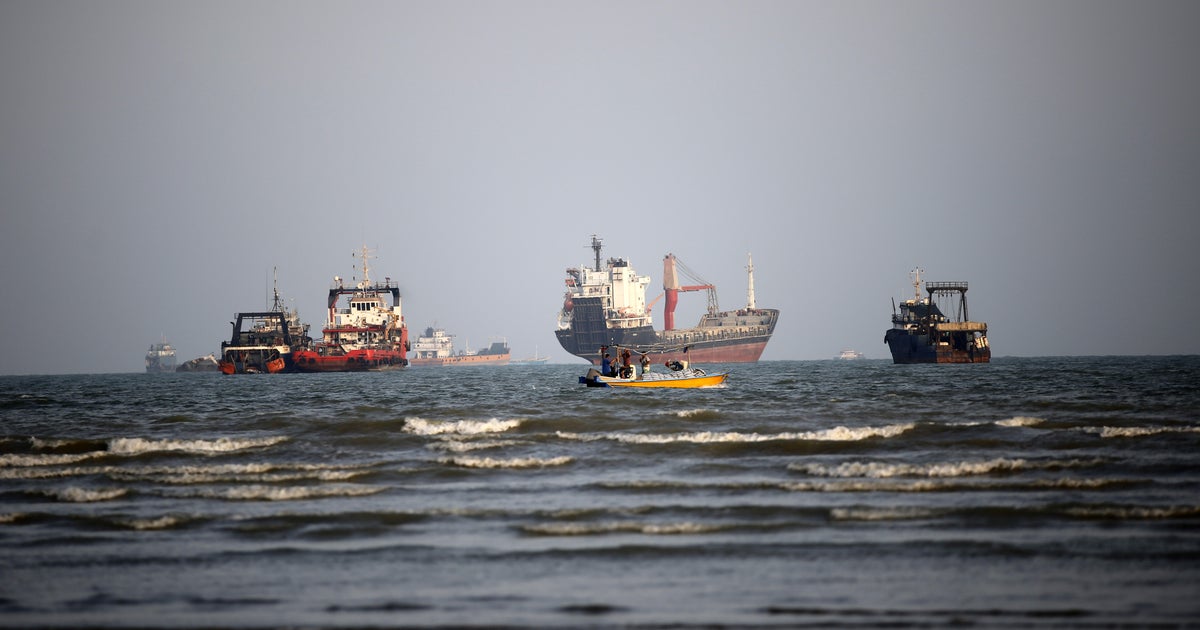
Iran and Oman delay a meeting to discuss control of the Strait of Hormuz as fighting between Iran's Houthi allies and Saudi Arabia raises the stakes for global energy markets.

Saudi Arabia's move may hinder regional diplomacy, affecting Gulf security dynamics and complicating future US-Iran engagement efforts.
CryptoBriefing•Estefano Gomez14 Sept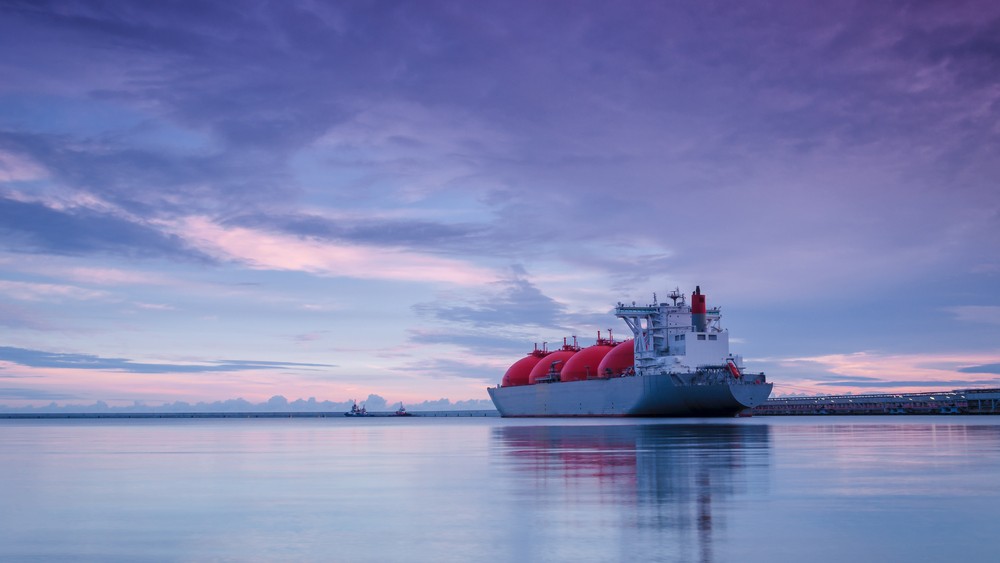
The Middle East needs alternative export routes for liquefied natural gas that bypass the Strait of Hormuz, Oman’s Minister of Energy and Minerals said at Gastech today. LNG exports from the Persian Gulf have collapsed since the start of the war between the United States and Israel and Iran. “Let’s identify alternative export options,” Salim Al-Aufi said at the Gastech conference in Thailand, as quoted by Bloomberg. “Be it north or through Oman or through Yemen. Diversify your options to get the resources out of the…

An Iranian cargo vessel was struck off Qeshm Island in the Strait of Hormuz on Sunday, killing one person and wounding four, Iranian state media said. Tehran blamed a “terrorist enemy” for the attack, which came as threats to shipping intensified around the Hormuz and Bab el-Mandeb straits.

Oman says Hormuz talks with Iran and Gulf states are postponed 'in the interests of consensus'.
Al Jazeera14 Sept
Dania Thafer of the Gulf International Forum weighs in on previously scheduled talks between Iran and Gulf states. Shortly before this interview aired, Oman announced that the talks were postponed.
NPR•Elissa Nadworny13 Sept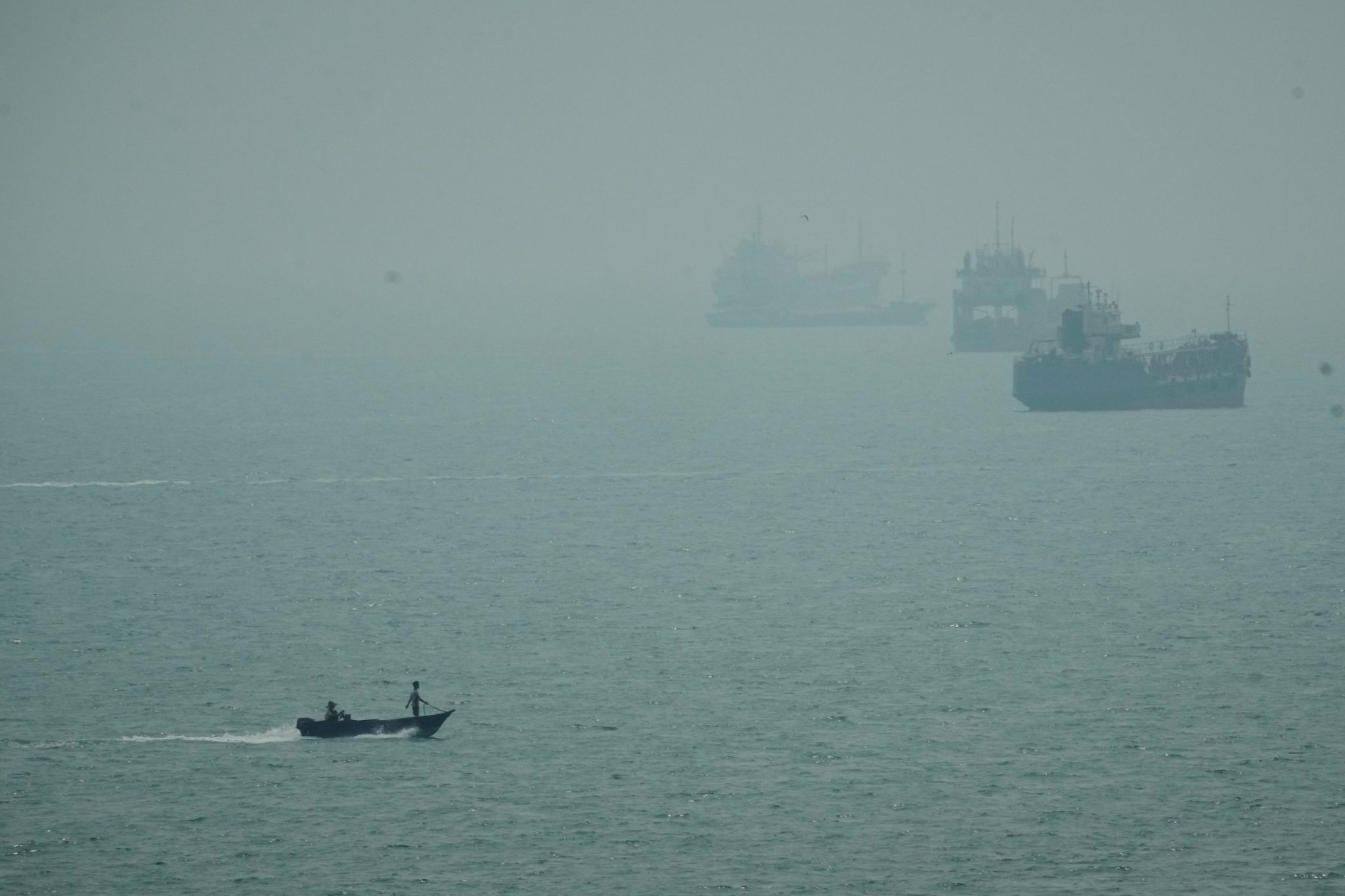
Iran has said foreign ministers from regional countries will meet Monday in Oman to discuss efforts by Iran and Oman to manage shipping on it.