
Houthis capture Red Sea port in blow to Saudis
Rebels overrun historic Yemeni port of Mocha as they advance south towards strategic Bab al-Mandeb Strait
Rebels overrun historic Yemeni port of Mocha as they advance south towards strategic Bab al-Mandeb Strait

Houthis deliver 'significant blow' to the Yemeni government, expand control over Bab al-Mandeb, analysts say.
 Al Jazeera10 Sept
Iran-aligned Houthi militants seized control of Yemen's port city of Mocha on Thursday, military sources said, posing a further threat to global energy supplies. Four Yemeni government military sources said the Houthis had gained further leverage over the Bab el-Mandeb Strait, the southern outlet of the Red Sea and one of the world's most important shipping routes, and were launching attacks on the strategic islands of Hanish.

Yemen’s Houthi rebels are advancing along the Red Sea coast, to gain more leverage over the Bab el-Mandeb Strait.
Al Jazeera10 Sept
Iran and its proxies move closer to full control of two shipping chokepoints as regional conflict widens Explained: why the fighting in Yemen matters globally Houthi forces in Yemen are making a concerted drive to take over the country’s Red Sea coast fully, claiming control of the key port of Mocha in the most serious wave of fighting with the Saudi-backed government in years, bringing the Iran-aligned group closer to full control of a key shipping route. Seizure of the coast and some of the islands in the sea would be a strategic disaster for Saudi Arabia and the US, taking Iran and its proxies closer to full control of two choke points for western shipping on opposite sides of the Arabian peninsula: the Bab al-Mandab at the southern end of the Red Sea and the strait of Hormuz in the Gulf. Continue reading...
 The Guardian•Patrick Wintour Diplomatic editor10 Sept
Etihad Airways, the national airline of the United Arab Emirates, will fly to Saudi Arabia’s Red Sea coast from 4 October 2026. The year-round service to Red Sea International Airport puts a new holiday destination on our map just over three hours from Abu Dhabi.

Saudi Arabia's rerouting of oil exports highlights vulnerabilities in global energy supply chains, emphasizing the need for diversified routes.
 CryptoBriefing•Editorial Team30 Aug
The escalation in Houthi attacks on Saudi tankers heightens geopolitical tensions, potentially disrupting global oil supply and impacting prices.
CryptoBriefing•Editorial Team24 Aug
The incident underscores heightened geopolitical tensions, potentially destabilizing energy transport and impacting global maritime trade security.
CryptoBriefing•Estefano Gomez24 Aug
The incident heightens regional instability, potentially disrupting global shipping routes and escalating geopolitical tensions further.
CryptoBriefing•Estefano Gomez18 Aug
The attack heightens regional instability, potentially disrupting Red Sea shipping routes and influencing broader geopolitical dynamics.
CryptoBriefing•Estefano Gomez17 Aug
The Houthi naval blockade heightens regional tensions, disrupts global oil markets, and challenges international maritime security efforts.
CryptoBriefing•Editorial Team17 Aug
Saudi Arabia's pipeline rerouting highlights vulnerabilities in global oil supply chains, potentially increasing costs and transit times for Asian markets.
CryptoBriefing•Editorial Team12 Aug
The attack underscores escalating regional tensions, potentially affecting Red Sea trade routes and increasing risks of broader conflicts.
CryptoBriefing•Estefano Gomez10 Aug
The escalation threatens regional stability, potentially disrupting global oil markets and prompting international diplomatic and military responses.
CryptoBriefing•Estefano Gomez5 Aug
The Houthi blockade heightens geopolitical tensions, impacting global oil prices and crypto markets, potentially prompting stricter regulations.
CryptoBriefing•Editorial Team5 Aug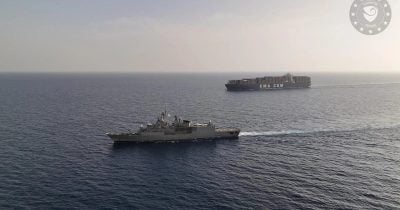
Escalating US-Iran tensions in the Red Sea could disrupt global shipping routes, heightening geopolitical instability and market uncertainty.
CryptoBriefing•Estefano Gomez2 Aug
The Houthi denial reduces perceived maritime risk, stabilizing market expectations and easing concerns over Red Sea shipping disruptions.
CryptoBriefing•Estefano Gomez1 AugPremium leisure airline beOnd has announced a major expansion of its European network with the launch of direct flights from six major European cities to Red Sea International Airport (RSI) in Saudi Arabia, further improving access to one of the world’s fastest-growing luxury tourism destinations. Beginning in December 2026, the airline will introduce three weekly […]
 Aviation24.be•André Orban28 Jul
The Red Sea oil blockade highlights Asia's energy vulnerability, potentially reshaping global oil markets and influencing future pricing dynamics.
CryptoBriefing•Estefano Gomez28 Jul