
More than 100,000 watch 49ers shock Rams in Melbourne
San Francisco 49ers record dominant 27-7 victory over Super Bowl favourites Los Angeles Rams in front of a crowd of more than 100,000 at Melbourne Cricket Ground.
 BBC11 Sept
San Francisco 49ers record dominant 27-7 victory over Super Bowl favourites Los Angeles Rams in front of a crowd of more than 100,000 at Melbourne Cricket Ground.
BBC11 SeptSan Francisco 49ers record dominant 27-7 victory over Super Bowl favourites Los Angeles Rams in front of a crowd of more than 100,000 at Melbourne Cricket Ground.
BBC11 Sept
San Francisco 49ers record dominant 27-7 victory over Super Bowl favourites Los Angeles Rams in front of a crowd of more than 100,000 at Melbourne Cricket Ground.
BBC11 SeptSan Francisco 49ers record dominant 27-7 victory over Super Bowl favourites Los Angeles Rams in front of a crowd of more than 100,000 at Melbourne Cricket Ground.
BBC11 SeptSan Francisco 49ers record dominant 27-7 victory over Super Bowl favourites Los Angeles Rams in front of a crowd of more than 100,000 at Melbourne Cricket Ground.
BBC11 Sept
Brock Purdy threw three touchdown passes as the San Francisco 49ers dominated the super-team Los Angeles Rams 27-7 in the first ever NFL regular-season game in Australia.
 Sky Sports11 Sept
The morning kick-off provided ‘incredible’ vibes for a sell-out crowd clearly different to that which attends AFL and cricket games at the venue At 9am on a Friday, Melbourne’s tongues would usually be tinged with toothpaste. Beer, however, was the flavour craved by this throng of bros brought together by the visit of one of the United States’ great institutions. Dressed in San Francisco 49ers red, LA Rams blue and every other colour of the 32-team NFL rainbow, the 100,021 fans had come to the competition’s first regular season match in Australia. They were there in droves, and 90 minutes from kick-off their thirst had already forced the closure of the pop-up pub adjacent to the MCG. Continue reading...
 The Guardian•Jack Snape at the MCG11 Sept
Ahead of the game between the Los Angeles Rams and the San Francisco 49ers in Melbourne, Australia, Netflix released a Friday Night Lights-inspired pre-game opener. Directed by Peter Berg and narrated by Kyle Chandler, the clip titled “For the Love of Football” taps into the nostalgia of fans of the film and TV series. The […]
 Deadline•Armando Tinoco10 Sept
The first international game of the 2026 NFL season will be live from Melbourne, Australia, where the Los Angeles Rams will host their NFC West rivals, the San Francisco 49ers. As the road to Super Bowl LXI begins, the first Thursday night football game will be thousands of miles away at the Melbourne Cricket Ground. […]
Deadline•Armando Tinoco10 Sept
Median rent for one-bedroom apartment in city tops $4,495 with a national median of $1,900 San Francisco ’s mayor, Daniel Lurie, declared a rent emergency on Thursday, proposing reforms aimed at curbing evictions and preventing rent spikes as the city grapples with soaring apartment prices. The Bay Area city, home to a large number of high-earning tech workers, has long been one of the most expensive housing and rental markets in the country. Continue reading...
The Guardian•Uwa Ede-Osifo10 SeptMedian rent for one-bedroom apartment in city tops $4,495 with a national median of $1,900 San Francisco ’s mayor, Daniel Lurie, declared a rent emergency on Thursday, proposing reforms aimed at curbing evictions and preventing rent spikes as the city grapples with soaring apartment prices. The Bay Area city, home to a large number of high-earning tech workers, has long been one of the most expensive housing and rental markets in the country. Continue reading...
The Guardian•Uwa Ede-Osifo10 SeptSAN FRANCISCO — The Ninth Circuit declined Amazon’s motion to rehear, en banc, its decision to vacate a district court order that enjoined Perplexity from sending its Comet AI Assistant “into password-protected areas of the Amazon store.” The court reports that not one judge “requested a vote on whether to rehear the matter.” In August, the court found that Amazon is not likely to succeed in showing that Perplexity violated the Computer Fraud and Abuse Act or the California Comprehensive Computer Data Access and Fraud Act.
The San Francisco 49ers take on the Los Angeles Rams tonight. One team got there early. The other is arriving just in time for the game.
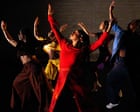
Yard theatre, London Starkly staged panorama of Black female experience rushes through its scenes but is delivered with feeling by terrific cast It has been 50 years since this “choreopoem” by Ntozake Shange premiered on Broadway and brought the emotions and experiences of Black women to the stage. And yet, until now – in this production directed by Diane Page for the Yard theatre’s reopening – it has never received a major London run. Collectively, the poems form a rich panorama: tales of domestic abuse bound up in a threatening marriage proposal; infidelity that brings a devastating HIV diagnosis; and an eight-year-old girl who is inspired by the Haitian revolutionary Toussaint Louverture. In so many ways, they could have been written yesterday. Journeying between US cities including Chicago, St Louis, New York and San Francisco, seven brightly coloured “Ladies” – played by five actors here – cry out their stories, ready to be heard. Shange’s lyrical writing mixes their pain with surges of joy, as each woman takes her turn in the spotlight while the others watch on in witness and support. Continue reading...
The Guardian•Anya Ryan10 Sept
A San Francisco nonprofit has published a detailed road map of the experiments, studies, and infrastructure that it says would be needed to make informed decisions about the use of solar geoengineering, MIT Technology Review can reveal. Scientists have now spent half a century exploring the possibility that we could counteract climate change by releasing…
 MIT Technology Review•James Temple10 Sept
The Amazon-owned driverless car company is a distant second to Waymo. Its pitch to riders? Wine pop-ups, festival sponsorships and a car built to be filmed.
 The New York Times•Emmy Martin9 Sept
The City Attorney’s Office has asked Meta to explain how the harmful ads repeatedly ran on Facebook and Instagram. The company claims the ads are not under the city’s jurisdiction.
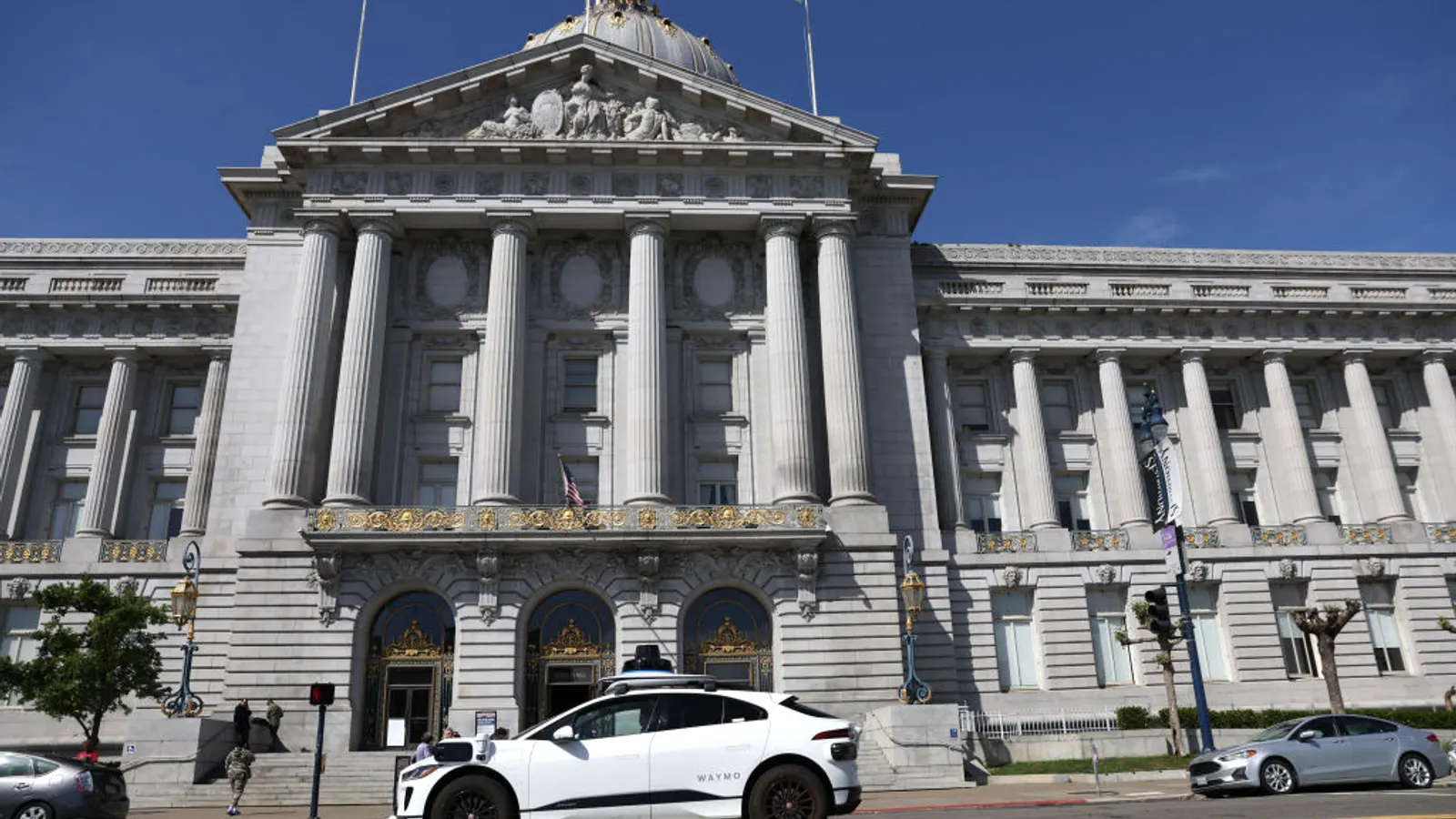
The City and County of San Francisco allegedly required attendance of a seminar series featuring “derogatory and vitriolic statements” about White people and White women.
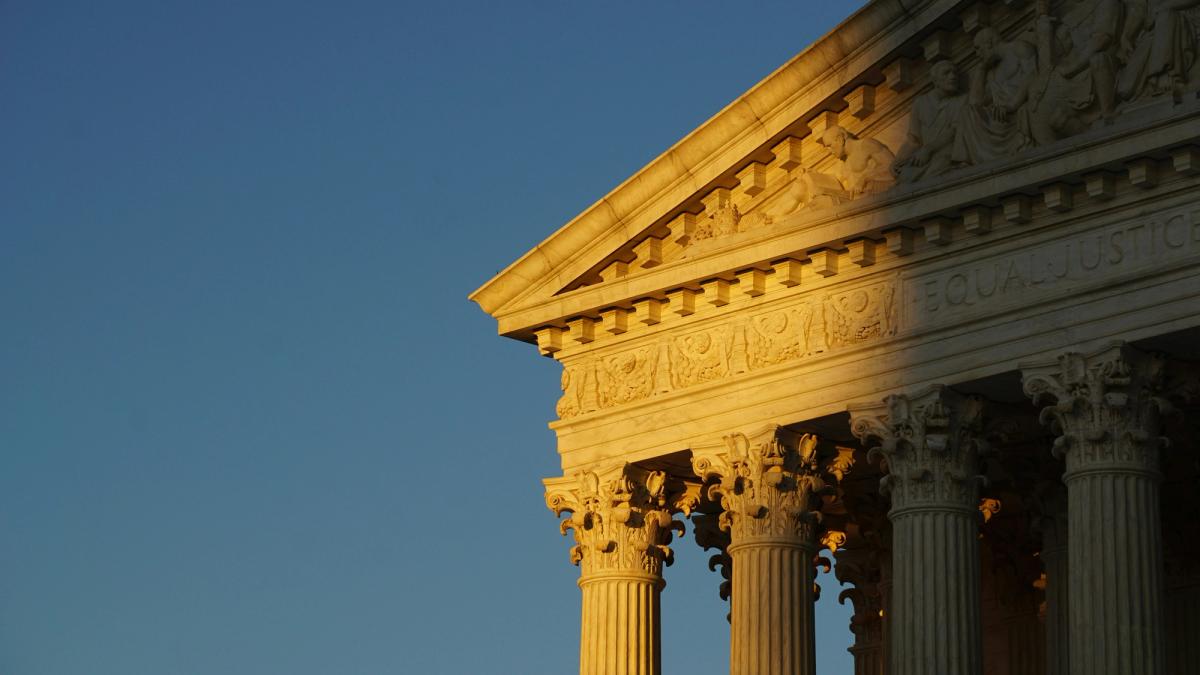
As SCOTUSblog readers are well aware, on June 30, a majority of justices struck down President Donald Trump’s executive order seeking to end birthright citizenship. Much of this decision relied on the 1898 case of United States v. Wong Kim Ark , which (in the court’s words) held that “the Citizenship Clause” of the 14th Amendment “granted citizenship to nearly all children born in the United States.” This landmark case on birthright citizenship is not just a lesson about the 14th Amendment’s reach, however, but how old battles may reemerge long after they’ve seemingly been won. I. The cook In August 1895, Wong Kim Ark sailed into San Francisco aboard the S.S. Coptic. It was the city where he had been born and a port through which he had already passed once before without incident. Still, he apparently had experienced some anxiety about leaving. Before he left to visit family in China the previous year in 1894, he had secured a notarized departure statement , signed by three witnesses who attested to his identity and his right to return, having been “born in the City and County of San Francisco, State of California.” But this time when he returned, the collector of customs refused to let him land. The refusal may have been no bureaucratic accident. Federal officials had been searching for a vehicle to challenge birthright citizenship. A San Francisco lawyer named George Collins had publicly attacked an earlier decision recognizing the citizenship of a Chinese American born in the United States and urged the Justice Department to take the issue to the Supreme Court under a competing theory that citizenship followed blood, not birthplace. United States Attorney Henry Foote then went looking for a suitable case. He found one in Wong Kim Ark. Wong, a 24-year-old cook, may have been particularly appealing given his limited resources and the fact that his wife and children lived in China, meaning he would not be separated from them if he wasn’t allowed to live in the United States. Wong had been born above his parents’ business at 751 Sacramento Street in San Francisco’s Chinatown. The Supreme Court record gives the year as 1873, although later historical research places his birth in 1870 – a reminder that the documentary records available to Chinese immigrants were far less tidy than the government’s exacting demands upon them. His parents had come to California from China and established a home and business in the city. They ran a grocery and butcher shop and lived above it, but Wong did not follow them into the family business. Instead, he worked as a dishwasher and cook, living nearby in the few crowded blocks of Chinatown. At the time, federal law made Chinese immigrants ineligible for naturalization. Wong’s parents therefore could not become citizens no matter how long they lived, worked, or paid taxes in the United States. The Chinese Exclusion Act of 1882 further barred Chinese laborers from entering the country, making it risky for Chinese Americans to depart without sufficient paperwork. The state of the law had divided Wong’s family across the Pacific. His parents eventually returned to China permanently and Wong married there while continuing to work in the United States and sending money home. His 1894 trip allowed him to see his wife for the first time in four years and meet his eldest son; his second son was conceived during the visit . Then the United States told him he could not come home. For months, Wong was held aboard steamships in San Francisco Bay at the direction of customs officials while his lawyers sought a writ of habeas corpus. In January 1896, a federal judge ruled that Wong was a citizen and ordered his release. The government appealed, and Wong remained free after posting a $250 bond – roughly $10,000 in today’s money. The Chinese Consolidated Benevolent Association, better known as the Chinese Six Companies, helped finance and organize his legal defense. The political stakes were larger than immigration, since citizenship carried the vote. The person at the center of this constitutional struggle, meanwhile, was still simply trying to get off a ship and go back to work. II. “Subject to the jurisdiction thereof” The case turned on one sentence adopted into our Constitution by amendment after the Civil War: “All persons born or naturalized in the United States, and subject to the jurisdiction thereof, are citizens of the United States and of the State wherein they reside.” The citizenship clause was written against the backdrop of Dred Scott v. Sandford , which had declared that Black Americans could not be citizens of the United States. The context of the 14th Amendment was bound up with slavery and Reconstruction, and its immediate purpose was to reverse Dred Scott . Its language, however, was more general. The court had already recognized in discussing the 13th Amendment (abolishing slavery) and other parts of the 14th Amendment that a constitutional rule may arise from a particular evil without being limited to that evil and will reach all cases that fall within its terms, even if the authors did not necessarily anticipate them. As the court had made clear, “[w]hile the thirteenth article of amendment was intended primarily to abolish African slavery,” it would equally “forbid Mexican peonage or the Chinese coolie trade when they amount to slavery.” Wong argued that the 14th Amendment adopted the longstanding common law rule of jus soli : subject to narrow exceptions, a person born within the sovereign’s territory is a citizen at birth. The government, for its part, focused on the qualifying words “subject to the jurisdiction thereof.” Because Wong’s parents were not citizens and remained subjects of the emperor of China, it argued, they were subject to a foreign power. Their American-born son therefore fell outside the citizenship clause. Justice Horace Gray, writing for a 6-2 Court (Justice Joseph McKenna did not participate because he joined the court after argument), sided with Wong. Because the Constitution did not define the key terms, he looked to “the common law, the principles and history of which were familiarly known to the framers of the Constitution.” Under the English common law rule, nearly everyone born within the sovereign’s territory and protection was a natural-born subject. The traditional exclusions were narrow and included children of foreign diplomats and children born to enemy forces occupying the territory. The court also recognized the then-existing exclusion of members of sovereign Indian tribes, a category Congress later eliminated by statute. III. The Great Dissenter’s blind spot Chief Justice Melville Fuller dissented, joined by Justice John Marshall Harlan. Just two years earlier, Harlan, who came to be known as the court’s “great dissenter,” had been the lone dissenting voice in Plessy v. Ferguson , where he famously stated that the Constitution is “color-blind” and warned that state-imposed segregation would prove as pernicious as Dred Scott . Frederick Douglass reportedly regarded Harlan as a moral hero. Yet Harlan’s constitutional vision had sharp boundaries. Within the same opinion celebrated for its ringing promise of legal equality, Harlan wrote that the Chinese were “a race so different from our own” that they were barred from naturalization and largely excluded from the country. He invoked the fact that a Chinese passenger could ride in a railcar with white passengers while a Black citizen could not – not to defend the Chinese passenger’s equality, but to expose what he saw as the absurdity of Louisiana’s racial classifications. Harlan did not speak in Wong Kim Ark , however, simply joining Fuller’s dissent. Fuller accused the majority of importing the feudal English law of subjectship into an American republic. Common law might properly illuminate common-law rights, Fuller wrote, but national citizenship implicated international relations and political status. The American Revolution had rejected perpetual allegiance to a king. It therefore made little sense, the dissent argued, to assume that the new nation had retained a rule under which birth created an indissoluble political bond with a monarch. The dissent also pointed to American naturalization law, which required new citizens to renounce their former sovereigns, and to statutes granting citizenship to children born abroad to American fathers. Those rules, Fuller thought, reflected a system in which citizenship followed the parent rather than the soil and required full allegiance. He also treated the Civil Rights Act’s phrase “not subject to any foreign power,” which was a predecessor of the citizenship clause, as interchangeable with the 14th Amendment’s “subject to the jurisdiction thereof.” The dissent ended by echoing the government’s view that Chinese laborers were a distinct, unassimilable population whose presence might threaten “good order” and the public interest. They concluded, “It is not to be admitted that the children of persons so situated become citizens by the accident of birth.” For Wong, a Supreme Court opinion bearing his name was not sufficient to secure safety. In October 1901, three and a half years after the court ruled, Wong attempted to cross into America via El Paso. He was initially rejected, and then arrested under the Chinese Exclusion Act. Wong was forced to post another bond – this time $300. Four months later, federal officials acknowledged that he was the same Wong Kim Ark whom the Supreme Court had declared a citizen and dismissed the case. Some of his sons were later admitted into the country, though one individual later confessed to falsely claiming to be his son to gain entry. In 1931 Wong Kim Ark left for China again, filed papers stating that he intended to return, and apparently never did. IV. The modern case For more than a century, Wong Kim Ark was widely understood to establish a nearly universal rule of birthright citizenship. But in January 2025, President Donald Trump issued an executive order directing federal agencies to deny citizenship to children born in the United States when neither parent was a citizen or lawful permanent resident and the mother was either unlawfully present or lawfully present only temporarily. The administration tried to distinguish Wong Kim Ark on the basis that his parents were lawful and permanently domiciled in the United States. Once again, the government was ostensibly prodding the Supreme Court into taking up the issue of birthright citizenship. The first trip to the court, in Trump v. CASA , concerned the power of lower courts to issue universal injunctions. The court did not decide whether the executive order was constitutional. That procedural ruling produced a second wave of litigation, including class actions designed to protect all affected children without relying on universal relief. The merits arrived the following term in Trump v. Barbara . On June 30, 2026, the court held that children born in the United States to parents who are unlawfully or temporarily present are indeed citizens under the 14th Amendment. Chief Justice John Roberts wrote for five justices – Sonia Sotomayor, Elena Kagan, Amy Coney Barrett, and Ketanji Brown Jackson. Justice Brett Kavanaugh supplied a sixth vote, but only on statutory, not constitutional, grounds. Roberts’ opinion returned to the same kind of evidence Gray had used in 1898, including text, common law, Reconstruction-era debates, and longstanding practice. It invoked Wong Kim Ark and concluded that, “Citizenship, then and now, was the right to have rights—to freely participate in our political community. The Framers of the Fourteenth Amendment extended that promise to ‘every free-born person in this land.’ We keep that promise today.” Kavanaugh agreed that the executive order could not stand, but he relied on the Immigration and Nationality Act. Federal law provides citizenship to a person “born in the United States, and subject to the jurisdiction thereof.” When Congress reenacted that language after Wong Kim Ark , Kavanaugh reasoned, it adopted the court’s construction of it, including the decision’s closed set of exceptions. On his reading, however, Congress could amend the statute and add exceptions for the children of people unlawfully or temporarily present. Justices Clarence Thomas, Samuel Alito, and Neil Gorsuch dissented. Thomas argued that Wong Kim Ark repeatedly emphasized the permanent domicile of Wong’s parents and did not resolve the status of children born to temporary visitors or people unlawfully present. He would have treated domicile as central, while reserving some questions about which undocumented parents could acquire it. Alito likewise emphasized political allegiance and read the Civil Rights Act of 1866 as evidence that the citizenship clause did not reach everyone born here who remained subject to a foreign power. Gorsuch wrote separately to emphasize that it was possible that people here illegally may establish domicile and their children would then potentially be birthright citizens. But he left that question for another day. V. The battle continues As it turns out, the Supreme Court’s recent decision did not end the debate any more completely than Wong’s victory did. In August 2026, slightly over a month after the Supreme Court’s decision in Barbara , the administration issued orders that targeted “ birth tourism ,” and that expanded both the categories of foreign officials whose children would be excluded from citizenship and denied birthright citizenship for persons born to enemy aliens. The order also eliminated birthright citizenship for several other categories of persons, including those whose parents engaged in “commercial transactions” to secure such citizenship. On Sept. 2, a federal judge blocked portions of that policy, relying on Barbara , saying that the court had already decided some of the categories excluded by the EO were explicitly deemed citizens by the Supreme Court. The administration, for its part, argues that Barbara merely recognized that certain categories were not automatically excluded, but said nothing about the president’s ability to shape those categories. More than a century after Wong Kim Ark , its rule has endured, and so has the government’s determination to challenge it.
 SCOTUSblog•Anastasia Boden8 Sept
As reported by The New York Times, a woman, going by the name of Cathy, had been traveling in United's Polaris business class from San Francisco to Beijing Capital. Image Credit: xprabadi | Shutterstock | Simple Flying