Sonypage 5

Organization · 123 articles
Share

Coverage, page 5

page 5 of 7

Lucas Debargue: Gershwin Variations album review – freshness and flair

(Sony) Alongside supple and distinctive accounts of Rhapsody in Blue and the Piano Concerto and Preludes, the French pianist showcases his jazz chops in reinterpretations of Gershwin’s timeless songs Ever since Lucas Debargue took fourth prize at the 2015 international Tchaikovsky competition, he’s refused to be pigeonholed. His distinctive journey brings him now to George Gershwin, complementing the piano concerto and preludes with beguiling original explorations of the composer’s songs in the form of a dozen études. His supple account of Rhapsody in Blue is based on Gershwin’s solo piano arrangement, to which he adds his own partly improvised cadenzas. Like everything here, it comes up fresh as a daisy. The Piano Concerto in F brings Debargue’s jazz credentials to the fore (he cut his teeth on the club circuit). The Orchestre de Paris under Elim Chan provides an admirably clear and concise accompaniment. The edge-of-your-seat stakes are reminiscent of André Previn. Continue reading...

The GuardianThe GuardianClive Paget11 Sept

Streaming from the cloud was meant to change games forever – what happened?

Once hailed as the future, even the likes of Google, Sony and Microsoft have struggled to make streaming games fun, fast or affordable • Don’t get Pushing Buttons delivered to your inbox? Sign up here In August 2009, at the very first Gamescom expo, I sat in a small meeting room in Germany and played Mario Kart and World of Warcraft on a laptop, via technology that was then completely new: cloud gaming. It was a demonstration for a yet-to-be-launched service called Gaikai that promised to let you play any game in a browser window, without a console. (Here is an ancient video of that demonstration, featuring a very young Keza.) With a single click I could launch into any game, hosted on servers hundreds of miles away. It really did look like the future. Since then, plenty of companies have tried to be the first to truly crack game streaming, vying to be the Netflix of games. Sony ended up buying Gaikai for $380m (£242m) in 2012; its technology now powers the streamable classic games library on PlayStation, and the PS5’s advanced game streaming. OnLive, Gaikai’s first competitor, launched in 2011 but shut down after less than a year, leaving Sony to acquire all its patents. Google’s Stadia cloud gaming service also imploded, launching in 2019 and shutting down three years later. Continue reading...

The GuardianThe GuardianKeza MacDonald9 Sept

Streaming from the cloud was meant to change games forever – what happened?

Once hailed as the future, even the likes of Google, Sony and Microsoft have struggled to make streaming games fun, fast or affordable • Don’t get Pushing Buttons delivered to your inbox? Sign up here In August 2009, at the very first Gamescom expo, I sat in a small meeting room in Germany and played Mario Kart and World of Warcraft on a laptop, via technology that was then completely new: cloud gaming. It was a demonstration for a yet-to-be-launched service called Gaikai that promised to let you play any game in a browser window, without a console. (Here is an ancient video of that demonstration, featuring a very young Keza.) With a single click I could launch into any game, hosted on servers hundreds of miles away. It really did look like the future. Since then, plenty of companies have tried to be the first to truly crack game streaming, vying to be the Netflix of games. Sony ended up buying Gaikai for $380m (£242m) in 2012; its technology now powers the streamable classic games library on PlayStation, and the PS5’s advanced game streaming. OnLive, Gaikai’s first competitor, launched in 2011 but shut down after less than a year, leaving Sony to acquire all its patents. Google’s Stadia cloud gaming service also imploded, launching in 2019 and shutting down three years later. Continue reading...

The GuardianThe GuardianKeza MacDonald9 Sept

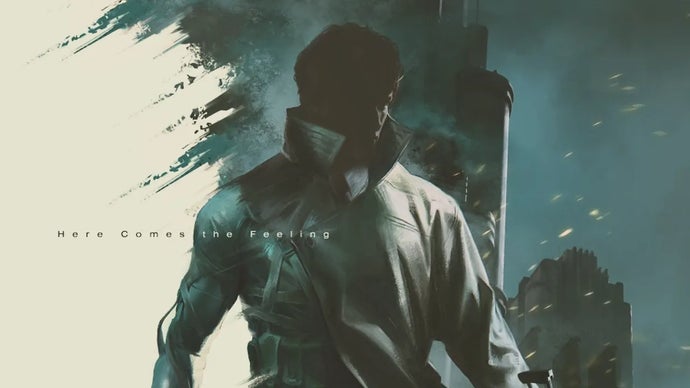
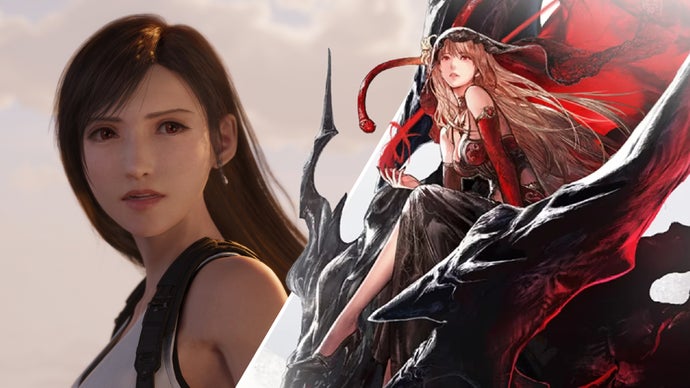
Final Fantasy 7 Revelation finally gets a 2027 release date, as Final Fantasy Resonance gets a surprise demo

We already knew that Final Fantasy 7 Revelation was going to launch sometime in 'spring 2027 ', but today director Naoki Hamaguchi took to Sony's State of Play livestream to inform us all that the game has a locked-in release date: 8th April, 2027. It'll launch worldwide, and on all platforms - that's PS5, Nintendo Switch 2 , Xbox Series X/S, and PC - at the same time (the first game in the series to do so). Read more

EurogamerEurogamerDom Peppiatt3 Sept