Australia: 25 Years of Abusive Offshore Detention
Click to expand Image
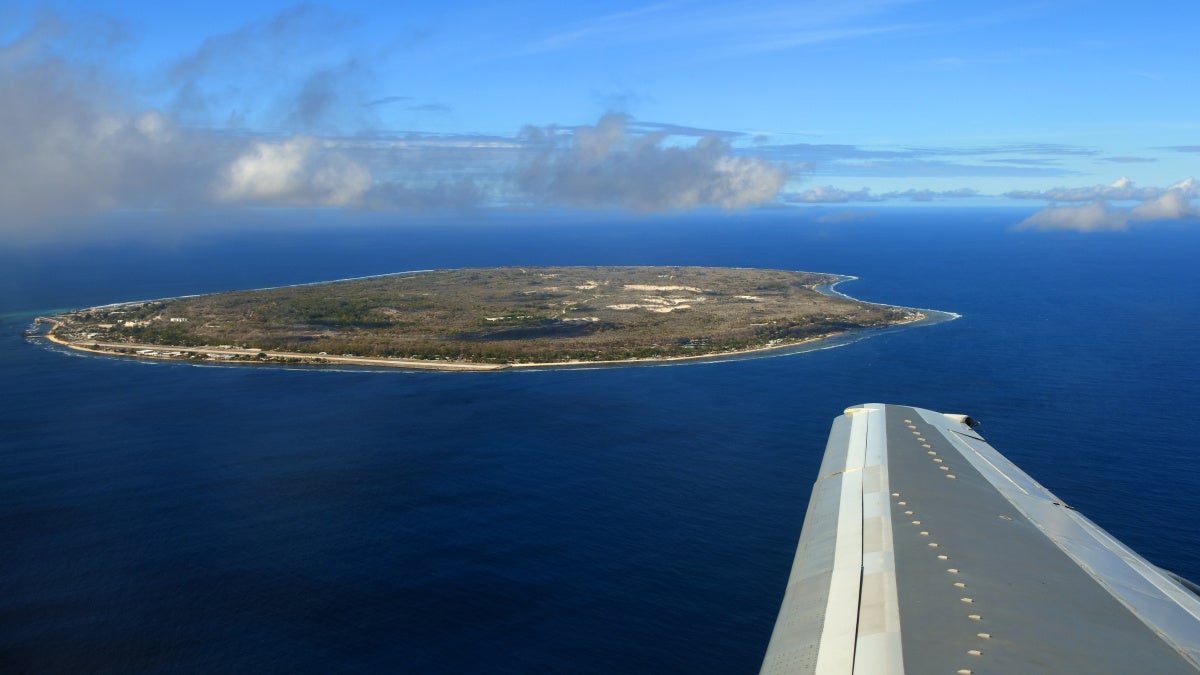
Naoero, formerly Nauru, island, March 2023.
© 2023 mtcurado/Getty Images (Sydney) – The Australian government has caused thousands of people seeking asylum to suffer grave abuses under its offshore detention system, which began in September 2001, Human Rights Watch said today. Over the past 25 years, Australia has forcibly transferred more than 5,000 asylum seekers to Naoero (formerly called Nauru) and Manus Island, Papua New Guinea (PNG). Those transferred have experienced inhumane conditions and serious harm to their mental and physical health. The United Nations refugee agency, other countries, and human rights groups including Human Rights Watch, have repeatedly pressed Australia to end offshore processing. “Australia’s offshore detention policy has caused profound harm to men, women, and children seeking refuge since its introduction 25 years ago,” said Annabel Hennessy, Australia researcher at Human Rights Watch. “Rather than abiding by its international legal obligations toward asylum seekers, Australia has hardened its abusive policies, contributing to a global erosion of refugee law.” Australia's offshore system started on September 17, 2001, when an Australian naval ship forcibly transferred the first group of asylum seekers to the Pacific island nation of Naoero. The then-Coalition government had signed an initial agreement with Naoero on September 10 and deployed a military team three days later to build the detention facility. From 2001 to 2008, Australia transferred 1,637 asylum seekers to Naoero and Manus Island. The policy was suspended by the then-Labor government in 2008, only to be reintroduced in 2012. In this second phase, from 2012 until 2026, Australia transferred more than 4,000 asylum seekers to Naoero and PNG. While Australia no longer sends people to Manus Island following a 2016 PNG Supreme Court ruling, it continues to forcibly transfer people seeking asylum to Naoero, with an estimated 110 people currently there. UN bodies, medical professionals, and refugee advocates have long criticized Australia’s offshore detention system for the harm it causes. In 2002, Human Rights Watch found that Australian authorities forcibly transferred people offshore and held them in severe conditions on Naoero and PNG, denying them access to legal counsel, and severely restricting their contact with the outside world. In 2016, Human Rights Watch found similarly harsh conditions for asylum seekers on Naoero, including a poor standard of medical care and frequent unpunished assaults by local residents. Human Rights Watch concluded that the Australian government had violated asylum seekers’ rights to be free from arbitrary detention, torture and other ill-treatment, among other fundamental protections. The Australian government has released only limited information about its offshore processing system. The government has frequently contended that responsibility for the treatment of the people transferred lies with Naoero, where access for media is tightly controlled. In 2014, Naoero introduced an A$8,000 (US$5,000) visa application fee for journalists seeking to access the island, which remains in force. At least 14 people have died in Australia’s offshore detention system since 2012. About half of these deaths were from suicide or suspected suicide. The harm to mental health has not been limited to the time people spend in offshore detention. A 2024 study found high rates of post-traumatic stress disorder, depression, and suicidal thoughts among those who had been previously held in offshore detention. Some of Australia’s policies have become harsher over the years. In 2013, then-Prime Minister Kevin Rudd announced that people seeking asylum who arrived by boat would “have no chance of being settled in Australia.” While some people were still physically moved to Australia from Naoero and PNG through medical evacuations after 2013, the policy has prevented them from obtaining permanent residency, leaving about 700 people in legal limbo on temporary visas that must be renewed every six months. In 2024, Australia amended its Migration Act to allow for “third country reception arrangements” as a way to remove refugees and others who cannot be returned to their home countries. Naoero agreed to such an arrangement in 2025 and—for an estimated A$2.5 billion (US$1.8 billion)—began receiving people rejected and expelled by Australia. Previously, Australia had claimed that those sent to Naoero were there only temporarily for offshore processing. Now, with no processing of claims envisioned for those deported under the new agreement, Naoero has been effectively transformed into Australia’s offshore endpoint. It is a low-income country, smaller than the size of Melbourne airport, that is not equipped to integrate refugees. While agreeing to take people whom Australia refuses to integrate, Naoero has also been planning to relocate 90 percent of its own population to higher grounds because of rising sea levels. Offshore processing is also immensely costly. Australia spent an estimated A$9 million (US$6.5 million) for each person held on Naoero in 2025. “After 25 years and billions spent, Australia’s offshore detention system has caused untold suffering to thousands of people and undermined Australia’s global reputation on human rights,” Hennessy said. “Australia should shut down offshore detention, transfer all those remaining offshore to Australia, and provide pathways to permanent residence for those still living on temporary visas.” Selected accounts: Betelhem Tibebu, an Ethiopian refugee, spent years on Naoero after Australia forcibly transferred her there in 2013. She is currently living in Australia, but remains on a temporary visa: Mentally, I lost everything, I lost my golden age, I lost my health, lost my time. Still now it’s damaging me. I never sleep peacefully, because every six months my visa runs out. I still get panic[ked]. Once you go to offshore detention, you are not a human being anymore, the way they treat you.... Every time, when you call [Australian immigration authorities] or they talk to you, [you have to say] my number is boat 16. The only thing I’ve got from my family is my name, but they call you the boat number. Sarah W. (pseudonym), a Somali refugee, was also among those Australia forcibly transferred to Naoero in 2013. She was brought to Australia in 2016 for urgent medical care. She is still living in Australia, but remains on a temporary visa: I arrived in 2013. I was 16 years old, and [Australian immigration authorities] rejected my age … they told me, “No, you are not 16, you are 18.” And then they send me [to] Nauru. Nauru was hell … it's just prison. We lived in a tent. The door is open, and anybody can come in. Security, they come in … I was thinking the people may harm me. Every morning [officials] tell us ... “Australia, they will never accept you. Go back where you come from,” I don't have anywhere to go back [to] because I don't feel safe.
 Human Rights Watch•Human Rights Watch10 Sept
 The Guardian•Caitlin Cassidy11 Sept