Washingtonpage 8

Place · 630 articles
Share

Coverage, page 8

page 8 of 32

Venezuela: Reform Needed for Rights Progress

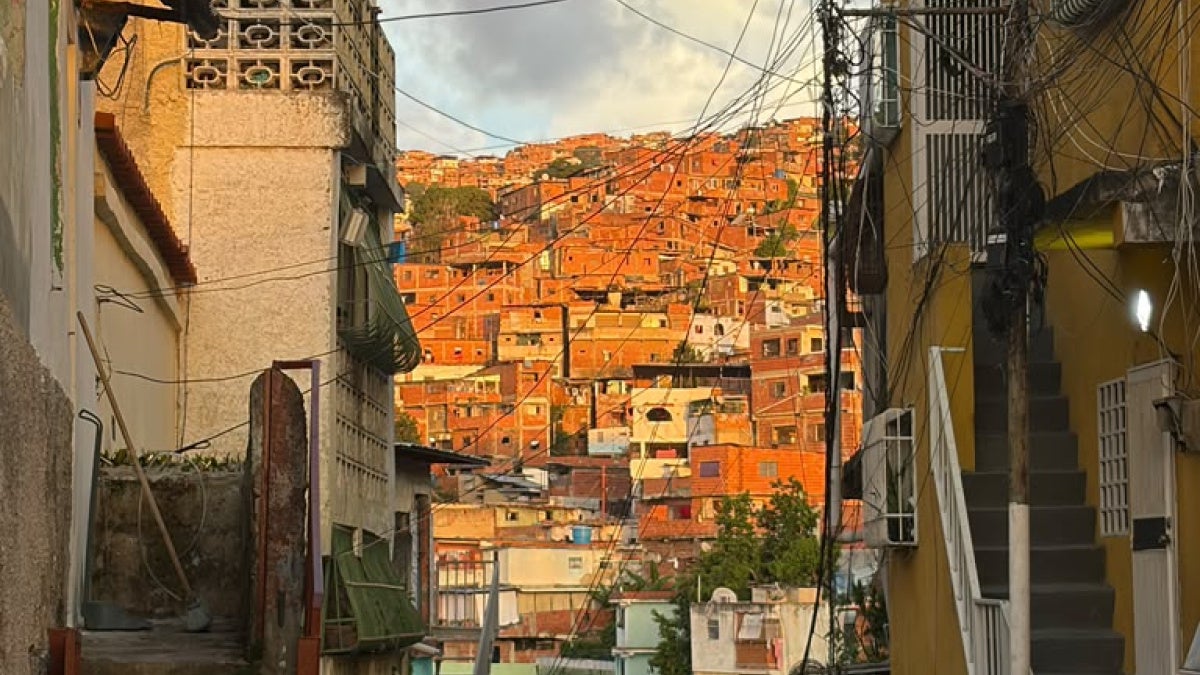
Click to expand Image Petare, a low-income neighborhood on the outskirts of Caracas, Venezuela, September 17, 2026. © 2026 Human Rights Watch (Washington, DC) – Venezuela needs to take urgent measures and carry out institutional reforms to protect people’s basic rights, Human Rights Watch said today, following its first official visit to the country since 2008. Human Rights Watch visited Caracas this week and met with interim President Delcy Rodríguez, other government officials, human rights groups, journalists, relatives of political prisoners, foreign diplomats, and others. Staff also visited Petare, a low-income neighborhood on the outskirts of Caracas. During its previous high-level visit, in 2008, Venezuelan authorities detained Human Rights Watch staff after they released a report and expelled them from the country. “Interim President Delcy Rodríguez has overseen a pause to the most overt forms of repression in Venezuela,” said Federico Borello, deputy executive director at Human Rights Watch. “But in this fragile political moment, these gains will only become sustainable with robust institutional reforms and the release of all political prisoners.” Rodríguez assumed office following the United States’ capture of then-President Nicolás Maduro on January 3, 2026. Since then, Venezuelan authorities have released hundreds of political prisoners, passed an amnesty law, unblocked some media websites, and announced measures to reform the judiciary. Human rights activists, opposition leaders, and journalists told Human Rights Watch that they are much freer to carry out their work. Some said they have left their hiding places after more than a year or reported for the first time on the arbitrary arrest of their loved ones. On September 18, Venezuelan authorities closed a criminal case against Carlos Correa, executive director of the free-speech organization Espacio Público. However, at least 344 political prisoners remain behind bars, according to Foro Penal, a Venezuelan human rights group, and many others remain under house arrest or are experiencing other restrictions. These include people who were detained for exercising their freedom of expression and people who have been tortured or have suffered gross due process violations. Others who were arbitrarily detained have experienced extortion from judicial officials, prosecutors, and others. Venezuelan authorities should promptly and unconditionally release all people arbitrarily detained, Human Rights Watch said. Authorities have continued, in a small number of cases, to detain critics for short periods. On September 18, Venezuelan authorities detained Javier Oropeza, a former opposition mayor who recently returned to the country. He was released a few hours later. Relatives of political prisoners said that some detainees are still being mistreated behind bars, in particular in the Rodeo I prison in Caracas. Human Rights Watch has documented torture and inhumane conditions of detention in Rodeo I. The closure of Rodeo I would send a powerful signal that the authorities intend to break with the government’s brutal legacy of abusive detention practices. Venezuelan authorities should ensure humane detention conditions for all detainees, Human Rights Watch said. They should also allow international experts, such as the International Committee of the Red Cross (ICRC) and the United Nations Office of the High Commissioner for Human Rights (OHCHR), unfettered access to all prisons and other places of detention. Venezuelan authorities should also amend or repeal laws that have enabled human rights violations, including anti-terrorism and anti-hatred legislation and rules restricting the work of human rights groups and media outlets. As part of a dialogue process with a part of the political opposition, Venezuelan authorities have announced a process to reform the Supreme Tribunal of Justice, the country’s highest court, and the Electoral Council. The destruction of judicial independence in Venezuela in the 2000s enabled widespread human rights violations and establishing an independent and impartial supreme court would be a crucial first step to a much-needed overhaul to the judicial system, Human Rights Watch said. Over the last decade, Venezuelan authorities have also barred opposition candidates from running for office. Broader patterns of repression have also made it impossible for Venezuelans to exercise their democratic rights freely in past elections. “Venezuelans deserve to participate in timely, free, and fair elections,” Borello said. “That requires urgently allowing political opponents to take part in the political process and run for office.” Venezuelan authorities should also overhaul the country’s security forces to curb their continuation of human rights violations, Human Rights Watch said. These measures should include vetting officials responsible for grave human rights violations, ensuring that intelligence agencies are not tasked with criminal investigations, dismantling clandestine detention centers, and establishing clear rules for the use of force. On September 16, the UN Independent International Fact-Finding Mission on the Bolivarian Republic of Venezuela (FFM) released a report warning that the state machinery behind repression remains firmly intact. The UN Human Rights Council should renew the mandate of the FFM for two years, Human Rights Watch said. The humanitarian situation in Venezuela remains dire, exacerbated by the earthquakes in June that killed at least 6,300 people. According to HumVenezuela, a group of organizations monitoring the humanitarian crises in the country, over 18 million people, out of a population of 28.5 million, were already unable to meet their basic needs prior to the earthquake. People in many parts of the country experience daily hours-long electricity blackouts and days-long water shortages, and many said they are increasingly impatient. Human Rights Watch has long expressed concern about the role of US economic sanctions in further deepening the humanitarian crisis in Venezuela. Since Maduro’s ouster, US engagement has focused largely on advancing the Trump administration’s economic goals, at the expense of a robust focus on reforms. “The United States should use its leverage to play a leading role in pushing for meaningful human rights change in Venezuela,” Borello said.

Human Rights WatchHuman Rights WatchHuman Rights Watch18 Sept

AI safety: No, China will not hit the brakes

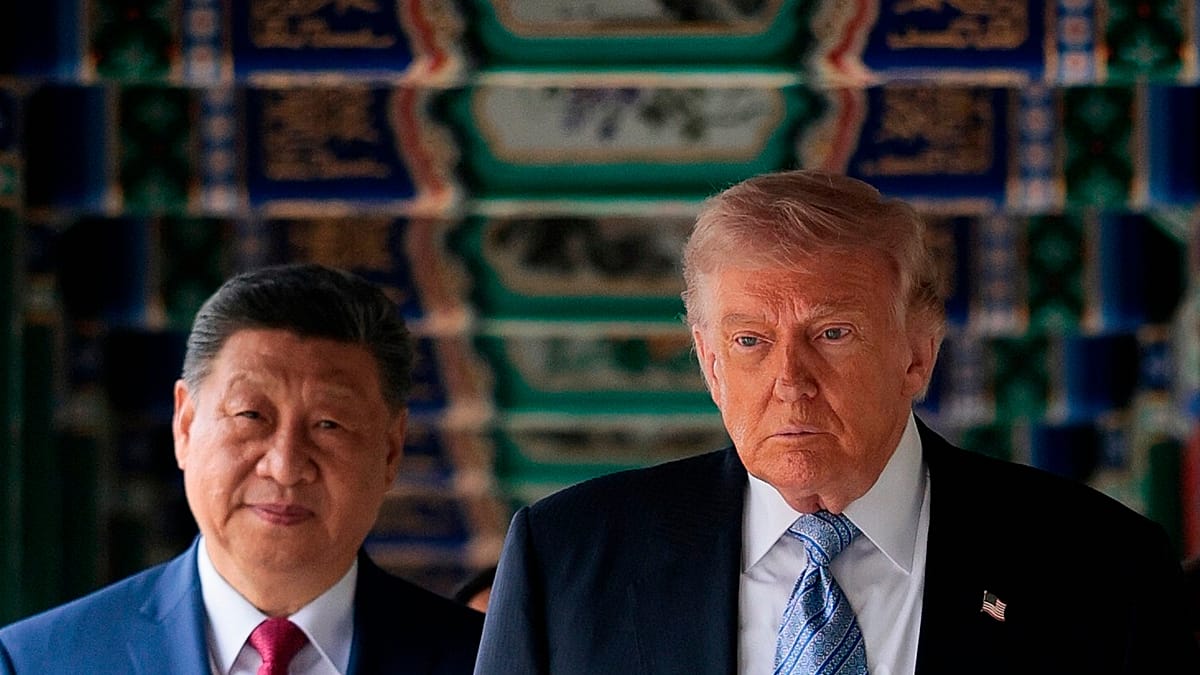
A spate of warnings in recent days about the dangers of AI have sparked mixed reactions: from Donald Trump dismissing the fears as a hoax, to Beijing criticising calls for the US to block its advancement as fearmongering. As President Xi Jinping heads to Washington for talks, FRANCE 24's technology correspondent Peter O'Brien explains why the two superpowers are unlikely to forge binding agreements on AI regulation.

France 24France 24Yuka ROYER18 Sept

Former Institute of Peace board members ask court to stop addition of Trump name to headquarters

Former board members for the U.S. Institute of Peace asked a federal court on Thursday to block the Trump administration from etching President Trump’s name into the facade of the institute’s headquarters in Washington, D.C. In an emergency petition filed in the U.S. Court of Appeals for the D.C. Circuit, lawyers for the former institute…

The HillThe HillSarah Davis18 Sept
  • neutral toward Donald Trump · 96%
S

The fundamental confusions of federal Indian law

I wanted to begin this series for SCOTUSblog by discussing some fundamentals (and fundamental confusions) of federal Indian law. Despite the common understanding that federal Indian law is difficult and confounding , I teach my students that its foundational principles are actually fairly simple. Federal law is supreme in Indian affairs, preempting state law ( Washington v. Cougar Den ). Tribal nations (or “Indian tribes,” to use the parlance of the Constitution) are sovereign governments ( United States v. Lara ). The judiciary is to interpret ambiguous treaty and statutory provisions to the benefit of tribal interests ( Herrera v. Wyoming ). Congressional enactments rationally related to the fulfillment of that responsibility are constitutional ( Morton v. Mancari ). Despite this relative simplicity, Supreme Court justices regularly complain that federal Indian law precedents are difficult and even incompatible with the Constitution. Justice Clarence Thomas, known for regularly assailing federal Indian law precedents, decried in 2004 “ the confusion reflected in our precedent ” in a case involving the power of Congress to restore or reaffirm tribal nations’ inherent power to prosecute nonmember Indians. Justices Samuel Alito and Brett Kavanaugh repeatedly asserted during one oral argument that an equal protection challenge to the Indian Child Welfare Act (a 1978 federal law that seeks to keep Indian children with Indian families) raised “ difficult ” questions. (Kavanaugh even wrote separately to encourage a future vehicle to challenge aspects of the act .) They were joined by the federal government’s counsel, there to defend the statute, who nevertheless opined during a series of hypothetical scenarios from the court that these questions were “difficult to defend.” In fact, in the entire history of federal Indian affairs enactments, only two federal statutes have been struck down by the Supreme Court. One case, 1911’s Muskrat v. United States , taught in federal courts classes nationally, involved a strange statutory provision that allowed Cherokee tribal citizens to challenge an act of Congress only potentially impacting them, essentially authorizing the federal judiciary to render an advisory opinion. The second law, struck down twice by the court, allowed first the Interior Department and then tribal nations to confiscate “de minimus” property interests in Indian lands without compensation (see Hodel v. Irving and Babbitt v. Youpee ). And yet the litany of judges figuratively throwing up their hands in frustrated confusion continues. Perhaps it’s useful to separate the areas of confusion into three buckets. The first bucket is Congress. Thanks to the Indian commerce clause and to the exercise of the treaty power , Congress has first stab at making Indian affairs policy. In the history of federal Indian law and policy, Congressional policy has vacillated between two opposing poles. On one hand, from the founding until the late 1960s or early 1970s, Congressional policy more or less consistently favored the slow eradication of tribal governments and Indigenous land holdings. Congress wavered on how to go about this project. At times, Congress directly sought to scrub out whole regions of Indian country, as it did during the early- to mid-19th century’s Removal Era and the mid-20th century’s Termination Era . Mostly, Congress sought to create incredibly difficult conditions for tribal nations that might force them into oblivion, such as the Allotment and Assimilation Era of the latter half of the 19th century . In the 1970s until the current period, an era we call the Self-Determination Era, Congress has aggressively supported tribal interests – the polar opposite policy from removal, termination, and assimilation. Despite congressional consistency for the last 50 years, Thomas still has referred to Indian affairs policy by the inaccurate and questionable label, “ schizophrenic .” This is because such vacillating policies, for Thomas, create inconsistent precedents. The second bucket is jurisprudential. Recently, the court lamented the “confusion” in its precedents that have sustained congressional power without identifying the source or scope of that power (see Haaland v. Brackeen ). As far back as 1886, in United States v. Kagama , for example, the court described the relationship of Indian tribes to the national government as “an anomalous one, and of a complex character.” Perhaps the most infamous incidence of confusion was in Oliphant v. Suquamish Indian Tribe and United States v. Wheeler , decided 16 days apart in 1978. In the first case, the court concluded that inherent tribal powers can be divested through an “unspoken assumption” of federal, state, and tribal actors in the absence of an act of Congress regulating or abrogating that power, while in the second, the court concluded that tribal powers are retained absent explicit divestiture through an act of Congress. The third bucket of confusion arises from the court’s musings about the policy implications of its decisions. For example, complexities involving Indian country criminal jurisdiction long have perplexed the judiciary, with Congress doing little to better the situation (see Washington v. Yakima Indian Nation ). Luckily, tribes and local governments usually choose to reach agreement amongst themselves about how to police Indian country (see United States v. Cooley ). In recent years, the court has both identified jurisdictional complexity as a problem (see McGirt v. Oklahoma ’s dissent arguing against a shift from state to federal criminal jurisdiction on the Creek Reservation) and attempted to resolve it by acknowledging additional state authority over Indian country crime (see Oklahoma v. Castro-Huerta ). All this despite the court’s documented lack of institutional capacity to make sound policy judgments in Indian affairs . Where does this leave us? Recently, scholars such as Michelle Bryan and Kekek Stark have taken up suggestion from Justices Neil Gorsuch and Thomas that the court’s Indian law precedents arising from an “ atmosphere ” of colonialism be reconsidered. Undoing some of the most odious precedents of the past that are inconsistent with the modern tribal self-determination would undoubtedly clear up most of the confusion. But it is my sense that those judges most likely to express frustration with the precedents may also be frustrated with the very idea of tribal sovereignty. So we may be stuck going in circles, with a federal Indian law that is both needlessly confusing and difficult. Throughout this series, I will attempt to further unpack how those difficulties have been addressed and how that circle might be squared.

SCOTUSblogSCOTUSblogMatthew L.M. Fletcher18 Sept

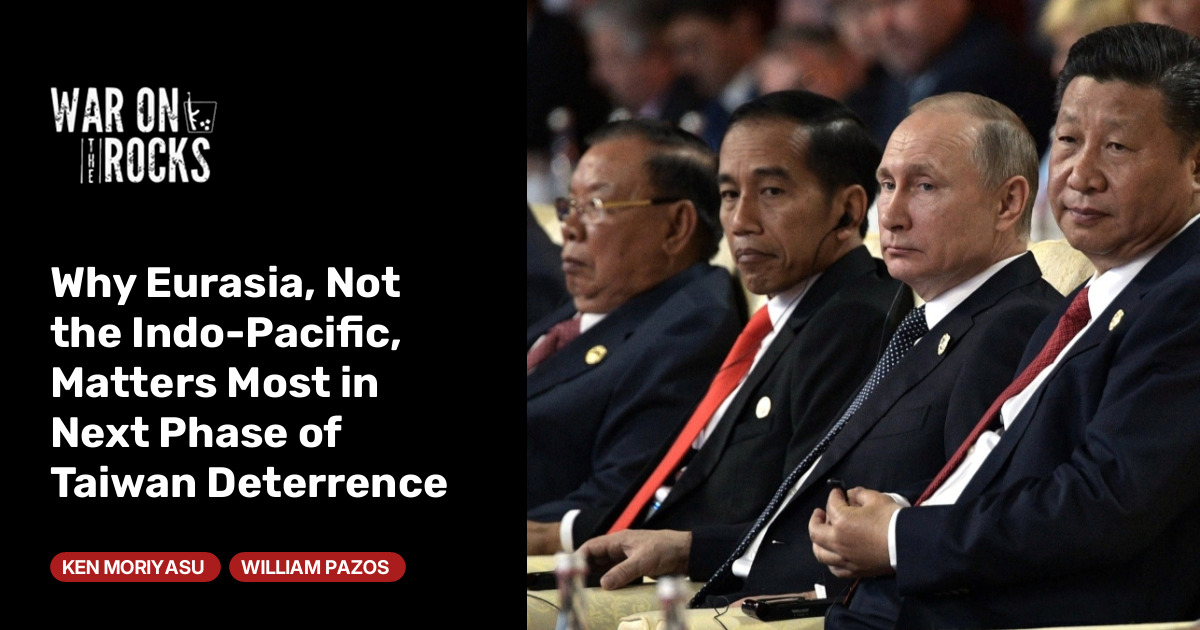
Why Eurasia, Not the Indo-Pacific, Matters Most in Next Phase of Taiwan Deterrence

Washington is preparing for the right war, but in the wrong theater. For years, U.S. strategic thinking has centered on the Indo‑Pacific: the militarized atolls of the South China Sea, China’s churning naval shipyards, and the tense waters of the Taiwan Strait. Yet the next phase of competition will likely play out on the Eurasian landmass, contested through pipelines, swing states, and shifting alignments along routes that overlap with the ancient Silk Road. This is where China is building alternative trade and energy corridors beyond the immediate reach of U.S. military power.Chinese strategists have long worried that, in a conflict

War on the RocksWar on the RocksWilliam Pazos18 Sept