War on the Rocks

War on the Rockspage 5

Coverage, page 5

page 5 of 6

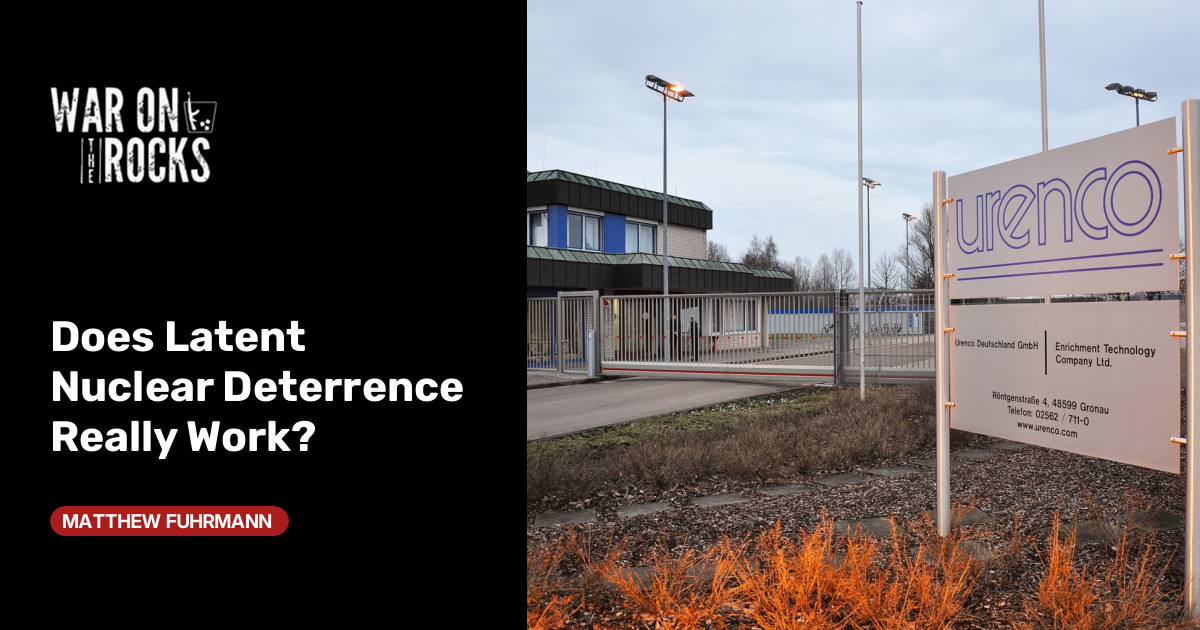
Does Latent Nuclear Deterrence Really Work?

In 2025, Matthew Fuhrmann wrote, “U.S. Allies and Adversaries Are Attempting Nuclear Deterrence Without Weapons – Will It Work?,” where he argued countries don’t always need to go as far as actually building nuclear weapons to reap the benefits of nuclear deterrence. A year later, we asked Matthew to revisit his arguments.Image: MidjourneyIn your 2025 article, you argued countries don’t necessarily have to follow through with building nuclear weapons to reap the benefits of nuclear deterrence, a strategy you called latent nuclear deterrence. Which countries do you think stand to gain the most from this strategy, given the significant and,
War on the RocksWar on the RocksMatthew Fuhrmann6 Aug

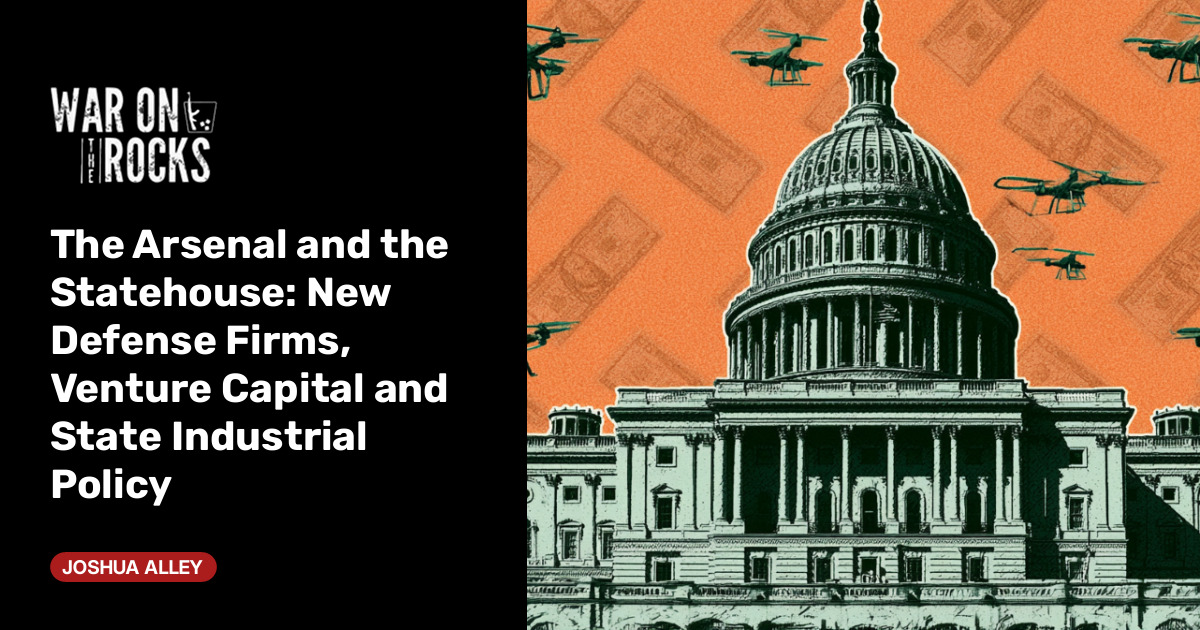
The Arsenal and the Statehouse: New Defense Firms, Venture Capital and State Industrial Policy

When Anduril announced a $910 million drone production facility in Ohio, it was not politics as usual. The main message came from Ohio’s governor, Mike DeWine, while Representative Mike Carey’s press release thanked the governor. Members of Congress usually take substantial credit for defense industrial jobs, but Carey did not because he could not. Anduril sited Arsenal-1 near Columbus partially because of state subsidies.New defense firms backed by venture financing and state economic development subsidies have given states a political stake in the most innovative portion of federal defense procurement. New entrants promise and sometimes deliver fast, commercial solutions. Subsidies

War on the RocksWar on the RocksJoshua Alley6 Aug

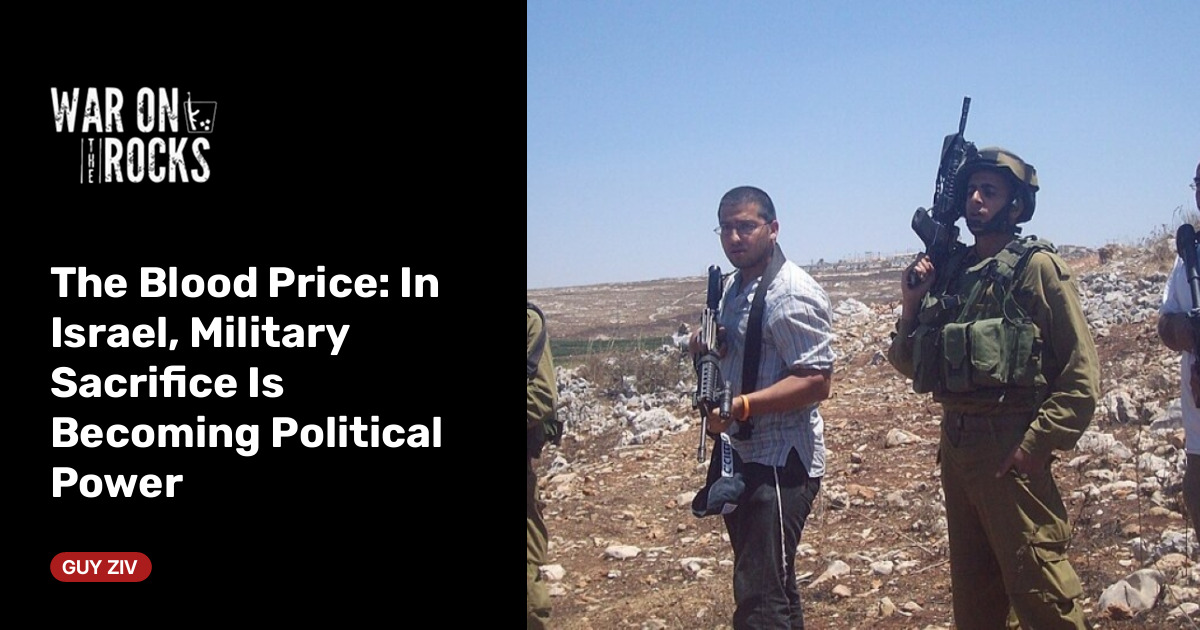
The Blood Price: In Israel, Military Sacrifice Is Becoming Political Power

In late June, cadets at the Israeli military’s officer training school sat through a lecture by Ofer Winter, a retired brigadier general and a polarizing figure in the Israel Defense Forces. According to Haaretz, Winter told the future officers that “there are no uninvolved civilians in Gaza” and accused two former chiefs of staff of politically blocking his career. Regulations prohibit political activity in training programs, and the Israeli military later called the episode a failure. The cadets who spoke to Haaretz, however, described this politically charged lecture as part of a pattern of guest speakers drawn overwhelmingly from the

War on the RocksWar on the RocksGuy Ziv6 Aug

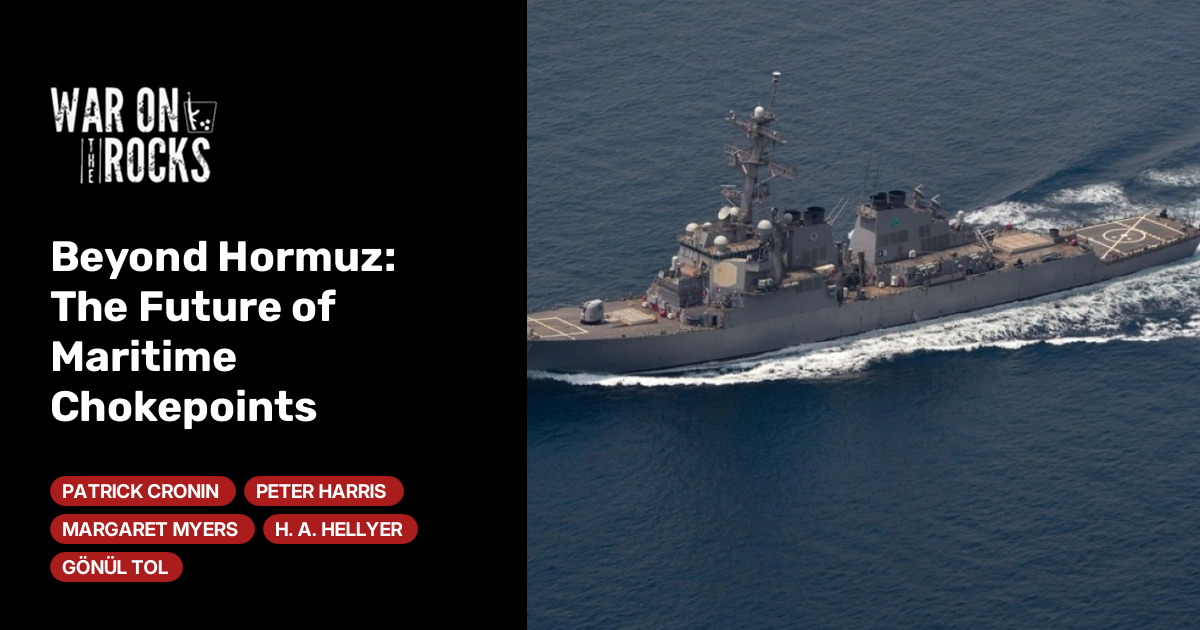
Beyond Hormuz: The Future of Maritime Chokepoints

Iran’s closure of the Strait of Hormuz and efforts to extract payments for safe passage — plus, more recently, the Houthis’ move to attack Saudi shipping through the Bab el-Mandeb Strait — have highlighted the risks of maritime chokepoints to global shipping and raised questions about the future for freedom of navigation. The impacts extend beyond the Persian Gulf and the Red Sea, so we asked five experts to consider the implications for several other crucial waterways: the Strait of Malacca, the Taiwan Strait, the Panama Canal, the Suez Canal, and the Turkish Straits.Read more below.Patrick M. CroninAsia-Pacific Security Chair

War on the RocksWar on the RocksGönül Tol5 Aug

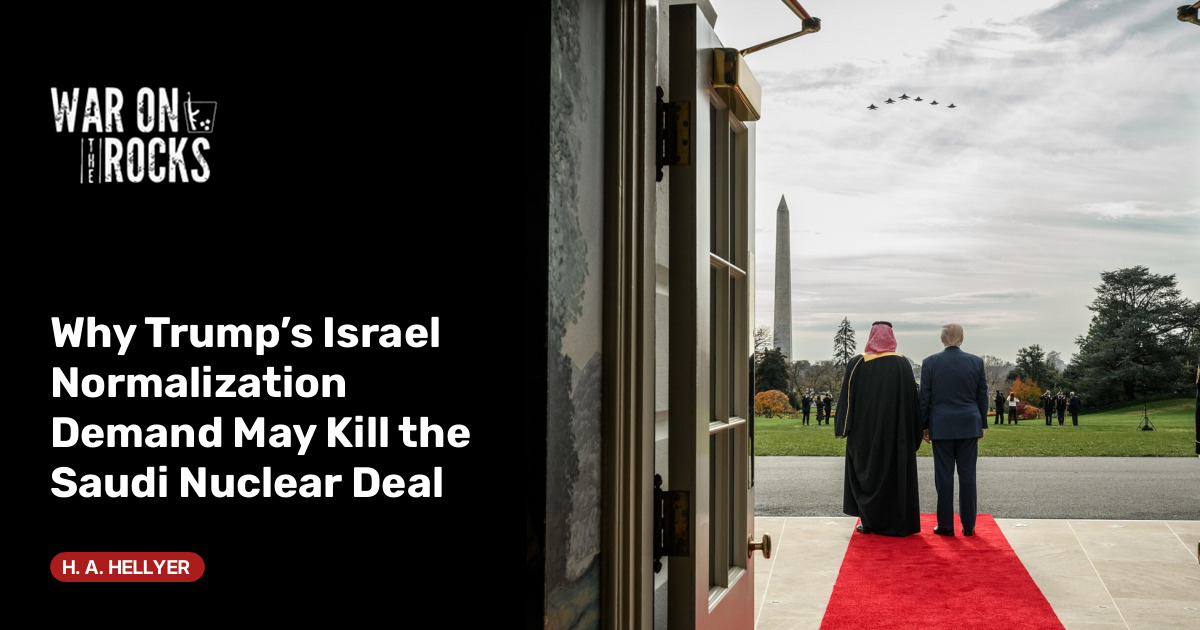
Why Trump’s Israel Normalization Demand May Kill the Saudi Nuclear Deal

Only days after the Trump administration celebrated what it called a landmark civilian nuclear agreement with Saudi Arabia, the president himself appeared to place the entire arrangement in jeopardy. In a Truth Social post, President Donald Trump declared the deal “totally subject” to Saudi Arabia joining the Abraham Accords and normalizing with Israel — a condition absent from the administration’s own announcement barely a day earlier. White House Press Secretary Karoline Leavitt then confirmed that, without normalization, “the deal is off.”The reversal was striking not simply because it resurrected a condition Washington had already concluded was ineffective, as Saudi Arabia

War on the RocksWar on the RocksH. A. Hellyer5 Aug

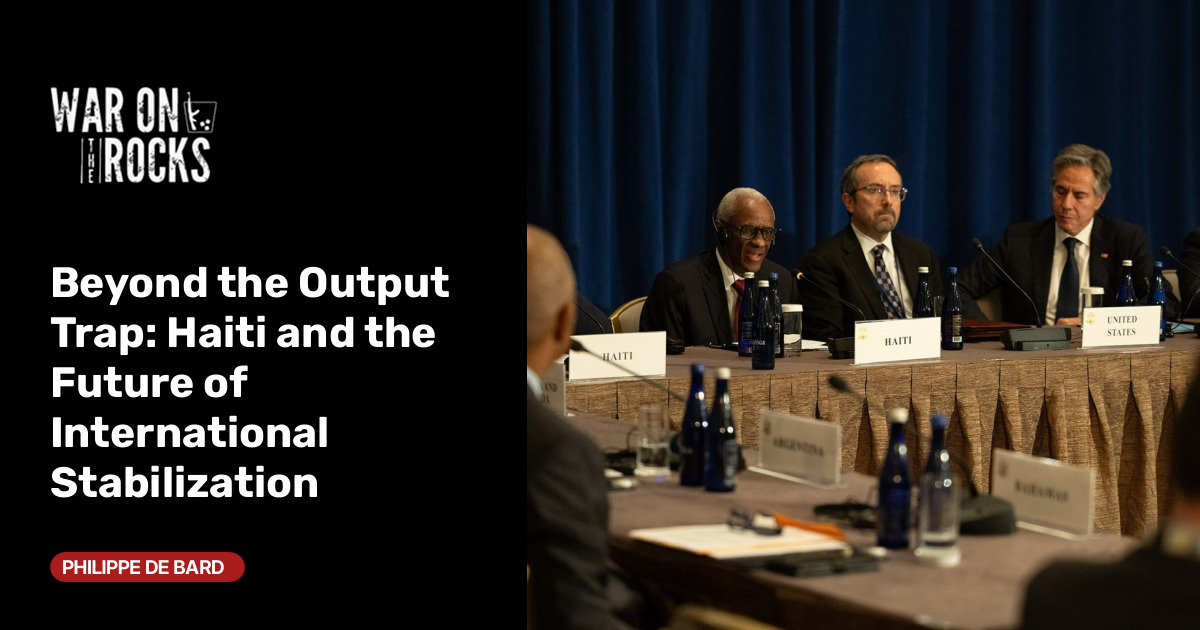
Beyond the Output Trap: Haiti and the Future of International Stabilization

Five years after the assassinations in Haiti of Monferrier Dorval, Diego Charles, and Antoinette Duclaire, justice remains elusive. Four years after the assassination of President Jovenel Moïse, accountability is still incomplete. Yet international reporting on Haiti continues to foreground outputs: workshops on gender and youth participation, deployments, and decrees. International organizations, including the United Nations, and the donor community measure what they do. Meanwhile, the Haitian public measures what actually changes.Call this the output trap: Missions demonstrate progress in outputs without delivering comparable gains in outcomes. Closing that gap requires making outcomes, not outputs, the measure of success. I examine

War on the RocksWar on the RocksPhilippe de Bard5 Aug

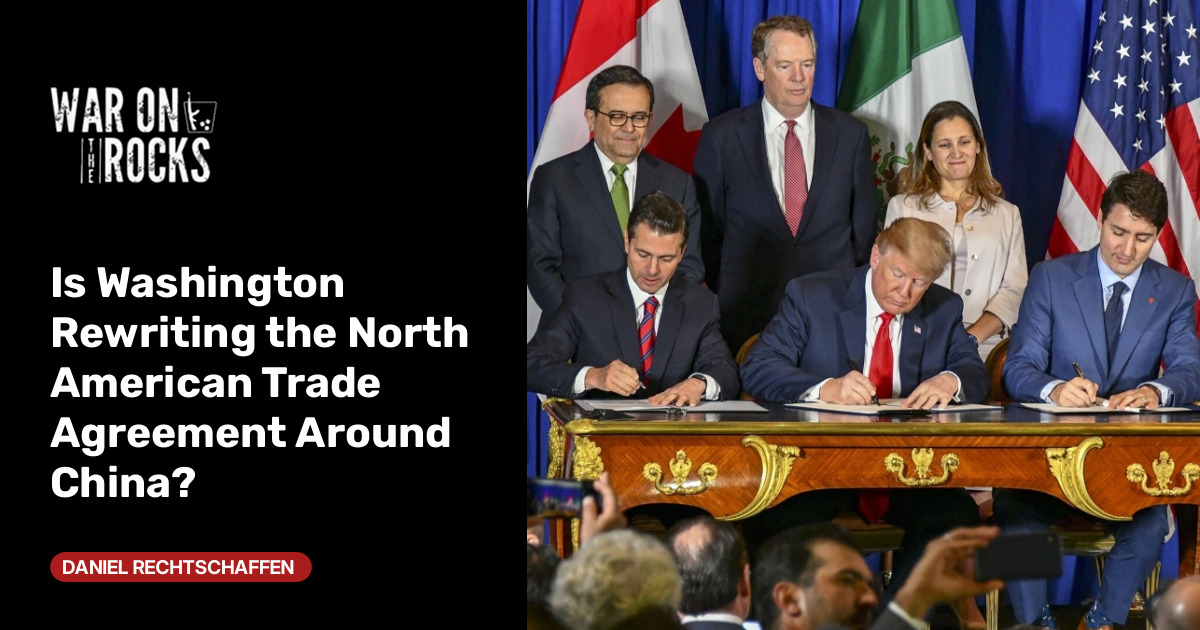
Is Washington Rewriting the North American Trade Agreement Around China?

Washington has repeatedly used trade policy and U.S. market access over the past decade to advance broader economic security priorities with its trading partners. The Trump administration’s decision not to renew the U.S.-Mexico-Canada Agreement on July 1, during a mandatory six-year review, is the latest example of this approach.  Despite the inclusion in the U.S. trade representative’s announcement that deficits were a prevailing concern, conversations with industry sources and past statements by the administration indicate that ongoing negotiations increasingly focus on limiting Chinese supply chain inputs by embedding economic security principles into the continent’s trade architecture. Incorporating provisions like investment screening,

War on the RocksWar on the RocksDaniel Rechtschaffen4 Aug

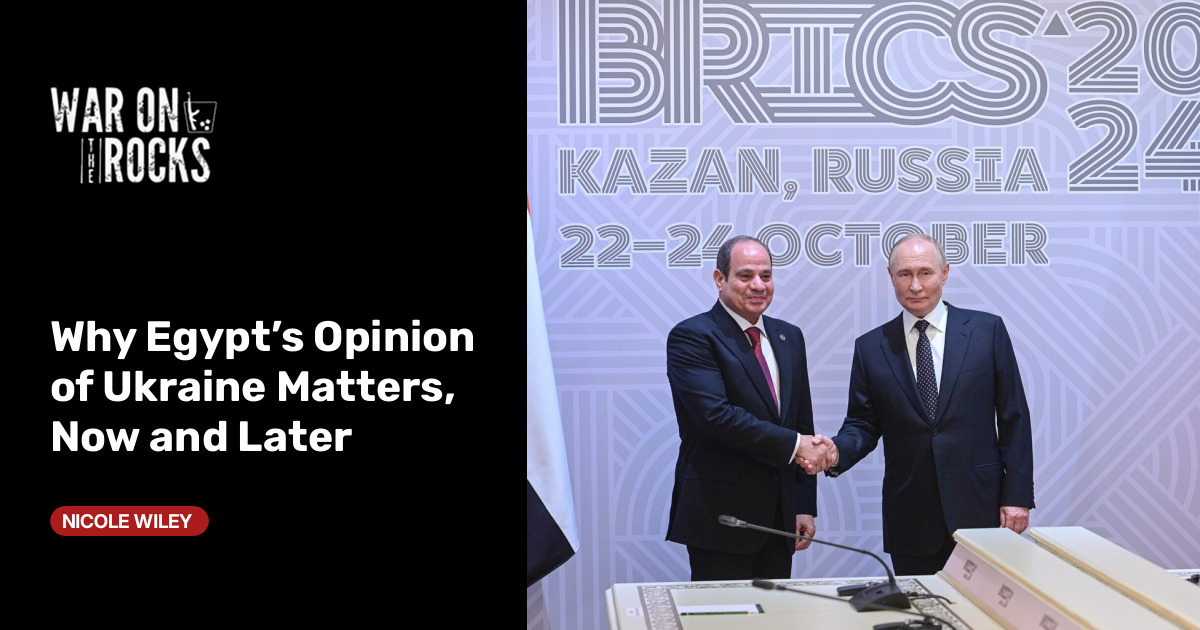
Why Egypt’s Opinion of Ukraine Matters, Now and Later

Welcome to The Ukraine Compass, a weekly digest of Ukrainian commentary and analysis from across the political spectrum only for War on the Rocks members. Each Monday, we bring you a curated selection of articles from Ukrainian media offering insight into how Ukrainians themselves debate the issues shaping their country.American coverage often narrows the view to the battlefield — these pieces widen it, revealing the texture of daily life, politics, and public argument in a nation at war. The perspectives gathered here are varied, candid, and often surprising, together forming a more complete picture of Ukraine as it really is.Frontline and StrategyФокус —

War on the RocksWar on the RocksNicole Wiley3 Aug

How to Stop China from Freeriding on American AI

The release of the Chinese open-weight AI model Kimi K3 has compressed a year’s worth of unresolved AI policy debate into a single news cycle. On July 21, Treasury Secretary Scott Bessent threatened sanctions against Chinese labs found to have built their models on “theft,” reporting that the government is “finding watermarks of our U.S. large language models on many of the Chinese models.” The following day, White House science advisor Michael Kratsios clarified that the Chinese AI lab behind K3, Moonshot AI, had built a sophisticated platform to copy Anthropic’s Fable model while evading detection.Industry has been vocal about

War on the RocksWar on the RocksRyan Fedasiuk3 Aug

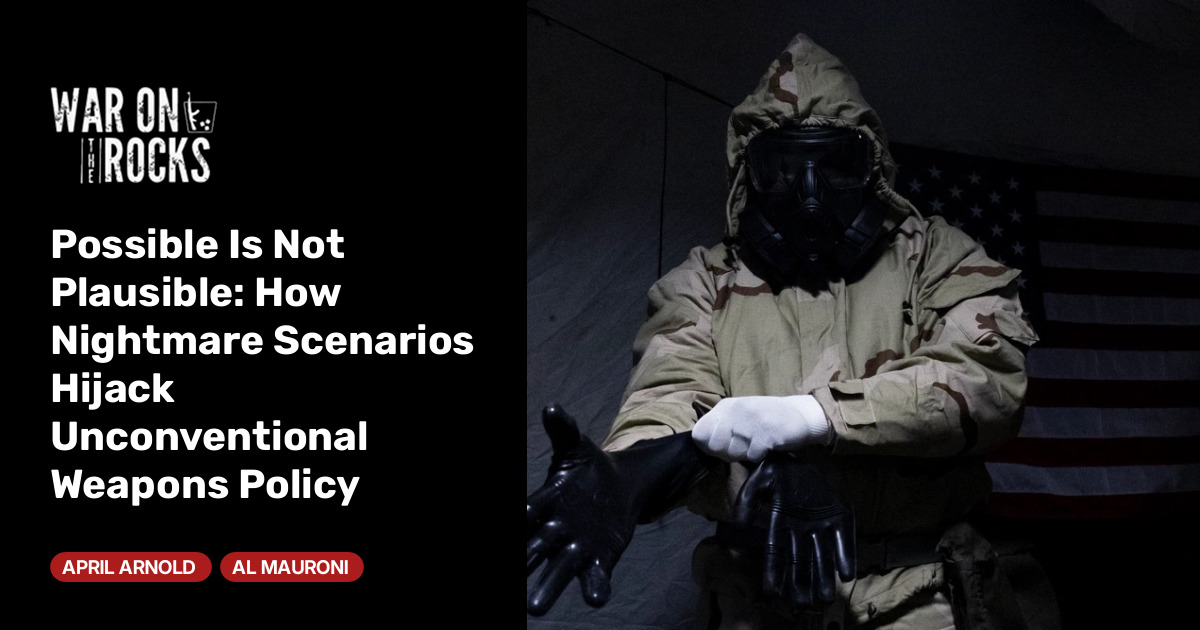
Possible Is Not Plausible: How Nightmare Scenarios Hijack Unconventional Weapons Policy

Current conversations surrounding unconventional weapons — chemical, biological, radiological, and nuclear — have become so fantastical as to be unserious. As the Chinese military fundamentally rethinks biological warfare and Russia continues to use chloropicrin in Ukraine, hypothetical scenarios of AI-enabled bioweapons dominate the headlines. If national security leaders and unconventional weapons experts continue to prioritize latent potentialities of emerging technology over current trends, U.S. national security will once again run the risk of being unprepared for an actual chemical, biological, radiological, or nuclear incident.Executive agencies and Congress have drastically cut down opportunities for successful unconventional weapons policy formation by eliminating

War on the RocksWar on the RocksAl Mauroni3 Aug

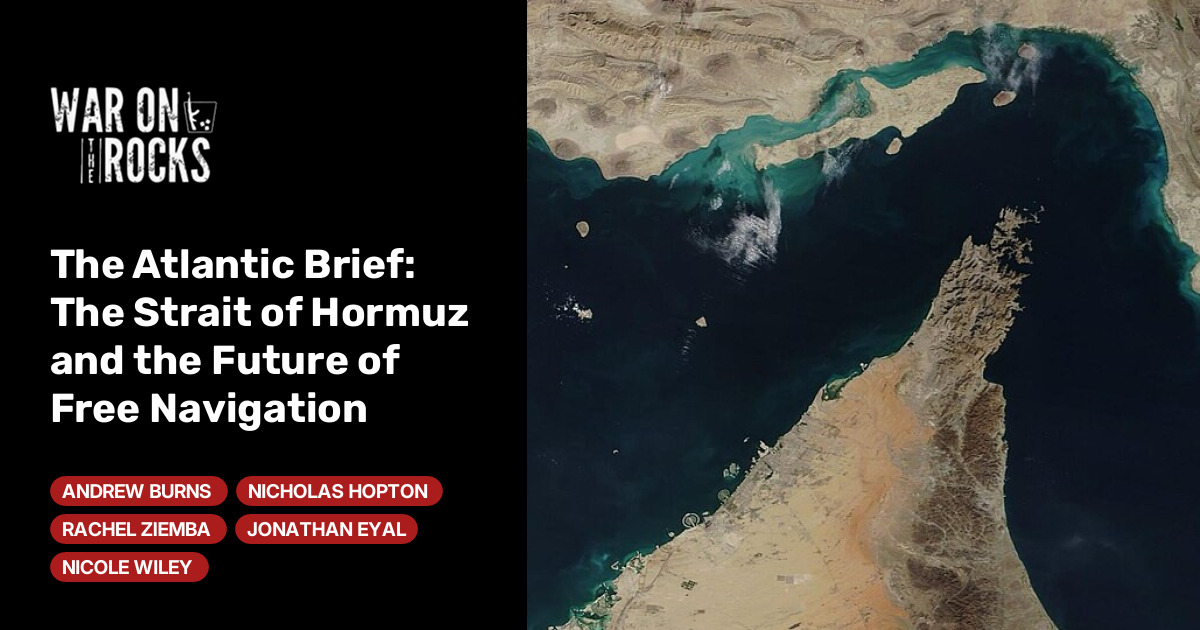
The Atlantic Brief: The Strait of Hormuz and the Future of Free Navigation

In February 2026, the United States and Israel initiated a war in the Middle East against Iran. Since then, the warring sides have oscillated between strikes, a fragile ceasefire, and the blocking of the Strait of Hormuz. Open hostilities resumed in mid-July. More recently, the Houthis in Yemen have threatened Saudi shipping through the Bab al-Mandab, raising the risk to shipping through that critical waterway.For the first webinar of The Atlantic Brief, War on the Rocks and the Royal United Services Institute (RUSI) present a dialogue on the Strait of Hormuz and the future of free navigation, exploring the consequences

War on the RocksWar on the RocksNicole Wiley31 Jul

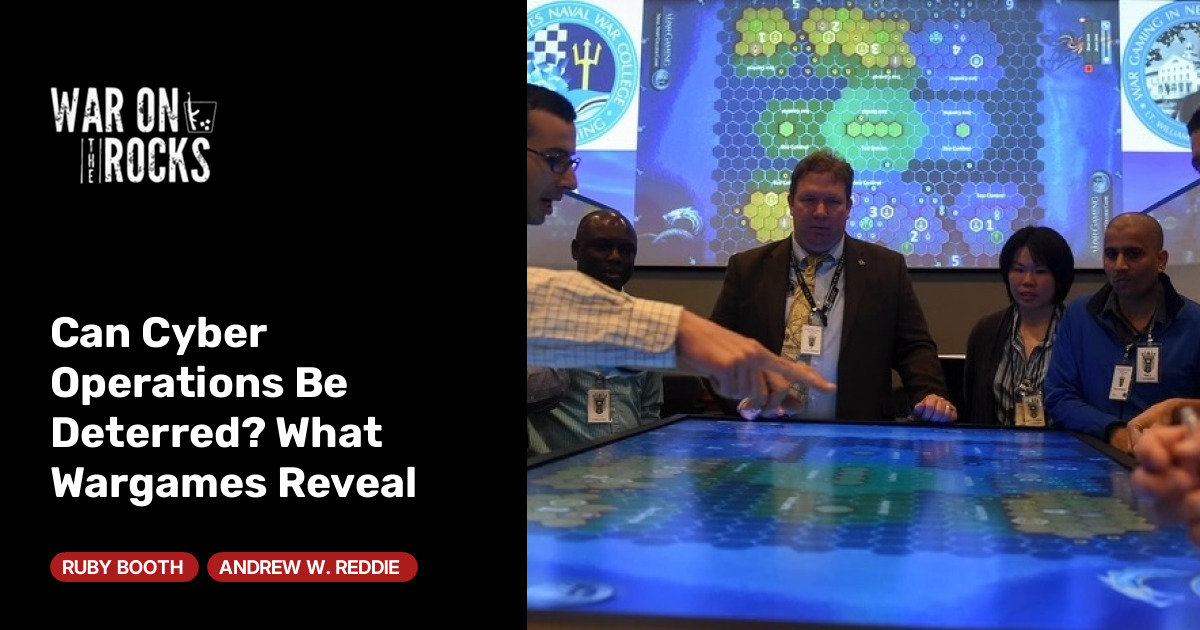
Can Cyber Operations Be Deterred? What Wargames Reveal

The most successful deterrent threats leave no evidence behind. No missiles fly. No networks go down. No troops cross borders. Nothing happens. For policymakers, that is often the desired outcome. For researchers, it is a nightmare. Imagine, however, being able to observe a decision-maker preparing to attack, receiving a deterrent threat, and then changing their mind. That moment — the instant deterrence succeeds — is arguably the most important observation in international security. It is also one we almost never see.We can see its failure: the red line crossed, the chemical weapons used, the invasion that follows from “military exercises.”

War on the RocksWar on the RocksAndrew W. Reddie30 Jul

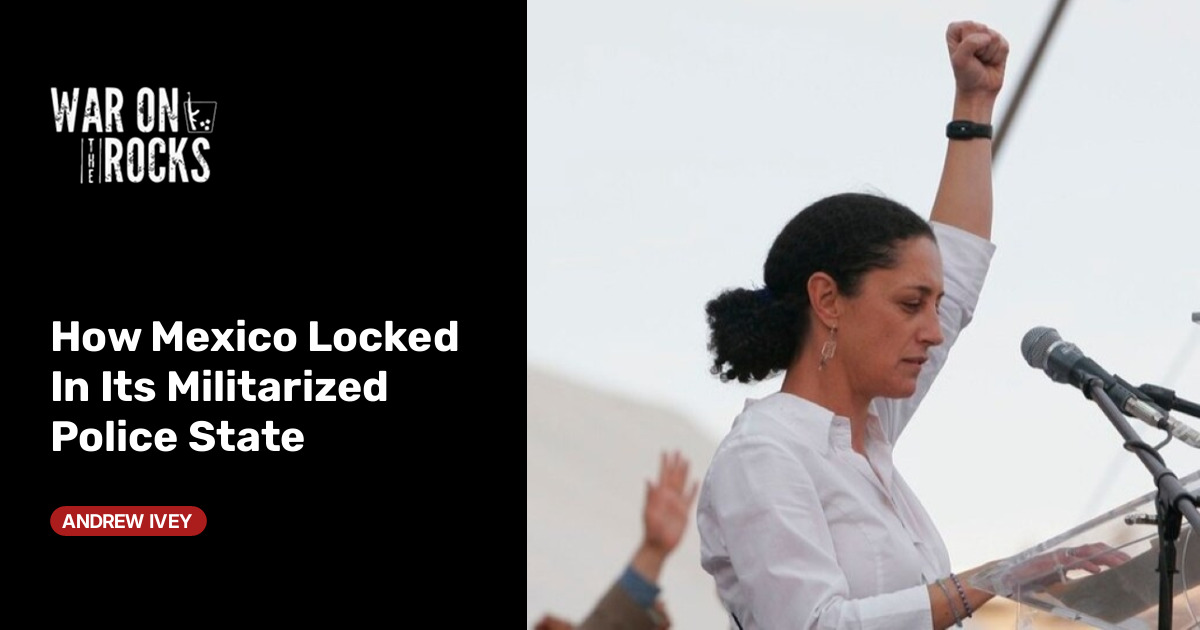
How Mexico Locked In Its Militarized Police State

In 2021, Andrew Ivey wrote, “‘I Have Other Data’: The Guardia Nacional and the Entrenchment of Mexico’s Militarization’,” where he warned Mexico was headed toward a militarization trap. Five years later, amidst increased pressure from the Trump administration and the election of a new Mexican president, we asked Andrew to revisit his arguments.Image: Sitio Oficial de Andrés Manuel López ObradorIn your 2021 article, you warned that Mexico was headed toward an entrenched militarization trap. In 2024, the Chamber of Deputies passed a constitutional reform formally placing the National Guard under military control, with President Claudia Sheinbaum embracing the change. Has

War on the RocksWar on the RocksAndrew Ivey29 Jul

ASML’s Extreme Ultraviolet Lithography and the Limits of Reverse Engineering in China

In June, the U.S. Department of Commerce informed the Dutch company ASML that it suspects one of its extreme ultraviolet lithography machines has reached China, an accusation that ASML denied, and for which no supporting evidence has yet been made public. ASML is the sole global producer of the machines capable of making the most advanced microchips. Whether China obtained a full extreme ultraviolet lithography scanner, major subsystems, or just related components, the strategic question is the same: How much can China gain from physical access to these pieces of the technology?The U.S. concern presumably spans across several dimensions, but

War on the RocksWar on the RocksNicolas Deriquehem29 Jul

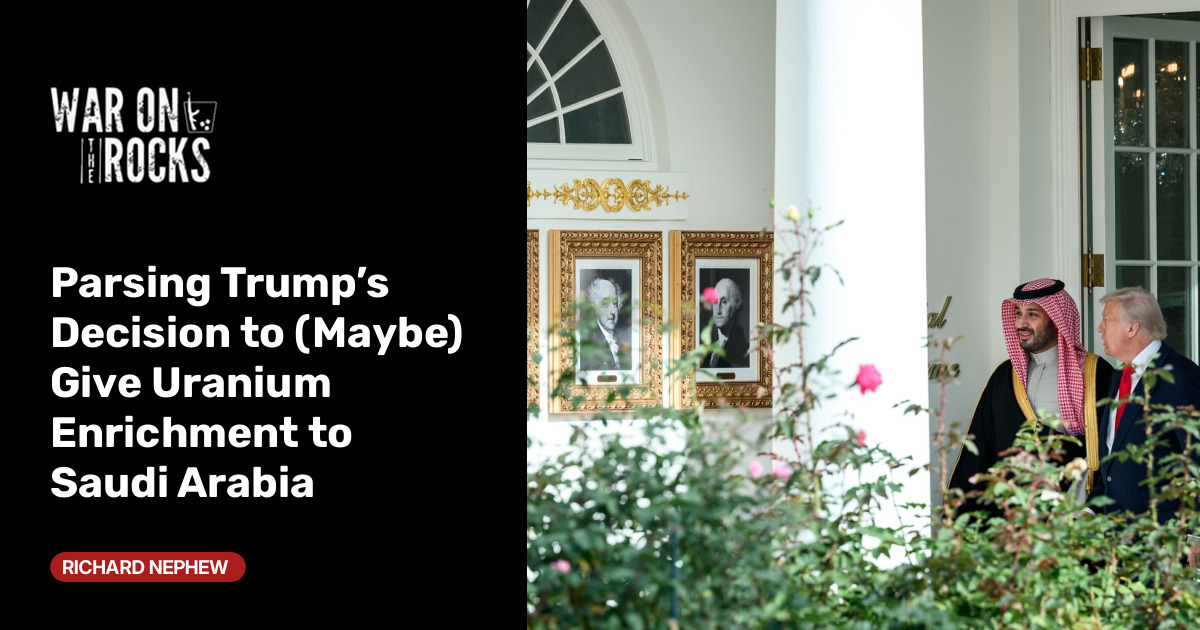
Parsing Trump’s Decision to (Maybe) Give Uranium Enrichment to Saudi Arabia

On June 22, the United States announced that it had signed a nuclear cooperation agreement with Saudi Arabia. This type of agreement broadly authorizes trade in nuclear technology, equipment, and materials, but only if the agreement and the country in question meet defined nonproliferation requirements. They are called Section 123 agreements for the section of the 1957 U.S. Atomic Energy Act that lays out the specific conditions for them. But the legal terms of Section 123 are only the minimum requirements in law: On top of the legal standards are nonproliferation policies that have been held by the United States

War on the RocksWar on the RocksRichard Nephew29 Jul

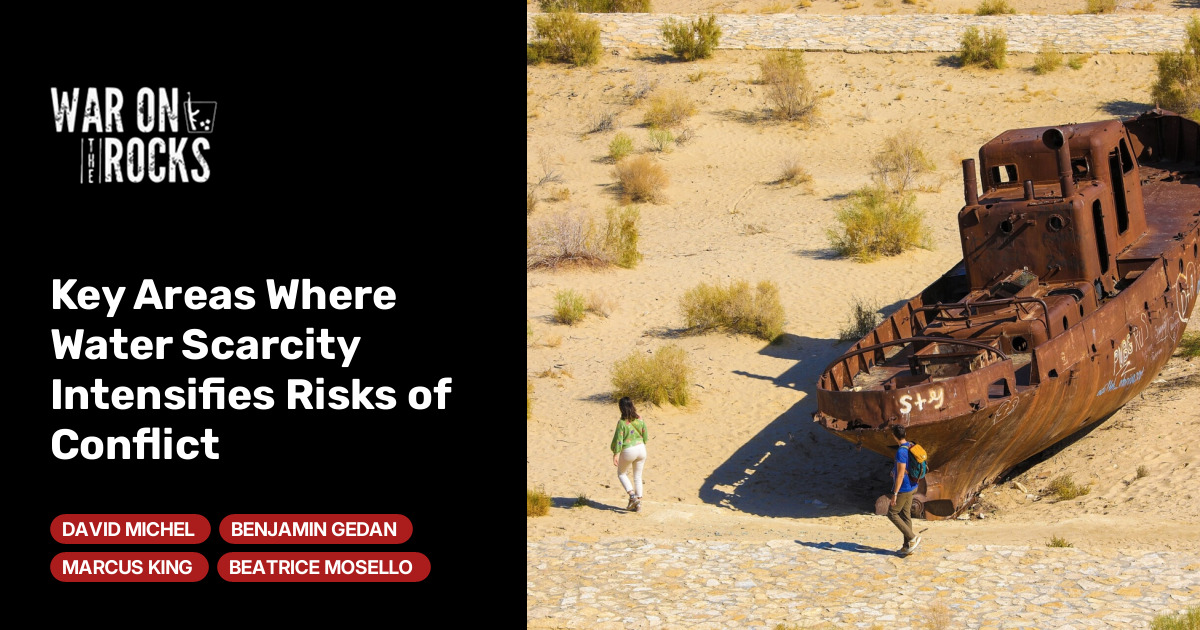
Key Areas Where Water Scarcity Intensifies Risks of Conflict

Water disputes can directly drive conflict, but more often, water scarcity acts as a catalyst — one that, combined with other pressures, raises the risk of conflict. This is nothing new; water has shaped human conflict for millennia. What’s changed is the accumulation of stress, as climate change, population growth, human migration, and the intensive demands of agriculture and industry are converging to strain water systems in ways that threaten to exacerbate instability. However, examples of governments cooperating to manage scarce resources also suggest that conflict over water is not inevitable.Water scarcity contributes to the risk of conflict in many

War on the RocksWar on the RocksBeatrice Mosello28 Jul

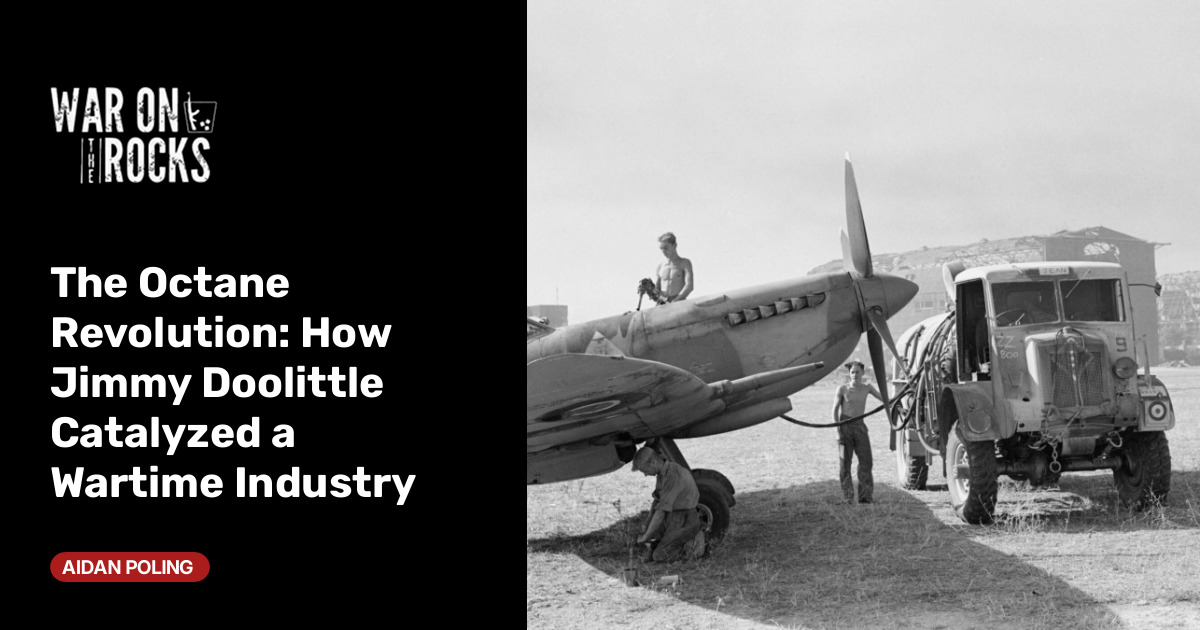
The Octane Revolution: How Jimmy Doolittle Catalyzed a Wartime Industry

Editor’s note: This is the sixth article in a limited series celebrating American defense technologies born from wartime and their effects on broader national security, politics, and society. This series will run for several weeks to commemorate America’s 250th anniversary, and winners will be selected by a reader vote undertaken through our newsletter later this summer. Prior installments can be found at the Arsenal of Innovation page.The impact of chance and poor logistics on warfare is especially acute when a battle or campaign is a close-run thing, as it was over the skies of England in 1940. After all, for want of a

War on the RocksWar on the RocksAidan Poling28 Jul

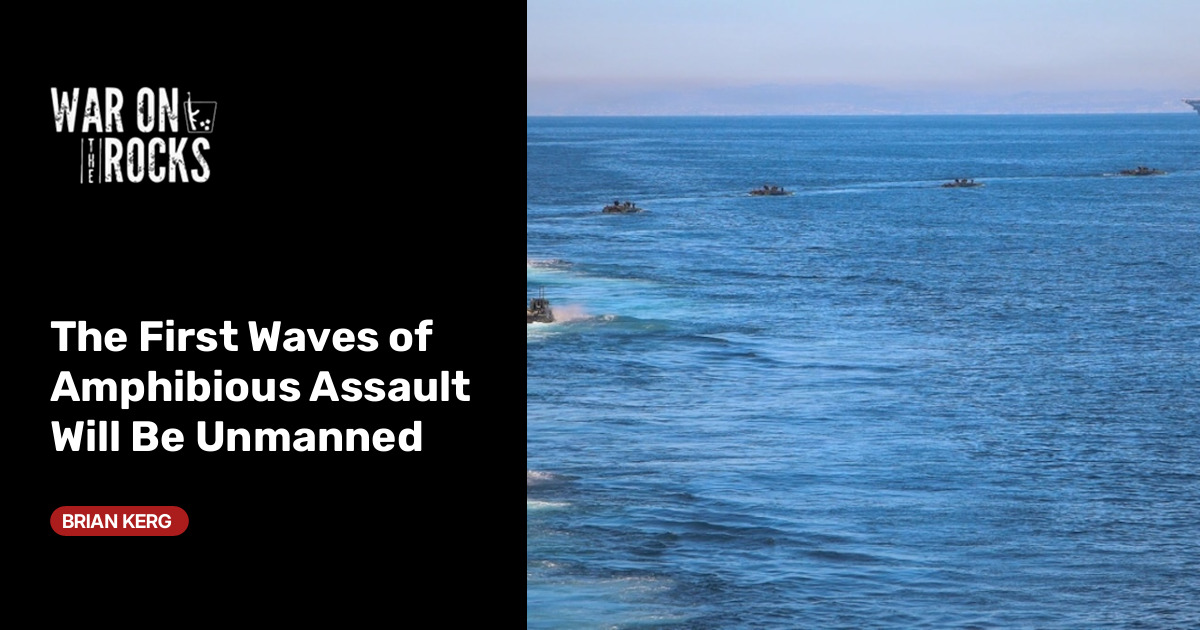
The First Waves of Amphibious Assault Will Be Unmanned

In the Pacific War, the U.S. Navy’s underwater demolition teams prepared the way for U.S. and allied amphibious landings on enemy-held islands. Through beach reconnaissance, obstacle breaching, mine clearance, and other missions, these teams paved paths for the first waves of amphibious assaults conducted by naval task forces and subsequent landings by marines and soldiers throughout the island hopping campaign.  These critical first steps of an amphibious operation were incredibly risky in World War II. And the underwater demolition teams, which were the predecessors of the Navy SEALs, were understandably proud of their work. The Marine Corps prided itself on being first to hit the beach. And when marines did hit the beach, they often

War on the RocksWar on the RocksBrian Kerg28 Jul

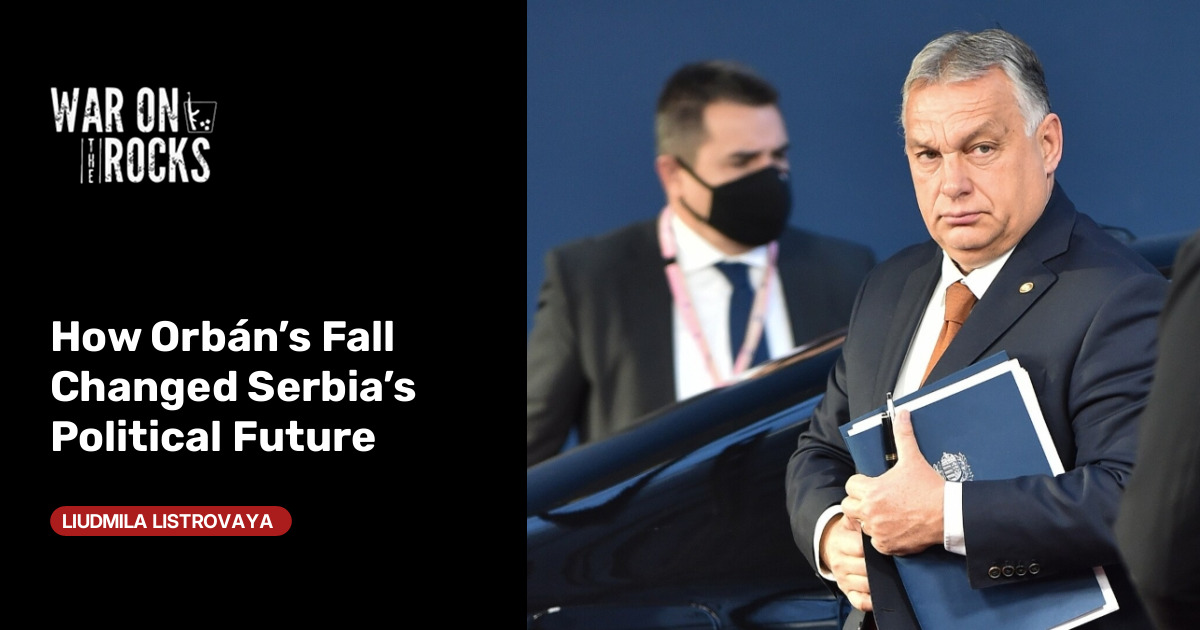
How Orbán’s Fall Changed Serbia’s Political Future

In the speech announcing his invasion of Ukraine on Feb. 24, 2022, Vladimir Putin took only minutes to arrive at the original sin in his catalogue of Western crimes. Before Iraq, before Libya, before Syria, came Belgrade: “First a bloody military operation was waged against Belgrade, without the U.N. Security Council’s sanction but with combat aircraft and missiles used in the heart of Europe.” The placement was not incidental, as Putin was telling Serbs that Russia’s war in Ukraine and NATO’s bombing of Yugoslavia belonged to the same story, and that he, unlike the West, remembered. Aleksandar Vučić has been

War on the RocksWar on the RocksLiudmila Listrovaya28 Jul