
US-Iran conflict cuts global LNG supply 20%, Asia prices hit 3-year high
The conflict-induced LNG supply cut may lead to sustained high energy costs and influence global energy market stability and policy shifts.
 CryptoBriefing•Estefano Gomez13 Sept
The conflict-induced LNG supply cut may lead to sustained high energy costs and influence global energy market stability and policy shifts.
CryptoBriefing•Estefano Gomez13 Sept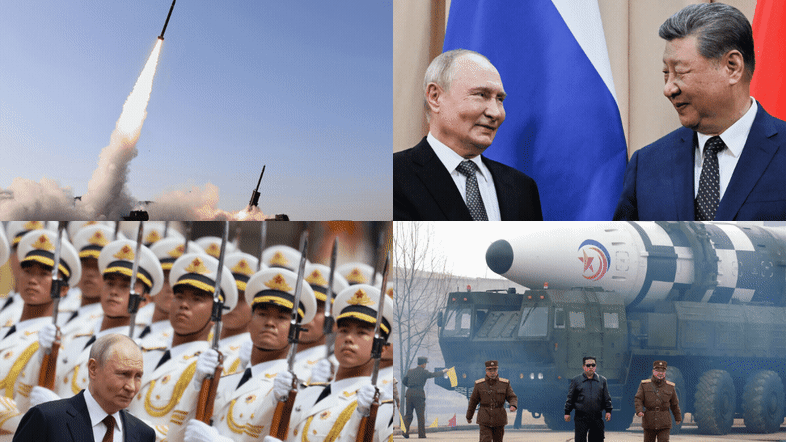
Experts, including a former CIA chief, warn that security in Asia is under threat as the three powers work ever more closely on missiles, drones and other tech in the war on Ukraine.
 The Sydney Morning Herald13 Sept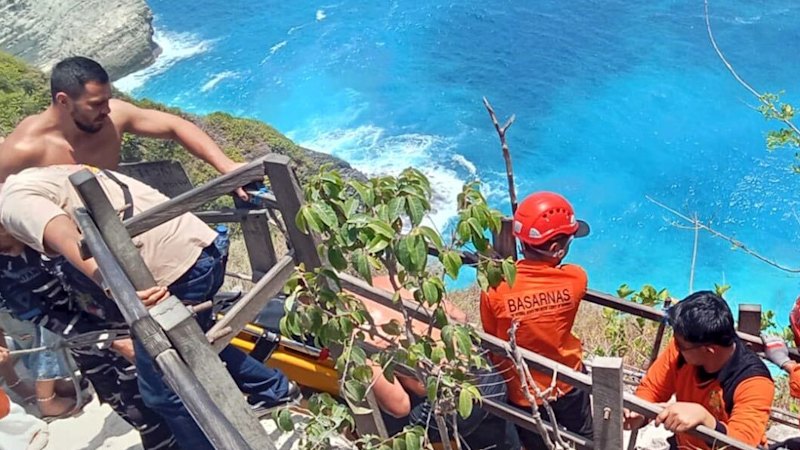
Kelingking Beach has become one of southeast Asia’s most photographed tourist spots, with visitors drawn to its dramatic clifftop for selfies against the stunning turquoise waters.
The Sydney Morning Herald•Ellen Connolly12 Sept
Supertanker rates on the Baltic Exchange's benchmark Middle East-to-China shipping route have surged to a staggering $800,000 a day. With US forces having destroyed five Iranian-linked tankers and Tehran threatening further escalation in recent days, prospects for near-term stabilization remain limited. The freight surge signals that crude oil and refined products continue to flow but are becoming increasingly costly to transport out of the Gulf region to global markets. According to Bloomberg, US Gulf-to-Asia shipments on very large crude carriers…

Jane Street's rise in Asia's block trading highlights the shift towards tech-driven market-making, challenging traditional banks and navigating complex regulations.
CryptoBriefing•Editorial Team11 Sept
China's aggressive crude buying reshapes global oil dynamics, highlighting Asia's growing influence and potential geopolitical ripple effects.
CryptoBriefing•Editorial Team11 Sept
SOFAZ is the only founder from outside East and Southeast Asia, reflecting Azerbaijan’s position on the trade corridor between Asia and Europe.
 Euronews11 Sept
In Klook's Travel Pulse survey of roughly Gen Z and millennial travelers across Asia, 57% said they had used AI to find new destinations or experiences.
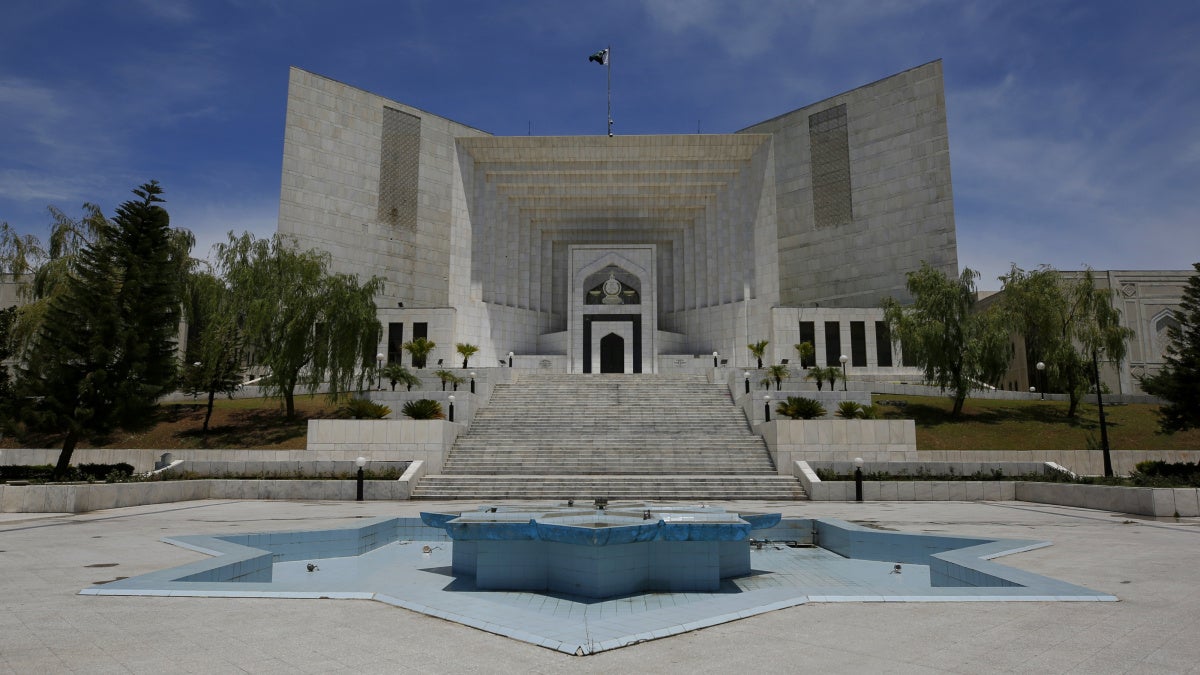
Click to expand Image The Supreme Court of Pakistan in Islamabad, Pakistan, June 20, 2022. © 2022 Anjum Naveed/AP Photo (New York) – The Punjab provincial assembly in Pakistan on August 31, 2026, passed a bill that would threaten the right to a fair trial in counterterrorism proceedings, Human Rights Watch said today. The provincial governor should return the bill to the assembly, which should develop rights-respecting protections for such proceedings, subject to independent oversight. The Anti-Terrorism (Punjab Amendment) Bill 2026 authorizes unspecified government officials to designate “special security cases” in which the identities of judges, prosecutors, police officers, witnesses, and defense lawyers could be withheld from defendants. The proposed law, which amends the 1997 Anti-Terrorism Act, would allow identifying witnesses by codes and holding proceedings at secret locations or through video links, including from prisons. “Protecting witnesses and court officials from possible harm is essential, but it’s no excuse to deprive defendants of their right to a fair trial,” said Patrica Gossman, senior associate Asia director at Human Rights Watch. “Punjab and other provincial assemblies in Pakistan should ensure that all their criminal laws, including counterterrorism legislation, meet international due process standards.” Human rights groups and political opposition leaders have raised concerns that the secrecy surrounding trial proceedings could impair defendants’ access to evidence needed for an effective appeal, and that the proposed law’s insufficiently defined authority could be used against political opponents, peaceful protesters, and other people. The Punjab government has defended the legislation as necessary to combat militant groups, citing inadequate witness protection and security as obstacles to prosecutions. Militant groups have carried out hundreds of attacks across Pakistan in recent years, killing both civilians and security personnel. The authorities should address those risks through adequate protection measures that preserve defendants’ ability to challenge evidence, consult their lawyers confidentially, and appeal convictions, Human Rights Watch said. Pakistan’s Constitution guarantees the rights to a fair trial and due process. The International Covenant on Civil and Political Rights (ICCPR), to which Pakistan is a party, ensures the right to a fair and public hearing before an independent, impartial tribunal, along with rights to prepare a defense, examine prosecution witnesses, and seek review of a conviction. The ICCPR permits excluding the public from trials in specified circumstances, including legitimate national security grounds. However, complete secrecy and denial of information to a defendant in criminal proceedings would not fall within the ambit of that exclusion. The United Nations Human Rights Committee, the independent international body that provides authoritative interpretation of the covenant, has specifically warned against “faceless” judges in counterterrorism proceedings, finding that tribunals combining such secrecy with restrictions on defense rights do not meet basic fair trial standards, including independence and impartiality. Human Rights Watch has previously opposed Pakistan’s use of sweeping counterterrorism powers on several occasions, including the Protection of Pakistan Ordinance in 2014, because of threats to fundamental rights, and the use of overbroad terrorism charges in 2023 against opposition supporters engaged in peaceful protest. Punjab’s government should revisit the law and hold broad consultations with human rights advocates and lawyers on protections based on demonstrable risks in individual cases. Any restrictions should be necessary, proportionate, open to independent scrutiny, and compatible with an effective defense, Human Rights Watch said. “Victims of terrorist acts are entitled to justice, but justice can’t be achieved by denying others a fair trial,” Gossman said. “The Punjab government should ensure that the proposed law is replaced by one that protects the public without sacrificing basic rights.”

A meeting with Prime Minister Narendra Modi would be the clearest test yet of the tentative post-2020 reset between Asia’s two largest economies.

Proprietary trading fund expands into areas once dominated by hedge funds
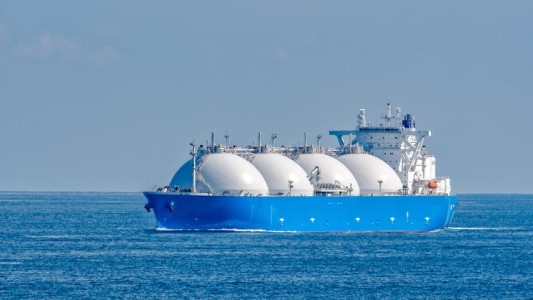
Demand for liquefied natural gas (LNG) in Southeast Asia has found a new major driver apart from the years-long efforts to switch away from coal-fired power generation. The AI boom and the data center construction in Asia are set to materially change Southeast Asia’s LNG demand outlook with a significant upside, as combined-cycle gas turbines (CCGT) remain the most reliable 24/7 power provider for hyperscalers amid relatively immature renewable energy-plus-batteries across the region, analysts at Wood Mackenzie say. As a result of the higher…

Shareholders of Bitcoin treasury company Metaplanet are seething over equity allocations for insiders, while new figures cement Singapore’s role as the top Asian crypto hub.
 Cointelegraph•Cointelegraph by Andrew Fenton10 Sept
25 years after 9/11, the terrorist group al-Qaeda is no longer the global terrorist organization it once was. Its central leadership has been weakened, but offshoots remain strong across Africa and Asia.
 Deutsche Welle10 Sept
Algerian-born French director of more than 20 films that celebrated Roma culture The French film director Tony Gatlif, who has died aged 77, was regularly described as “cinema’s Gypsy auteur”, so often did his films focus on Roma communities and their music. Between 1975 and 2025, Gatlif directed more than 20 films, beginning with La Tête en Ruine (The Ruined Head). That film was never released, and he struggled throughout the 1970s and 80s to get funding for his films, and then to find a distributor, before finally breaking through with Latcho Drom (1993, the title being Romany for “good journey”). An international arthouse hit, Latcho Drom is a meditative travelogue that blends footage of staged musical performances in contemporary Roma communities in Istanbul, Romania, Hungary, Slovakia, France and Spain, with historic recreations of such communities in Rajasthan and an Egyptian oasis. Latcho Drom conveys the centuries-long migration from Asia to western Europe of a nomadic people we now call Gypsies or Roma, as a fable told entirely in images and music. There is no voiceover, talking heads or text; instead Gatlif lets the striking settings and musical performances enchant viewers. It is an idealised portrait of the Roma, not a documentary (as some labelled it), and while Gatlif portrays the discrimination and persecution Roma communities experience, his emphasis was on celebrating Roma beauty and artistry. Continue reading...
 The Guardian•Garth Cartwright10 Sept
Gemini has received full payment institution approval in Singapore, where it currently provides spot trading, custody and over-the-counter services.
 AMBCrypto•Adewale Olarinde10 Sept
Circle is acquiring Tazapay in a $400 million all-stock deal that would bring more than $25 billion in annual payment volume into its orbit. With 60% of Tazapay’s transactions already involving stablecoins, the acquisition could materially expand USDC’s reach across Asia, Africa and other fast-growing markets. Circle Pushes USDC Into 100+ Markets With Tazapay Acquisition […]
 Bitcoin.com News•Emmanuel Musa9 Sept
The screwball French comedy is back as a film that actually works, thanks to putting Andréa and Noémie at the heart of chaotic events and bringing all the old faces back At last: a beloved-TV-show-to-film-spinoff that doesn’t suck! The original French series is a screwball-speed office comedy about a boutique Parisian talent agency, and was a ratings and critical success in its homeland when it started back in 2015. Its acquisition by Netflix grew the audience internationally and spawned a stable full of remakes across Europe and Asia. In the meantime, several members of the original French cast have become proper stars in their own right, especially Camille Cottin and Laure Calamy, and this sequel, set five years on, is smart to put these two at the heart of the latest instalment. And of course, there are the obligatory turns from properly famous actors playing themselves, including Laetitia Casta, Vincent Macaigne, Laurent Lafitte and some guy named George Clooney, best known these days for appearances on vaporettos in the Venice lagoon. Like many great sitcoms, this one always understood that failure, rather than success, keeps the wider narrative arc more interesting and relatable. So the last episode of the series left the gang at talent agency ASK (which stood for Agence Samuel Kerr, after the founder, who died in the first episode), dispersed to new gigs and careers; the band, in effect, broke up. Five years on, the stars have aligned to bring them all back together to work on Andréa (Cottin) and Noémie’s (Calamy) new film project, so the title Call My Agent! The Movie works on more than one level. Continue reading...
The Guardian•Leslie Felperin9 Sept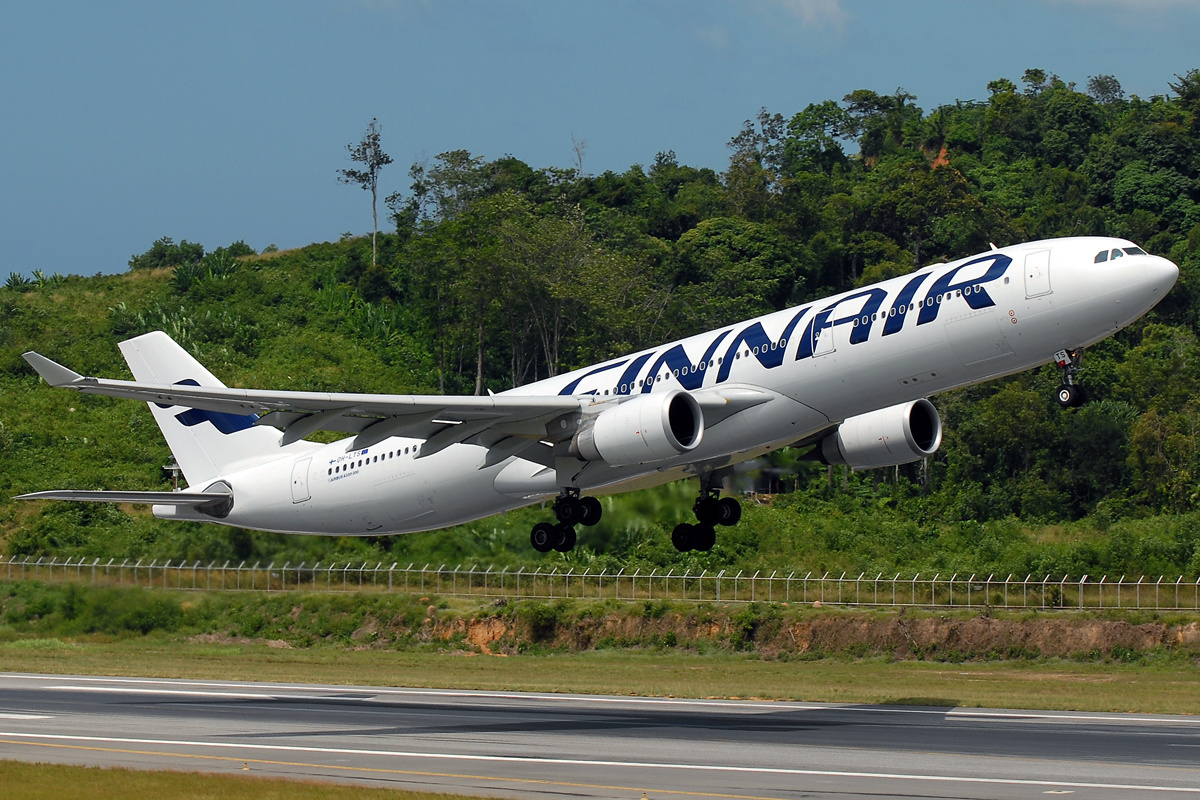
Finnair carried 1.126 million passengers in August 2026, up 2.3% from the same month last year. Growth in European traffic offset declines on North Atlantic and domestic services. Overall capacity, measured in available seat kilometres, fell by 4.8%, or 8.4% when including wet-lease operations. Capacity increased slightly in Europe and Asia but declined substantially across […]
 Aviation24.be•André Orban9 Sept
Vertical Aviation International (VAI) and the Australian Helicopter Industry Association (AHIA) today announced the signing of a letter of intent and initial engagement agreement, marking the first step toward developing a new, internationally credible vertical lift industry event for Australia and the broader Southeast Asia region. Under the agreement, signed Aug. 4, 2026, VAI and