China’s intelligence chief just gave a revealing glimpse into what Beijing fears most about AI
China's spy chief Chen Yixin has outlined six major risks AI poses to China, as a heated debate over AI doom plays out in the West.
China's spy chief Chen Yixin has outlined six major risks AI poses to China, as a heated debate over AI doom plays out in the West.

Beijing signals growing concern over how rapid advances in technology could be used against the country

The potential cancellation of the summit highlights escalating U.S.-China tensions, impacting diplomatic relations and market confidence.
 CryptoBriefing•Estefano Gomez13 Sept
Chinese president’s arrival in Delhi seen as step towards reconciliation after deadly 2020 military clash The Chinese president, Xi Jinping, has received a red-carpet welcome in India for a summit of Brics developing nations, as regional rivals Beijing and Delhi make a public display of thawing relations while quietly competing to lead at a time of shaky US global dominance. As Xi stepped off the plane, he was walked past an honour guard of Indian soldiers and traditional dancers in colourful dresses. Continue reading...
 The Guardian•Oliver Holmes12 Sept
Keeping people in charge means little if supercomputers determine the evidence, choices and time on which their decisions depend If there were a 10% chance that AI could wipe out humanity, no responsible government would leave its development to companies racing to build it. Yet until recently, that seemed to be the case. The warning was all the more ominous because it was made by a researcher at Anthropic , the trillion-dollar AI company behind the Claude chatbot. The dangers of AI-enabled pandemics or attacks on nuclear systems are real. Countries need not agree on democracy or trade policy to accept this. The US and China will hold, reportedly , their first bilateral AI-safety talks before a planned White House summit between Donald Trump and Xi Jinping. Despite their tech rivalry, neither Washington nor Beijing can make the most advanced AI safe on their own. A US-China settlement won’t be able to say how AI works everywhere. Countries deploying AI must help write the global rulebook. The odds on an extinction event are shortening. This week Anthropic said that it identified five cases in which attempts were made using its models to support biological weapons development. It banned the accounts. In one case, a platform sent requests rejected by Claude to a rival with weaker safeguards . AI safety, clearly, cannot be that of the least responsible model. Do you have an opinion on the issues raised in this article? If you would like to submit a response of up to 300 words by email to be considered for publication in our letters section, please click here . Continue reading...
The Guardian•Editorial11 Sept
Beijing has lodged a complaint with Italy and the EU over top Taiwanese officials visiting a democracy conference. The EU is navigating contentious issues with China and high-ranking Taiwanese visits are rare.
 Deutsche Welle11 Sept
The demonstration of a potent cyberweapon has exposed China’s vulnerabilities and added to the urgency of A.I. safety talks between Beijing and Washington.
 The New York Times•Lily Kuo and Pei-Lin Wu11 Sept
Three pro-democracy activists who organized annual commemorations of China's deadly 1989 Tiananmen crackdown were charged under Hong Kong's Beijing-backed national security law.
Deutsche Welle11 Sept
Chow Hang-tung, Lee Cheuk-yan and Albert Ho were given lengthy prison sentences under a national security law imposed on the city by Beijing.
The New York Times•Tiffany May11 Sept
The activists were sentenced to about 5 to 7 years in prison in a case widely seen as a barometer of the city's eroding freedoms as Beijing clamps down on dissent.
 NPR•The Associated Press11 Sept
Beijing's recent push to tax offshore wealth may be only the opening phase of a broader campaign that could eventually reach overseas properties, inheritances.

China and the Philippines have been locked in years of tension over their competing claims in the South China Sea, with friction intensifying in recent months.

A Hong Kong court sentenced three activists — who for years organized vigils in remembrance of China's 1989 Tiananmen Square crackdown — to prison for terms ranging from five to more than seven years on Friday in a case that is widely seen as a barometer of the city's freedoms as Beijing clamps down on dissent.

JD.com is expanding AI and robotics across its logistics network under a new Physical AI Acceleration Plan, while reiterating a five-year target to procure 3 million robots, 1 million autonomous vehicles, and 100,000 delivery drones. The company launched the plan at JDDiscovery 2026 in Beijing. JD Logistics also unveiled its industrial Wolf Robot series, designed […]
 AI News•Muhammad Zulhusni10 Sept
Click to expand Image The eight members of Zion Church who remain detained. Top from left to right: Gao Yingjia, Wang Cong, Wang Lin, Lin ShuchengBottom from left to right: Wu Qiuyu, Liu Zhenbin, Yin Huibin, Wang Zhong © Private Chinese lawyer Ruth Wang fled to Taiwan on September 2 after authorities threatened to shut down her law firm. Her offense? Representing members of China’s Zion Church, a prominent underground Protestant congregation. While founding pastor Ezra Jin was freed from custody in July following high-level US intervention, eight other church members have remained wrongfully detained since their October 2025 arrests. Chinese leader Xi Jinping launched his “Sinicization of religion” policy in 2016, which included government regulations tightening controls over religious life. Beijing is not only punishing people for independent religious practice but also those defending their rights. Recently, authorities have continued to tighten surveillance over religious activities. In the first half of 2026 alone, more than a dozen cities across the country introduced measures encouraging or rewarding people to report religious activities the government labels “illegal.” The reporting rules are sweeping. In February, authorities in Honghe prefecture, Yunnan province, listed 35 categories of reportable “illegal religious activity.” These include holding collective religious activities or ceremonies in private homes or other “unapproved” venues, clergy preaching through livestreams or WeChat groups, distributing religious materials in public places, and organizing religious education or training without official approval. Authorities in Haidong, Qinghai province, extended reporting obligations to businesses, ordering hotels and travel agencies to screen the events they host and report any “suspicious situation.” Almost all of the new regulations offer informants rewards. In Chengdu, Sichuan province, authorities are offering up to 800 RMB (US$120) for verified tips about vaguely defined “illegal” religious conduct. These measures, which appear to build upon similar ones in Xinjiang since 2013 and in Guangdong since 2019, send yet another chilling signal to Christians, Muslims, and Tibetan Buddhists in China who have faced intense pressure to closely reflect and follow Han Chinese culture and Chinese Communist Party ideology. The new measures followed changes to the Public Security Administration Punishment Law, which took effect on January 1. For the first time, the law made “illegal religious activities” grounds for 5 to 15 days of administrative detention. The Chinese government insists that people in China can freely worship. While many people in China continue to practice religion, they can only do so strictly within the authorities’ ever-tightening bounds. That is what “Sinicization” means in practice. Beijing’s claims won’t be taken seriously so long as churchgoers and other religious adherents are being detained for exercising their religious freedom.

As the Carney government pursues deeper relations with Beijing, the Chinese government reports it held a "candid" exchange on military issues with Canadian officials earlier this month.

The ongoing U.S.-China AI dispute underscores the strategic importance of AI in national security, potentially affecting global tech dynamics.
CryptoBriefing•Estefano Gomez9 Sept
As the first leader of the former British colony after its handover, he balanced the demands of Beijing and Hong Kongers, making it clear that Beijing was now in charge.
The New York Times•Austin Ramzy and Keith Bradsher9 Sept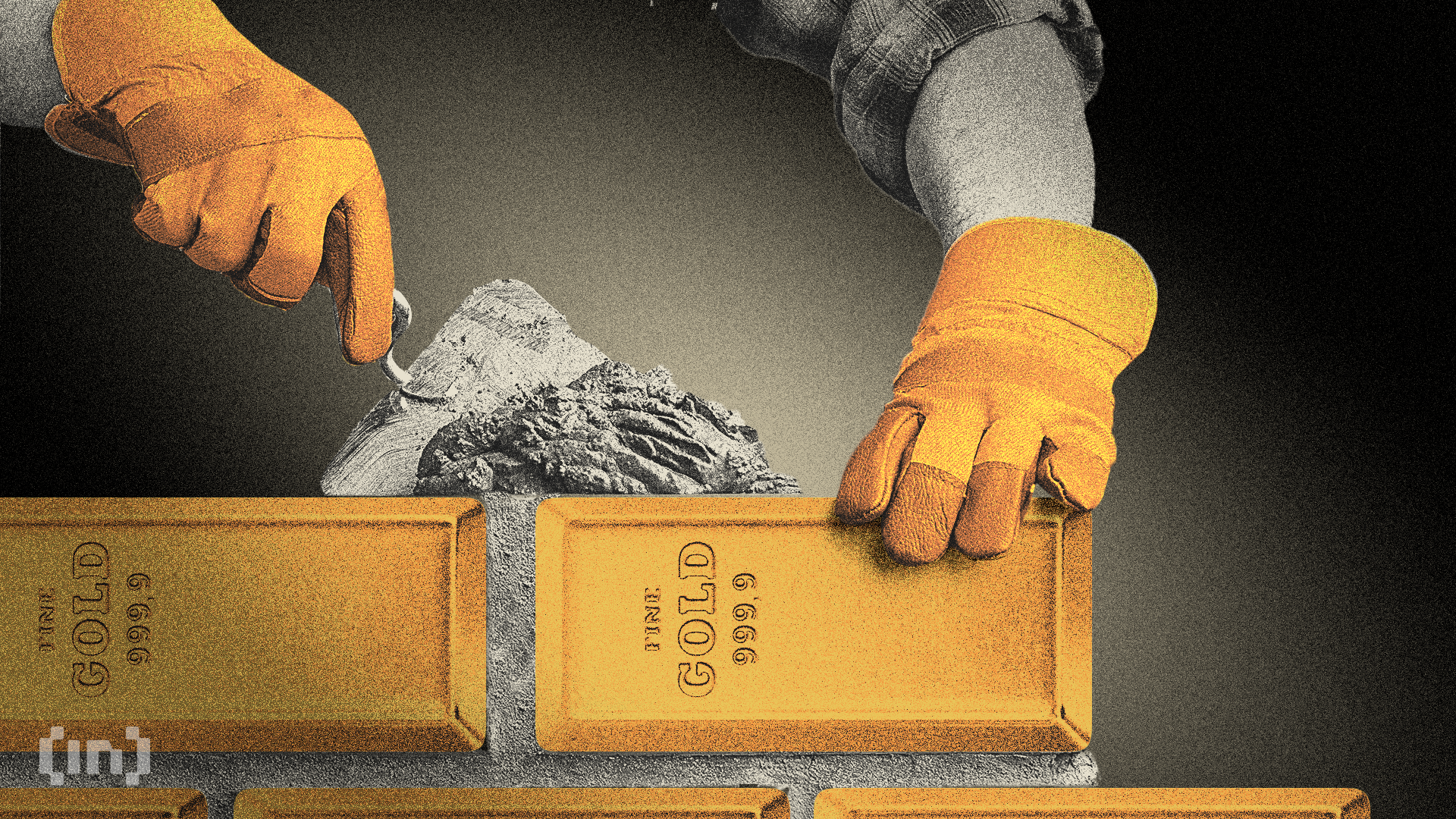
China’s central bank’s gold reserves rose by 650,000 ounces of gold in August, its largest monthly addition since October 2023. The addition extends Beijing’s buying run to 22 straight months. Purchases sped up while gold posted its strongest monthly gain since January. Beijing Keeps Buying While Prices Run Hot Consecutive months of buying have transformed
 BeInCrypto•Kamina Bashir8 Sept
China’s marine scientific research ships are expanding their operations around Taiwan, and they are not just there to advance the frontiers of human knowledge. Their operations serve to undermine Taiwan’s independent political status and to force international acceptance of Beijing’s claim of sovereignty over the island and its surrounding waters. This pressure campaign by the People’s Republic of China began intensifying in 2022. While media coverage of this development has focused on the activities of the People’s Liberation Army and the China Coast Guard, China’s civilian survey ships operate among them often unnoticed and in unprecedented numbers. Because of the
 War on the Rocks•Ryan D. Martinson8 Sept