Belaruspage 2

Place · 44 articles
Share

Coverage, page 2

page 2 of 3

UNHCR Poland Fact Sheet, February 2026

Countries: Poland, Belarus, Russian Federation, Ukraine, World Source: UN High Commissioner for Refugees Please refer to the attached file. Over one million refugees from Ukraine are currently present in Poland, the majority women and children. This represents some 2.5 per cent of the total population of Poland. UNHCR coordinates the response of 58 organizations in Poland under the Ukraine Situation Regional Refugee Response Plan (RRP), the majority of which are local and refugee-led organizations. UNHCR works with the Government of Poland to ensure refugees have access to territory, legal status, documentation and enjoy their rights. HIGHLIGHTS UNHCR Engagement on Amendments to the Act Phasing Out the Special Actt on Assistance to Ukrainian Citizens In January 2026, the Polish Parliament adopted the so-called Phasing Out Act, which terminates the special assistance regime for Ukrainian refugees and provides for a transition to temporary protection under existing legislation as of March 2026. Throughout the legislative process, UNHCR actively engaged through legal comments and targeted advocacy, raising concerns regarding compliance with EU law. UNHCR issued recommendations addressing the proposed restriction of access to protection, access to accommodation support, documentation requirements and the removal of provisions safeguarding family reunification. Following consultations, the bill was amended to retain family reunification provisions. Supporting Refugee Employment: UNHCR and Japan’s MOFA Host Job Fair UNHCR, together with the Ministry of Foreign Affairs of Japan, organised a Japanese Job Expo in Warsaw to support investment in refugee human capital and self-reliance. Held on 28 November, the event connected Japanese employers with Ukrainian jobseekers, supporting skills matching, labour market inclusion and pathways towards a more stable future.

ReliefWebReliefWebUN High Commissioner for Refugees16 Sept
  • neutral toward UNHCR · 98%

UNHCR Lithuania Fact Sheet, February 2026

Countries: Lithuania, Belarus, Russian Federation, Somalia, Ukraine Source: UN High Commissioner for Refugees Please refer to the attached file. Refugees from Ukraine: Lithuania generously hosts 52,500 refugees from Ukraine on temporary protection. Temporary protection in Lithuania is extended untill 4 March 2027. Refugee Response Plan (RRP): Lithuania is included in the Ukraine RRP for 2025-2026. Partners have reached above 27,000 refugees with assistance and support in Lithuania in 2025. Refugees from Belarus: Lithuanian authorities and NGOs provide assistance and support to refugees and persons released from prison in Belarus. HIGHLIGHTS EU Solidarity The Government has opted for a mixed approach in Lithuania to the EU’s solidarity mechanism. Lithuania will accept half of the asylum-seekers allocated to it by the EU and will pay a financial contribution for the remainder, starting in June 2026. Fair asylum procedures UNHCR conducted training on asylum interviews for asylum and registration officers of the Migration Department. Training included all stages of the process, from planning and preparing, engagement and rapport, managing biases and how memory works to obtaining a free account and challenging information respectfully, as well as working with interpreters and conducting remote interviews.

ReliefWebReliefWebUN High Commissioner for Refugees16 Sept

UNHCR Belarus Factsheet, February 2026

Countries: Belarus, Afghanistan, Georgia, Ukraine Source: UN High Commissioner for Refugees Please refer to the attached file. Access to asylum: UNHCR works towards enhancing the asylum space and standardization of the state refugee status determination procedure (SRSDP) through capacity building and liaison with asylum authorities at country and regional levels. Self-reliance and inclusion: UNHCR promotes inclusive and sustainable integration aligned with the UN Country Framework 2026–2030, aiming toexpand the access of forcibly displaced and stateless people to national social protection systems. Since 1 January 2026, UNHCR’s operations in Belarus and the Russian Federation have been consolidated under a newly established Multi‑Country Office (MCO).

ReliefWebReliefWebUN High Commissioner for Refugees15 Sept

Nato jets shoot down drone violating Lithuania’s airspace

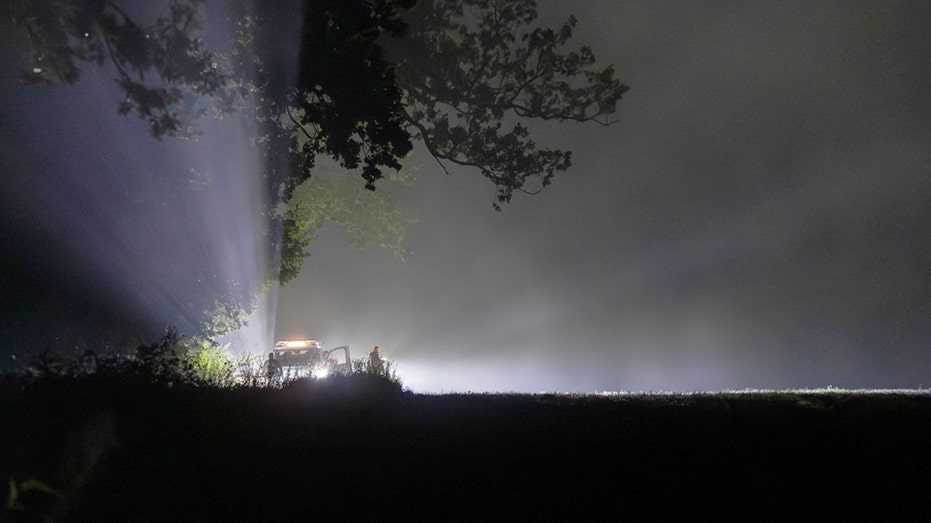
The drone, which reportedly entered from Belarus, ⁠was shot down near Pratkunai village in central-southern Lithuania Nato fighter jets shot down a drone over Lithuania after an alert was issued in the ‌capital, Vilnius, and surrounding region, while Poland scrambled fighter jets less than a day after retrieving a suspected Russian drone adrift in its waters. The Lithuania drone ⁠was shot down near the central-southern village of Pratkunai outside the city of Kaunas, said emergency authorities early on Tuesday. The drone came from neighbouring Belarus and was heading west, according to information from Lithuania’s crisis management centre that was reported by national radio LRT. Continue reading...

The GuardianThe GuardianGuardian staff and agencies15 Sept

Turkish Airlines further reduces EX-YU operations this winter

Turkish Airlines has further revised its operations for the upcoming 2026/27 winter season, which begins on October 25 and runs through to March 27 next year. This week, the Turkish flag carrier removed an average of more than 100 weekly flights from its timetable compared to its original schedule, with Podgorica, Skopje and Pristina among the destinations affected by the latest changes. Turkish Airlines is further reducing flights between Istanbul and Podgorica . After initially cutting frequencies from eighteen to fourteen weekly, the carrier has now reduced services to ten per week throughout the winter. As part of its European Union accession process, Montenegro will introduce visa requirements for nationals of Turkey, Belarus, China, Russia and Saudi Arabia from November 1. Turkish Airlines’ Podgorica services carry a notable number of Turkish travellers, as well as connecting passengers travelling to and from Russia, with the new visa measures expected to impact demand. As previously reported, Turkish Airlines will suspend operations to Tivat for the entire upcoming winter season. The carrier had initially planned to maintain three weekly flights between Istanbul and the Montenegrin coastal city, matching frequencies from the previous winter. Although Turkish Airlines also scheduled the route last winter, it ultimately suspended operations in January for the remainder of the season following Montenegro’s temporary introduction of visa requirements for Turkish nationals. This time, no flights are planned for the entire winter season. Skopje will see its frequencies reduced by two per week, from fourteen to twelve weekly, while Pristina services will be cut from ten weekly last winter to eight per week. As noted in previous schedule revisions, Turkish Airlines will reduce operations to Sarajevo from the originally planned fourteen weekly flights to twelve throughout the winter season. Services to Zagreb will also be cut from sixteen or seventeen weekly last winter, depending on the month, to fourteen weekly this coming winter. Overall, Turkish Airlines has put 683.424 seats on sale on flights to and from the former Yugoslav markets during the 2026/27 winter season, down 9.1% on the previous winter, or by 68.530 seats. The number of flights has been reduced by 12.9%, with 591 fewer services scheduled. EX-YU Aviation News

EAEX-YU Aviation NewsEX-YU Aviation (noreply@blogger.com)13 Sept
  • neutral toward Turkish Airlines · 98%

‘Letters From the Silenced Country’ Wins Golden Globes Impact Prize for Documentary Presented During Venice Film Festival (EXCLUSIVE)

Belarusian director Andrei Kutsila’s “Letters from the Silenced Country,” a portrayal of contemporary Belarus seen through the lives of five individuals whose existence has been upended by state violence and political repression, is the winner of The Golden Globes Impact Prize for Documentary awarded in partnership with Artemis Rising Foundation at the Venice Film Festival. The […]

VarietyVarietyNvivarelli12 Sept

Prominent Rights Lawyer Imprisoned in Belarus

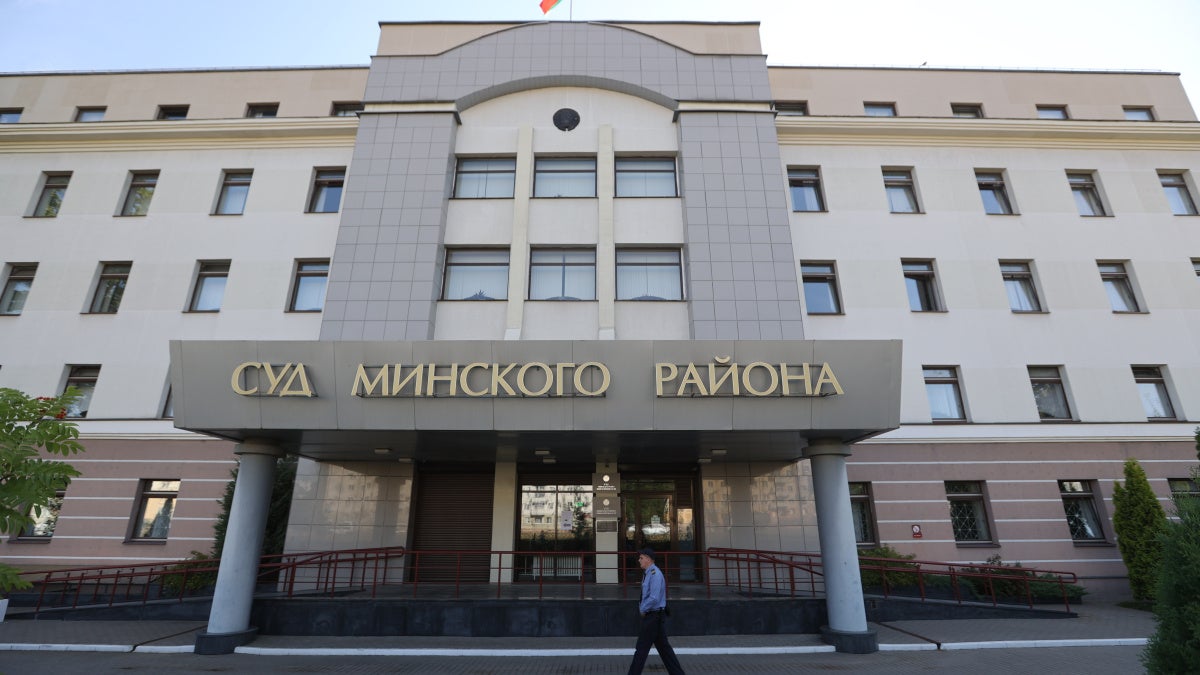
Click to expand Image The Minsk District Court, Belarus, August 4, 2021. © 2021 Anadolu Agency via Getty Images The Minsk City Court sentenced human rights lawyer Dmitri Laevski on September 9 to three years in prison for “aiding an extremist organization” and “discrediting” Belarus. Laevski has represented high-profile political prisoners, including opposition politician Viktar Babaryka and lawyer Maksim Znak. Laevski was charged with “aiding extremism” in connection with an interview he gave to Radio Liberty in June 2021 about Babaryka’s trial. Belarus banned Radio Liberty as “extremist” in December 2021 – half a year after the interview. Authorities opened a criminal case against Laevski in August 2025, according to Yauheni Pylchanka, a former colleague of Laevski. The Minsk City Bar Association disbarred Laevski in July 2021 in apparent reprisal for providing legal assistance to political prisoners and speaking out on human rights issues. The trial against Laevski began on September 2. According to prosecution, he “knowingly spread false information” about Belarus by giving nine interviews to seven independent media outlets by commenting on his own disbarment, and by discussing trials and criminal cases against Babaryka and Znak, as well as the treatment of lawyers who represent political prisoners. Laevski gave all nine interviews before the government classified the outlets as “extremist” and, during his trial, the prosecution did not present evidence that any of his statements were false. This is not the first time Laevski faced baseless prosecution for representing political prisoners. In 2011 and 2012 he had represented Ales Bialiatski, a prominent human rights defender and a 2022 Nobel Peace Prize co-laureate. Bialiatski condemned the September 9 verdict against Laevski, saying that he was punished for loving his country. The sham trial against Laevski is just the latest example of the widespread and systematic repression of the legal community in Belarus. At least six other lawyers remain behind bars and dozens have lost their licenses on politically motivated grounds. Belarusian authorities should immediately and unconditionally release Dmitri Laevski and stop the crackdown on the legal profession.

Human Rights WatchHuman Rights WatchHuman Rights Watch11 Sept