Trump, Zelenskiy discuss Patriot missiles; no US commitment made
The absence of a U.S. commitment on missile support may ease immediate NATO-Russia tensions, influencing market perceptions of conflict risk.
- neutral toward Zelenskiy · 99%
37 articles from 21 sources. Only labels with confidence ≥ 0.6 are counted; quotes are the evidence.
| 5 articles | |||
| 4 articles | |||
| 4 articles | |||
| GBGlobal Banking & Finance Review | 3 articles |
„A viral NATO video is being falsely framed online as “war propaganda””
France 24 ↗„NATO’s thumbs-up for AWS”
Defense One ↗„Historic NATO Arctic Mission”
Aviation News EU ↗„NATO is measuring Russian adaptation the wrong way”
Breaking Defense ↗„Is NATO ready to fight? The Ukraine war is raising doubts among military analysts”
Global Banking & Finance Review ↗
The absence of a U.S. commitment on missile support may ease immediate NATO-Russia tensions, influencing market perceptions of conflict risk.

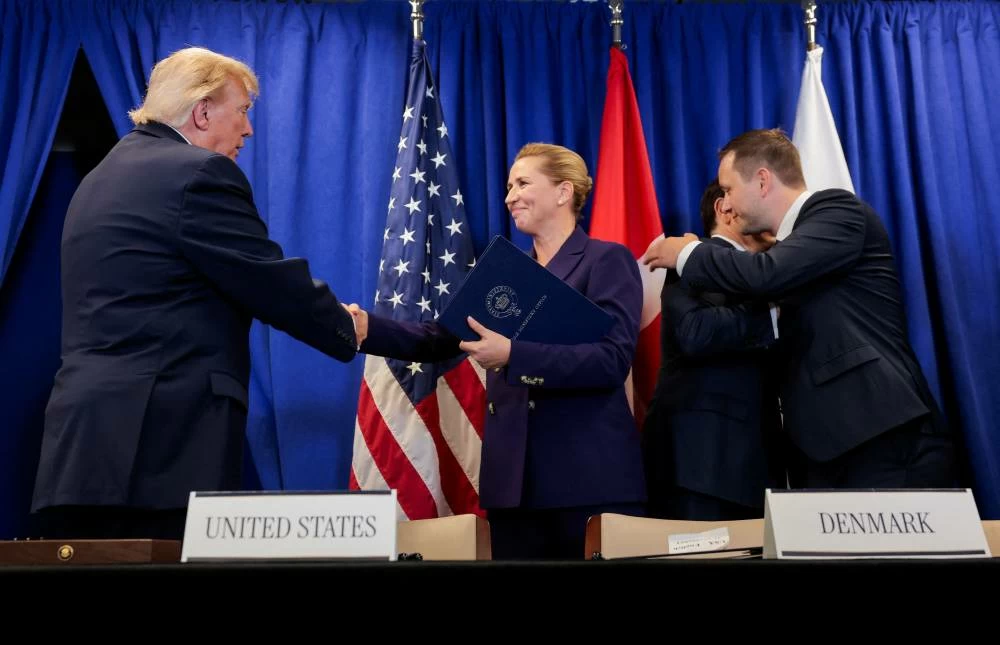
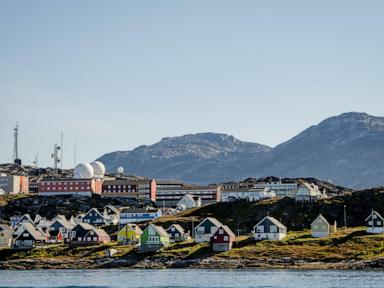
U.S. President Donald Trump and the leaders of Denmark and Greenland signed an agreement about the status of the Arctic island after months of threats by Trump to seize the semiautonomous territory of a NATO ally. The deal was officially signed Tuesday in New York, after U.S., Greenlandic and Danish officials had quietly negotiated for months behind the scenes - searching both for solutions to address some of Trump’s security concerns about the territory, as well as alleviating Danish and Greenlandic fears of being taken over by the U.S. The three parties expressed satisfaction with the deal at the signing ceremony - but what exactly does it say? Washington is allowed to "modernize and expand” its activities at the remote Pituffik Space Base in the northwest, according to the agreement. The U.S. can also set up "defence areas” at Narsarsuaq in the south and Mestersvig in the east, and "may establish additional defense areas in Greenland and strengthen its military operations or facilities.” The accord calls for wide U.S. military mobility on Greenland’s territory, including "undersea access," noting that " the security situation in the Arctic is changing and that more efforts are needed to ensure security there in the future.” US President Donald Trump, Danish Prime Minister Mette Frederiksen and Greenland Prime Minister Jens-Frederik Nielsen attend a trilateral signing event regarding a deal on Greenland The agreement reaffirms "the sovereignty and territorial integrity of the Kingdom of Denmark,” and recognizes the Greenlanders' "right to self-determination.” The agreement says all three parties "support a stronger NATO engagement in the Arctic, including as regards planning, presence, exercises, and joint intelligence gathering.” It allows U.S. military access to Greenland to defend the NATO area, Greenland itself and the American continent - including through a "Golden Dome defense system." The deal spells out that "no state that is not a member of NATO shall be allowed to establish its own manned or unmanned military installations in Greenland nor shall they be allowed a persistent presence of military forces in Greenland." In the preamble, the signatories recognize "the need to protect the pristine environment of Greenland.” It also stresses "the economic, social, and cultural rights of the people of Greenland, including with respect to their lands and their way of life, including hunting, fishing, and other traditional, cultural, historical, future activities.” The accord "does not have an end date” and, if Greenland chooses to become independent, it will agree to remain in NATO and take on Denmark’s rights and obligations under the deal. The deal will only "enter into force” once the "necessary parliamentary processes of the Kingdom of Denmark, in conjunction with Greenland, have been completed.”

The Polymarket NATO contract covers a 2025 military-clash window, while fresh warnings concern possible future tests of the alliance.

NATO jets were deployed in Polish and Romanian airspace overnight into Wednesday morning, in response to the latest wave of Russian drone and missile attacks on Ukraine.

The US relationship is stabilising, but how will Europe face up to Russia and China if President Le Pen is in power? I addressed a group of more than 100 European ambassadors recently on the big challenges facing the continent this year and next. My main point to these senior diplomats was that, perhaps counterintuitively, Europe’s biggest external challenges over the next 12 months will come from Russia and China, rather than the US. Europe’s relationship with Trump’s America remains difficult. The US president has weakened confidence in Nato, raised new transatlantic trade tensions and introduced uncertainty into everything from US support for Ukraine to his territorial designs on Greenland. Yet paradoxically, and notwithstanding Trump’s latest tariff threats over the EU’s outreach to Canada, the transatlantic relationship is becoming the more stable part of Europe’s external environment. Not stable, but more stable. Mujtaba Rahman is the managing director for Europe at Eurasia Group, a political risk research and consulting firm Continue reading...

Rising tensions highlight the need for enhanced NATO strategies and could significantly impact geopolitical stability and market dynamics.

A viral NATO video is being falsely framed online as “war propaganda”, with users accusing the Alliance of sharing a “promotional video” designed to prepare the public for imminent war with Russia. But the footage is not new: NATO published it in July 2024 for its 75th anniversary, and it’s been stripped of its original context. The claim comes as European leaders warn of growing Russian hybrid threats, including alleged drone, cyber and sabotage activity. Vedika Bahl explains in Truth or Fake.

NATO's deputy commander in Europe is warning that Russian President Vladimir Putin is becoming increasingly reckless as the war in Ukraine drags on and as he seeks to divide Western allies

NATO and the European Union welcome accord that ends months-long standoff after Trump threatened to seize Greenland.

President Donald Trump signs updated defense deal with the Kingdom of Denmark over military presence in Greenland that tucks NATO alliance closer in defending the U.S. northern frontier.

The company has become the first cloud provider to win approval to handle sensitive data for all alliance members.

Over time, the development should allow better intelligence sharing and military planning among the alliance.

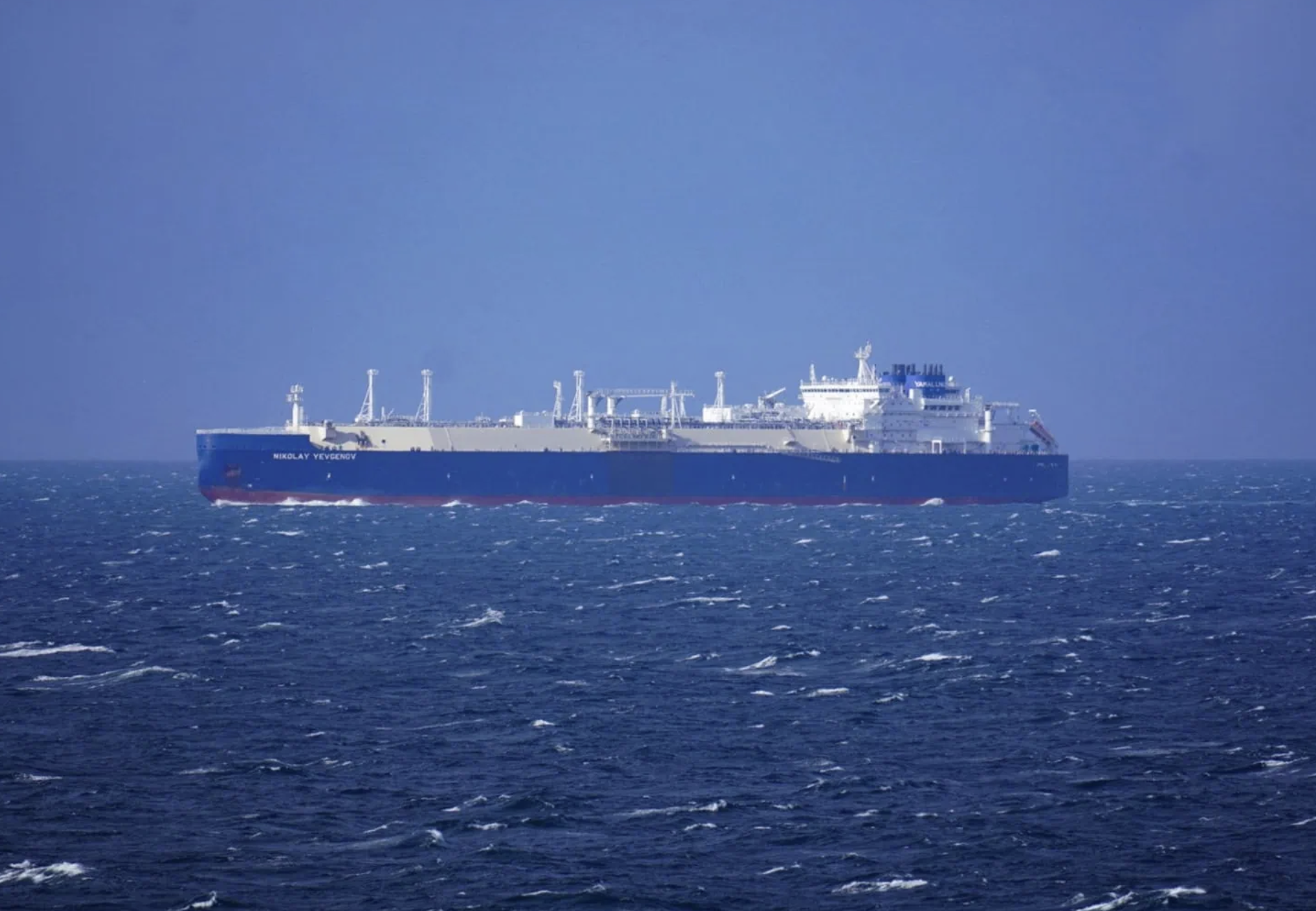
The Danish yard is repairing one of its own Nato warships while continuing to service LNG carriers from Russia reportedly linked to Russia’s FSB security service.

President Trump’s announcement that he secured a deal with Denmark and Greenland over security for the Arctic territory gave both the president’s supporters and critics something to cheer over — the removal of a key irritant in the NATO relationship. The exact details of the deal are not yet public, but officials have highlighted that…
Planet Labs CEO Will Marshall said growing European interest in commercial satellite imagery comes as countries see how Ukraine is using it.
President Donald Trump’s interest in a U.S. acquisition of Greenland, a semiautonomous territory of NATO ally Denmark, first became publicly known in 2019

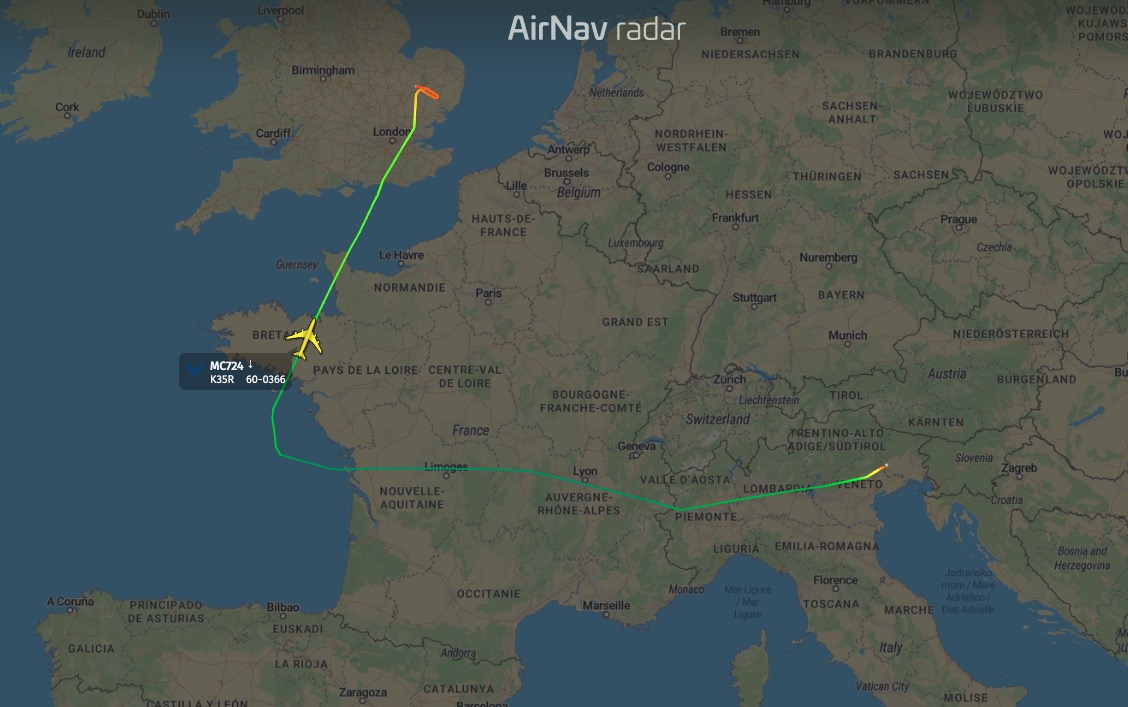
SUFFOLK, United Kingdom — A U.S. Air Force Boeing KC-135R Stratotanker made an emergency diversion to Royal Air Force (RAF) Mildenhall on Monday morning after declaring an in-flight emergency while cruising over French airspace on Monday Septembre 21, 2026. The military aerial refueling aircraft, operating under callsign MC724 and registration 60-0366, departed from Aviano NATO […]

President Donald Trump’s interest in taking control of Greenland, a semiautonomous territory of NATO ally Denmark, first became publicly known in 2019, but was dismissed as absurd by Denmark's leader

Lithuania's readiness highlights escalating NATO-Russia tensions, potentially increasing the risk of military conflict and impacting regional stability.