
AI surpassing human tasks no longer seen as key milestone: Bloomberg
The reassessment of AI's role in surpassing human tasks may shift focus towards innovation and strategic competition among leading AI firms.
 CryptoBriefing•Estefano Gomez7 Sept
The reassessment of AI's role in surpassing human tasks may shift focus towards innovation and strategic competition among leading AI firms.
CryptoBriefing•Estefano Gomez7 Sept
Goldman Sachs, Jane Street, and Millennium Management led disclosed spot XRP ETF holdings in second-quarter filings. Bloomberg Intelligence data showed known filers held $183.5 million in fund exposure representing about 176.4 million XRP. Goldman Sachs Leads XRP ETF Holder Rankings Institutional investors held $183.5 million across U.S. spot XRP exchange-traded funds (ETFs) at the end […]
 Bitcoin.com News•Kevin Helms6 Sept
Brazil's Wealth High Governance Asset Management held about $24 million worth of 21Shares' HYPE fund as of the end of June, the top HYPE ETF holder.
 The Block•Zack Abrams5 Sept
Bessent predicts oil could drop to $40 after the Iran war, influencing bond yields. New all-time high for crude oil by September 30 at 1.6% YES.
CryptoBriefing•Estefano Gomez4 Sept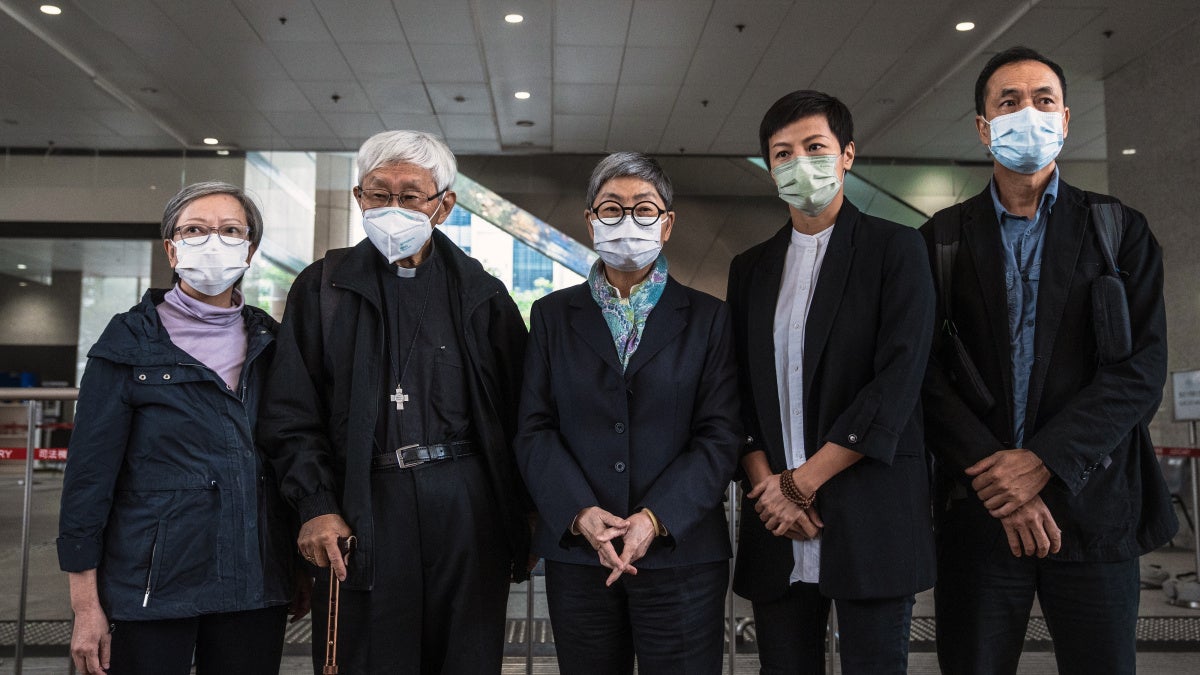
Click to expand Image Former trustees of the 612 Humanitarian Relief Fund, following a verdict at the West Kowloon Magistrates' Courts in Hong Kong, November 25, 2022. © 2022 Lam Yik/Bloomberg via Getty Images Organizing a group to help people in distress used to be something Hong Kong people could do without fear. Not anymore. On September 3, the Hong Kong Court of Appeal affirmed the conviction of five 612 Humanitarian Fund trustees for failing to register the fund under the Societies Ordinance. It’s just the latest example of the government weaponizing colonial-era laws to dismantle civil society organizations. The 612 Fund was established in 2019 through public donations to cover medical and legal expenses for demonstrators arrested during the pro-democracy protests. It ceased operations in 2021. The following year, its five trustees—including Cardinal Joseph Zen, the barrister Margaret Ng, and the singer Denise Ho—were fined HK$4,000 (US$510) for failing to register as a society. Separately, they were also arrested under the newly adopted National Security Law for alleged “foreign collusion”; that case remains open. The ruling has serious rights implications for organizations in Hong Kong. The Societies Ordinance defines “society” so broadly that virtually any informal group can fall within it. To operate legally, a group must provide personal information to police and meet strict, continuing reporting obligations, allowing authorities to monitor everyday civic activity. Yet the appeals court ruled that these restrictions did not impose “an unacceptably harsh burden” on freedom of association. The ordinance was enacted by the British colonial government in 1911 primarily to control gangs. The United Nations Human Rights Committee and civil society groups have long criticized the law for its vague language and sweeping scope. In the nearly three decades since the United Kingdom handed sovereignty over Hong Kong to China in 1997, the authorities started using the Societies Ordinance with increasing frequency against pro-democracy groups. They have used it to ban the Hong Kong National Party, prosecute trade union leaders, and pressure the Civil Human Rights Front to disband. Other colonial-era laws, including sedition provisions and the Public Order Ordinance, have also been repurposed against civil society. While the 2020 National Security Law imposed by Beijing remains the authorities’ most powerful tool against dissent, the 612 Fund case shows that the authorities are selectively applying yet another law to restrict freedom of association rights, punish advocacy, and bring civic life under heavy-handed police scrutiny.

Boeing is making steady progress repairing hundreds of microscopic cracks discovered in structural reinforcing members on the two 747-8 aircraft being converted into the next Air Force One fleet, with the news coming from Bloomberg. The repairs involve longitudinal structures known as stringers, which are being replaced under procedures mandated by the Federal Aviation Administration (FAA).

Binance has continued serving and onboarding some European Union customers more than two months after missing the bloc’s MiCA licensing deadline, using regulatory provisions and offshore routing while it seeks authorization elsewhere. According to a Bloomberg report, the world’s largest…

Airbus A330neo deliveries have been severely hampered over the summer after concerns surfaced around the aircraft’s horizontal tail…
 AeroTime•Ian Molyneaux3 Sept
Anthropic's IPO could reshape investor strategies, influencing market dynamics and timing for other companies considering US listings.
CryptoBriefing•Estefano Gomez2 Sept
Rising agricultural prices could exacerbate global food insecurity, strain economies, and trigger socio-political unrest similar to past crises.
CryptoBriefing•Editorial Team2 Sept
Justin Sun says Forbes and Bloomberg cut 70-80% off his net worth. He explains why he will never cash out.
 BeInCrypto•Phil Haunhorst1 Sept
Donald Trump Jr.’s 1789 Capital has agreed to lead a $1 billion Polymarket funding round with roughly $300 million that would value the prediction market platform at $21 billion. Bloomberg first reported the new financing, while 1789 Capital spokeswoman Alexa…

Hyperliquid Labs and Kraken parent Payward have entered advanced talks to offer selected Hyperliquid-linked perpetual futures to U.S. traders through CFTC-regulated exchange Bitnomial. Hyperliquid could reach U.S. traders through Bitnomial Bloomberg reported on Aug. 31 that Hyperliquid Labs and Payward…
The reported plan would route U.S. traders through CFTC-regulated Bitnomial, while neither Payward nor Hyperliquid has confirmed a deal.
 The Defiant•The Defiant Team31 Aug
Payward has reportedly presented the CFTC with an outline of the proposed structure, though regulatory approval is still pending.
The Block•Kyle Baird and Sarah Wynn31 Aug
Hyperliquid's potential US entry could revolutionize the on-chain perpetual futures market by aligning it with American regulatory standards.
CryptoBriefing•Editorial Team31 Aug
HYPE's potential U.S. market entry could boost investor confidence and trading volume, impacting its growth trajectory and regulatory landscape.
CryptoBriefing•Estefano Gomez31 Aug
A disorderly yen could lead to higher U.S. rates, strengthening the dollar and potentially suppressing gold prices, affecting global markets.
CryptoBriefing•Estefano Gomez28 Aug
Bitwise’s Solana Staking ETF has surpassed $1 billion in assets less than ten months after its launch, becoming the first individual Solana ETF to reach the level. Bitwise Solana ETF crosses $1 billion Bloomberg senior ETF analyst Eric Balchunas said…

The US Securities and Exchange Commission has proposed allowing crypto projects to raise up to $75 million annually without full registration, reopening public token fundraising at a time when investor demand for new tokens has fallen sharply from the ICO…