Georgia: Critics Jailed for Online Speech
Click to expand Image
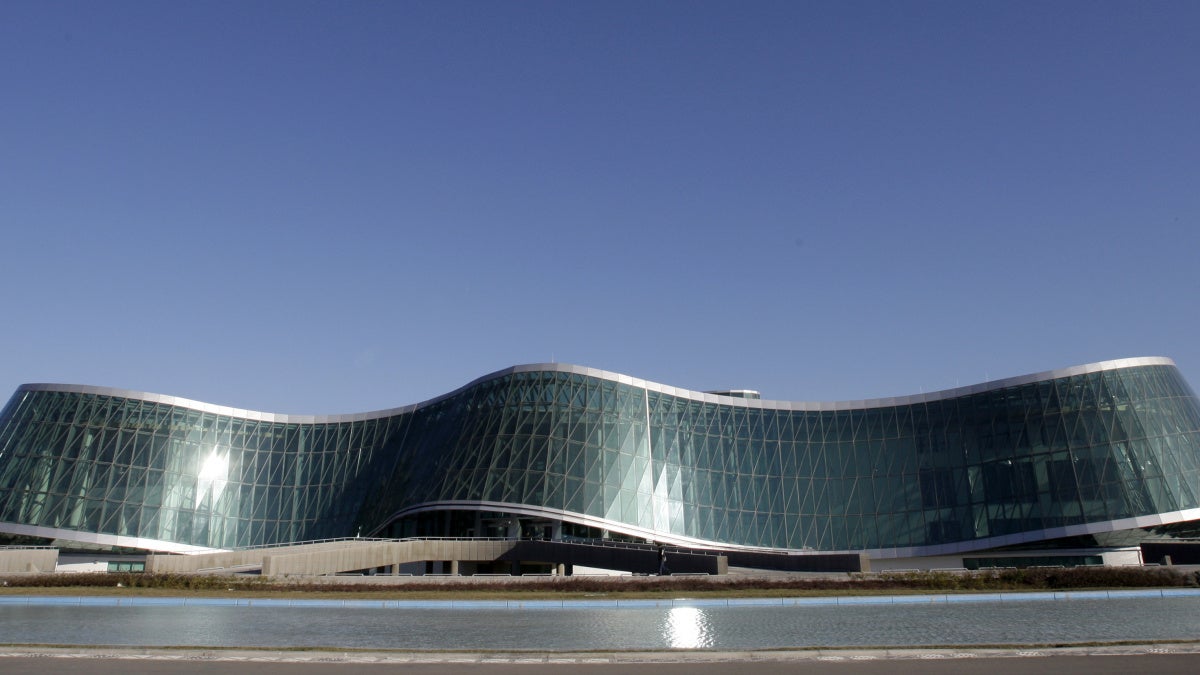
The Georgian Interior Ministry headquarters in Tbilisi, February 2, 2010.
© 2010 David Mdzinarishvili/Reuters (Berlin, September 18, 2026) – Georgian authorities are using vague administrative offenses to jail or heavily fine people for online speech, deepening the government’s crackdown on freedom of expression, Human Rights Watch said today. Since June 2026, a new Ministry of Internal Affairs unit has monitored social media and referred hundreds of posts to courts to be tried for speech-related charges, such as insult or profanity. In July, courts sentenced a journalist and an activist to 14 and 25 days of detention, respectively, for online statements deemed insulting, and in September, authorities opened proceedings against a blogger over a Facebook comment deemed profane. “Statements can be crude or disrespectful, but that does not justify jailing people for what they say about public officials,” said Hugh Williamson, Europe and Central Asia director at Human Rights Watch. “Detention or substantial fines for nonviolent expression under vague rules, combined with monitoring social media, pose a serious threat to free expression in Georgia.” On July 22, the Tbilisi City Court sentenced Vakho Sanaia, a journalist and anchor at Formula TV, a broadcaster critical of the government, to 14 days in detention over a Facebook post referring to Shalva Papuashvili, the parliament speaker, and Vladimir Bozhadze, a lawmaker, in terms deemed disparaging. Sanaia had been fined 6,000 Georgian lari (approximately US$2,200) 12 days earlier in a separate case involving Facebook posts about the same officials. Following that decision, Sanaia posted: “I wrote a post saying, ‘Don’t call Papuashvili and Bozhadze d—ks,’ and I was fined 6,000 lari for that. Well, I don’t know then—I guess call them that.” A Ministry of Internal Affairs representative said the authorities sought detention because Sanaia had disregarded the previous court decision and demonstrated his intention to continue his conduct. The court granted the ministry’s request. Two days later, Tbilisi City Court sentenced Giorgi Akhobadze, a physician and activist, to 25 days of detention for statements about public officials and a police officer, including on social media. Akhobadze’s lawyer, Mikheil Zakareishvili, said that the police presented the defense with a large volume of case materials, including photographic and video evidence, only 27 minutes before the hearing, yet the court rejected a request for more time to review them. Zakareishvili also disputed that the police evidence established an offense and said that the statements at issue were legitimate criticism or commentary on factual events. On September 10, Tornike Razmadze, an activist and blogger critical of the government, received notice that police had initiated profanity proceedings against him over a Facebook comment under a video in which he compared remarks by Prime Minister Irakli Kobakhidze with statements by the Russian propagandists Margarita Simonyan and Vladimir Solovyov. The Ministry of Internal Affairs stated that Razmadze was accused of insulting Kobakhidze. But Razmadze said that the administrative offense notice he received cited article 166(1) of the Code of Administrative Offenses, which concerns swearing and other insulting conduct in a public space, rather than the provision specifically concerning insults against public officials. Razmadze said his comment referred to Simonyan and Solovyov, not Kobakhidze. The case illustrates the expanded use of administrative offenses to police online speech, Human Rights Watch said. Article 166, traditionally concerning petty hooliganism in public places, is now also being applied to social media. In February 2025, parliament added article 17316 to Georgia’s Code of Administrative Offenses, making “verbal abuse, swearing, persistent insult and/or other offensive actions” directed at a broad range of state and public officials in connection with their duties punishable by a fine of 1,500 to 4,000 lari (about $550 to $1,500) or up to 45 days of detention. A repeat offense carries a fine of 2,500 to 6,000 lari (about $920 to $2,200) or between 5 and 60 days of detention. The provision forms part of a series of legislative changes since late 2024 that Human Rights Watch has found sharply restrict peaceful expression and assembly and enable increasingly punitive sanctions to be imposed on government critics. Imposing detention or substantial fines for nonviolent, insulting, or profane speech is an especially severe interference with freedom of expression and risks deterring others from speaking openly about those in power, Human Rights Watch said. The Organization for Security and Co-operation in Europe’s Office for Democratic Institutions and Human Rights has criticized the provision’s broad and subjective wording. It found that terms including “verbal abuse, swearing, persistent insult and/or other offensive actions,” without definitions or clearly specified elements of the offense, could be interpreted and applied arbitrarily. It concluded that the provision does not meet the requirements of legality and foreseeability for restrictions on freedom of expression and warned of its potential chilling effect. Enforcement of the new provision intensified after June 1, when the Ministry of Internal Affairs established a Division for Combating Hate Speech. The unit monitors public statements, including on social media and in the press, for speech that it considers degrading, insulting, or hateful, in particular toward officials, identifies alleged offenders, and refers cases to court. By August 1, the Ministry of Internal Affairs said the unit had identified and submitted to courts about 300 alleged administrative offenses involving expression in public spaces. Courts have already completed about 130 cases and imposed fines or administrative detention. Using a unit ostensibly created to combat “hate speech” to pursue alleged offensive or profane expression is particularly troubling, Human Rights Watch said. International human rights standards distinguish incitement to discrimination, hostility, or violence from speech that merely shocks, offends, or insults. Crude or offensive language does not, by itself, remove expression from human rights protection. The European Court of Human Rights has repeatedly recognized that freedom of expression protects not only ideas that are favorably received but also those that offend, shock, or disturb. Politicians and other public officials are subject to greater public scrutiny than private individuals and are expected to tolerate a wider degree of criticism. As a party to several international human rights treaties, including the European Convention on Human Rights, Georgia is obligated to protect freedom of expression. Any restriction must have a sufficiently clear legal basis, pursue a legitimate aim, and be necessary and proportionate in a democratic society. Georgia is also required to provide appropriate due process protections when an offense is criminal in substance, even if domestic law classifies it as “administrative.” The severity of available sanctions, including detention for as long as 60 days, makes adequate procedural safeguards particularly important. The Georgian authorities should end the use of detention for peaceful expression and repeal or amend vague provisions used to punish speech so that they comply fully with Georgia’s international human rights obligations. They should ensure that provisions concerning insults, swearing, and public disorder are not used to suppress legitimate expression, including harsh criticism of public officials, whether they are politicians, police officers, or other state representatives. “The government does not have to like crude or offensive speech, but it cannot use that as a shortcut to jail its critics,” Williamson said. “Georgia should end detention for peaceful expression, repeal its repressive restrictions on speech, and restore space for people to criticize those in power without fear of punishment.”
 Human Rights Watch•Human Rights Watch18 Sept


 CryptoBriefing•Editorial Team1h ago