Indonesiapage 4

Place · 226 articles
Share

Coverage, page 4

page 4 of 12

World: Global Update | September 2026: An Inter-Agency Report of the Global ENSO Analysis Cell - El Niño Status & Humanitarian Outlook

Countries: World, Afghanistan, Angola, Bangladesh, Burkina Faso, Cameroon, Central African Republic, Chad, Colombia, Cuba, Djibouti, Ecuador, El Salvador, Ethiopia, Fiji, Guatemala, Haiti, Honduras, Indonesia, Kenya, Kiribati, Madagascar, Malawi, Mali, Mozambique, Myanmar, Nepal, Nicaragua, Niger, Nigeria, Papua New Guinea, Peru, Solomon Islands, Somalia, South Sudan, Sudan, Timor-Leste, Tuvalu, Uganda, Vanuatu, Venezuela (Bolivarian Republic of), Zambia, Zimbabwe Sources: International Federation of Red Cross and Red Crescent Societies, Save the Children, UN Office for the Coordination of Humanitarian Affairs, World Food Programme Please refer to the attached file. OVERVIEW El Niño is firmly established and is forecast to reach very strong intensity. WMO forecasts indicate a nearly 100 per cent likelihood that it will persist through February 2027, with the event expected to strengthen further and peak towards the end of 2026. Its effects may lag and persist beyond the peak. A very strong El Niño is likely to bring major shifts in rainfall and temperature patterns, increasing the risk of drought, flooding, extreme heat and other weather and climate hazards. These effects will not be felt everywhere at the same time or in the same way. Their severity will depend on where the climate signal coincides with agricultural and livelihood calendars, existing humanitarian needs and people's ability to cope. WMO cautions that the strength of the global event does not translate directly into the scale of impacts in any individual country or region. El Niño is also occurring against the backdrop of long-term climate warming. The emerging risks must be understood alongside conflict, displacement, high food insecurity and high food prices, malnutrition, disease outbreaks, economic pressures and overstretched essential services. These conditions have not improved since the June update. In many places, repeated shocks have depleted household assets, increased debt and weakened the coping mechanisms that people would ordinarily rely on when drought, floods or high prices affect their livelihoods. WFP estimates suggest that up to 50 million people globally could be affected over the next six to nine months, indicating the potential scale of the humanitarian consequences.

ReliefWebReliefWebWorld Food Programme17 Sept

World: State of Global Water Resources 2025

Countries: World, Argentina, Armenia, Australia, Chile, Cuba, Democratic Republic of the Congo, Djibouti, Dominican Republic, Eritrea, Ethiopia, France, Haiti, Indonesia, Iran (Islamic Republic of), Jamaica, Jordan, Malaysia, Nigeria, Pakistan, Philippines, Somalia, South Africa, Sri Lanka, Syrian Arab Republic, Thailand, Türkiye, United States of America, Viet Nam Source: World Meteorological Organization Please refer to the attached file. WMO: Recent water trends have serious future implications The WMO State of Global Water Resources report is a comprehensive science-based annual assessment of the hydrological cycle and extreme events in 2025 and over the past five years. 2025 was one of driest years for river discharge in 35 years Past 7 years have seen abnormal river flows Water storage on Earth’s land surface has decreased in past 10 years Widespread glacier loss across all regions for 4th consecutive year Asia and Africa are the regions most affected by water-related disasters Water data availability has improved, but gaps remain in hard hit areas Geneva, Switzerland, 17 September 2026 (WMO) – Rivers across the globe in 2025 had one of the driest years in more than three decades, according to a new report from the World Meteorological Organization (WMO). It shows a continuation of the long-term decline in Earth’s freshwater storage and in glacier retreat - trends with serious implications for people and economies in the future. The WMO State of Global Water Resources Report shows that the water cycle has become more erratic and unpredictable, swinging between too little or too much. The past seven years have seen the fewest rivers with “normal” flows since 1991. Asia and Africa together accounted for at least half of all recorded water-related extreme events and more than 80% of reported associated deaths over the past five years, it says. The report provides a comprehensive, science-based assessment of the entire water cycle loop, including river discharge, groundwater, evapotranspiration, land water storage, and snow and ice, as well as high-impact events. It covers the year 2025 and summarizes findings of the past five years since it was first published. Some parts of this cycle are fast – such as precipitation, river flow, soil moisture – they respond to weather within days or weeks. Others, like groundwater, glaciers and seasonal snowpack, are slow, they accumulate or deplete over seasons to decades or longer. Traditionally these slow reserves have acted as the planet's savings account: a buffer that absorbs bad years so that a single drought or a single dry season does not translate directly into a water crisis,” said WMO Secretary-General Celeste Saulo. “We are depleting that savings account. Global terrestrial water storage has shown a declining trend since 2014–2016 - a persistent, decade-long signal. For the fourth consecutive year, every major glaciated region on Earth lost ice mass. Groundwater tells a similar story: nearly two-thirds of monitored wells worldwide showed conditions outside the historical norm in 2025, and the balance shifted further toward deficit compared with 2024, not toward recovery,” said Celeste Saulo. “At the same time, we are seeing more water-related disasters. The strengthening El Niño will increase the risk of drought in some areas, and flooding in others,” she said. The report highlights some major areas of concern: 2025 was one of driest years for river discharge globally in 35 years, with below-normal flows over 36% of global basin area. This is based on data from simulations from 13 global hydrological models, driven by observed weather data. For the seventh year in a row, the number of river basins with “normal” conditions was in a clear minority: ranging between 34-38%, compared to the average of 46% between 1991-2020, according to the report. Terrestrial water storage – the total amount of water stored in groundwater, lakes and rivers, soil moisture, vegetation and ice and snow – has been in decline since mid-2010s. 2025 marked the fourth consecutive year with widespread glacier loss across all regions – leading to short term hazards like floods and long-term water insecurity. Between 2023-2025 glaciers lost mass in each reporting year with cumulative global glacier mass loss at 1400 Gigatonnes of water. This is roughly equal to the water required to fill about 560 million Olympic-sized swimming pools, or about one third of annual freshwater withdrawals. In each of the past five years, National Meteorological and Hydrological Services around the globe reported record-breaking floods and droughts. Some places have had no recovery time between one event and the next. “Water respects no borders. A river basin's water balance depends on what happens in another country. A glacier's retreat in one country reshapes water availability for populations hundreds of kilometers downstream. This is precisely why we need shared data, shared standards, and shared early warning — the exact function WMO exists to perform,” said Celeste Saulo. Dozens of experts from National Meteorological and Hydrological Services, data centres, researchers and partner institutions shared in situ observations, model outputs and space-based data and contributed to the report, which has expanded from three to 15 hydrological variables since the first edition in 2021. Country coverage has greatly expanded. However, Africa and Asia are still among the least represented regions in terms of hydrological observations in the report, even though they are most affected by extremes. 2025 was one of the warmest years on record. A weak La Niña emerged towards the end of the year after neutral conditions, and there was a predominantly negative Indian Ocean Dipole, which influenced precipitation. River basins Across the five reporting years (2021-2025), recurring below-normal river discharge was observed in major parts of the Amazon and La Plata basins, North America, Central and East Africa, Central Asia and the Middle East. Annual river discharge in 2025 was above-normal to much-above-normal across South and South-East Asia and parts of northern South America. In Africa, there were above-normal flows in the Senegal, Niger, Lake Chad, Orange and Limpopo basins, but much-below-normal discharge in the Nile, Congo and Zambezi basins. Below-normal to much-below-normal river discharge affected several major regions, including much of North America, the La Plata and São Francisco basins of South America, Eastern European basins, the Middle East and Central Asia. Reservoir and lake levels followed similar geographical trends as for river basins. African lakes were largely much above normal, with Kariba a notable exception. Terrestrial water storage Terrestrial water storage shows a persistent negative trend since 2014-2016 with increasing area under below-normal conditions. Between 2021-2025 below-normal terrestrial water storage repeatedly affected the south-western United States, Patagonia and the subtropical Andes, the Ganges–Indus headwaters, North Africa, the Middle East, Central Asia and eastern China, while persistent positive anomalies occurred in parts of sub-Saharan Africa, the Sahel and the Tibetan Plateau. In 2025, it was below-normal in northern and southwestern North America, Patagonia, Eastern Europe, the Middle East, Central Asia, eastern Brazil, northern India, parts of Northern Europe, the Russian Federation, China and Northern Africa. La Plata in South America showed signs of partial recovery from the long-term drought. Much-above-normal storage continued from 2024 into 2025 in Central and Southern Africa. Groundwater levels Persistent groundwater deficits were observed during 2022–2025 in parts of the Americas, Europe, the Middle East, India, southern Africa and Australia. Persistent and widespread below-normal to much-below-normal groundwater levels were observed across Central and Eastern Europe, central United States, parts of Mexico, northern and central Chile, northeastern and central-western Brazil, northern South Africa, northwestern India and parts of southern Australia, pointing to a cumulative depletion with multi-year drying trend. There were above-normal to much-above-normal conditions include parts of France, much of Northern Europe, the southeastern United States, large parts of South Africa, South-East Asia, and eastern Australia. Snow cover and glaciers Snow conditions were below normal across Europe in 2025, whilst the Russian Federation and North America showed strong regional contrasts. In the hydrological year 2025, glaciers lost 408 (±132) Gigatonnes of mass, equivalent to 1.1 (±0.4) mm of sea-level rise. It marked the fourth consecutive year in which every major glaciated region recorded a net loss. Central Asia, South Asia West, Russian Arctic, Iceland, Western Canada and USA all recorded annual mass balances that ranked among the three most negative years on record for that region. Some regions dominated by smaller glaciers, such as the Caucasus, Western Canada and the USA, and Central Europe may already have reached “peak water conditions,” the threshold where the glacier reaches its maximum runoff due to melting. Extreme events From 2021-2025, South America’s La Plata and Amazon basins, the Middle East and the Greater Horn of Africa experienced persistent multi-year drought conditions, while severe floods repeatedly affected West and Central Africa and South-East Asia. Asia and Africa were the regions most affected by extreme hydrometeorological events in 2025, with several African countries experiencing major flooding for two (Nigeria) or three consecutive years (Democratic Republic of the Congo). South and South-East Asia was hit by compound tropical cyclones and intense monsoon, leading to up to 3 600 deaths across affected countries - Sri Lanka, Pakistan, Viet Nam, Indonesia, Thailand, Malaysia, the Philippines. Assessing the economic losses associated with water-related disasters remains challenging in many countries. Jamaica reported that hurricane Melissa resulted in losses equivalent to 41% of GDP. Cyclone Ditwah cost Sri Lanka around 4% of GDP. Severe drought gripped East Europe, the Mediterranean, and Middle East and also returned to the Greater Horn of Africa after one of the driest October–December seasons on record linked to La Niña and a negative Indian Ocean Dipole. Notes to Editors The WMO State of Global Water Resources 2025 report includes scientific contributions from dozens of WMO Members, partners and scientists. Full details of the datasets, references and institutions involved are available in the report. The WMO Secretariat wishes to thank everyone who dedicated their time and expertise to this report. The World Meteorological Organization is the United Nations System’s authoritative voice on Weather, Climate and Water. For further information, please contact: Clare Nullis, WMO media officer, cnullis@wmo.int, +41 79 709 13 97 Global Communication and Engagement Media Contact media@wmo.int

ReliefWebReliefWebWorld Meteorological Organization17 Sept

The 'apex predator' of fires choking south-east Asia - podcast

Indonesia is in the middle of a climate emergency, experiencing what Nasa calls the ‘apex predator’ of wildfires. It’s burning an area three times the size of Singapore and choking millions across south-east Asia with toxic haze. But while Europe’s catastrophic summer made headlines in Australia, the climate emergency happening to one of our closest neighbours is less well known. Kate Lamb joins Matilda Boseley to talk about just how consequential these fires could become Read more : El Niño-fuelled wildfires destroy precious Indonesian forests – in pictures The women saving Borneo: battling fire, patriarchy and super El Niño on Indonesia’s peatland frontlines Indonesian wildfires threaten leading orangutan research site in Borneo Continue reading...

The GuardianThe GuardianPresented by Matilda Boseley with Kate Lamb. Produced by Cheyne Anderson with mixing and sound design by Lu Hill. Molly Glassey is executive producer16 Sept

A Route-Based Snapshot: Data & Trends for Refugees from Myanmar, as of end-August 2026

Countries: Myanmar, Bangladesh, India, Indonesia, Malaysia, Sri Lanka, Thailand Source: UN High Commissioner for Refugees Please refer to the attached Infographic. The humanitarian crisis in Myanmar remains one of the world’s most complex and protracted, marked by repeated waves of displacement and limited prospects for durable solutions. Escalating conflict and human rights violations have forced millions to flee within Myanmar and across borders. As of August 2026, 4 million people are internally displaced, and 1.63 million are refugees and asylum-seekers. The crisis has been worsened by disasters and extreme weather in recent years, including Cyclone Mocha (May 2023), Typhoon Yagi (September 2024), and a 7.7 magnitude earthquake (March 2025). With no sign of improvement, prospects for safe and voluntary returns, especially for 1.33 million Rohingya remain bleak. As humanitarian resources in host countries grow increasingly strained, thousands of Myanmar refugees are undertaking dangerous journeys in search of protection, safety, family reunification, and livelihoods. UNHCR is adopting a Route-Based Approach to improve early access to protection and solutions for refugees and asylum-seekers - ultimately reducing the need for risky onward movement. UNHCR continues to urge States across the region to strengthen coordination to save lives at sea, fully deploy rescue capacities, and ensure safe, timely disembarkation—upholding the principles of humanity, solidarity, and shared responsibility.

ReliefWebReliefWebUN High Commissioner for Refugees16 Sept

Oscars: Indonesia Selects Kamila Andini’s ‘Four Seasons in Java’ for International Feature Race (EXCLUSIVE)

Indonesia has selected Kamila Andini’s “Four Seasons in Java” (“Empat Musim Pertiwi”) as its submission for the international feature category at the 99th Academy Awards. Written and directed by Andini and produced by Ifa Isfansyah for Forka Films, the film stars Putri Marino, Arya Saloka, Christine Hakim and Hana Malasan. The story centers on Pertiwi […]

VarietyVarietyNaman Ramachandran16 Sept

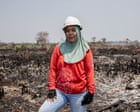
The women saving Borneo: battling fire, patriarchy and super El Niño on Indonesia’s peatland frontlines

Fire threatens Kalimantan’s rainforests. On the peatland frontlines, a group of local mothers is defending their community. Words and Photography: Garry Lotulung Irma puts on her heavy rubber boots as she prepares for a volunteer firefighting shift in her village of Sungai Putri, on the Indonesian side of Borneo island. Dressed in full safety gear she heads into fire zones on her motorbike, the air thick with toxic smoke. Continue reading...

The GuardianThe Guardian16 Sept

Indonesian wildfires threaten leading orangutan research site in Borneo

Critically endangered Bornean orangutans flee forests as staff at Cabang Panti work round the clock to stave off blaze Wildfires in Indonesia are sweeping through a critical research site for Bornean orangutans and are now threatening a celebrated research camp, home to one of the world’s longest-running studies of wild apes. In the past few days, the fires have burned within 200 metres of Rangkong research station, a satellite of Cabang Panti research station, which lies about four miles north in Gunung Palung national park. Continue reading...

The GuardianThe GuardianGloria Dickie15 Sept

Indonesian Humanitarian Coordination Platform: Situation Report No. 9 - Earthquake and Tsunami in Flores and Surrounding Areas (14 September 2026)

Country: Indonesia Source: Indonesia Humanitarian Coordination Platform Please refer to the attached file. Urgent Needs • The JNA was conducted from 19 August to 4 September 2026, with primary data collection carried out on 24-26 August at 143 survey locations/points across 35 sub-districts in seven affected districts. The JNA was led by Humanitarian Forum Indonesia (HFI), coordinated by WVI, and involved 20 national and local organizations. Overall, the main JNA findings include: o People are staying close to home - recovery strategies should follow where people are. Most JNA locations reported the use of tents/tarpaulins near homes; the response should therefore prioritize shelter-in-place, safe return, repair, and self-recovery. o Protection risks in displacement settings are becoming as important as shelter needs. 86.01% of JNA locations had no private space, and nearly half reported that basic facilities were difficult to access for at-risk groups. o A secondary health emergency may emerge from living conditions rather than the earthquake itself. Acute respiratory infections (ARI) were reported in 62.24% of locations, skin diseases in 47.55%, and gastrointestinal infections in 41.26%, while outreach services and access to medicines remain limited. o Markets are functioning, but affected households may not be able to afford what is available. Goods are generally available, but staple-food and fuel prices are under pressure, while household purchasing power is a major constraint. o Assistance has reached many locations, but coverage and quality remain uneven. A total of 42 JNA locations had not yet received food assistance, and some locations still reported people not receiving food. • Priority needs by sector include: 1. WASH Sector: ensure safe and sustainable access to clean water and drinking water; increase the availability of adequate and inclusive latrines; and expand handwashing-with-soap facilities at strategic locations. These efforts should be supported by improved solid-waste and wastewater management, strengthened hygiene and healthy-behaviour promotion through the Community-Based Total Sanitation (STBM) approach, and easy-to-understand education materials. Active involvement of communities and local stakeholders is also important to ensure service sustainability. Particular attention is needed to improve access to clean water in areas with the lowest coverage, especially Sikka and Manggarai districts. 2. Shelter Sector: provide shelter-in-place (shelter established near displaced households' homes) to support safe return; provide family spaces or tents that ensure privacy and protection for at-risk groups in communal shelters; and improve the quantity and quality of basic household items, accessibility, and safety in temporary shelters. 3. Food and Nutrition Sector: ensure food assistance reaches all affected locations; expand communal kitchen services; provide cooking-related supplies; prioritize the nutritional needs of at-risk groups (infants, young children, pregnant women, and breastfeeding women); and prepare mixed assistance modalities (in-kind, cash, and vouchers) based on market assessments. 4. Health Sector: strengthen primary, mobile, and outreach health services, particularly in hard-to-reach areas; ensure the availability of essential medicines and continuity of treatment for chronic diseases; strengthen referral systems and health transportation; improve prevention of communicable and environment-related diseases; and ensure mental health, reproductive health, and inclusive services for at-risk groups through close coordination with the WASH and Shelter sectors. 5. Market Access: access differs across districts, particularly between urban and rural/remote areas. Market functionality is uneven across districts and does not automatically ensure that household needs are met. Three main issues affect market conditions in Flores: physical access (people in remote areas still face long distances and travel times to markets); availability of certain commodities (particularly medicines and materials for shelter repair, which are more limited); and household purchasing power (households are under economic pressure and have begun reducing food consumption).

ReliefWebReliefWebIndonesia Humanitarian Coordination Platform15 Sept

Fifty Fifty’s ‘After-School Exorcism Club,’ The Boyz’s ‘Wi-Fi Love in the Palace’ and NCT’s ‘Wind Up: The Movie’ Score New Asia Sales for Finecut

South Korean sales company Finecut has landed new territorial deals for two K-pop idol-fronted theatrical titles, “After-School Exorcism Club: Girls’ Night” and “Wi-Fi Love in the Palace,” while also adding fresh markets for the previously sold “Wind Up: The Movie.” “After-School Exorcism Club: Girls’ Night” has gone to Indonesia (Catchplay+), Singapore (Shaw Organisation) and Taiwan […]

VarietyVarietyNaman Ramachandran15 Sept