Lebanonpage 3

Place · 279 articles
Share

Coverage, page 3

page 3 of 14

UNHCR Ireland Fact Sheet, February 2026

Countries: Ireland, Afghanistan, Syrian Arab Republic, Ukraine, World Source: UN High Commissioner for Refugees Please refer to the attached file. Arrivals: a total of 13,162 people applied for international protection in Ireland in 2025, representing a decrease of nearly 30 per cent compared with 2024. In addition, Ireland welcomed 290 Syrian refugees through resettlement from Lebanon and Jordan. CJEU Ruling: In its judgment on reception conditions in Ireland, the Court of Justice of the European Union found that the State cannot invoke force majeure to justify failing to provide asylum‑seekers with their basic material needs. The ruling aligns with UNHCR’s submission. International Protection Bill: In January, the Minister for Justice received Cabinet approval to publish the International Protection Bill 2026, which will replace the International Protection Act 2015 and reform Ireland’s asylum system in line with the EU Pact on Migration and Asylum.

ReliefWebReliefWebUN High Commissioner for Refugees16 Sept

Lebanon Cash Working Group: Situation Report #5 (Reporting period: as of August 2026)

Country: Lebanon Source: UN High Commissioner for Refugees Please refer to the attached file. Situation Overview During August, humanitarian needs in Lebanon remained substantial despite a continued decline in overall displacement and further population returns. As of 26 August, IOM DTM recorded 334,353 internally displaced people, a 4% decrease compared with 19 August, while 823,337 people had begun returning to their communities, representing a 1% increase over the same period. A further 19,543 people remained registered across 196 collective sites, down 10% from the previous round. Displacement nevertheless remains highly concentrated, with Beirut, Saida, Sour, Chouf and Aley hosting 77% of all IDPs, while 94% of displaced people originate from just five districts, primarily Bent Jbeil, El Nabatieh and Sour. Population movements also remain geographically complex: 79% of IDPs are displaced outside their governorate of origin, reflecting continued di erences in security, accessibility and conditions for return across a ected areas. While the overall trajectory remains towards return, the reduction in displacement should not be interpreted as a corresponding reduction in humanitarian needs. Returns are concentrated in a limited number of areas, with 87% of returned IDPs arriving in Sour, El Nabatieh, Baabda, Saida and Baalbek. At the same time, the majority of remaining displaced households continue to carry substantial accommodation and living costs: 74% of IDPs are living in rental housing, 11% in host settings, 9% in second homes, around 5% in collective sites and 1% in at-risk shelter conditions. These patterns reinforce the increasingly fluid nature of displacement and return, with households navigating insecurity, damaged or inaccessible housing, disrupted services, livelihood constraints and the costs associated with prolonged displacement. Humanitarian priorities therefore continue to span both displaced and returning populations, including cash assistance, shelter rehabilitation, restoration of basic services, health care, protection and livelihoods support. Against this backdrop, the Cash Working Group (LCWG) continued to support the transition from broad emergency assistance towards more targeted interventions under the Shock Responsive Safety Net (SRSN), while advancing planning for assistance beyond the Flash Appeal through the 2026 LRP Addendum. The latest mobility trends reinforce the need for targeting approaches that consider vulnerability and household circumstances rather than displacement status alone, particularly as return does not necessarily signal recovery or reduced need.

ReliefWebReliefWebUN High Commissioner for Refugees16 Sept
R

Lebanon: Líbano: las necesidades humanitarias siguen siendo acuciantes en medio de la constante incertidumbre

Country: Lebanon Source: International Committee of the Red Cross Tras meses de hostilidades, desde diversas partes de Líbano, numerosas familias regresan a su hogar, pero lo que encuentran son viviendas destruidas, servicios —como los de salud— interrumpidos y que su fuente de ingresos ya no existe. Para otras familias, aún no están dadas las condiciones para volver. En Líbano, quedaron arrasados aldeas y pueblos enteros, que siguen prácticamente inaccesibles después de los intensos ataques y la devastación general. Al 26 de agosto de 2026, todavía hay más de 334.000 personas desplazadas que no pueden volver por cuestiones de seguridad, daños materiales y acceso restringido a los servicios esenciales. El Comité Internacional de la Cruz Roja (CICR) amplía y adapta su respuesta según cómo evoluciona la situación, contribuyendo a atender las necesidades inmediatas de la población afectada, además de apoyar la rehabilitación de los servicios, los medios de subsistencia y la recuperación temprana, para ayudar a que las comunidades regresen y se restablezcan. La asistencia de salud más cerca de las comunidades Para las familias que regresan, el acceso a la atención médica sigue siendo limitado, en especial en las zonas donde los servicios están interrumpidos. Según datos recabados por la Organización Mundial de la Salud (OMS), en el sur de Líbano y los suburbios meridionales de Beirut apenas el 4% de las familias manifiestan tener pleno acceso a asistencia de salud luego del cierre de decenas de centros de atención primaria y diversos hospitales durante la escalada de violencia. Las instalaciones médicas también sufren escasez de insumos esenciales y daño a la infraestructura, y se registró que los ataques afectaron al personal de salud y los servicios. Desde el 16 de abril, el CICR apoya a más de 70 instalaciones y servicios médicos y de salud, entre ellos, 12 hospitales, 21 centros de atención primaria, 4 unidades móviles, 23 centros de servicios médicos de emergencia, así como centros de rehabilitación física, aportándoles insumos médicos esenciales, medicamentos, suministros, equipamiento y otras formas de ayuda vital. Esta asistencia resulta fundamental para sostener la operatividad de las instalaciones y que continúen prestando servicios de salud esenciales a las comunidades afectadas por el conflicto armado. También se reanudaron las actividades de fortalecimiento de la capacidad para que las principales instalaciones de salud optimicen su preparación ante situaciones de emergencia. En zonas donde las comunidades no tienen acceso directo a instalaciones de asistencia de salud y el personal médico no puede alcanzar a heridos y enfermos, el CICR está preparado para poner en marcha unidades sanitarias móviles que acercan la asistencia de salud a las personas que la necesitan. Por otra parte, el CICR continúa apoyando las unidades sanitarias móviles desplegadas por la Cruz Roja Libanesa en el área de influencia de Tebnine y por el Ministerio de Asuntos Sociales en el área de influencia de Maryayún. El objetivo es contribuir a que la falta de servicios de salud esenciales no se convierta en otro obstáculo para las familias que intentan reconstruir sus vidas. Apoyo para que las familias recuperen sus medios de subsistencia El conflicto también repercute en lo económico. Muchas familias perdieron sus actividades productivas, equipamiento agrícola, ganado u otras fuentes de ingresos, por lo que dependen de la asistencia incluso después de regresar a su hogar. En el caso de las comunidades agrícolas, las consecuencias son especialmente graves: un 72% de los agricultores informan pérdidas de ingresos y una drástica caída en la producción, de acuerdo con el Ministerio de Agricultura. El CICR comenzó a analizar los medios de subsistencia de las comunidades afectadas por el conflicto con la intención de comprender mejor sus necesidades e identificar oportunidades para ayudarlas a recuperar sus fuentes de ingresos y a tener más independencia. El apoyo a medios de subsistencia sostenibles es una medida muy importante para pasar del socorro inmediato a la recuperación de más largo plazo. Fortalecimiento del acceso a agua potable Para que las familias sostengan la decisión de regresar, es fundamental las redes de suministro de agua, las instalaciones de asistencia de salud y otros servicios esenciales funcionen como corresponde. El CICR fortaleció el acceso a los servicios de salud y de suministro de agua en todas las zonas afectadas: reparó y rehabilitó estaciones de bombeo, pozos y redes hídricas, instaló y donó bombas, generadores, sistemas solares y otros elementos cruciales, y aportó más de 135.000 litros de combustible a 70 plantas de agua ubicadas en el sur del país. El CICR también apoyó a empresas de agua y saneamiento ocupándose del mantenimiento de 41 vehículos, ofreciendo equipamiento y herramientas esenciales y facilitando el acceso para que los equipos técnicos lleven adelante reparaciones urgentes. En el ámbito de la salud, a fin de contribuir a la continuidad de los servicios, el CICR aportó unos 240.000 litros de combustible, además de oxígeno, agua y gas licuado de petróleo; entregó generadores, materiales de mantenimiento y otros insumos esenciales; realizó tareas de mantenimiento y reparaciones de urgencia; y mejoró la infraestructura hospitalaria con instalaciones de almacenamiento y almacenamiento en frío, así como sistemas solares. Asimismo, el CICR apoyó a las municipalidades y a la Cruz Roja Libanesa brindándoles equipamiento para búsqueda y rescate, además de lámparas solares y de combustible, y mejorando los sistemas de agua y saneamiento de seis refugios colectivos. En colaboración con la empresa de agua y saneamiento South Lebanon Water Establishment, el CICR construyó un centro de operación y supervisión remotas para las estaciones de bombeo que prestan servicio al sur de Líbano. Gracias a ese sistema, los ingenieros pueden operar y supervisar a distancia las plantas de agua interconectadas, recibir alertas en tiempo real y responder con más rapidez en caso de fallas de la maquinaria, fugas y cortes de electricidad. Porque permite gestionar mejor la red, el sistema ayuda a fortalecer la confiabilidad de los servicios hídricos a las comunidades de todo el sur de Líbano. Apoyo al regreso y la recuperación de las familias En la actualidad, la obra del CICR en Líbano combina asistencia y protección continuas para restaurar los servicios de salud esenciales, el suministro de agua y el apoyo a los medios de subsistencia en las comunidades afectadas por el conflicto. Para las familias que regresan a su hogar, todos esos factores les permiten volver a vivir en su comunidadad, tener acceso a servicios básicos, obtener ingresos y comenzar a reconstruir su vida con dignidad. En simultáneo, el CICR sigue dialogando con las partes en conflicto, en forma bilateral y confidencial, acerca de la protección de la población civil, los servicios de asistencia de salud y la infraestructura esencial para la prestación de servicios básicos. El CICR también continúa apoyando a las familias que buscan a sus seres queridos desaparecidos. Para miles y miles de personas de todo Líbano, la recuperación apenas comienza. Para muchas otras, todavía es complicado emprender ese camino, ya que las condiciones siguen afectando su regreso a casa y la capacidad de reconstruir su vida. “Quisiera volver a caminar por la playa de Tiro y tener esa sensación de seguridad que sentía antes, sin temer que nos caiga un misil en cualquier momento, o que salgamos y, al volver, solo descubramos que nuestros seres queridos o nuestros familiares ya no están”.” – Rita, de Tiro (ciudad del sur de Líbano)

ReliefWebReliefWebInternational Committee of the Red Cross16 Sept

World: Food Assistance Outlook Brief, September 2026

Country: World Source: Famine Early Warning System Network Please refer to the attached file. Key messages In March 2027, FEWS NET expects the number of people in need of humanitarian food assistance to be highest in Sudan, Pakistan, Nigeria, Democratic Republic of the Congo, and Yemen, followed by Afghanistan. When food assistance needs are expressed as a percent of the total population of each respective FEWS NETmonitored country, FEWS NET expects the share of the population that needs humanitarian food assistance to be highest in South Sudan, where 50-55 percent of the country’s population will most likely need food assistance. The share of the country’s population that needs food assistance is also very high in Yemen (45-50 percent); Sudan (40-45 percent); Somalia, Syria, and Haiti (25-30 percent each); and Lebanon (20-25 percent). Out of the projected total 155-165 million people in need across FEWS NET-monitored countries, Sudan, Pakistan, Nigeria, and Democratic Republic of the Congo are each expected to contribute over 10 percent of total food assistance needs. Yemen and Afghanistan are each expected to contribute 5-10 percent of total food assistance needs. In comparison to March 2026, FEWS NET expects the number of people in need of food assistance to be higher in Sudan, Pakistan, Nigeria, the Democratic Republic of the Congo, Yemen, Uganda, Venezuela, Ukraine, Madagascar, Lebanon, and Angola. In contrast, FEWS NET expects the number of people in need of food assistance to be lower in Afghanistan, Kenya, Mozambique, Zambia, and Burundi. In all other countries, food assistance needs are expected to be similar to last year.

ReliefWebReliefWebFamine Early Warning System Network15 Sept

Lebanon Situation Analysis: [31/8/2026] - [6/9/2026]

Country: Lebanon Source: Data Friendly Space Please refer to the attached file. Executive Summary This Lebanon SituationHub report provides comprehensive situational analysis and actionable intelligence for humanitarian decision-makers responding to the ongoing crisis in Lebanon. The humanitarian situation in Lebanon requires coordinated, evidence-based response strategies. This SituationHub analysis provides the critical intelligence necessary for effective decision-making, enabling humanitarian actors to respond faster, allocate resources more effectively, and ultimately deliver better outcomes for affected populations. This analysis, produced through GANNET SituationHub's AI-powered platform with human-in-the-loop verification, synthesizes data from thousands of humanitarian sources to provide actionable insights for decision-makers, field teams, and donors responding to the Lebanon crisis. The platform's real-time monitoring capabilities enable rapid identification of emerging needs and coordination gaps critical for effective humanitarian response. SituationHub: https://analysis.gannet.ai/lebanon

ReliefWebReliefWebData Friendly Space15 Sept

Lebanon: 400,000 years of climate and landscape history rediscovered

An international research team led by Dr. Gabriele Russo of the Senckenberg Centre for Human Evolution and Palaeoenvironment at the University of Tübingen has re-examined historical fossil collections from Lebanon using modern methodology. The results, published today in two complementary studies in the journal Communications Earth & Environment, show that the Levant served as an important corridor for animals and various human lineages during the Pleistocene and that environmental conditions in the central part of the region differed significantly from those in the south.

Phys.orgPhys.org14 Sept

Syria in 2026: Between Transition and Recovery - A Secondary Data Review of Humanitarian Conditions and Operational Implications (August 2026)

Countries: Syrian Arab Republic, Egypt, Iraq, Jordan, Lebanon, Türkiye Source: Estonian Refugee Council Please refer to the attached file. Key Takeaways • Since December 2024, Syria has witnessed one of the largest and most rapid return movements of this century. More than 3.5 million refugees and IDPs have returned to their places of origin – a scale unimaginable only a few years ago. While the renewed possibility of return is encouraging, movements have far outpaced many communities’ absorption capacity. In many locations, returnees have found essential services missing and are having to live in damaged housing. As such, any future humanitarian programming should incorporate an area-based reintegration approach. • Available benchmarks show that income covers only a fraction of essential costs. In March, the minimum wage covered 28% of WFP’s MEB for a family of five and less than half (43%) of its food component. Independently, SCPR found that university educated public-sector and private-sector wages covered only 33.9% and 38.5% of the household abject-poverty line in April. These findings reinforce the need to verify household income and expenditure locally before setting transfer values and to review values regularly as prices and exchange conditions change. • Women-headed households, children, people with disabilities and families of missing persons face compounded protection concerns. Documentation and death-registration gaps restrict property rights and assistance; people with disabilities experience exclusion from work; economic stress increases GBV and harmful coping; and children are at a high risk for explosive-ordnance casualties, child labor and child marriages. Specialist legal assistance and robust referral system add-ons should be considered to ensure that assistance coverage goes beyond the minimum survival standards and accounts for specific vulnerabilities of affected groups. • Cash-delivery conditions improved somewhat in June and July as exchange-rate differences narrowed and the Central Bank expanded currency choice for beneficiaries of covered incoming remittances. However, local humanitarian transactions and procurement must still be conducted in Syrian pounds, and feasibility remains highly location specific. Financial service provider liquidity, currency availability, fees, agent coverage, documentation requirements, electricity, connectivity and cash-out safety should therefore be verified before selecting a delivery mechanism, with offline and non-cash alternatives retained. • Explosive-ordnance contamination and the prohibitive cost of land clearance constrain agricultural recovery in many return areas. Livelihood support should therefore extend beyond agriculture to viable non-farm microenterprises, particularly for womenheaded and returnee households. Productive-asset grants including support to purchase sewing machines, workshop tools, small-business stock, or equipment for small food retail activities is recommended, provided local assessment confirms demand and viability.

ReliefWebReliefWebEstonian Refugee Council14 Sept
R

Lebanon: Liban : les besoins humanitaires restent aigus dans un climat d’incertitude permanente

Country: Lebanon Source: International Committee of the Red Cross avril - septembre 2026 Après des mois de conflit, de nombreuses familles au Liban retrouvent leurs habitations endommagées, la crise ayant par ailleurs perturbé les services tels que la santé et leur ayant fait perdre leurs sources de revenus. Les conditions actuelles empêchent toujours le retour de certaines d’entre elles. Des villes et des villages entiers au Liban ont été largement détruits et demeurent inaccessibles suite aux affrontements intenses et aux destructions massives. En date du 26 août 2026, plus de 334 000 personnes restaient déplacées, l’insécurité, les dégâts causés et l’accès limité aux services essentiels les empêchant de rentrer. Le Comité international de la Croix-Rouge (CICR) intensifie son action et l’adapte à l’évolution de la situation en continuant de répondre aux besoins immédiats de la population touchée, tout en soutenant le rétablissement des services, le relèvement rapide et les moyens de subsistance afin d’aider les communautés à rentrer chez elles et à reprendre le cours de leur vie. Rendre les soins de santé plus accessibles aux communautés L’accès aux soins de santé reste limité, en particulier dans les zones de retour où les services ont été perturbés. Seulement 4% des ménages interrogés par l’Organisation mondiale de la Santé au Sud-Liban et dans la banlieue sud de Beyrouth ont déclaré avoir pleinement accès aux soins de santé suite à la fermeture de dizaines de centres de soins de santé primaires et de plusieurs hôpitaux pendant l’escalade du conflit. Les structures médicales ont également dû faire face à des pénuries de produits de première nécessité et aux dommages causés aux infrastructures par les attaques qui ont touché les personnels et les services de santé. Depuis le 16 avril, le CICR a soutenu plus de 70 structures médicales et services de santé, dont 12 hôpitaux, 21 centres de soins de santé primaires, 4 formations sanitaires mobiles, 23 centres de santé d’urgence, ainsi que des centres de réadaptation physique, en leur fournissant du matériel médical essentiel, des médicaments, des consommables, des équipements et d’autres aides vitales. Sans cette assistance, ces structures n’auraient pu rester opérationnelles et continuer de fournir des services de santé essentiels aux communautés touchées par le conflit. Les activités de renforcement des capacités ont également repris afin d’améliorer la préparation aux situations d’urgence des principales structures médicales. Dans les régions où les communautés n’ont pas directement accès aux structures médicales et où les personnels de santé ne parviennent pas à atteindre les personnes qui ont besoin d’aide, le CICR se tient prêt à mettre en place des unités sanitaires mobiles pour rendre les soins de santé plus accessibles à ceux qui en ont besoin. Parallèlement, le CICR continue de soutenir les formations sanitaires mobiles déployées par la Croix-Rouge libanaise pour desservir la zone de Tebnine, ainsi que le Ministère des Affaires sociales dans la zone de Marjayoun. Ces efforts visent à éviter que la pénurie de services de santé essentiels ne constitue un obstacle supplémentaire pour les familles qui tentent de reconstruire leur vie. Favoriser le rétablissement des moyens de subsistance Les conséquences du conflit sont aussi économiques. Beaucoup de familles ont perdu leur commerce, du matériel agricole, du bétail ou d’autres sources de revenus, ce qui les rend dépendantes de l’assistance même une fois de retour chez elles. Les communautés agricoles ont été particulièrement touchées, le ministère de l’Agriculture estimant que 72% des agriculteurs ont subi des pertes de revenus et une baisse substantielle de la production agricole. Le CICR a commencé à évaluer les moyens de subsistance des communautés touchées par le conflit afin de mieux comprendre leurs besoins et de rechercher les possibilités d’aider les familles à rétablir leurs sources de revenus et à recouvrer une plus grande autonomie. Le soutien à des moyens d’existence durables est une étape importante pour passer des secours immédiats au relèvement à long terme. Renforcer l’accès à l’eau potable Pour les familles qui sont de retour, des réseaux de distribution d’eau, des structures médicales et d’autres services essentiels qui fonctionnent sont indispensables pour une réinstallation durable. Le CICR a renforcé l’accès aux services essentiels d’approvisionnement en eau et de santé dans toutes les zones touchées en réparant et en remettant en état les stations de pompage, les forages et les réseaux d’eau ; en faisant don et en installant des pompes, des générateurs, des systèmes solaires et d’autres équipements essentiels ; et en livrant plus de 135 000 litres de carburant à 70 stations hydrauliques dans le sud. Le CICR a également soutenu les offices des eaux en entretenant 41 véhicules, en fournissant du matériel et des outils essentiels et en facilitant l’accès des équipes techniques chargées d’effectuer des réparations urgentes. Dans le secteur de la santé, le CICR a contribué à assurer la continuité des services hospitaliers en livrant près de 240 000 litres de carburant, ainsi que de l’oxygène, du GPL et de l’eau ; en fournissant des générateurs, du matériel d’entretien et d’autres biens essentiels ; en effectuant des travaux urgents de maintenance et de remise en état, notamment suite aux dommages causés par le conflit ; et en améliorant les infrastructures hospitalières en les équipant d’installations d’entreposage, de chambres froides et d’installations solaires. Le CICR a en outre aidé les municipalités et la Croix-Rouge libanaise en fournissant des équipements pour la recherche et les secours, du carburant et des lampes solaires, et en améliorant les systèmes d’approvisionnement en eau et d’assainissement dans six abris collectifs. En collaboration avec l’Office des eaux du Sud-Liban, le CICR a construit un centre de gestion et de contrôle à distance pour les stations de pompage desservant le sud du pays. Ce système permet aux ingénieurs de contrôler et de gérer à distance les stations d’eau connectées, de recevoir des alertes en temps réel et de réagir plus rapidement en cas de défaillance des équipements, de fuites et de coupures de courant. En améliorant la manière dont le réseau est géré, le système accroît la fiabilité des services de distribution d’eau aux communautés dans tout le Sud-Liban. Faciliter le retour et le relèvement Aujourd’hui, le travail du CICR au Liban consiste à continuer de fournir assistance et protection pour rétablir les services essentiels dans le domaine de la santé et de l’eau et soutenir les moyens de subsistance des communautés touchées par le conflit. Pour les familles de retour chez elles, il s’agit de retrouver leur communauté, d’avoir accès aux services de base, d’être à même de générer un revenu et de commencer à reconstruire leur vie dans la dignité. En parallèle, le CICR poursuit son dialogue bilatéral confidentiel avec les parties au conflit sur la protection des civils, des services de santé et des infrastructures critiques essentielles à la fourniture des services de base. Le CICR continue également de soutenir les familles qui sont à la recherche de proches disparus. Des dizaines de milliers de personnes au Liban ne font que commencer à se relever. Pour beaucoup d’autres, le chemin reste semé d’embûches, la situation actuelle entravant leur retour et leur capacité à reconstruire leur vie. « Je voudrais pouvoir marcher de nouveau sur la plage de Tyr et me sentir en sécurité, comme avant, sans craindre qu’un missile nous prenne pour cible à tout moment, ou de sortir et de rentrer pour découvrir que nos proches ou les membres de notre famille ne sont plus là » – Rita, originaire de Tyr dans le Sud-Liban.

ReliefWebReliefWebInternational Committee of the Red Cross14 Sept

WFP Lebanon Country Brief, September 2026

Country: Lebanon Source: World Food Programme Please refer to the attached file. IN NUMBERS 715,910 people assisted in August (52% female) 543 mt food distributed in August USD 17.5 M cash transferred in August USD 186.3 M required in the next six months (September 2026 – February 2027) KEY HIGHLIGHTS Since the escalation in March, WFP has reached 1.1 million conflict-affected people across Lebanon through cash, food, and emergency assistance. WFP continued strengthening national systems, supporting MoSA's Integrated Beneficiary Registry, which now consolidates seven assistance datasets covering 1.54 million people. WFP sustained emergency food assistance through community kitchens serving 4,500 hot meals daily in 31 shelters and delivered 460,000 meals to 14,700 newly displaced Syrians. Since the conflict escalation, the WFP-led Logistics Cluster has facilitated 41 humanitarian convoys, supporting the delivery of assistance to almost 126,000 people in hard-to-reach areas.

ReliefWebReliefWebWorld Food Programme14 Sept

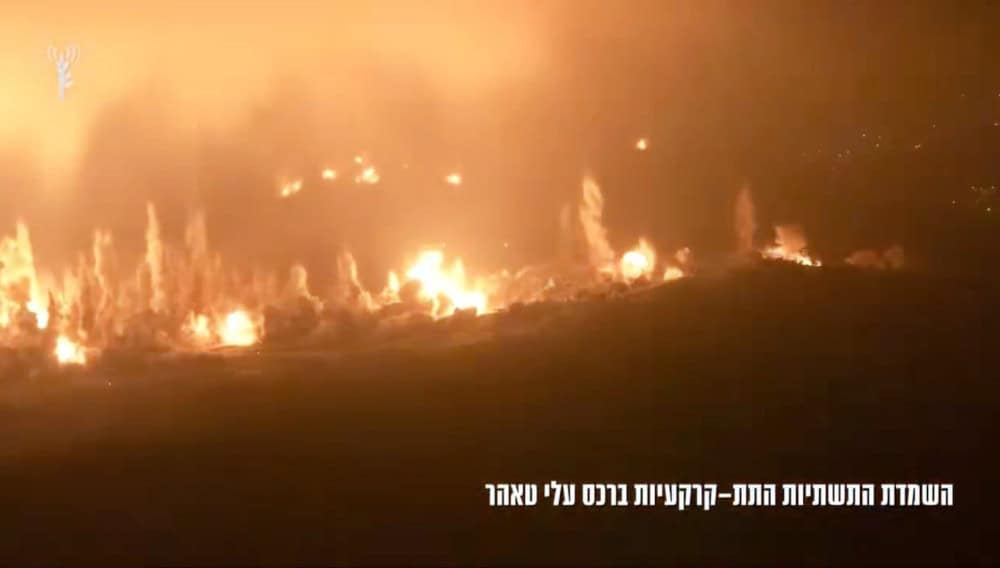
IDF destroys Hezbollah underground command complex at Ali al Taher, withdraws from ridge

The IDF says it destroyed more than two kilometers of Hezbollah underground infrastructure beneath Ali al Taher Ridge in southern Lebanon and identified the facility as a central command complex for Hezbollah’s Badr Unit. Israeli Army Radio reported that troops subsequently withdrew from the ridge and redeployed toward Beaufort, and Israel says it will retain control of Ali al Taher through surveillance and firepower.

Long War JournalLong War JournalDavid Daoud11 Sept

Lebanon: Humanitarian needs remain acute amid continued uncertainty

Country: Lebanon Source: International Committee of the Red Cross After months of hostilities, many families across Lebanon are returning to find their homes damaged, services such as health care disrupted, and their sources of income lost. For some, current conditions still make return impossible. Entire towns and villages in Lebanon have suffered widespread destruction and remain largely inaccessible following intense hostilities and destruction. As of 26 August 2026, more than 334,000 people remained displaced, unable to return because of security concerns, damage and limited access to essential services. The International Committee of the Red Cross (ICRC) is scaling up and adapting its response to the evolving situation by continuing to help address the immediate needs of the affected population, while supporting the restoration of services, early recovery and livelihoods to help communities return and recover. Bringing health care closer to communities Access to health care remains limited, particularly in areas of return where services have been disrupted. Only 4% of households surveyed by the World Health Organization in southern Lebanon and Beirut’s southern suburbs reported full access to health care following the closure of dozens of primary health-care centres and several hospitals during the escalation. Medical facilities have also faced shortage in essential supplies and damage to infrastructure with attacks affecting health-care personnel and services being reported. Since April 16, the ICRC has supported more than 70 medical and health care facilities and services, including 12 hospitals, 21 primary health-care centres, 4 mobile medical units, 23 emergency medical service centres, and physical rehabilitation centres, with essential medical supplies, medications, consumables, equipment and other critical support. This assistance has been essential in helping these facilities remain operational and continue providing essential health-care services to conflict-affected communities. Capacity-building activities have also been resumed to enhance emergency preparedness of key health care facilities. In areas where communities have no direct access to health-care facilities and medical personnel are unable to reach those in need, the ICRC stands ready to operate mobile medical units to bring health care closer to those in need. Meanwhile, ICRC is still supporting the mobile medical units deployed by the Lebanese Red Cross in the Tebnine catchment area, and the Ministry of Social Affairs in the Marjayoun catchment area. These efforts aim to help ensure that lack of essential health-care services does not become another obstacle for families trying to rebuild their lives. Supporting families to regain their livelihoods The consequences of the conflict are also economic. Many families have lost businesses, agricultural equipment, livestock, or other sources of income, leaving them dependent on assistance even after returning home. The impact has been particularly severe in agricultural communities, with an estimated 72% of farmers reporting losses of income and a drastic decrease in agricultural production according to the Ministry of Agriculture. The ICRC has started livelihood assessments of conflict-affected communities to better understand their needs and identify opportunities to help families restore their sources of income and regain greater independence. Supporting sustainable livelihoods is an important step towards moving from immediate relief to longer-term recovery. Strengthening access to clean water For returning families, functioning water networks, health-care facilities and other essential services are fundamental to making their return sustainable. The ICRC strengthened access to essential water and health services across affected areas by repairing and rehabilitating pumping stations, boreholes and water networks; installing and donating pumps, generators, solar systems and other critical equipment; and delivering more than 135,000 litres of fuel to 70 water stations in the south. The ICRC also supported water establishments by maintaining 41 vehicles, providing essential equipment and tools, and facilitating access for technical teams to carry out urgent repairs. In the health sector, the ICRC helped maintain the continuity of hospital services by delivering nearly 240,000 litres of fuel, as well as oxygen, LPG and water; providing generators, maintenance materials and other essential supplies; carrying out urgent maintenance and repairs, including to conflict-related damage; and improving hospital infrastructure through the installation of cold storage and storage facilities, solar systems. The ICRC further supported municipalities and the Lebanese Red Cross by providing search and rescue equipment, fuel and solar lamps, and improving water and sanitation systems in six collective shelters. Together with the South Lebanon Water Establishment, the ICRC built a remote monitoring and operation centre for pumping stations serving southern Lebanon.That system enables engineers to remotely monitor and operate connected water stations, receive real-time alerts and respond more quickly to equipment failures, leaks and power cuts. By improving the management of the network, the system helps strengthen the reliability of water services for communities across southern Lebanon. Supporting return and recovery Today, the ICRC's work in Lebanon combines continued assistance and protection to restore essential health care, water services and support livelihoods in communities affected by the conflict. For families returning home, these efforts are about being able to live in their communities again, access basic services, earn an income and begin rebuilding their lives with dignity. In parallel, the ICRC continues its bilateral confidential dialogue with the parties to the conflict on the protection of civilians, health-care services and critical infrastructure essential to the provision of basic services. The ICRC also continues to support families searching for missing relatives. For tens of thousands of people across Lebanon, recovery has only just begun. For many others, the path to recovery remains challenging, as conditions continue to affect their return home and their ability to rebuild their lives. “I would like to walk again along the beach in Tyr, and to feel the sense of safety we used to feel before, without the fear that a missile might target us at any moment, or that we go out and return only to discover that those we love, or our family members, are no longer there.” – Rita from Tyr in southern Lebanon

ReliefWebReliefWebInternational Committee of the Red Cross11 Sept