Lebanonpage 4

Place · 279 articles
Share

Coverage, page 4

page 4 of 14

World: Islamic Relief Ramadan Programme 2026

Countries: World, Bosnia and Herzegovina, Kenya, Lebanon, Malawi, occupied Palestinian territory, Pakistan, Sri Lanka, Sudan Source: Islamic Relief Please refer to the attached file. This report is a testament to what collective will and action can achieve even in the most challenging of times. The world today is shaped by converging crises. Conflict, climate shocks and economic hardship continue to erode the livelihoods of millions, pushing vulnerable communities further into the margins. It is against this backdrop that Islamic Relief’s Ramadan Food Assistance Programme carries its greatest meaning. This report documents our efforts to deliver essential food support across 35 countries, reaching nearly 955,000 individuals during the blessed month of Ramadan. Our purpose extended beyond alleviating immediate hunger. We were equally committed to offering our supporters a meaningful and dignified avenue through which to fulfil their religious obligation of giving, connecting the act of charity to real, visible impact in communities that needed it most. Our Ramadan food assistance distributions were carried out efficiently and on time, including in some of the world’s most demanding humanitarian environments such as Lebanon, Gaza and Sudan. None of the work presented in this report was accomplished without difficulty. Financial constraints were real and the scale of need on the ground grew more than ever. Yet, our country teams, local partners and volunteers responded effectively to the challenge with professionalism and dedication. This report does not claim to capture every effort or every act of service that took place. What it does reflect is the spirit of an organisation united in its commitment to uphold the dignity and wellbeing of those we serve. To every Islamic Relief family member, donor, partner, staff and volunteer who gave of their time, resources and energy, I offer my sincere and heartfelt gratitude. May Allah (SWT) accept this humble effort, bless all who contributed, and reward them in ways that no report could ever adequately measure.

ReliefWebReliefWebIslamic Relief11 Sept

Lebanon Situation Analysis: [24/8/2026] - [30/8/2026]

Country: Lebanon Source: Data Friendly Space Please refer to the attached file. Executive Summary This Lebanon SituationHub report provides comprehensive situational analysis and actionable intelligence for humanitarian decision-makers responding to the ongoing crisis in Lebanon. The humanitarian situation in Lebanon requires coordinated, evidence-based response strategies. This SituationHub analysis provides the critical intelligence necessary for effective decision-making, enabling humanitarian actors to respond faster, allocate resources more effectively, and ultimately deliver better outcomes for affected populations. This analysis, produced through GANNET SituationHub's AI-powered platform with human-in-the-loop verification, synthesizes data from thousands of humanitarian sources to provide actionable insights for decision-makers, field teams, and donors responding to the Lebanon crisis. The platform's real-time monitoring capabilities enable rapid identification of emerging needs and coordination gaps critical for effective humanitarian response. SituationHub: https://analysis.gannet.ai/lebanon

ReliefWebReliefWebData Friendly Space11 Sept

World: Attacks on Health Care Bi-Monthly News Brief, 19 - 31 August 2026

Countries: World, Democratic Republic of the Congo, Lebanon, Mexico, Myanmar, Sudan, Ukraine, Yemen Source: Insecurity Insight Please refer to the attached file. Armed drone strikes affecting health care occurred in multiple contexts, including direct attacks on hospitals, as part of wider assaults on towns and during multiple strike attacks targeting health workers conducting search and rescue operations. In total, these drone strikes damaged or destroyed health care facilities on 246 occasions and killed 37 health workers while injuring 124 others. The strikes disrupted service delivery through program closures, reduced access and staff shortages, as well as the psychological impact on the health work force. The use of drone-delivered explosives impacting health care surged by 43% in 2025, with 410 incidents recorded, compared to 286 in 2024. These incidents accounted for 34% of all incidents where explosive weapons affected health care in 2025, up from 16% in 2024. Incidents were reported in 12 countries in 2025 – one more than in 2024 – with new incidents of drone use impacting health care documented in the DRC, Iran, and Yemen. SHCC Attacks on Health Care This section aligns with the definition of attacks on health care used by the Safeguarding Health in Conflict Coalition (SHCC). Africa Democratic Republic of the Congo 19 August 2026: In Birambizo locality, Rutshuru territory, North Kivu province, Birambizo General Referral Hospital was looted by unidentified armed perpetrators, who stole medicines, medical equipment and office supplies. The looting occurred on the same day that the hospital resumed activities following nearly four days of suspension, disrupting the provision of healthcare and access to care. Source: All Africa Publicly reported incidents affecting Ebola response measures in the DRC 17 August 2026: In Kandoyi village, Aru territory, Ituri province, Kandoyi Health Centre was vandalised, and health workers were threatened by community members amid tensions related to the Ebola response, forcing almost all patients to leave the facility, including recently operated patients and pregnant women. Only a few health workers returned to provide minimal emergency services, while the medical director returned to the facility on 22 August under protection from the Congolese National Police (PNC). Source: Radio Okapi 18 August 2026: In Malikuti village, Rungu health zone, Haut-Uélé province, two Red Cross volunteers conducting an Ebola burial were attacked and injured by local community members and later were evacuated to Isiro for medical care. Sources: All Africa , Health Policy Watch and International Committee of the Red Cross 19 August 2026: In Beni city, North Kivu province, three Red Cross volunteers participating in Ebola response activities were attacked and injured by a group of individuals, disrupting the provision of emergency health and humanitarian services. Equipment used in the intervention was also destroyed. Sources: All Africa , Health Policy Watch and International Committee of the Red Cross 19 August 2026: In Kasanga Tuha village, Bunji health zone, North Kivu province, an Ebola safe and dignified burial team was attacked by unidentified perpetrators, killing and injuring an unspecified number of people. Source: Actualite 19 August 2026: In Mungamba village, Komanda health zone, Irumu territory, Ituri province, a vehicle used by an Ebola safe and dignified burial team was stoned and damaged by unidentified perpetrators while the team was conducting response activities. The team was subsequently escorted by the Armed Forces of the DRC (FARDC). Source: Actualite 27 August 2026: In Vuromo-Kakuva locality, Mukuna area, Katwa Health zone, Beni territory, North Kivu province, Bethesda Dispensary was set on fire by unidentified perpetrators at around 0100hrs amid rumours linked to the Ebola virus disease. Source: Actualite Data by Insecurity Insight shows that since the outbreak on 21 May and 31 August 2026, 47 attacks on Ebola response measures have been reported in the DRC. Ebola treatment centres have been attacked and damaged 14 times, including nine cases of facilities being deliberately set on fire. In addition,16 response workers were injured and seven others kidnapped. Data is collected daily, with continuous backdating as new sources and incidents are identified or additional information becomes available. Therefore, the data may differ from the version retrieved on 04 September following subsequent updates. Sudan Incident briefs: 19-31 August ; 05-18 August ; 22 July-04 August ; 08-21 July ; 24 June-07 July ; 10-23 June ; 27 May-09 June ; 13-26 May ; 29 April-12 May ; 15-28 April ; 01-14 April ; 18-31 March ; 04-17 March ; All SHCC chapters (EN): 2025 ; 2024 ; 2023 ; 2022 ; 2021 . (AR): 2025 ; 2024 ; 2023 ; 2022 ; 2021 . Asia Myanmar Incident briefs: 19-31 August : 05-18 August ; 22 July-04 August ; 08-21 July ; 24 June-07 July ; 10-23 June ; 27 May-09 June ; 13-26 May ; 29 April-12 May ; 15-28 April ; 01-14 April ; 18-31 March ; 04-17 March ; All SHCC chapters: Burmese: 2025 ; 2024 ; 2023 . English: 2025 ; 2024 ; 2023 : 2022 ; 2021 Europe Ukraine 19-20 August 2026: In Boryspil city and raion, Kyiv oblast, Red Cross facilities were damaged by a nine-hour overnight Russian attack using dozens of missiles and jet-powered drones. Sources: Censor and Prime Minister of Ukraine 22 August 2026: In Snihurivka city and urban hromada, Bashtanka raion, Mykolaiv oblast, a health facility and a pharmacy were damaged by three Russian drones in the morning. Sources: Korabelov.info and UA Varta 23 August 2026: In Kherson city and oblast, a Ukrainian Red Cross Society warehouse caught fire following a Russian drone attack, damaging and destroying supplies worth more than 620,000 USD. No staff or volunteers were injured. Sources: Ukrainian Red Cross and UN News 24 August 2026: In Arkhanhelivka village, Izium raion and oblast, a medical facility was damaged by Russian shelling. Sources: Magnolia TV and UA Varta 31 August 2026: In Kherson city, raion and oblast, a health facility was struck by a Russian drone at around 0645hrs, injuring two health workers: 69-year-old woman and a 62-year-old man who suffered concussion, blast injuries and closed head injuries. Sources: Antikor , Intent , Mezha and Pravda Insecurity Insight identified over 3,300 attacks on Ukraine’s health facilities, health workers and infrastructure since the start of Russia’s full-scale invasion on 24 February 2022 to 31 July. Hospitals and clinics were damaged or destroyed 1750 times and 489 health workers killed. 115 attacks impacted services provided for women during pregnancy, childbirth and the postnatal period. A further 143 attacks impacted services that provide health care to children. SHCC Chapters: EN: 2025 ; 2024 ; 2023 ; 2022 . UK: 2025 ; 2024 ; 2023 Middle East and North Africa Lebanon 24 August 2026: In Doha–Kafr Mann area, Nabatieh district and governorate, an Al-Risala Health Association ambulance was struck by a stun grenade launched by an Israeli drone while its medics were conducting a survey of the area, in an attempt to force them to leave the scene following a previous Israeli strike. Source: Im Lebanon Occupied Palestinian territory Incident briefs: 19-31 August ; 05-18 August ; 22 July-04 August ; 08-21 July ; 24 June-07 July ; 10-23 June ; 27 May-09 June ; 13-26 May ; 29 April-12 May ; 15-28 April ; 01-14 April ; 18-31 March ; 04-17 March ; 18 February-03 March ; 04-17 February ; All SHCC Chapters (EN): 2025 ; 2024 ; 2023 ; 2022 ; 2021 . (AR): 2025 ; 2024 ; 2023 ; 2022 ; 2021 Yemen 25 August 2026: In Sana'a city, Amanat Al-Asimah governorate, Al-Ahli Modern Hospital was surrounded and stormed by Houthi forces and established an armed camp near its entrance. A doctor was assaulted. Sources: Al Montasaf and Khabar Agency 29 August 2026: In Houthi-controlled areas, Houthi forces refused to allow the entry of a shipment of children's vaccines unless the UN reopened offices and resumed activities in areas under their control. The shipment was intended to be distributed free of charge to children amid shortages of vaccines and increased risks of diseases including measles and polio. The UN has demanded the release of detained staff, the return of seized assets and the lifting of restrictions on humanitarian organisations' activities. Source: Al Montasaf and News Yemen The Americas Mexico 21 August 2026: In Atlitenco de Altamira neighbourhood, Chilpancingo city, Guerrero state, a doctor was shot and killed in her home by armed men who opened fire at her. Sources: Infobae and Reforma 25 August 2026: In Arenillas city, Chihuahua state, a man purchasing medication at the pharmacy of Arenillas Basic Hospital was killed by an unidentified armed perpetrator in front of the facility. National Police officers consequently cordoned off the area. Source: Jubones Public Radio As reported on 27 August 2026: In Tijuana city, Baja California state, a patient who was being treated for an earlier gunshot wound was killed in the emergency room of Tijuana General Hospital by a man disguised as a health worker in the daytime. Source: Complaints IMSS Mexico

ReliefWebReliefWebInsecurity Insight11 Sept
Lebanon: Case study: A Locally Led, Choice Based Aid Delivery Model in a Protracted Crisis

Country: Lebanon Source: Boxtribute Please refer to the attached file. ABSTRACT This case study highlights how a refugee-led organisation of six local staff was able to sustainably provide long-term support to over 27,000 beneficiaries in Lebanon's Bekaa Valley through adoption of a structured, choice-based digital voucher and aid delivery programme with the support of Boxtribute. Operating in a volatile context, The Free Shop Lebanon (TFS) faced common barriers in implementing cash and voucher assistance (CVA). The study reviews how TFS was able to structure its programme and operations to bring faster and more transparent aid delivery through their partnership with Boxtribute.

ReliefWebReliefWebBoxtribute11 Sept

Case study: How Boxtribute facilitates a locally-led, emergency response in urban Poland

Country: Poland Source: Boxtribute Please refer to the attached file. Summary : Local organisations are typically first to respond in a crisis, yet continue to receive only a small share of humanitarian funding directly. This is often attributed to capacity or trust, but a closer look points to a structural gap instead: the accountability infrastructure needed to justify direct funding, such as real-time tracking and standards-based reporting, which has typically only been within reach of large, well-resourced organisations. Boxtribute, an open-source digital public good, puts that infrastructure into local teams' hands. Three case studies illustrate that what made accountable delivery possible was not the scale of a large INGO, but the right systems in place from the start as shown across cases from Poland, Lebanon, and Greece.

ReliefWebReliefWebBoxtribute11 Sept

Israel says destroys Hezbollah tunnels as explosions triggers tremor

Israel said Thursday it demolished key tunnels built by the Iran-backed Hezbollah group beneath the strategic Ali al-Taher ridge in southern Lebanon, with the force of the explosions enough to trigger a 4.1 magnitude tremor. It comes a few days after Israeli authorities claimed to have taken control of the Ali al-Taher ridge, saying that the pro-Iranian Hezbollah had dug numerous tunnels there, allowing it to attack Israel from this mountainous area.

France 24France 24FRANCE2411 Sept

Lebanon — Mobility Snapshot — Round 116 (10 September 2026)

Country: Lebanon Source: International Organization for Migration Please refer to the attached Infographic. The International Organization for Migration (IOM) conducts regular monitoring of population movements in Lebanon to support preparedness and response efforts. This report is based on IOM’s Displacement Tracking Matrix (DTM) Mobility Tracking exercise and is complemented by data from national systems, including the Lebanese Red Cross (LRC) and the Disaster Risk Management (DRM), to support data triangulation and validation. As of 09 September 2026, IOM’s DTM recorded 333,144 internally displaced persons (IDPs) across Lebanon, representing a 1.2 per cent increase compared to 01 September. During the same period, 818,288 IDPs have begun returning to their communities, marking a four per cent decrease from the previous round Key figures as of 09 September 2026: 333,144 internally displaced persons (IDPs) identified (+1.2% compared to 01 September) 315,822 IDPs outside collective sites (+1.3% compared to 01 September) 17,322 IDPs across 176 collective sites (-1% compared to 01 September) 818,288 returned IDPs reported (-4% compared to 01 September) Data was collected remotely through IOM’s network of key informants, including municipality officials, mukhtars, community representatives, and neighbourhood focal points. Population figures for collective sites were sourced from the DRM dashboard.

ReliefWebReliefWebInternational Organization for Migration10 Sept

Lebanon: Escalation in the Middle East and Beyond — Mobility Report (25 August – 07 September)

Countries: Lebanon, Afghanistan, Armenia, Azerbaijan, Iran (Islamic Republic of), Iraq, Pakistan, Syrian Arab Republic, Türkiye, Turkmenistan Source: International Organization for Migration Please refer to the attached file. On 17 June 2026, the United States of America and the Islamic Republic of Iran reached an agreement on a Memorandum of Understanding (MOU) concerning the cessation of hostilities. The escalation in the Middle East and beyond had triggered a humanitarian crisis affecting multiple regions in an already fragile context. A resurgence of hostilities in recent weeks are placing pressure on humanitarian access and threatens civilian and essential services. Mobility dynamics across the region and beyond due to renewed escalation remains uncertain. The situation continues to be highly fragile, requiring sustained monitoring and operational preparedness. In the Islamic Republic of Iran, some families have begun returning to their homes amid signs of de-escalation. However, thousands continue to shelter in hotels due to damage to housing and civilian infrastructure. As of 01 June, approximately 9,000 individuals remain displaced, unable to return to their homes due to the extent of the damage. Overall, population movements remain localized, temporary, and economically driven, with no signs of mass displacement. In Lebanon, displacement nationwide remains significant despite continuing returns. As of 01 September 2026, 329,240 people remain internally displaced across 628 cadasters, a 5.6 per cent decrease compared to the previous reporting period (as of 19 August 2026). Of the total IDPs in Lebanon, 21,758 individuals remained displaced in 218 collective shelters. Returns have continued, with 856,316 returned IDPs reported as of 19 August 2026, marking a 4.7 per cent increase from the previous round (as of 12 August 2026). Humanitarian and protection needs remain acute, driven by the destruction of homes and services, prolonged displacement, explosive ordnance risks, protection concerns, and declining coping capacities. Meanwhile, cross-border flows into the Syrian Arab Republic are continuing, with a total of 761,319 movements recorded as of 07 September 2026. IOM’s Displacement Tracking Matrix (DTM) is on the ground, actively tracking displacement and cross border mobility while scaling operations in coordination with local authorities and partners to better understand how the crisis is impacting human mobility in the region.

ReliefWebReliefWebInternational Organization for Migration10 Sept

How the fate of a small furry animal reveals the ecological tragedy of Israel’s war on Lebanon | Hisham Younes

The Syrian rock hyrax depends on the fragile landscapes of the border region. Alongside other environmentalists, I have been documenting the destruction of its habitat Wars are usually measured in the number of people killed, homes destroyed and towns erased. Far less attention is paid to what happens beneath the rubble. Across southern Lebanon, repeated large-scale detonations are not only causing human tragedy by demolishing villages , they are also destroying the ancient limestone habitats that have sheltered colonies of rock hyrax for centuries. As founder and president of Green Southerners, an environmental organisation documenting the ecological effects of war in southern Lebanon, I have been helping colleagues to record the damage inflicted on forests, wildlife and fragile ecosystems across the border region. Continue reading...

The GuardianThe GuardianHisham Younes10 Sept

Lebanon/Israel: Hezbollah’s Use of Cluster Munitions

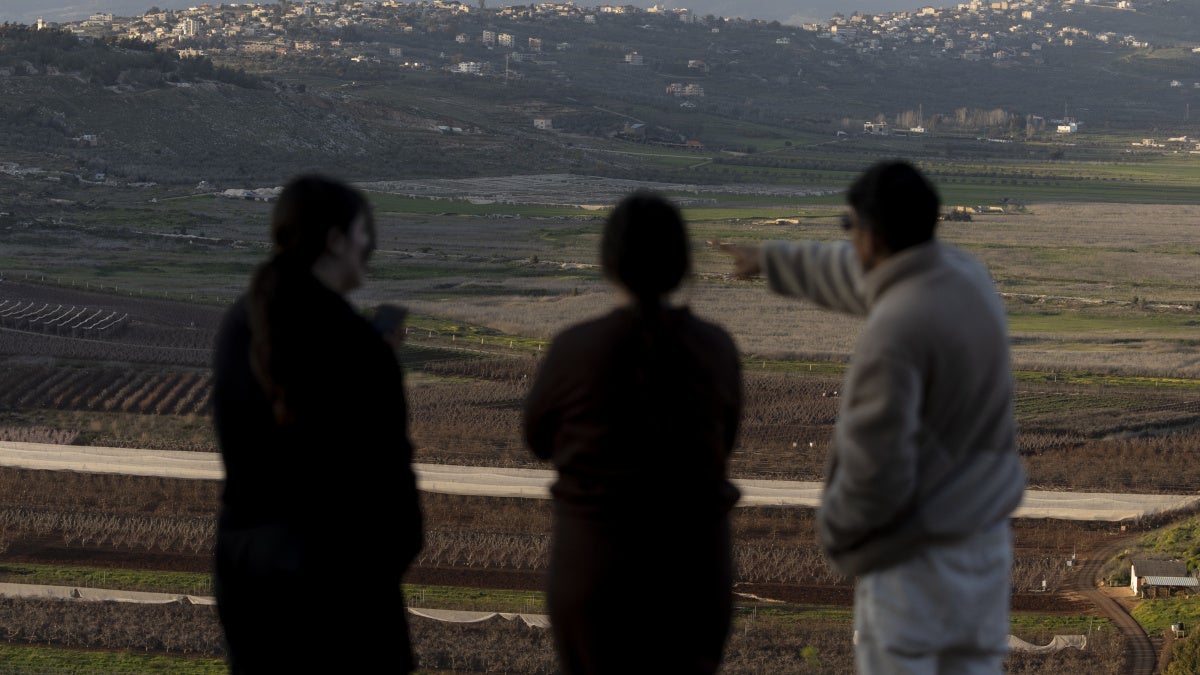
Click to expand Image Israelis look at the border with Lebanon from a position in the northern village of Metula on March 5, 2026, after Hezbollah launched rockets at Israel during the ongoing conflict.   © March 2026 Amir Levy/Getty Images (Beirut, September 9, 2026) – Hezbollah unlawfully fired widely banned cluster munitions into a town in northern Israel on March 4, 2026, and again on March 15, Human Rights Watch said today. The attacks, neither of which caused civilian casualties, took place during a major escalation in the conflict between Israel and Hezbollah beginning on March 2 as part of the wider war in the region involving Iran and the United States. “Cluster munitions should not be used under any circumstances, and their use may amount to a war crime,” said Patrick Thompson, crisis, conflict and arms researcher at Human Rights Watch. “Not only are they inherently indiscriminate, but unexploded submunitions can kill and injure civilians long after hostilities conclude.” Cluster munitions are fired in rockets, missiles, and projectiles, or dropped from aircraft. They typically disperse in the air, spreading dozens of explosive submunitions, or bomblets, indiscriminately over a large area. Many fail to explode on initial impact, leaving duds that can kill and maim, like landmines, for years or even decades, unless cleared and destroyed. Human Rights Watch researchers visited Metula in May and confirmed the use of cluster munitions, analyzed the impact sites, and interviewed four witnesses. Hezbollah claimed responsibility on social media for rocket attacks against Metula on March 4 and 15, but in response to a Human Rights Watch request for comment, denied using or even possessing cluster munitions. Despite ceasefires that went into effect on April 17 and June 20, Israeli attacks have killed at least 4,381 people in Lebanon since the beginning of the escalation, including 261 children, 399 women, and 135 medical workers, according to Lebanon’s Health Ministry. Israel has continued to issue orders to Lebanese civilians to leave their homes, displacing over one million people in what may amount to the war crime of forced displacement. Hezbollah rocket attacks in northern Israel between March and June killed two civilians, the Times of Israel reported on June 30. Hezbollah also fired unguided rockets into populated areas in Israel, according to the United Nations Office of the High Commissioner for Human Rights. The use of these weapons, which cannot distinguish between military objectives and civilians and civilian objects, is unlawfully indiscriminate and poses a foreseeable and long-lasting danger to civilians, in violation of the laws of war. Human Rights Watch has previously documented Israel’s extensive use of cluster munitions in southern Lebanon and Hezbollah’s use of them in Israel. The Guardian reported that Israel used cluster munitions in southern Lebanon again in 2025. Play Video The March 4 attack struck a residential street on the southern side of Metula near the cemetery. Hagai, 57, whose full name is not used for his safety, lives in the town with his wife and two children, and said that he and his family ran to their shelter outside their house as they heard sirens at around 4 p.m. They had just closed the door when they heard multiple explosions outside. As instructed by the Israeli authorities, they waited 10 minutes before leaving the shelter. But soldiers outside told them to stay inside until the next day as they were clearing the area of submunitions. The submunitions damaged his two cars beyond repair, and a submunition landed on the roof of his house. Twelve windows were damaged, and submunitions cut two water pipes. He fears for his children’s safety. “My son plays basketball here,” he said. “If the ball goes down the hill into the grass, I tell him to leave it. They checked the whole area for unexploded bombs, but who knows, I don’t know how thoroughly they can check the bushes.” Click to expand Image A submunition impact crater outside Hagai’s house where his son plays basketball, May 2026. © 2026 Human Rights Watch He said the military counted approximately 50 impact craters. The road had been repaved by the time Human Rights Watch researchers arrived, but they identified seven impact craters consistent with submunition impacts, due to their relatively small size and distribution pattern. Human Rights Watch analyzed photographs from a journalist taken before the road was repaved that showed additional craters outside Hagai’s house. Fragmentation from the submunitions affected another house about 50 meters away, damaging windows. The homeowner, who wished to remain anonymous, said there were multiple unexploded submunitions outside her house. On March 4, an Israeli police spokesperson reported from Metula that a cluster munition had struck northern Israel. The report was accompanied by a photograph of what appears to be an unexploded BRB1-type submunition. This submunition is dispensed from a 122mm rocket, which reportedly contains between 45 to 56 BRB1-type submunitions. Human Rights Watch was unable to confirm the location of the photograph, but researchers did not find a version of the photograph online uploaded before March 4. Witness reports of approximately 50 submunition impacts in Metula on March 4 are consistent with numbers reportedly contained in the BRB1 delivery system, as are the craters Human Rights Watch analyzed. These submunitions were previously identified in southern Lebanon in September 2024. A statement from the Cluster Munition Coalition at the time suggested that they were ejected from a storage facility that was attacked. The March 15 attack struck near the town’s entrance. One nearby resident said that she heard multiple near simultaneous explosions. City authorities had notified a residents’ security WhatsApp group that a cluster munition had fallen. The witness said the army told residents not to leave their homes for 24 hours while they cleared explosive hazards. The road was being repaved when Human Rights Watch visited, yet researchers found one crater consistent with a submunition impact. Researchers geolocated a video uploaded to Telegram on March 15 that shows approximately 30 small explosions around the entrance gate consistent with a cluster munition attack. Researchers were able to identify the area as the one where witnesses reported seeing the cluster munition strike. There were no reports of civilian casualties or major damage to infrastructure. The 2008 Convention on Cluster Munitions, which has 112 states parties and 12 more states have signed, comprehensively prohibits these weapons and requires clearing contaminated areas and assisting victims. Although Lebanon is a state party, the treaty does not formally bind Hezbollah as a non-state armed group. Nonetheless, Hezbollah is bound by international humanitarian law, otherwise known as the laws of war. International humanitarian law requires parties to a conflict to take constant care during military operations to spare the civilian population, and to “take all feasible precautions” to avoid or minimize the incidental loss of civilian life and damage to civilian objects. International humanitarian law also requires all parties to distinguish between military objectives and civilians and civilian objects, and to target only military objectives. Individuals who commit serious violations of the laws of war with criminal intent—that is, intentionally or recklessly—may be prosecuted for war crimes. As cluster munitions spread submunitions over a wide area and unexploded submunitions pose a danger long after hostilities are over, their use in civilian areas amounts to a violation of the principles of precaution and distinction. Intentionally directing such attacks against the civilian population is a war crime. Israel is not a party to the Convention on Cluster Munitions. It should urgently join the convention and cease the manufacture, transfer, and use of cluster munitions, as well as commit to clearing unexploded cluster munitions in all areas under its effective control. “The use of cluster munitions in civilian areas is a flagrant violation of international law,” Thompson said. “Hezbollah and all parties to the conflict should abide by the laws of war.”

Human Rights WatchHuman Rights WatchHuman Rights Watch9 Sept