South Africapage 6

Place · 181 articles
Share

Coverage, page 6

page 6 of 9

Six Nigerians extradited to US over $6M online romance scam

Alleged members of Black Axe criminal network that swindled US women out of $6m flown from South Africa Six Nigerian nationals linked to an organized criminal network that allegedly swindled American women out of more than $6m through online romance scams were extradited to the United States on Friday. South African police confirmed they were to be extradited earlier on Friday, while local news in Africa confirmed that the Directorate for Priority Crime Investigation, known as the Hawks, facilitated their handover to officials from the US Federal Bureau of Investigation and Secret Service at Cape Town international airport, in collaboration with Interpol South Africa. Continue reading...

The GuardianThe GuardianGuardian staff and Associated Press12 Sept

George Furbank on his latest injury woe: ‘I was hoping I would get to the hospital, just fart and leave’

Full-back missed out for England when he had appendix out but could be key for Steve Borthwick if his luck changes George Furbank must have cracked a few mirrors in his time. A second Prem winners’ medal was some way to bring the curtain down on his Northampton career but when it comes to England, he cannot catch a break. Indeed, it is staggering to consider the 29-year-old full-back has just 14 caps to his name, only one more than his former Saints teammate Henry Pollock, who is only 21. It was supposed to be No 15 against South Africa in July – more than 18 months since his previous England appearance – but Furbank woke up feeling off colour the day before the match and was sent for a scan by the team doctor. The results arrived at 7pm on the Friday night – Furbank would need to stay in hospital and have his appendix out on the Saturday. The wait would go on. Continue reading...

The GuardianThe GuardianGerard Meagher11 Sept

Springboks v All Blacks a US World Cup preview in Baltimore as thrilling series goes down to the wire

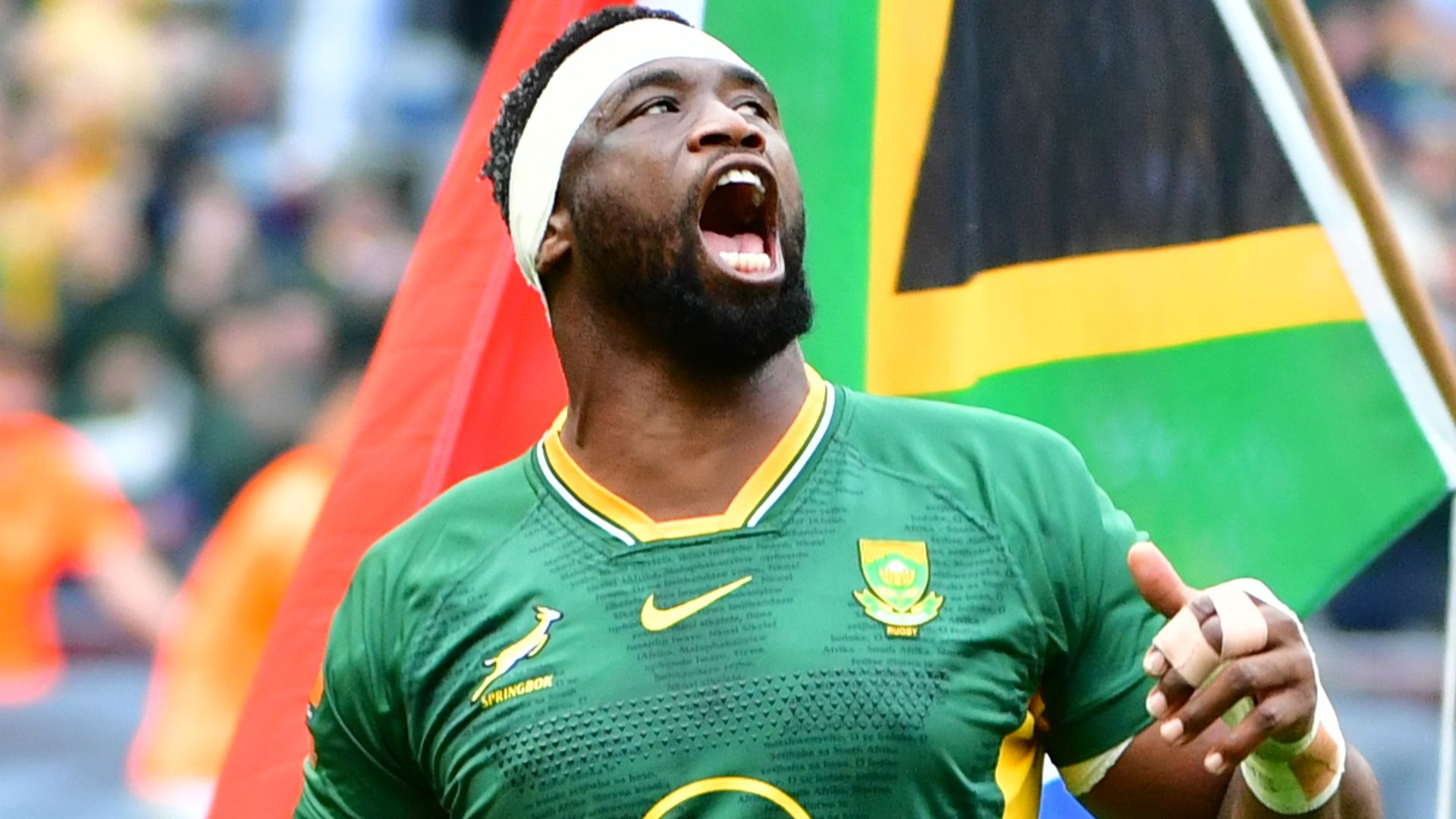
‘Rugby’s Greatest Rivalry’ will culminate on US soil on Saturday, a staging post on the road to America hosting the World Cup in 2031 When New Zealand and South Africa kick off at M&T Bank Stadium in Baltimore on Saturday, there will be more at stake than victory in “Rugby’s Greatest Rivalry”, the four-Test series the Springboks lead 2-1 . For World Rugby CEO Alan Gilpin, the game is a key staging post on the road to the 2031 World Cup, which the US will host – a journey that could include Six Nations games on American soil . “We’ve been in a long process with venues and cities, over the last two years,” Gilpin said, of the build to World Cup kick-off. “We’ve still got 25-plus cities involved in that process, which is fantastic in terms of engagement and enthusiasm. Continue reading...

The GuardianThe GuardianMartin Pengelly11 Sept

Upgrading to Apple Watch Series 12 Could Cost You Hypertension Notifications

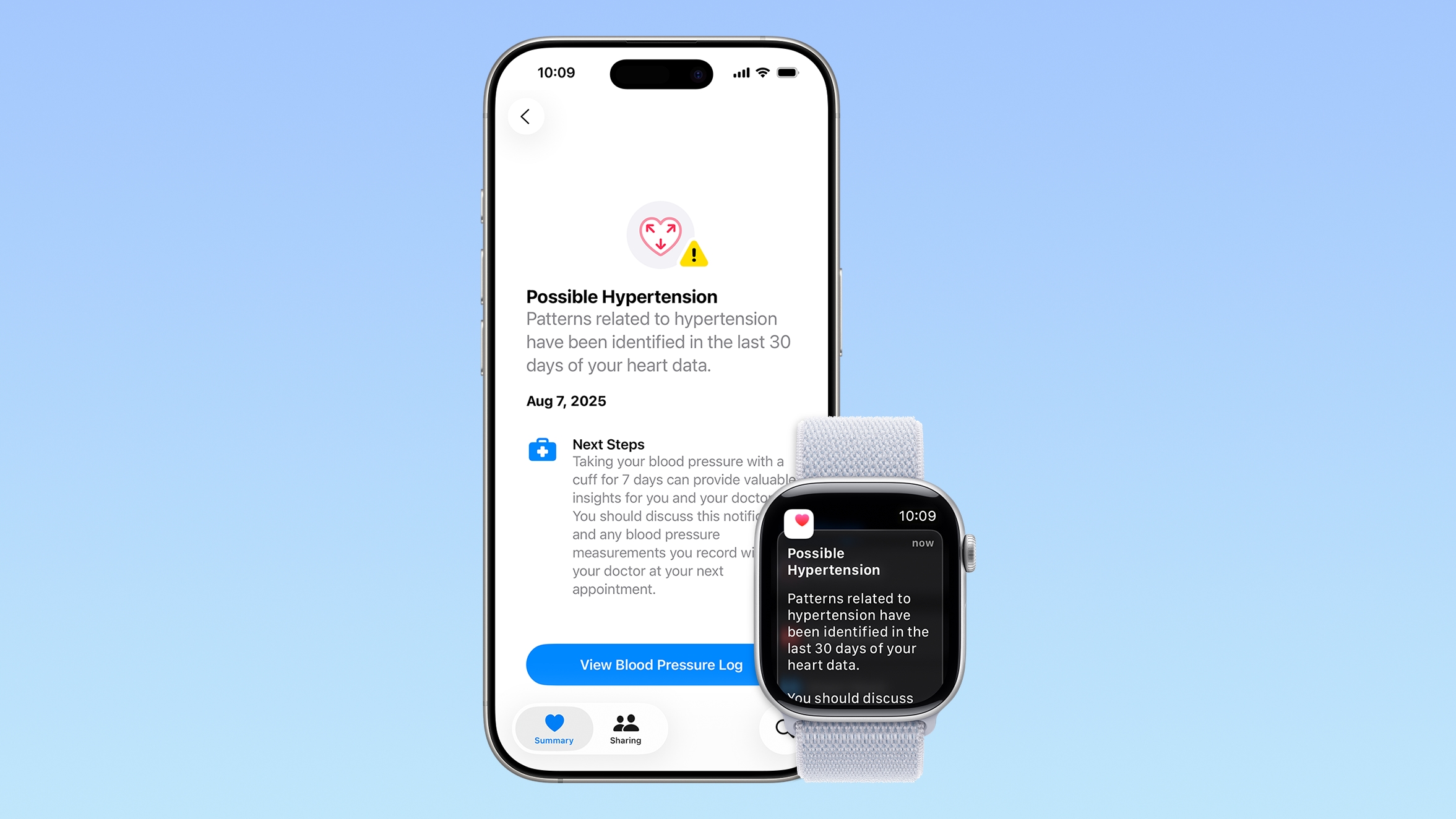
Some Apple Watch users who upgrade to the Series 12 or the Ultra 4 might temporarily lose access to hypertension notifications. On the watchOS feature availability page , Apple says notifications might not be available on the Series 12 or Ultra 4 at launch because regulatory clearances are in process. Hypertension Notifications may not be available on Apple Watch Series 12 or Ultra 4 in your region, as additional regulatory clearances for these devices are in process. The warning applies to 33 countries and regions, including Canada, Australia, India, Brazil, Singapore, Japan, Taiwan, South Africa, South Korea, and the UAE, with a full list on Apple's website. The Apple Watch Series 12 and Apple Watch Ultra 4 have revamped sensors and a new Health Sensing System. Apple added new optical and electrical heart sensors for more frequent and accurate tracking, and the change appears to require new regulatory approval in some locations. What's new: ECG - The electrodes in the watch cover more surface area for improved skin contact during ECG readings. Optical sensing - Redesigned photodiodes are organized in a ring to capture light more efficiently. Heart rate measurement - Larger, power-efficient green LEDs in the optical heart rate sensor allow the new watches to measure heart rate every five seconds all day, offering more data on a user's fitness and physiological state. Real-time heart rate is available in the updated Heart Rate app, and Exercise and Move Activity rings are more accurate. HRV is also measured as often as every five minutes. Apple Watch users who get these notifications today may lose the option when upgrading to the Series 12 or Ultra 4 until regulatory clearance is granted. Countries not on Apple's list with a footnote will continue to get notifications as usual. This includes the United States, UK, and all EU countries. Related Roundups: Apple Watch 11 , watchOS 26 , watchOS 27 Buyer's Guide: Apple Watch (Buy Now) Related Forum: Apple Watch This article, " Upgrading to Apple Watch Series 12 Could Cost You Hypertension Notifications " first appeared on MacRumors.com Discuss this article in our forums

MacRumorsMacRumorsJuli Clover10 Sept

World Rugby float plans for Six Nations match in US but England unlikely to participate

Governing body floating staging Ireland v Italy in US World Rugby eyes commercial value in American fixtures World Rugby wants a Six Nations match to be staged in the US and has offered financial incentives to the unions to do so – but England have effectively ruled themselves out on the grounds that fixtures at Twickenham are too lucrative. The US will stage the 2031 World Cup and World Rugby is seeking to capitalise commercially despite mounting fears over the parlous state of rugby union in the host country. As a result, the governing body is desperate to raise interest in the sport’s profile by staging high-profile matches Stateside, with Baltimore hosting the fourth Test between South Africa and New Zealand on Saturday. Continue reading...

The GuardianThe GuardianGerard Meagher10 Sept

A Growing Global Push for Free Education for Every Child

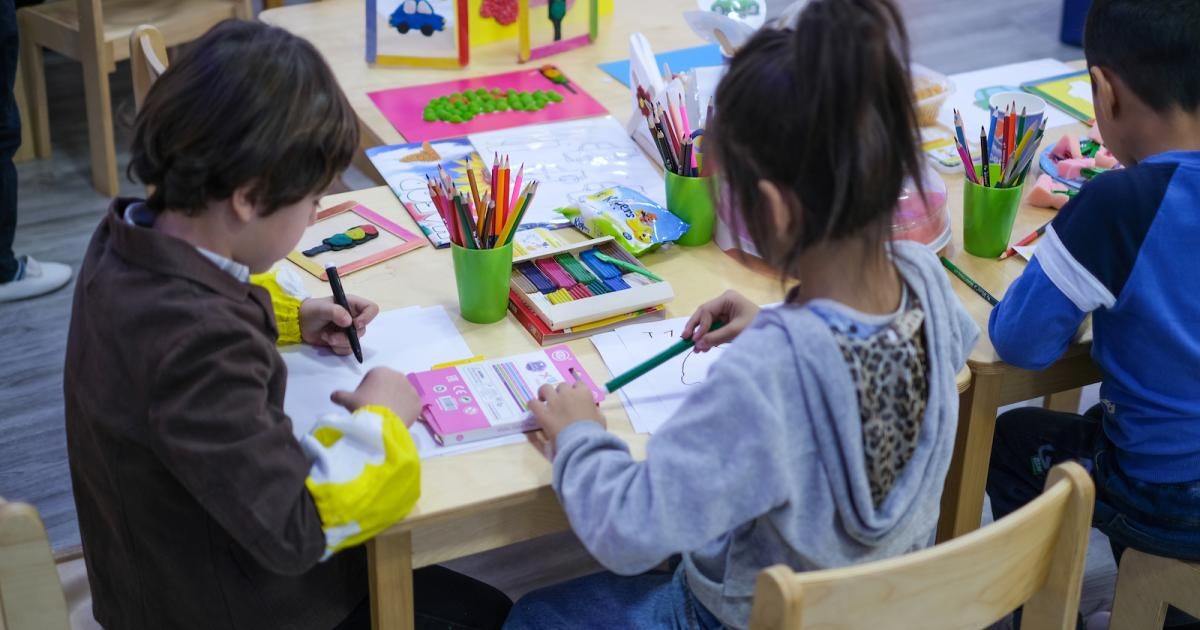
Click to expand Image Students in a pre-primary school classroom in Tashkent, Uzbekistan, 2021.  © 2021 Bede Sheppard / Human Rights Watch The global push to make free education accessible for every child gained momentum, as 81 states met at the United Nations in Geneva on August 31 to September 2 to discuss a proposed treaty that could strengthen children’s right to education and remove financial barriers that keep many out of school. The new optional protocol to the Convention on the Rights of the Child would recognize early childhood care and education as part of the right to education, guarantee at least one year of free public pre-primary education, and strengthen the promise of free public secondary education. The initiative has been led by Sierra Leone, the Dominican Republic, and Bulgaria, which already provide free education for their children from pre-primary through secondary. During the three-day meeting, Guatemala became the 62nd country to publicly support the initiative. However, there were differences about next steps: Some states including Armenia, Azerbaijan, Bulgaria, Chile, Cuba, the Dominican Republic, Ecuador, Georgia, Peru, South Africa, and Uruguay supported moving forward to draft the treaty while others, including Austria, Bangladesh, Belgium, Egypt, and Slovenia, called for more time to consider different options. Children played a central role at the meeting. Child delegates from all five regions shared recommendations based on consultations with more than 80 children worldwide. Tuition-free education is not genuinely free if families still need to pay for transport, uniforms, school materials, and other essential costs, the delegates said. Free pre-primary education gives children a stronger start and children from disadvantaged families a fairer chance to succeed. Free secondary education can change the course of a child’s life by reducing the likelihood of child marriage and opening doors to further education and decent work. For children with disabilities, removing financial and practical barriers can enable them to participate fully and learn alongside their peers. Further consultations will take place before the next formal meeting in October 2027. The Sierra Leone chair called for continued review of the proposals for the treaty and expert advice, while stressing that children should continue to have a meaningful, safe, and inclusive role in the next stages. The momentum now needs to become action. Governments should move this process forward so that millions of children are not left waiting for the education to which they are entitled.

Human Rights WatchHuman Rights WatchHuman Rights Watch9 Sept

Birdwatch: the avian equivalent of a catwalk model, blue cranes are under threat

Numbers of the exquisitely graceful species are falling amid loss of food supply and habitat Few birds are quite as elegant as the blue crane. As I watched a pair feeding alongside a busy road in South Africa, against the rather incongruous backdrop of a herd of cows, I was struck by their sheer beauty. With a slender body, curved neck, long legs, elongated tail plumes and a subtle, dove-grey plumage, this bird really is the avian equivalent of a catwalk model. But not all is well for the blue crane. It has the smallest global range of any of the world’s 15 crane species: apart from an isolated population in Namibia, almost all are found in South Africa, where it is celebrated as the national bird. Continue reading...

The GuardianThe GuardianStephen Moss9 Sept

‘We have really cool sharks’: three-year project to lift lid on Britain’s little-understood species

Anglers will help scientists investigate the porbeagle, tope and blue shark to boost knowledge and conservation ‘We have really cool sharks,” says Dr Lucy Hawkes. She is not referring to animals in the rich coastal waters of South Africa or Mexico, but instead talking about the species that live around Britain. Hawkes, an associate professor at the University of Exeter, is co-leading a new three-year project to investigate the lives of three of England’s most vulnerable shark species. “I like the porbeagle, which looks like a baby great white shark,” she says. “Surfers could see one and absolutely poop their pants, but they’re not dangerous. It’s amazing that we share the water with some pretty exciting animals.” Continue reading...

The GuardianThe GuardianAnna Turns8 Sept

Weather tracker: Typhoon Saudel causes mass evacuations in south-east China

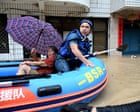
Torrential rain causes widespread damage; while north-west South Africa hit by thunderstorms and central-southern US faces oppressive heat Typhoon Saudel brought days of torrential rain to Zhejiang, Jiangxi, Fujian and Guangdong provinces in south-east China last week. The city of Putian, in Fujian province, recorded 416.5mm of rain in a 24-hour period between Thursday and Friday, with surrounding villages recording more than 500mm in the same period. In Fujian, authorities estimate that almost 600,000 people were evacuated from high-risk, flood-prone areas. A further 128,000 people in 53 counties were also affected across Jiangxi, with emergency evacuations affecting 9,000 people. Flooding, landslips and infrastructure damage were reported widely in the region. More than 2,500 teachers and students were trapped in a school compound in the Zhejiang city of Wenzhou on Wednesday after extreme rainfall caused flash floods in low-lying areas. At least 1,260 people reportedly had to be rescued in Putian after a river embankment collapsed on Thursday, flattening 100 homes. On Saturday, a landslip in a village of Suichuan county, in Jiangxi province, killed three people and nine others remaining missing. Continue reading...

The GuardianThe GuardianAlice Nightingale-Smith for MetDesk7 Sept