
South Sudan - Refugee Population in Wedwil - 31 August 2026
Countries: South Sudan, Sudan Source: UN High Commissioner for Refugees Please refer to the attached Map.
 ReliefWeb•UN High Commissioner for Refugees18 Sept
Countries: South Sudan, Sudan Source: UN High Commissioner for Refugees Please refer to the attached Map.
ReliefWeb•UN High Commissioner for Refugees18 Sept
Countries: South Sudan, Sudan Source: UN High Commissioner for Refugees Please refer to the attached Infographic.
ReliefWeb•UN High Commissioner for Refugees18 Sept
Amid a civil war in Sudan, it’s now difficult for people with cancer and other long-term illnesses to receive treatment that was once readily available
 STAT•Sophie Neiman18 Sept
Countries: South Sudan, Central African Republic, Democratic Republic of the Congo, Ethiopia, Sudan Source: UN High Commissioner for Refugees Please refer to the attached Map.
ReliefWeb•UN High Commissioner for Refugees18 Sept
Countries: Chad, Sudan Source: Famine Early Warning System Network Please refer to the attached file. Key Messages Crisis! (IPC Phase 3!) and Crisis (IPC Phase 3) outcomes will persist between August 2026 and January 2027 in the Ouaddaï, Sila, Wadi Fira, and Ennedi Est provinces. Refugees continue to arrive and remain heavily dependent on markets and food assistance. Pressure on host population livelihoods is increasing at a time when lean season conditions are particularly severe, resulting in significant food consumption deficits. However, conditions among host populations are expected to improve with the harvests in October. Crisis (IPC Phase 3) outcomes are expected in Lac Province through January 2027. Security conditions are deteriorating, and the season is delayed amid persistent attacks by armed terrorist groups. The deterioration of livelihoods, particularly fishing and livestock rearing, is resulting in declining income. Food consumption deficits are being observed among internally displaced persons (IDPs) and host populations. However, an improvement to Stressed (IPC Phase 2) outcomes is expected between October and January 2027 in Wayi Department with the arrival of the harvests. Crisis (IPC Phase 3) outcomes are expected between August and September 2026 in Kanem and northern Barh-El-Gazel. In this pastoral area, the season remained delayed through August. Market-dependent households continue to face high livestock maintenance costs and deterioration in most of their income sources. Low purchasing power is forcing households to engage in atypical sales of productive assets. Beginning in October, these conditions are expected to improve, along with household food consumption. A delayed onset of the rainy season, with below-average rainfall, has been observed in several regions of the country. A particularly difficult lean season is ongoing in several areas. Nearly all households are highly dependent on markets, while the delayed season is preventing the recovery of typical agricultural income that would normally facilitate food access.
ReliefWeb•Famine Early Warning System Network18 Sept
Country: Sudan Source: UN Interim Security Force for Abyei Please refer to the attached file. Abyei, 17 September 2026 – The United Nations Interim Security Force for Abyei (UNISFA) strongly condemns the outbreak of violence at the Amiet Common Market on 15 September, which resulted in the death of 26 people and the injury of 82 others, as of 16 September. The incident follows separate killings of a Ngok Dinka man and a Misseriya man on 14 and 15 September respectively, which heightened tensions between the two communities and contributed to the escalation at the market, a vital economic hub in an already fragile security environment. UNISFA extends its deepest condolences to the families of those killed and wishes the injured speedy recovery. The mission continues to monitor the situation closely and verify reports on the impact of the violence and those affected. Following the deadly violence, UNISFA immediately reinforced its security presence in and around the market and deployed additional forces to de-escalate the situation. The mission is actively engaged with local authorities and community leaders to restore calm in the area. “We are actively engaging with the leaders of the two communities who have reiterated their commitment to dialogue and a peaceful resolution to the hostilities. On the ground, we are taking all measures to protect civilians and prevent retaliation. Our priority is to prevent further loss of life. We urge all community leaders to embrace dialogue and advance peaceful coexistence,” said Lieutenant General Ganesh Kumar Shreshta. UNISFA calls on the relevant authorities to work closely with the mission to conduct a swift investigation into the violence and to hold the perpetrators accountable. The mission will continue to maintain an enhanced presence and to engage with all sides to prevent further violence and protect civilians. Contact: Antonette Miday. Acting Spokesperson/Public Information Officer. miday@un.org. Tel: +254732043043 (Whatrsapp), +249912165639 (Sudan)/+254732043043. Lt Col Saurabh Pandey. SSO Public Information, Unisfa-fhq-adv-pio1@un.org: +91-8796322209 (WhatsApp)
ReliefWeb•UN Interim Security Force for Abyei18 Sept
UN Interim Security Force for Abyei strengthens security on the ground after days of deadly fighting.
 Al Jazeera17 Sept
Countries: Malta, Libya, Sudan, Syrian Arab Republic, Ukraine Source: UN High Commissioner for Refugees Please refer to the attached file. UNHCR established its presence in Malta in 2005 and monitors access to territory and reception, while promoting fair and efficient asylum procedures in line with international standards. As of December 2025, Malta had issued 2,944 Temporary Protection certificates since the full-scale war in Ukraine began in 2022, with 80 per cent of certificates issued to women and children. As of mid-2025, there were 8,556 international protection holders in Malta. In 2025, 472 lodged asylum application mainly from Syria, Colombia, Bangladesh and Libya. HIGHLIGHTS Improved initial conditions and coordination for sea arrivals: Following a recent shift by the Government towards improved disembarkation arrangements, initial conditions and coordination during recent disembarkations have improved. After the first health checks at the disembarkation site, the identification and vulnerability screening are done in a better equipped facility; allowing UNHCR to provide asylum information and to support identification of vulnerable individuals. New Labour Migration Policy opens room for dialogue on refugee inclusion: UNHCR welcomed Malta’s new Labour Migration Policy as a positive step in addressing precarious work and the exploitation of foreign workers. UNHCR supported the Government with proposed measures to strengthen refugee selfreliance and economic inclusion, such as free work permits for refugees and the prioritisation of refugees in the “I Belong” programme for the early inclusion of refugees in society. Communities improved their access to services: UNHCR Malta works closely with refugee-led organizations (RLOs) to strengthen their capacity and expertise in delivering protectionoriented services to refugee communities. In November 2025, the RLO “Foundation for the Ukrainian Community of Malta” implemented a UNHCR grant aimed at supporting displaced Ukrainians in accessing services and delivering information sessions on rights and social protection.
ReliefWeb•UN High Commissioner for Refugees17 Sept
At least 82 people have died after an informal gold mine collapsed in war-torn Sudan, officials have said.
 Sky News17 Sept
Countries: World, Afghanistan, Angola, Bangladesh, Burkina Faso, Cameroon, Central African Republic, Chad, Colombia, Cuba, Djibouti, Ecuador, El Salvador, Ethiopia, Fiji, Guatemala, Haiti, Honduras, Indonesia, Kenya, Kiribati, Madagascar, Malawi, Mali, Mozambique, Myanmar, Nepal, Nicaragua, Niger, Nigeria, Papua New Guinea, Peru, Solomon Islands, Somalia, South Sudan, Sudan, Timor-Leste, Tuvalu, Uganda, Vanuatu, Venezuela (Bolivarian Republic of), Zambia, Zimbabwe Sources: International Federation of Red Cross and Red Crescent Societies, Save the Children, UN Office for the Coordination of Humanitarian Affairs, World Food Programme Please refer to the attached file. OVERVIEW El Niño is firmly established and is forecast to reach very strong intensity. WMO forecasts indicate a nearly 100 per cent likelihood that it will persist through February 2027, with the event expected to strengthen further and peak towards the end of 2026. Its effects may lag and persist beyond the peak. A very strong El Niño is likely to bring major shifts in rainfall and temperature patterns, increasing the risk of drought, flooding, extreme heat and other weather and climate hazards. These effects will not be felt everywhere at the same time or in the same way. Their severity will depend on where the climate signal coincides with agricultural and livelihood calendars, existing humanitarian needs and people's ability to cope. WMO cautions that the strength of the global event does not translate directly into the scale of impacts in any individual country or region. El Niño is also occurring against the backdrop of long-term climate warming. The emerging risks must be understood alongside conflict, displacement, high food insecurity and high food prices, malnutrition, disease outbreaks, economic pressures and overstretched essential services. These conditions have not improved since the June update. In many places, repeated shocks have depleted household assets, increased debt and weakened the coping mechanisms that people would ordinarily rely on when drought, floods or high prices affect their livelihoods. WFP estimates suggest that up to 50 million people globally could be affected over the next six to nine months, indicating the potential scale of the humanitarian consequences.
ReliefWeb•World Food Programme17 SeptDozens more are missing after shafts collapsed on Sunday, according to a charity, which said that the chances of rescuing those trapped were “limited.”
 The New York Times•Matthew Mpoke Bigg and Abdalrahman Altayeb16 Sept
Deadly mine collapses in Sudan are not uncommon in a country where safety standards are not widely applied.

Dozens of artisanal miners have been killed after a series of adjoining mining shafts collapsed.
Al Jazeera16 Sept
Country: Sudan Source: UN Women Please refer to the attached file. Kordofan, September 15, 2026 The Women Advisory Group for Humanitarian Work in Sudan is deeply concerned about the rapidly deteriorating humanitarian situation in the Kordofan region and the catastrophic effects on women and girls in North, West, and South Kordofan. The ongoing armed conflict, expanding displacement, the collapse of basic services, and limited access to markets and humanitarian aid have multiplied the suffering of women and girls, who bear the heaviest burden in supporting and protecting their families under these extraordinary circumstances. The Advisory group emphasizes that rising threats, including attacks on major cities, the use of drones, and the ongoing blockade of several cities in the region for years in some areas, have worsened the humanitarian crisis and made access to basic services, protection, and livelihoods extremely difficult.
ReliefWeb•UN Women16 Sept
Countries: Afghanistan, Djibouti, Pakistan, Somalia, Sudan, Yemen Source: World Health Organization Please refer to the attached Infographic.
ReliefWeb•World Health Organization16 Sept
A gold mine collapse on Wednesday killed at least 67 people in a remote area in Sudan, a medical group and survivors reported. The destruction occurred at the al-Zara gold mine, located in West Kordofan province – an area under the control of the paramilitary Rapid Support Forces, who have been at war with the country’s military for over three years.
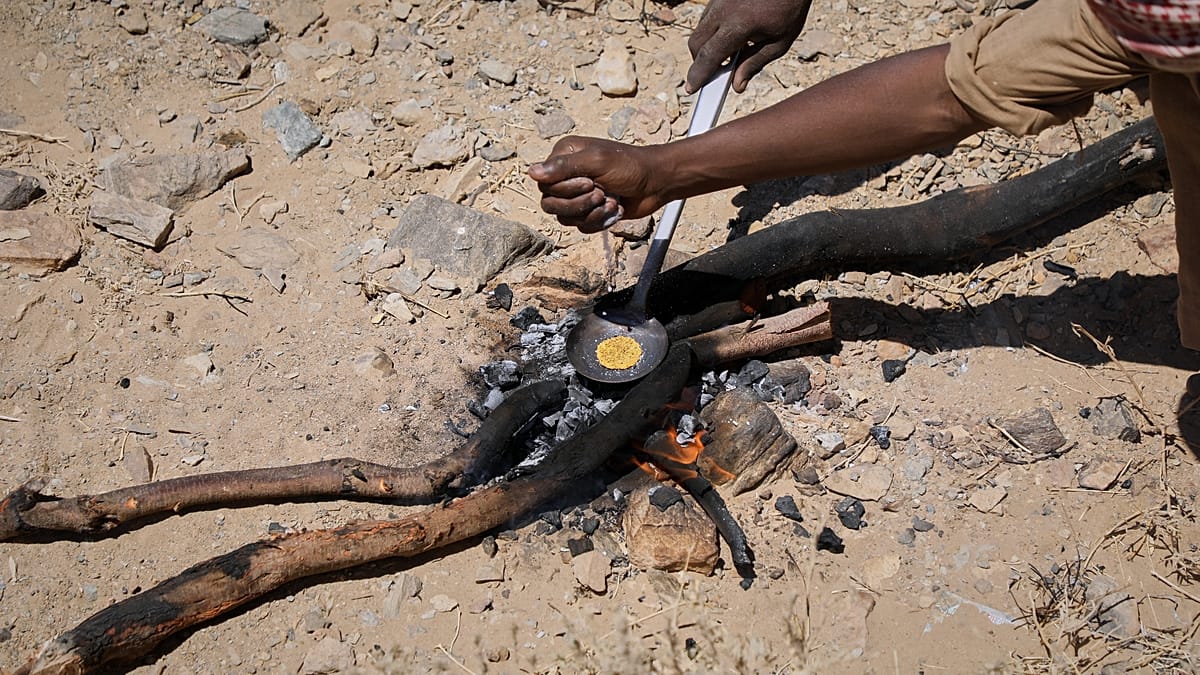
The Al-Zaraa mine is near El-Nahud in Sudan’s West Kordofan region. The mine began to collapse on Tuesday after tunnels were dug very close together
 Euronews16 Sept
Country: World Source: Famine Early Warning System Network Please refer to the attached file. Key messages In March 2027, FEWS NET expects the number of people in need of humanitarian food assistance to be highest in Sudan, Pakistan, Nigeria, Democratic Republic of the Congo, and Yemen, followed by Afghanistan. When food assistance needs are expressed as a percent of the total population of each respective FEWS NETmonitored country, FEWS NET expects the share of the population that needs humanitarian food assistance to be highest in South Sudan, where 50-55 percent of the country’s population will most likely need food assistance. The share of the country’s population that needs food assistance is also very high in Yemen (45-50 percent); Sudan (40-45 percent); Somalia, Syria, and Haiti (25-30 percent each); and Lebanon (20-25 percent). Out of the projected total 155-165 million people in need across FEWS NET-monitored countries, Sudan, Pakistan, Nigeria, and Democratic Republic of the Congo are each expected to contribute over 10 percent of total food assistance needs. Yemen and Afghanistan are each expected to contribute 5-10 percent of total food assistance needs. In comparison to March 2026, FEWS NET expects the number of people in need of food assistance to be higher in Sudan, Pakistan, Nigeria, the Democratic Republic of the Congo, Yemen, Uganda, Venezuela, Ukraine, Madagascar, Lebanon, and Angola. In contrast, FEWS NET expects the number of people in need of food assistance to be lower in Afghanistan, Kenya, Mozambique, Zambia, and Burundi. In all other countries, food assistance needs are expected to be similar to last year.
ReliefWeb•Famine Early Warning System Network15 Sept
Country: South Sudan Source: World Food Programme This is a transcription of what was said by Matthew Hollingworth, WFP’s Assistant Executive Director for Programme Operations – to whom quoted text may be attributed – at today's Geneva briefing. Palais Briefing Note GENEVA – Good morning to you all. So I am here today to give a briefing on what we are seeing as a fairly catastrophic situation unfolding across South Sudan. Simply put, South Sudan today is facing a sort of a collision of crises, plural, just as the humanitarian resources are starting to run out. I was the country director for the World Food Programme in South Sudan for three years. I left in 2022. And since my departure until the one-week mission I took part in last week, the situation has deteriorated enormously. Across the whole country, conflict, displacement, economic hardship, climate shocks, and the situation in neighbouring Sudan are all converging to push millions of people deeper into vulnerability. At the same time, as I say, we're seeing not just the World Food Programme's humanitarian assistance, but all actors, humanitarian assistance in the country, rapidly declining in scale. 7.8 million people today , more than half the country's population, struggle to find food each day. 2.2 million children and 1.2 million pregnant and breastfeeding mothers require urgent nutrition support. Unless additional resources are secured, more than one million vulnerable people could lose access to life saving food and nutrition assistance by October. So this is looming. South Sudan is also bearing the consequences of the conflict in neighbouring Sudan. Every week, around 3,000 refugees and returnees cross the border seeking safety, food, water and shelter. During my visit last week in Renk, I met women and children and older people who travelled for days on foot, sometimes weeks, escaping violence and uncertainty in order to get to South Sudan, you know, genuinely out of the frying pan into the fire. Many have lost their homes. Most, if not all, have lost their livelihoods and belongings. Sadly, many had lost loved ones. And yet they are arriving, as I say, into communities that are already struggling significantly to feed themselves and look after themselves. One of the women I met, a lady by the name of Hapsa Hassan, a mother of four, who had recently arrived in Renk in the transit camp, fled Blue Nile State, Damazin. And having walked almost 200 kilometres, she reached the transit camp absolutely exhausted, extremely hungry as were her children, and genuinely uncertain as to what lay ahead of her. She did receive food assistance from WFP, she received nutrition support from UNICEF for her children, but frankly it just wasn't and isn't enough to meet her needs. And now, sadly, she's going to rely on the generosity of neighbours and friends and host communities to support her, families and other communities that don't have enough themselves, facing similar kinds of hardships and increasing pressure because of the new arrivals into those transit centres and indeed, ultimately, refugee camps. She spoke of impossible choices that women and girls are being forced to take each day to look for food and basic necessities. Her biggest concern that she raised with me was the safety of her teenage daughter, who she knows is going to need to leave the transit camp on a daily basis to look for work, to look for food, and to take risks that no young girl should be taking and should ever have to face. perhaps a story for me at least was a really stark reminder of the protection risks and the vulnerabilities confronting displaced families as they struggle to survive. Over the last three years the World Food Programme and partners have indeed provided food and cash and nutrition assistance to refugees and an increasing number of South Sudanese returnees going into already vulnerable communities. The assistance has been a lifeline. Today it is at risk. I was in Malakal as well during my visit, visiting one of what was the largest logistics hubs that we had in the northern part of South Sudan, where we would feed half a million people across the greater Upper Nile region with life-saving support. Last year in Malakal at this time, we had 10,000 metric tons of food positioned , ready to go the moment the rainy season withdrew so that we could get food out to areas as they became accessible as we identified vulnerability. Today, there's less than 300 metric tons of food in that same complex, not because the numbers have fallen, not because there's less need, not because things have improved, but because simply put, humanitarian agencies just don't have the resources anymore, anymore that they once had. Access and safety, or lack thereof, is compounding this crisis. Humanitarian food that gets transported along the Nile, commercial food and other materials that get transported along the River Nile, face illegal checkpoints and illegal taxation by soldiers across the entirety of the journeys that they take. This increases operational costs, it slows down the delivery of assistance. And for many traders, it's become so much that it's prohibiting their ability and desire to continue trading. This is at a time where every single pound, every single euro, every single dollar really matters. And these illegal checkpoints reduce our ability to stretch scarce humanitarian resources. It reduces our ability to move assistance efficiently. And when we're relying on cash as one of the modalities of support, it means that the availability of commercial goods is diminishing daily. Honestly speaking, today in Malakal, if a family is eating something other than tomatoes, okra, chilies and onions that are grown locally, anything else they are eating has been flown into Malakal, because it no longer arrives by road or by barge, because it's too expensive, because the transporters have to pay so many illegal taxes on the way. They're just not taking the risk anymore. This is starting not just to raise costs, it's starting to be a cost in terms of people's lives. Even where humanitarian assistance does reach communities, the pressure that's facing those communities is mounting. I went to Canal Pigi in Jonglei State, and I met families whose farmland, seven years after the original floods, is still submerged. Communities that could, in the old days, produce their own food, can no longer produce any food, and they can't rely on the small harvests in the land that is not submerged because of — rather contradictory — a drought which is growing in the area. So surrounded by floodwater, at the same time facing droughts in terms of a lack of rain. Floodwater by the way, that after seven years of submerging is no longer clean, is no longer drinkable, is no longer safe. These extreme weather shocks and the impact of what is a super El Nino is having a greater impact in South Sudan, but also in neighbouring Sudan, Eritrea, Ethiopia, Uganda, Kenya. It's going to have a bigger effect on food security in the entire area. The reduced funding now is exacerbating all these other risks, all these other challenges, leaving fewer families with food assistance, fewer children with access to nutrition support and fewer opportunities for communities to recover from repeated shocks. We are committed to keep doing all that we can, but we do need resources urgently to save lives. The World Food Programme and other partners, other UN organisations as well. If you just look at WFP, we have an USD86 million gap right now, and a USD 416 million gap over the next six months . Without that, we can't serve the refugees. We can't serve the displaced. We can't serve the vulnerable host communities during these six months. And we can't serve those people that are living in fear of famine in at least four locations of Jonglei State. We do, however, also have a significant call to action for the Government of South Sudan. The burden cannot only sit with humanitarian and development workers. The Government of South Sudan has to start mobilizing their own funds to support their own people. The humanitarian community cannot replace the obligations that the government has for their own citizens. They need to take action as well to put their own finances, their own resources — that may mean money, but it could mean food that is grown in other areas of the country that still has the ability. They also need to take action to make sure if those goods move commercially or as aid around the country, that they are not diminished in their impact because of the illegal taxation and daylight robbery, which is frankly growing and has grown so much over the last five years. I'm happy to take more questions. I have to emphasize that while South Sudan is a country that has faced many challenges in its short life as an independent nation, we are seeing something different now. We are about to drop off the financial cliff at a time when the needs are at the greatest level that they've been at for the past 13 or 14 years. Notes to editors: Package of high-resolution photos is available here Broadcast quality footage is available here South Sudan Follow us on X, formerly Twitter, via @wfp For more information please contact (email address: firstname.lastname@wfp.org): Tomson Phiri, WFP/ South Sudan, Mob. +211 928 008 037Azfar Deen, WFP/ Nairobi, Mob. +39 345 846 6425Martin Rentsch, WFP/ Berlin, Mob +49 160 99 26 17 30Julian Miglierini, WFP/ Rome, Mob. +39 348 2316793Martin Rentsch, WFP/Berlin, Mob +49 160 99 26 17 30Nicola Kelly, WFP/London, Mob +44 (0)796 8008 474 Rene McGuffin, WFP/ Washington Mob. +1 771 245 4268
ReliefWeb•World Food Programme15 Sept
Country: Sudan Source: Data Friendly Space Please refer to the attached file. Executive Summary The Sudan crisis continues to represent one of the world's most severe humanitarian emergencies, with the conflict between the Sudanese Armed Forces (SAF) and Rapid Support Forces (RSF) driving unprecedented levels of displacement, violence, and suffering. This GANNET SituationHub report provides a comprehensive analysis of the operational environment and sectoral conditions affecting humanitarian response across Sudan. This analysis, produced through GANNET SituationHub's AI-powered platform with human-in-the-loop verification, synthesizes data from thousands of humanitarian sources to provide actionable insights for decision-makers, field teams, and donors responding to the Sudan crisis. The platform's real-time monitoring capabilities enable rapid identification of emerging needs and coordination gaps critical for effective humanitarian response. SituationHub: https://analysis.gannet.ai/sudan
ReliefWeb•Data Friendly Space15 Sept